Are you wondering how many watts it takes to run your portable air conditioner? Knowing this can save you money and prevent unexpected power issues.
Whether you want to keep your room cool without blowing your electricity bill or need to choose the right generator for outdoor use, understanding the power needs of your portable AC is key. Keep reading, and you’ll get clear, simple answers that help you make smarter choices for your comfort and energy use.
Portable Ac Power Basics
Wattageis the amount of power an appliance uses to work. For portable air conditioners, it tells how much electricity is needed. The higher the wattage, the more power the AC uses. This affects your electric bill and how well the AC cools a room.
Portable AC wattage usually ranges from 500 watts to 1500 watts. Small units use less power but cool smaller spaces. Bigger units use more power and cool larger rooms faster.
Choosing the right wattage helps balance energy use and cooling performance. Too low wattage might not cool well. Too high wattage wastes electricity.
- Low wattage: best for small rooms, saves energy
- Medium wattage: good for medium rooms, balanced use
- High wattage: cools large rooms quickly, uses more power

Credit: hvac-temecula-murrieta.com
Factors Influencing Power Usage
The BTU ratingshows the cooling power of a portable air conditioner. Higher BTU means more watts used. A unit with 8,000 BTU uses fewer watts than one with 12,000 BTU.
Room sizeaffects power use. Big rooms need more cooling, so the AC uses more energy. Good insulationkeeps cool air inside and saves watts.
Temperature settingsalso matter. Lower temperatures make the AC work harder and use more watts. How often you run the unit changes total power use too.
Typical Wattage Ranges
Small portable AC units usually use between 500 and 1,000 watts. They work well in small rooms or personal spaces. These units cool areas up to about 150 square feet.
Medium-sized portable AC units need around 1,000 to 1,500 watts. They can cool rooms from 150 to 300 square feet. These are good for bedrooms and offices.
Large portable AC units consume 1,500 to 2,000 wattsor more. They are suitable for big rooms or open spaces over 300 square feet. These models offer stronger cooling power but use more electricity.

Credit: northnjhvac.com
Calculating Energy Consumption
To estimate daily power use, check the portable air conditioner’s wattage. Most models use between 800 to 1500 watts. Multiply the wattage by the hours used each day. For example, a 1000-watt unit running for 8 hours consumes 8,000 watt-hoursor 8 kWh.
Energy consumption depends on the unit’s size and settings. Higher cooling power means more watts used. Running the unit on high uses more energy than on low.
| Usage Hours | Wattage (W) | Daily Energy (kWh) |
|---|---|---|
| 6 | 1000 | 6.0 |
| 8 | 1200 | 9.6 |
| 10 | 1500 | 15.0 |
Electricity bills rise with more energy use. Check your local rate to find cost per kWh. Multiply daily kWh by rate and days used to find monthly cost. Running a portable AC often can increase bills noticeably.
Energy Efficiency Tips
Choosing the right size portable air conditioner is very important. A unit too small will work hard and use more watts. A unit too large cools quickly but wastes energy. Check the room size and pick a model that fits well.
Energy-saving features can lower power use. Look for models with sleep mode, timer settings, and eco mode. These options help reduce energy waste during use.
Regular maintenance keeps the air conditioner running efficiently. Clean or replace filters often. Clear dust and debris from vents. This helps the unit use less power and last longer.
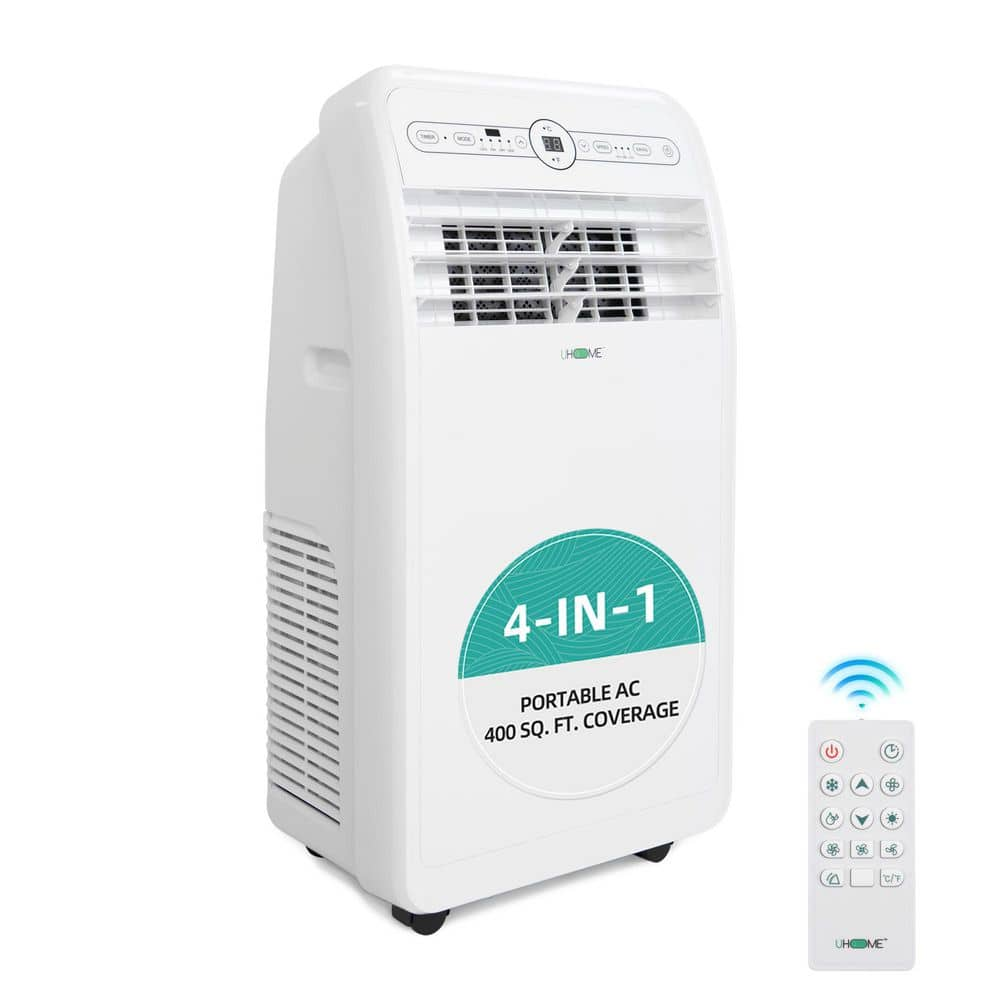
Credit: www.homedepot.com
Power Requirements And Electrical Setup
Portable air conditioners usually need between 500 to 1500 wattsto run. The exact wattage depends on the unit’s size and cooling power. Most models use a standard 120-volt plug, similar to other home appliances.
Some units may require a 240-volt outletfor higher power needs. This is common for larger portable ACs. The plug type must match the unit’s power requirements to work safely.
| Plug Type | Voltage | Common Use |
|---|---|---|
| Type A/B | 120V | Small to medium portable ACs |
| Type C | 240V | Larger, high-power units |
Circuit breakers should match the power load of the portable AC. A 15-amp breakeris enough for smaller units. Larger units might need a 20-amp or higher breaker. This prevents electrical overload and keeps the system safe.
Comparing Portable Ac To Other Cooling Options
Window AC unitsusually use more watts than portable air conditioners. They can cool a room faster but need a fixed window space. These units often consume between 500 to 1500 wattsdepending on size. They are less flexible but more powerful in cooling.
Fans and evaporative coolersuse far fewer watts than both portable and window ACs. Fans typically use 40 to 100 watts, making them energy efficient but less effective in very hot weather. Evaporative coolers use around 100 to 300 watts. These coolers add moisture to the air, which works best in dry climates.
| Cooling Option | Typical Watt Usage | Best Use |
|---|---|---|
| Portable Air Conditioner | 800 – 1500 watts | Small to medium rooms, flexible setup |
| Window AC Unit | 500 – 1500 watts | Fixed window, powerful cooling |
| Fan | 40 – 100 watts | Air circulation, mild cooling |
| Evaporative Cooler | 100 – 300 watts | Dry climates, adds moisture |
Common Myths About Portable Ac Power
Higher wattagedoes not always mean better cooling. Portable air conditioners with more watts use more electricity but may not cool the room faster. Cooling power depends on the BTU rating, not just wattage. Some models are designed to be energy efficient and use less power while cooling well.
Many people think portable ACs use too much energy. This is not always true. Energy use depends on the size of the unit and how long it runs. Smaller units use fewer watts and are good for small rooms. Using a timer or thermostat helps save energy by running the AC only when needed.
Frequently Asked Questions
How Many Watts Does A Portable Air Conditioner Use?
A portable air conditioner typically uses between 800 to 1500 watts. The exact wattage depends on the unit’s BTU rating and efficiency. Higher BTUs mean more cooling power but higher energy consumption. Always check the product label for precise wattage details.
What Wattage Is Needed For A 10,000 Btu Unit?
A 10,000 BTU portable air conditioner generally requires around 1000 to 1400 watts. This wattage provides sufficient power to cool a medium-sized room efficiently. Energy-saving models may use slightly less power while maintaining performance.
Can I Run A Portable Ac On A 1000-watt Generator?
Running a portable AC on a 1000-watt generator is possible only if the unit’s wattage is below 1000 watts. Many portable ACs exceed this, so check the starting and running wattage before use. Overloading the generator can cause damage or power failure.
Does Wattage Affect Portable Ac Cooling Performance?
Yes, wattage directly impacts cooling performance. Higher wattage means more energy for the compressor and fan, leading to stronger cooling. However, efficiency also depends on the unit’s design and BTU rating, not just wattage alone.
Conclusion
Understanding watt usage helps in choosing the right portable air conditioner. Consider room size and energy efficiency when deciding. Energy-efficient models save costs and electricity. Check the product label for watt information. This ensures informed decisions and optimal cooling. Remember, a well-chosen unit boosts comfort and reduces bills.
Make sure to balance cooling needs with energy consumption. Keep these tips in mind for a comfortable and cost-effective summer. A smart choice leads to a cooler home and happier you.