Getting your fishing line properly on a spinning reel can make all the difference between a smooth cast and a frustrating tangle. If you’ve ever struggled with knots, twists, or uneven line, you’re not alone.
But don’t worry—this guide will walk you through simple steps to set up your reel like a pro. By the end, you’ll feel confident and ready to enjoy your time on the water without worrying about your gear. Ready to learn how to put fishing line on your spinning reel the right way?
Let’s dive in!

Credit: windrider.com
Choosing The Right Fishing Line
Picking the right fishing line is key to a good fishing trip. It helps you catch fish easier and keeps your gear safe.
There are different types of lines, strengths, and thicknesses to consider before putting line on your spinning reel.
Types Of Fishing Lines
You can choose from three main types of fishing lines: monofilament, fluorocarbon, and braided. Each type has its own features.
- Monofilament:Easy to handle and stretchable. Good for beginners.
- Fluorocarbon:Nearly invisible underwater. Great for clear water fishing.
- Braided:Very strong and thin. Best for heavy cover or deep water.
Selecting Line Strength
Line strength is measured by its pound test. It tells how much weight the line can hold before breaking.
Choose a strength that matches the fish you want to catch. Stronger lines suit bigger fish, but they are thicker.
- Light line (2-6 lbs): Good for small fish and light lures.
- Medium line (8-12 lbs): Best for medium-sized fish and general fishing.
- Heavy line (15+ lbs): Use for big fish or heavy cover fishing.
Considering Line Diameter
Line diameter affects casting distance and how the line moves in water. Thinner lines cast farther and are less visible.
Stronger lines usually have larger diameters, but some braided lines are thin yet strong.
- Thin diameter: Better for long casts and clear water.
- Thicker diameter: More abrasion resistance and strength.
- Balance diameter with strength for best fishing results.
Preparing Your Spinning Reel
Before putting fishing line on a spinning reel, prepare the reel properly. This makes the process easier and prevents problems later. Take time to clean, check, and set up your reel for spooling.
Proper preparation helps the line go on smoothly and extends the life of your reel. Let’s look at key steps to get your spinning reel ready.
Cleaning The Reel
Clean your spinning reel before adding new line. Dirt and salt can cause damage and make the reel work poorly. Use a soft cloth and mild soap to wipe the reel’s surface.
- Remove old line from the spool
- Wipe the spool and body gently
- Use a toothbrush for hard-to-reach spots
- Dry the reel with a clean cloth
- Apply a drop of reel oil to moving parts
Checking Reel Components
Inspect your reel parts before spooling new line. Look for damage or wear that can affect performance. Tighten loose screws and check the drag system.
| Component | What to Check | Action Needed |
|---|---|---|
| Spool | Clean and no dents | Clean or replace if damaged |
| Bail Arm | Moves smoothly and locks | Lubricate or fix if stiff |
| Drag Knob | Adjusts properly | Test and repair if stuck |
| Handle | Firm and spins well | Tighten or replace if loose |
Setting Up The Reel For Spooling
Prepare your reel for spooling by attaching it to the rod. This gives better control. Make sure the drag is set to low tension to avoid line damage.
- Attach reel firmly to the fishing rod
- Open the bail arm fully
- Thread the line through the rod guides starting at the tip
- Tie the line to the spool using an arbor knot
- Close the bail arm to lock the line in place
- Hold the line tight to avoid slack while spooling
Attaching The Line To The Reel
Attaching the fishing line to a spinning reel is the first step to prepare for fishing. Doing it right helps the line spool evenly and avoid tangles.
This guide explains how to attach the line securely to your spinning reel for a smooth fishing experience.
Threading The Line Through Guides
Start by pulling the line from your fishing spool. Pass it through each guide on the fishing rod, starting at the tip.
Make sure the line goes smoothly through all guides to prevent tangles and ensure even casting.
- Hold the rod firmly.
- Thread the line through the top guide first.
- Continue threading through each guide down to the reel.
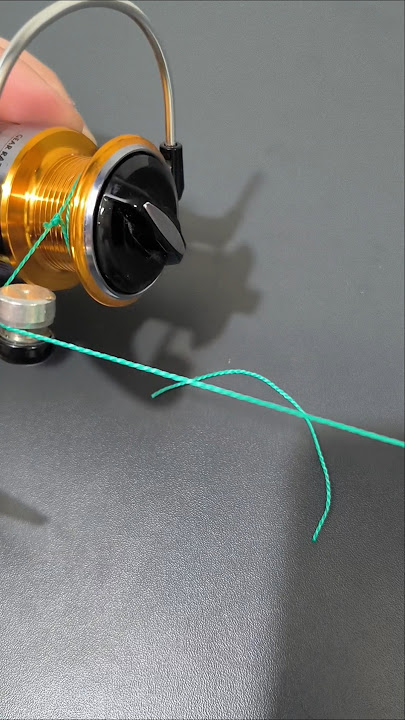
Tying The Arbor Knot
The arbor knot connects the line to the reel spool. It is strong and easy to tie, preventing the line from slipping.
To tie the arbor knot, wrap the line around the spool and tie two simple knots.
- Wrap the line around the reel spool.
- Tie an overhand knot around the main line.
- Tie a second overhand knot at the tag end.
- Pull both knots tight against the spool.
Securing The Line Properly
After tying the arbor knot, pull the line tight. Make sure it is snug and will not slip under tension.
Start turning the reel handle slowly to wind the line onto the spool evenly. Keep tension on the line with your fingers.
- Check the knot for tightness.
- Keep steady tension on the line.
- Wind the line evenly on the spool.
- Stop when the spool is almost full.
Credit: letsgobassfishing.com
Spooling The Line Onto The Reel
Putting fishing line on a spinning reel is an important task for every angler. Proper spooling helps avoid problems like tangles and line breaks.
This guide covers key points to keep your line tight, even, and free from twists while spooling.
Maintaining Line Tension
Keeping the line tight during spooling prevents loose loops and tangles. Use a cloth or your fingers to apply steady pressure on the line as it feeds onto the spool.
- Hold the line between your thumb and forefinger.
- Keep firm but gentle pressure to avoid snapping.
- Ask a partner to hold the spool with a pencil if needed.
- Check tension often to keep it consistent.
Winding The Line Evenly
Wind the line evenly across the entire spool width. Uneven winding causes line bunching and casting problems.
| Tip | Why It Matters |
| Move the line guide back and forth | Distributes line evenly on the spool |
| Keep steady reel handle speed | Prevents loose spots and bunches |
| Fill spool to about 1/8 inch below edge | Avoids overfilling and tangles |
Avoiding Line Twist
Line twist weakens the line and causes knots. To avoid it, let the line come off the filler spool the same way it goes onto the reel spool.
Follow these tips to prevent twists:
- Place the filler spool so the line uncoils in the same direction as the reel spool.
- Do not let the line spin freely off the filler spool.
- Keep tension on the line while spooling.
- Check for twists by occasionally pulling line off the reel.
Finishing And Testing
After putting the fishing line on your spinning reel, it is important to finish and test it properly. This ensures the line works well and is ready for fishing.
Careful finishing and testing help avoid problems like line tangles or breaks during casting. Follow these simple steps to complete the process.
Trimming Excess Line
Cut off any extra fishing line past the reel spool. Leaving too much line can cause tangles and reduce casting distance.
Use sharp scissors or line clippers. Leave about a quarter inch of line beyond the spool edge to allow for smooth operation.
Checking Line Capacity
Check that the fishing line fits well on the reel spool. Do not overfill or underfill the spool.
- Line should be close to the spool edge but not over it.
- Overfilling can cause line to tangle or break.
- Underfilling reduces casting distance and control.
Performing A Test Cast
Make a few test casts to check the line flow and reel function. This shows if the line is loaded correctly.
Watch for smooth casting without snags or loops. Adjust the line or spool fill if you see problems.

Credit: www.youtube.com
Common Mistakes To Avoid
Putting fishing line on a spinning reel seems simple. Yet, many make mistakes that cause problems later. Avoid these common errors to fish better and keep your gear safe.
Read on to learn about three frequent mistakes and how to avoid them when spooling your reel.
Overfilling The Spool
One common mistake is putting too much line on the spool. Overfilling leads to tangles and line breaks. It also causes the line to slip off during casting.
- Leave a small gap below the spool edge, about 1/8 inch.
- Do not fill the spool to the very top.
- Check the reel manual for recommended line capacity.
Using Incorrect Line Types
Not all fishing lines fit every reel. Using the wrong type can cause casting and durability issues. Match the line type to your reel and fishing style.
| Line Type | Best Use | Notes |
| Monofilament | General fishing | Easy to handle and knot |
| Fluorocarbon | Clear water fishing | Less visible underwater |
| Braid | Heavy cover | Strong with thin diameter |
Ignoring Line Twists
Line twist causes tangles and weak spots. It happens when the line spins during casting or retrieving. Fix it to keep smooth performance.
Tips to avoid line twist:
- Use a swivel to reduce twisting.
- Spool the line under tension.
- Check for twists regularly and remove them.
Frequently Asked Questions
How Do I Choose The Right Fishing Line For Spinning Reels?
Choose a line based on fish type and reel capacity. Monofilament is versatile, braid offers strength, and fluorocarbon is nearly invisible underwater.
What Is The Best Way To Attach Line To A Spinning Reel?
Use an arbor knot for secure attachment. It’s simple, strong, and keeps the line tight on the reel spool.
How Much Fishing Line Should I Put On My Reel?
Fill the spool about 1/8 inch from the edge. Overfilling causes tangles; underfilling reduces casting distance.
Can I Use Braided Line On A Spinning Reel?
Yes, braided lines work well. They offer strength and sensitivity but may need a backing line to fill the spool.
Conclusion
Putting fishing line on a spinning reel is easy with practice. Start by gathering all necessary tools. Follow each step carefully. Avoid tangles by keeping tension on the line. Secure the line tightly to prevent slipping. Test the reel after spooling.
Make sure everything functions smoothly. This process ensures a great fishing experience. Enjoy your time on the water with confidence. Remember, practice makes perfect. So, don’t hesitate to try again. Happy fishing!