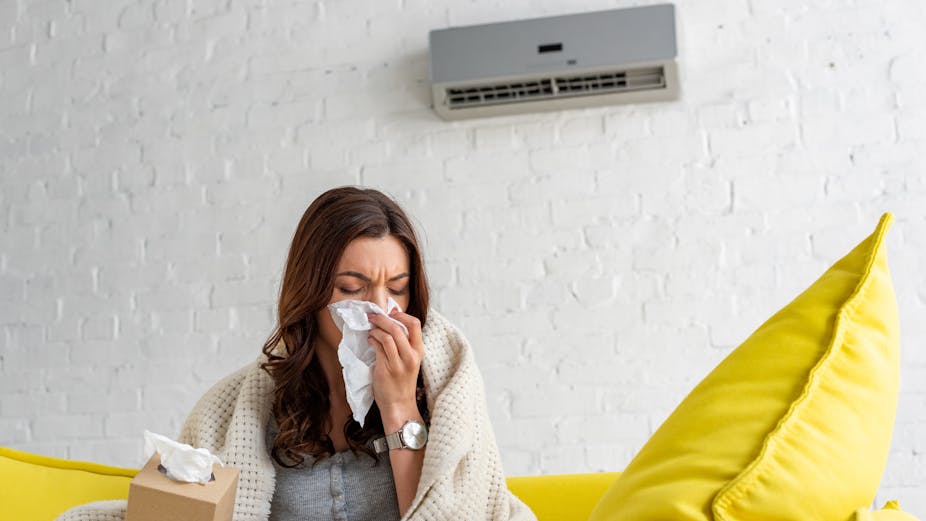
Have you ever felt stuffy, tired, or even sick after spending time in a room with the air conditioner running? It’s a question many people wonder about: can your air conditioner actually make you sick?
Your AC is supposed to keep you cool and comfortable, but sometimes it might do the opposite. Understanding how your air conditioner affects your health could save you from headaches, allergies, or worse. Keep reading to find out what risks might be hiding in your cooling system—and how you can protect yourself.

Credit: theconversation.com
How Air Conditioners Affect Indoor Air
Air conditioners cool indoor spaces but can change air quality. They move air around, which affects what you breathe. Understanding these effects helps keep your home healthy.
This article looks at how air conditioners move dust and allergens, affect humidity and mold, and spread bacteria and viruses.
Circulation Of Dust And Allergens
Air conditioners can spread dust and allergens inside a room. Dust collects in filters and vents. If not cleaned often, it blows back into the air you breathe.
- Dust mites and pet dander can cause allergies.
- Dirty filters increase dust circulation.
- Regular cleaning reduces allergen spread.
- Using high-quality filters helps trap particles.
Humidity And Mold Growth
Air conditioners lower humidity, but too much moisture can stay in ducts. This creates mold growth. Mold spores affect breathing and can cause illness.
| Effect | Cause | Result |
| Low Humidity | Air conditioner cooling | Dry skin and throat irritation |
| High Humidity | Poor drainage or leaks | Mold growth and bad odors |
| Mold Spores | Moist ducts and filters | Allergic reactions and asthma |
Spread Of Bacteria And Viruses
Air conditioners move air that may contain germs. Bacteria and viruses can spread through vents if the system is not clean. This can lead to sickness.
Ways air conditioners spread germs:
- Airflow moves germs around the room.
- Wet surfaces inside units allow bacteria to grow.
- Clogged filters reduce air quality and trap germs.
- Regular maintenance lowers health risks.
Common Health Issues Linked To Ac Use
Air conditioners cool our homes and offices. But they can cause health problems too. Understanding these issues helps you stay safe.
This article covers respiratory problems, allergic reactions, and skin irritations linked to AC use.
Respiratory Problems
Air conditioners can spread dust, mold, and bacteria. These can cause coughs, wheezing, and shortness of breath.
People with asthma or lung conditions may have worse symptoms in poorly cleaned AC rooms.
Allergic Reactions
- Dust mites grow in AC filters and vents.
- Mold spores spread in damp AC systems.
- These allergens cause sneezing and runny nose.
- Some people may get itchy eyes or headaches.
Cleaning AC units regularly can reduce allergen build-up and ease symptoms.
Skin Irritations
| Skin Issue | Cause | Effect |
|---|---|---|
| Dry Skin | Low humidity from AC | Itching, flaking, redness |
| Contact Dermatitis | Allergens in AC dust | Rashes, swelling |
| Cold Rash | Sudden cooling | Small red bumps, irritation |
Using moisturizers and keeping skin clean helps reduce irritation caused by AC air.
Hidden Dangers In Ac Maintenance
Air conditioners keep us cool, but they can also cause health problems. Poor maintenance hides risks that affect air quality.
Understanding these hidden dangers helps you keep your home safe and your air fresh.
Dirty Filters And Their Impact
Dirty filters block airflow and trap dust, pollen, and bacteria. This lowers the air quality inside your home.
Breathing polluted air can cause allergies, asthma, and other health issues.
- Filters collect dust and germs over time
- Clogged filters reduce AC efficiency
- Dirty filters spread harmful particles in the air
- Regular filter changes improve air quality
Neglected Drainage Systems
Drainage pipes remove moisture from your AC. If these pipes get blocked, water can build up inside.
Standing water creates mold and bacteria, which can spread through the air and cause sickness.
- Clogged drains cause water leaks and mold growth
- Mold spores can trigger respiratory problems
- Regular checks keep drainage systems clear
Importance Of Regular Cleaning
Cleaning your AC removes dirt, dust, and germs. This keeps the air cleaner and your unit working well.
Ignoring cleaning leads to bad smells and poor air quality, which may harm your health.
- Clean coils, filters, and vents often
- Prevent dust and mold buildup
- Improve airflow and AC performance
- Keep your home environment healthy

Credit: globalcoolair.com.au
Preventing Health Risks From Air Conditioning
Air conditioners cool indoor spaces but can sometimes cause health problems. Poor maintenance and wrong choices may lead to issues like allergies or breathing trouble.
Taking simple steps can keep your air conditioner safe and healthy. This helps you enjoy cool air without worrying about sickness.
Choosing The Right Ac Unit
Select an air conditioner that fits your room size. Too big or too small units may not work well and can cause humidity problems.
Look for units with good air filters to reduce dust and allergens. Energy-efficient models also keep air fresh and save power.
- Match unit size to room area
- Choose models with high-quality filters
- Pick energy-efficient AC units
- Consider units with built-in air purifiers
Effective Cleaning Practices
Clean your air conditioner regularly to stop mold and bacteria growth. Dirty filters and coils can spread germs and cause allergies.
Replace or wash filters every few months. Clean the vents and drain pipes to avoid water buildup and bad smells.
- Wash or replace filters every 2-3 months
- Clean air vents and grills regularly
- Check and clear drain pipes to prevent leaks
- Schedule professional servicing yearly
Using Air Purifiers And Humidifiers
Air purifiers help remove dust, pollen, and germs from the air. This reduces allergy and asthma risks when using an AC.
Humidifiers add moisture to dry air caused by air conditioners. Proper humidity keeps your skin and lungs healthy.
- Use air purifiers with HEPA filters
- Keep humidifiers clean to stop mold
- Maintain indoor humidity between 30% and 50%
- Combine these devices with regular AC cleaning
When To Seek Medical Advice
Your air conditioner can affect your health if it is dirty or not working well. Sometimes, it spreads dust, mold, or bacteria in the air. This can cause sickness.
It is important to know when to see a doctor if you feel sick after being in a cooled room. This guide will help you understand when to get medical help.
Recognizing Symptoms
You might feel sick because of your air conditioner if you notice certain symptoms. These symptoms can appear after spending time in a room with the AC on.
Watch for signs like coughing, sneezing, or a runny nose that lasts for a long time. Also, pay attention to headaches or tiredness that does not go away.
- Frequent coughing or wheezing
- Constant runny or stuffy nose
- Dry or sore throat
- Headaches or dizziness
- Skin irritation or rashes
- Eye redness or itchiness
- Feeling tired without reason
Consulting Health Professionals
If you have symptoms that last more than a few days or get worse, you should see a doctor. Tell the doctor about your air conditioner use and your symptoms.
The doctor might check if you have allergies, infections, or other problems caused by air pollution. They can give you the right treatment or advice.
- Visit a doctor if symptoms last longer than a week
- See a doctor if you have trouble breathing or chest pain
- Tell the doctor about your home or work AC use
- Follow the doctor’s advice on treatment and care

Credit: www.1news.co.nz
Frequently Asked Questions
Can Air Conditioners Cause Respiratory Problems?
Yes, poorly maintained air conditioners can harbor mold and bacteria. These contaminants may trigger allergies, asthma, or respiratory infections if circulated indoors.
How Often Should Ac Filters Be Cleaned Or Replaced?
AC filters should be cleaned or replaced every 1 to 3 months. Regular maintenance ensures better air quality and prevents dust buildup that can cause illness.
What Symptoms Indicate Sickness From Air Conditioner Use?
Common symptoms include headaches, dry throat, coughing, and nasal congestion. These may result from allergens, cold air exposure, or poor ventilation linked to AC units.
Can Air Conditioners Spread Viruses Or Bacteria Indoors?
Yes, if not cleaned regularly, AC units can circulate viruses and bacteria. Proper cleaning and filter changes reduce the risk of spreading infections.
Conclusion
Air conditioners can make you sick if not maintained. Regular cleaning is crucial. Change filters often. This prevents dust and mold. Ensure vents are clear. Fresh air is vital for health. Use your AC wisely. Set a moderate temperature. Avoid sudden changes.
Keep your living space clean. Balance is key. Stay mindful of air quality. Your health depends on it. Take simple steps for better air. Enjoy comfort without worries. Stay informed and breathe easy.