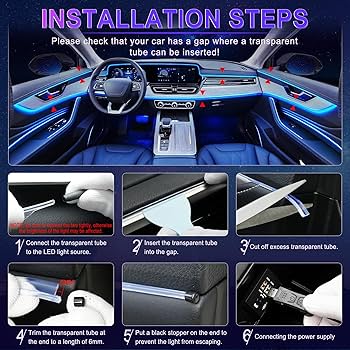
Want to give your car’s interior a fresh, modern look without spending a fortune? Installing LED lights is one of the easiest and most effective ways to do just that.
Imagine stepping into a car that glows with vibrant colors, creating a cool atmosphere every time you drive. In this guide, you’ll discover simple steps to install LED lights yourself, even if you’re not a tech expert. By the end, you’ll have all the tips and tricks to transform your ride into a stylish and inviting space.
Ready to light up your car interior like a pro? Let’s get started!

Credit: www.youtube.com
Choosing The Right Led Lights
Installing LED lights in your car’s interior can improve its look and feel. It is important to pick the right lights for your needs.
Choosing the correct LED lights helps ensure safety, style, and easy installation. Consider the types, colors, and compatibility first.
Types Of Led Lights For Cars
There are several LED light types designed for car interiors. Each type serves different purposes and fits in certain areas.
- Strip lights: Flexible and easy to install under seats or dashboards
- Bulb replacements: Fit into existing light sockets like dome or map lights
- Spotlights: Focused light for specific areas like footwells
- Panels: Flat lights that can cover larger surfaces for ambient lighting
Color Options And Brightness Levels
LED lights come in many colors and brightness settings. Choose colors that match your car’s style and your preferences.
Brightness levels affect how well you see inside the car. Some LEDs allow you to adjust brightness for comfort and safety.
- Single color LEDs: Basic, often white or red
- Multi-color LEDs: Allow changing colors with a remote
- Adjustable brightness: Lets you set light intensity
- Warm or cool white: Different white shades to match interior
Compatibility With Car Models
Not all LED lights fit every car model. Check your car’s make and model before buying LED kits or bulbs.
Some LEDs need specific sizes or connectors. Using compatible lights avoids installation problems and damage.
- Check bulb type numbers (e.g., T10, 194) for replacements
- Look for LED kits made for your car brand
- Verify power requirements match your car’s system
- Read user reviews for your car model’s LED experiences
Tools And Materials Needed
Installing LED lights inside your car can improve its look and feel. You need the right tools and materials to do the job well.
This guide covers the basic tools, safety gear, and optional accessories for installing car interior LED lights.
Basic Tools Checklist
Gather these tools before starting. They help you install LED lights easily and safely.
- Screwdrivers (flat and Phillips head)
- Wire strippers and cutters
- Electrical tape
- Multimeter for testing voltage
- Crimping tool for connectors
- Heat shrink tubing
- Panel removal tool
- Zip ties or cable clips
Safety Equipment
Protect yourself while working with electricity and tools. Use safety items to avoid injuries.
- Insulated gloves to prevent electric shock
- Safety glasses to protect your eyes
- Face mask if working in dusty areas
- Proper lighting to see clearly
Optional Accessories
These accessories are not required but make installation easier and more professional.
- LED light strips with adhesive backing
- Wireless remote controller for lights
- Extension wires for longer runs
- Fuse holders for added safety
- Double-sided tape for secure mounting
Preparing Your Car Interior
Installing LED lights inside your car looks great and adds style. Before starting, prepare your car interior well. This helps you work safely and get the best results.
Proper preparation saves time and avoids damage. Focus on cleaning, disconnecting power, and planning where to place lights.
Cleaning And Clearing Work Areas
Clean all surfaces where you will install the LED strips or lights. Remove dust, dirt, and grease. This helps the lights stick better and last longer.
Clear out any items like floor mats, trash, or personal belongings. You need space to work and avoid losing small parts.
- Use a soft cloth and mild cleaner for surfaces
- Vacuum floors and seats before starting
- Keep tools and parts organized in one spot
Disconnecting The Car Battery
Disconnect the car battery to avoid electric shocks or short circuits. This step protects you and your car’s electrical system.
Find the battery under the hood or in the trunk. Use a wrench to remove the negative (black) cable first, then the positive (red) cable.
- Wear gloves and safety glasses
- Keep metal tools away from battery terminals
- Wait a few minutes after disconnecting before starting work
Planning Light Placement
Decide where you want the LED lights inside your car. Common spots are under the dashboard, seats, and door panels.
Measure the areas and check if there are power sources nearby. Make sure the placement does not block pedals or cause distractions.
- Choose flat surfaces for easy installation
- Avoid places with heat or moisture
- Plan wire routes to keep cables hidden

Credit: www.chevymalibuforum.com
Installing Led Strips
Installing LED strips in your car’s interior can improve its look and create a cool atmosphere. The process is simple if you follow the right steps carefully.
This guide will help you measure, cut, attach, and connect the LED strips safely and securely.
Measuring And Cutting Led Strips
Measure the areas inside your car where you want to place the LED strips. Use a tape measure to get exact lengths.
Cut the LED strips only at marked points. These points are usually shown with a small line or scissors icon on the strip.
- Measure twice to avoid mistakes
- Cut only on marked lines
- Use sharp scissors for a clean cut
Attaching Strips Securely
Clean the surface where you will attach the LED strips. Dirt or dust can cause the strips to fall off.
Most LED strips have adhesive backing. Peel off the protective layer and press the strip firmly onto the surface.
- Use alcohol wipes to clean surfaces
- Press strips for at least 30 seconds
- Use extra tape if the adhesive is weak
Connecting To Power Source
Identify a power source in your car, like the fuse box or cigarette lighter socket. Make sure the source matches the LED strip voltage.
Connect the LED strip wires to the power source. Use connectors or solder for a secure connection. Always test the lights before finalizing.
- Match LED voltage with power source
- Use proper connectors or solder joints
- Test lights before fixing wires in place
Wiring And Connecting Leds
Installing LED lights inside your car needs careful wiring. Good wiring keeps your lights working well and safe.
Connecting LEDs correctly helps prevent damage. Follow clear steps to wire and connect LED lights in your car interior.
Routing Wires Neatly
Keep wires away from moving parts and heat sources. Use clips or tape to hold wires tight and clean.
Neat wiring looks better and stops wires from breaking. Plan your wire path before you start.
- Avoid sharp edges that can cut wires
- Keep wires close to the car frame
- Use wire loom to protect wires
- Secure wires with zip ties or clips
Using Connectors And Adapters
Connectors join wires without twisting or soldering. They make installation easier and safer.
Choose the right adapter for your LED type. Match the connector size to your wire gauge.
- Use quick disconnect connectors for easy removal
- Crimp connectors tightly for a strong hold
- Check connectors for corrosion resistance
- Use waterproof connectors in damp areas
Testing Electrical Connections
Test your LED lights before finalizing the installation. Make sure all connections work well and lights turn on.
Use a multimeter to check for voltage and continuity. Fix any loose wires or bad connections.
- Turn on the car power to test LEDs
- Check each LED strip or bulb separately
- Look for flickering or dim lights
- Secure any loose wiring found
Controlling Led Lights
Installing LED lights in your car’s interior is fun and easy. Controlling these lights lets you create the perfect mood inside your vehicle.
You can control LED lights using different tools. This guide covers remote controls, smartphone apps, and timers.
Remote Controls And Switches
Remote controls and switches let you change LED colors and brightness quickly. They are simple to use and fit most car setups.
- Wireless remotes let you control lights from anywhere inside the car.
- Wired switches mount on the dashboard for easy access.
- Some remotes have preset modes like flashing or fading.
- Switches often include dimmer functions to adjust brightness.
Smartphone Integration
Smartphone apps provide advanced control of your LED lights. Connect your phone via Bluetooth or Wi-Fi to start customizing.
| Feature | Description |
| Color Selection | Choose from millions of colors using the app. |
| Brightness Control | Adjust light intensity with a slider. |
| Music Sync | Lights change with your music beats. |
| Group Control | Manage multiple LED strips at once. |
Setting Up Timers And Modes
Timers and modes help automate your LED lights. Use them to save power and set moods without manual changes.
- Set timers to turn lights on or off at specific times.
- Choose modes like pulse, fade, or steady glow.
- Program lights to adjust based on your daily schedule.
- Use modes to highlight special occasions or trips.
Troubleshooting Common Issues
Installing LED lights in your car’s interior can improve its look. Sometimes, small problems happen after installation. Fixing these problems is easy with the right steps.
This guide covers how to solve common issues like flickering lights, power failures, and broken parts. Follow each section to keep your LED lights working well.
Fixing Flickering Lights
Flickering LED lights can be annoying and may mean a connection problem. The cause might be loose wires or voltage issues.
- Check all wire connections and tighten any loose ends.
- Inspect the LED strip or bulbs for damage.
- Make sure the power supply gives steady voltage.
- Try a different fuse if the flicker continues.
- Use a resistor if the LED light needs one for stable current.
Resolving Power Failures
Power failures happen when LED lights do not turn on. This can be due to a bad connection or a weak power source.
| Cause | How to Fix |
|---|---|
| Blown fuse | Replace the fuse with one of the same rating |
| Loose battery connection | Secure the battery terminals tightly |
| Faulty switch | Test the switch and replace if needed |
| Dead battery | Charge or replace the battery |
Replacing Damaged Components
Damaged parts like LED strips, connectors, or wires cause problems. Replace these parts to restore full function.
Follow these tips when replacing parts:
- Identify the damaged component by visual check.
- Turn off power before removing any parts.
- Use matching replacement parts for safety.
- Connect new parts firmly to avoid future faults.
- Test the lights after replacement to confirm repair.

Credit: www.amazon.ca
Maintaining Your Led Setup
Keeping your car’s LED lights in good shape helps them last longer. Regular care ensures bright and even lighting inside your car.
Follow simple steps to clean, check, and update your LED system. This keeps your interior lights working well and looking great.
Cleaning Tips
Clean your LED lights gently to avoid damage. Use a soft cloth and mild cleaner to remove dust and dirt.
Avoid harsh chemicals or water directly on the lights. This can cause electrical problems or fading.
- Turn off LEDs before cleaning
- Use microfiber cloth for wiping
- Apply cleaner on cloth, not on lights
- Dry lights completely after cleaning
Regular Inspections
Check your LED system often to find any issues early. Look for loose wires, dim lights, or flickering.
Fix small problems quickly to avoid bigger damage. Make sure all connections are tight and secure.
- Inspect wiring for wear or damage
- Test all LED lights regularly
- Listen for unusual sounds from the system
- Replace faulty parts as soon as possible
Upgrading Your System
Upgrade your LED setup to improve brightness or add new colors. New parts can boost the look and function of your interior lighting.
Choose compatible LED strips or controllers to avoid problems. Keep your system up to date with the latest features.
- Pick LED strips with better brightness
- Use smart controllers for color change
- Replace old wiring with quality cables
- Check compatibility before buying new parts
Frequently Asked Questions
How Do I Choose The Right Led Lights For My Car?
Choose LED lights that match your car’s interior style and color scheme. Ensure compatibility with your car’s voltage system. Opt for high-quality, durable LEDs from reputable brands. Consider the brightness level and ease of installation. Check reviews and ratings to make an informed decision.
Are Led Lights Safe For Car Interiors?
Yes, LED lights are safe for car interiors when installed correctly. They consume less power and emit less heat. Ensure proper wiring to avoid short circuits. Use LEDs that meet automotive standards to ensure safety. Regularly check connections to prevent any potential issues.
Can Led Lights Drain My Car Battery?
LED lights are energy-efficient and unlikely to drain your car battery. They consume minimal power compared to traditional bulbs. Ensure the car is running when using LED lights for extended periods. Regularly check your battery health to avoid unexpected issues.
Proper installation helps prevent unnecessary battery drain.
How Long Do Led Interior Lights Last?
LED interior lights can last up to 50,000 hours, depending on usage and quality. This longevity makes them a cost-effective choice. High-quality LEDs offer better durability and performance. Regular maintenance and proper installation can extend their lifespan. Choose reliable brands for longer-lasting results.
Conclusion
Installing LED lights in your car interior is simple and fun. Choose the right lights and tools before you start. Follow the steps carefully to avoid mistakes. Brighten your car’s inside with colors you like. Enjoy a fresh look that feels cozy and cool.
Small changes can make a big difference. Now, your car shines just the way you want. Try it today and see the change yourself.