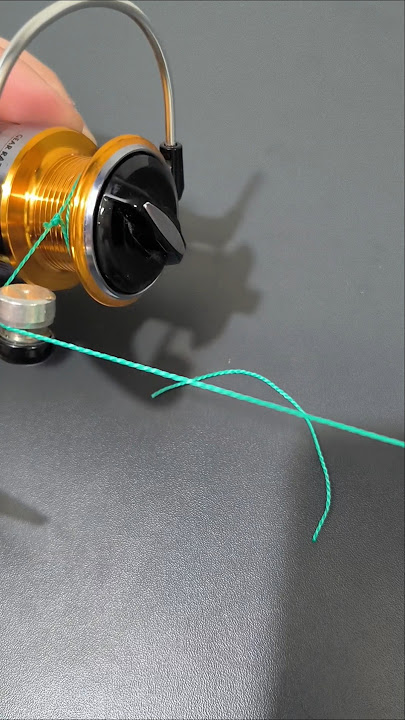
Tying a fishing line to your spinning reel might seem tricky at first, but once you learn the simple steps, it becomes second nature. If you want your line to stay secure and cast smoothly every time, knowing the right knot is key.
In this guide, you’ll discover an easy, foolproof way to attach your line that even beginners can master quickly. Keep reading, and you’ll be ready to fish with confidence on your very next trip.
Choosing The Right Fishing Line
Picking the right fishing line is key for a good fishing experience. The line must fit the reel and the fish you want to catch.
The right line helps you cast better and avoid breakage. It also makes tying the line to the spinning reel easier and more secure.
Types Of Fishing Lines
Fishing lines come in different types. Each type has its own strength, stretch, and visibility in water.
- Monofilament:Affordable and easy to handle. Good stretch for shock absorption.
- Fluorocarbon:Less visible in water and more abrasion-resistant. Sinks faster than monofilament.
- Braid:Very strong and thin. Little stretch and good sensitivity for feeling bites.
Matching Line Strength To Fish Size
Choosing the right strength for your line depends on the size of the fish you want to catch. Stronger fish need stronger lines.
| Fish Size | Recommended Line Strength (pounds) | Line Type Suggestion |
|---|---|---|
| Small Fish (up to 5 lbs) | 2 – 6 | Monofilament or Fluorocarbon |
| Medium Fish (5 – 15 lbs) | 8 – 15 | Fluorocarbon or Braid |
| Large Fish (15+ lbs) | 20+ | Braid or Heavy Fluorocarbon |

Credit: www.youtube.com
Preparing Your Spinning Reel
Before tying your fishing line to a spinning reel, you need to get the reel ready. This makes the process easier and ensures the line stays secure.
Proper preparation helps avoid problems while fishing. It keeps your gear working smoothly on the water.
Checking The Reel Condition
Look over your spinning reel carefully before starting. Check for any damage or dirt that might cause trouble later.
Make sure the reel handle turns easily and the spool is clean. If you see rust or dirt, clean it before tying the line.
- Inspect the handle and spool for smooth movement
- Check for cracks or damage on the reel body
- Clean any dirt or old fishing line from the spool
- Apply light oil if the reel feels stiff
Opening The Bail Arm
The bail arm keeps the fishing line on the spool. You must open it before tying the line to the reel.
Lift the bail arm gently until it stays open. This lets you wrap the line around the spool without trouble.
- Locate the bail arm on the spinning reel
- Lift it up carefully until it locks open
- Keep the bail arm open while tying the line
- Close the bail arm after the line is secure
Attaching The Line To The Reel
Attaching the fishing line to your spinning reel is the first step in setting up your fishing gear. It is important to secure the line properly to avoid slippage during casting or reeling in fish.
This guide will help you thread the line through the guides and tie it to the reel using a strong knot.
Threading The Line Through Guides
Before tying the line to the reel, you need to thread it through the rod guides. These guides keep the line straight and help with smooth casting.
- Open the bail arm of the spinning reel.
- Take the line end and pass it through the first guide near the reel.
- Continue threading the line through each guide towards the rod tip.
- Make sure the line sits smoothly inside each guide without twisting.
- Keep some slack in the line after threading to tie the knot comfortably.
Using The Arbor Knot
The arbor knot is a simple and strong knot to attach your line to the reel spool. It prevents the line from slipping off during fishing.
| Step | Action |
| 1 | Wrap the line around the reel spool. |
| 2 | Tie an overhand knot around the main line with the tag end. |
| 3 | Make a second overhand knot at the tag end. |
| 4 | Pull both knots tight against the spool. |
| 5 | Trim the tag end close to the knot. |
Securing The Knot
Securing the knot is important to keep the fishing line fastened to the spinning reel. A strong knot prevents the line from slipping or breaking while fishing.
Use proper techniques to tighten and trim the line for a clean and reliable connection.
Tightening Techniques
Pull the knot slowly and evenly to tighten it. Avoid jerking or pulling too hard at once. Wet the knot with water or saliva before pulling to reduce friction. This helps the knot slide smoothly and hold better.
- Moisten the knot lightly with water.
- Hold the knot firmly between your fingers.
- Pull the tag end and main line evenly.
- Tighten until the knot is snug against the reel.
- Check for any loose loops or twists.
Trimming Excess Line
Cut the extra line close to the knot to avoid tangles. Leave a small tag end to ensure the knot does not slip. Use sharp scissors or clippers for a clean cut.
| Tip | Reason |
|---|---|
| Cut 2-3 mm from knot | Prevent knot slipping and tangles |
| Use sharp scissors | Clean cut avoids fraying |
| Leave small tag end | Extra security for the knot |
Spooling The Line
Spooling the line onto a spinning reel is an important step in fishing. It helps to keep the line strong and ready for use. Proper spooling prevents tangles and line breaks.
This guide explains how to spool the line carefully. Follow the tips to keep your fishing line tight and fill the spool correctly.
Maintaining Line Tension
Keeping the line tight while spooling stops loops and knots. Loose line can cause problems on the water. Use your fingers to hold the line firmly but not too tight.
You can also use a cloth or a partner to help hold the line. The goal is to keep steady tension as you wind the line onto the spool.
- Hold the line with your fingers or cloth for steady pressure
- Ask a partner to keep the line tight if possible
- Keep the reel handle turning slowly and evenly
Filling The Spool Correctly
Fill the spool almost to the edge but not over it. Too much line can cause tangles or knots. Leave about 1/8 inch of space from the spool’s edge.
Wind the line evenly across the spool. This helps the line lay flat and cast smoothly. Avoid piling the line in one spot.
- Start the line near the spool’s center
- Wind slowly and evenly across the full width
- Stop filling when the line is close to the spool edge

Credit: windrider.com
Testing The Setup
After tying the fishing line to your spinning reel, you need to test the setup. This ensures the line stays secure and works well during fishing.
Testing helps avoid problems like line slippage or wrong tension that can cause lost fish or gear damage.
Checking For Slippage
To check for slippage, pull the line firmly away from the reel. The knot should hold tight without moving.
If the line slips, retie the knot or try a stronger knot type. A secure knot keeps your line from loosening during use.
- Hold the rod steady
- Pull the line with steady force
- Watch if the knot moves or loosens
Adjusting Line Tension
Proper line tension helps you cast smoothly and control fish better. Too loose or too tight tension can cause problems.
Adjust the reel drag to set the right tension. Test by pulling the line to feel resistance without breaking.
- Turn the drag knob clockwise to increase tension
- Turn it counterclockwise to decrease tension
- Pull line slowly to test tension level

Credit: n1outdoors.com
Frequently Asked Questions
How Do I Tie A Fishing Line To A Spinning Reel?
Start by threading the line through the reel’s guides. Then, tie a secure knot like the improved clinch knot. Finally, trim any excess line close to the knot for a neat finish and strong hold.
What Knot Is Best For Spinning Reels?
The improved clinch knot is ideal for spinning reels. It provides a strong, reliable hold. It is easy to tie and works well with most fishing lines.
Can I Use Braided Line On A Spinning Reel?
Yes, braided line works well on spinning reels. It offers high strength and low stretch. Make sure to use the right knot, such as the Palomar knot, for secure attachment.
How Tight Should The Knot Be On A Spinning Reel?
The knot should be tight enough to prevent slipping but not so tight as to damage the line. Pull firmly and evenly to secure the knot for best performance.
Conclusion
Tying a fishing line to a spinning reel is simple. Just follow the steps carefully. Practice makes perfect. With time, you’ll get better. Remember to choose the right knot. It ensures a strong hold. Double-check your work. Avoid loose ends.
A secure line means more successful fishing trips. Enjoy the process. Fishing is fun and relaxing. Now, you’re ready to fish confidently. Share your knowledge with friends. Happy fishing!