Have you ever found yourself with a flat car tire and only a bike pump nearby? You might wonder, “Can a bike pump inflate a car tire?” It’s a question that could save you time and stress in an unexpected situation.
You’ll discover the truth behind using a bike pump for your car tire, how effective it really is, and what you should keep in mind if you decide to try it. Keep reading—you might just learn a handy trick that could help you on the road!
Bike Pump Basics
A bike pump is a simple tool used to add air to tires. It helps keep bike tires firm and safe to ride.
Understanding how bike pumps work and their types can explain if they can inflate car tires.
Types Of Bike Pumps
Bike pumps come in different shapes and sizes. Each type suits a certain need or bike.
- Floor Pumps:Large, stable, and easy to use for high pressure.
- Hand Pumps:Small and portable but take more effort.
- Mini Pumps:Lightweight and fit on the bike for quick fixes.
- CO2 Inflators:Use gas cartridges for fast inflation.
How Bike Pumps Work
A bike pump pushes air into the tire through a valve. When you push the handle, air moves inside.
The pump’s piston moves inside a cylinder. This forces air out through a hose and valve into the tire.
Typical Air Pressure Capacity
Bike pumps vary in how much air pressure they can create. Different tires need different pressures.
| Type of Pump | Max Pressure (psi) | Best For |
|---|---|---|
| Floor Pump | 100-160 | Road and mountain bike tires |
| Hand Pump | 80-120 | Mountain and hybrid bikes |
| Mini Pump | 60-100 | Emergency use on any bike |
| CO2 Inflator | Up to 120 | Quick inflation during rides |
Car Tire Inflation Needs
Car tires need the right amount of air to work well and keep you safe. Proper inflation helps your car drive smoothly and saves fuel.
Using the correct pump and knowing how much air your tires need is very important. This guide explains why car tires need special care.
Standard Car Tire Pressure
Most car tires need air pressure between 30 and 35 PSI (pounds per square inch). This range keeps tires firm and safe on the road.
You can find the exact pressure for your car in the owner’s manual or on a sticker inside the driver’s door.
- Too low pressure causes poor gas mileage and tire wear
- Too high pressure can make the ride uncomfortable and tires unsafe
- Check pressure when tires are cold for best reading
Volume And Size Differences
Car tires are much larger than bike tires. They hold more air and need bigger pumps to fill quickly.
A bike pump is designed for small volume tires. It can take a long time to fill a car tire fully with a bike pump.
- Car tires need large air volume at moderate pressure
- Bike tires need less air volume but higher pressure
- Bike pumps often have small barrels, making inflation slow
Pressure Requirements For Safety
Correct tire pressure keeps your car safe by improving handling and braking. Underinflated tires can cause accidents.
Overinflated tires risk blowouts and uneven tire wear. Always keep pressure within the recommended range.
| Pressure Level | Risk |
|---|---|
| Under 30 PSI | More tire wear, poor control, higher fuel use |
| 30-35 PSI (Recommended) | Safe driving, good fuel efficiency, even tire wear |
| Above 35 PSI | Hard ride, possible tire damage, reduced traction |
Using A Bike Pump On Car Tires
Many people wonder if a bike pump can inflate a car tire. A bike pump is designed for small tires and high pressure. Car tires are larger and need more air volume.
This article looks at the feasibility, time needed, and risks of using a bike pump on car tires.
Feasibility And Challenges
A bike pump can add air to a car tire but it takes a long time. Bike pumps have smaller chambers and lower air flow.
- Bike pumps require many pumps to fill a car tire.
- Car tires need more air volume than bike tires.
- Bike pumps may not reach the needed pressure for car tires.
- Using a bike pump may be tiring and slow.
Time And Effort Involved
Inflating a car tire with a bike pump needs a lot of effort. It can take 10 to 30 minutes depending on the tire size and pump quality.
| Factor | Effect on Pumping Time |
| Tire Size | Larger tires take longer |
| Pump Chamber Size | Smaller chambers need more pumps |
| Pressure Needed | Higher pressure requires more effort |
| User Strength | Stronger user pumps faster |
Potential Risks And Damage
Using a bike pump on a car tire has risks. The pump or valve might get damaged. The pump may not fit well on the car tire valve.
- Risk of valve damage due to improper fitting.
- Possible pump failure from high pressure.
- User fatigue could cause accidents or dropping the pump.
- Inconsistent air pressure may affect tire performance.

Credit: www.amazon.com
Alternative Inflation Methods
Using a bike pump to inflate a car tire is possible but not practical. It takes a long time and a lot of effort. There are better ways to fill your car tire with air quickly and safely.
Here are some common alternative inflation methods that help you fill car tires without using a bike pump.
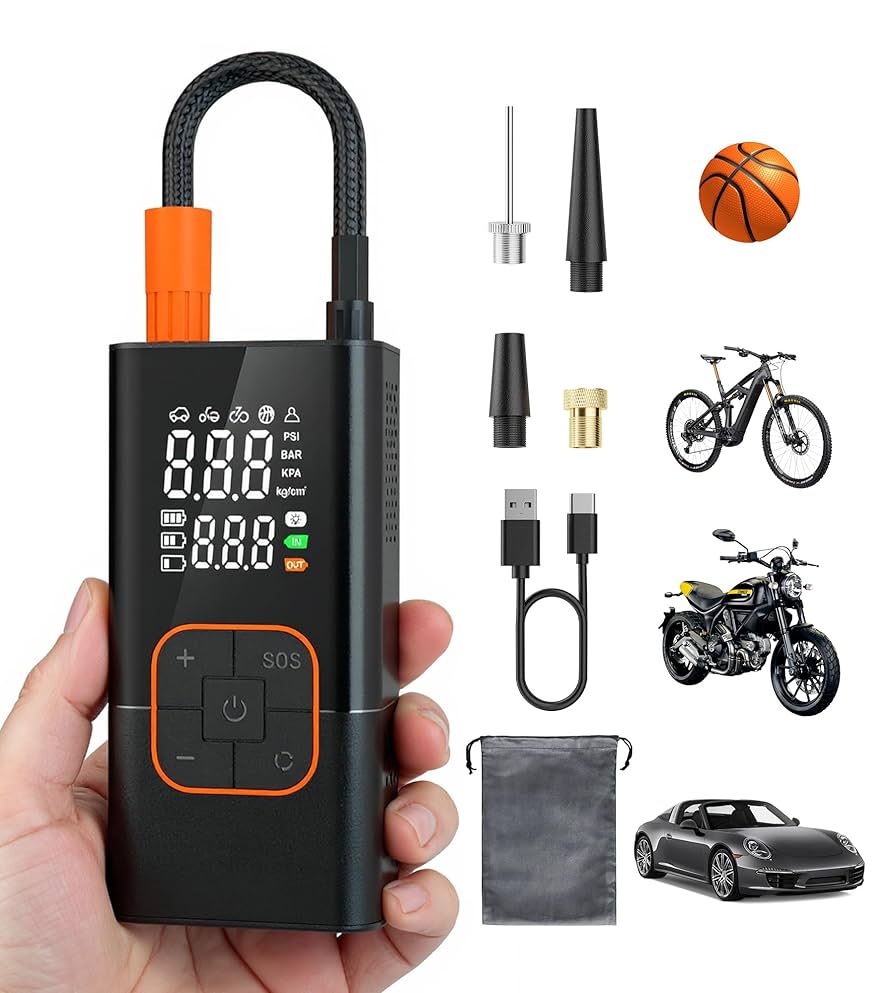
Portable Air Compressors
Portable air compressors are small devices you can carry in your car. They plug into your car’s power outlet and pump air into your tires fast. These compressors usually have a built-in pressure gauge to avoid overinflation.
They are easy to use and work well for emergencies or regular tire maintenance.
- Compact and easy to store
- Runs on car battery power
- Usually includes pressure gauge
- Inflates tires quickly
Gas Station Air Pumps
Many gas stations offer air pumps for public use. These pumps are designed to fill car tires fast and accurately. Most of them allow you to set the desired tire pressure before inflating.
They are a good option if you do not have any equipment with you. Just stop by and use the air pump to keep your tires properly inflated.
- Available at most gas stations
- Set pressure before inflating
- Good for quick tire inflation
- May require coins or payment
Emergency Inflation Kits
Emergency inflation kits are handy tools for fixing flat tires on the go. These kits often include a small air canister and sealant. The sealant plugs small holes while the canister fills the tire with air.
They are not a permanent fix but help you reach a service center safely. Many kits are compact and easy to keep in your car.
- Includes air canister and sealant
- Temporarily seals small leaks
- Compact and easy to store
- Good for emergency use only
Tips For Maintaining Tire Pressure
Keeping your tires at the right pressure is key for safety and fuel efficiency. Low tire pressure can cause uneven wear and reduce control.
Using the right tools and checking often helps avoid problems on the road.
Regular Pressure Checks
Check your tire pressure at least once a month and before long trips. Use a reliable pressure gauge to get accurate readings.
- Remove the valve cap from the tire.
- Press the gauge onto the valve stem firmly.
- Read the pressure on the gauge display.
- Compare it with the car manufacturer’s recommended pressure.
- Add or release air as needed.
Proper Pump Usage
When using a bike pump for a car tire, choose one that fits the valve type. Make sure to pump steadily and avoid over-inflation.
| Pump Type | Valve Compatibility | Best Use |
|---|---|---|
| Handheld Bike Pump | Presta and Schrader | Small air top-ups |
| Floor Pump | Mostly Schrader | Faster inflation for bike and car tires |
| Electric Pump | Universal | Quick and easy inflation |
When To Seek Professional Help
Get expert help if your tire loses pressure quickly or shows visible damage. Professionals can check for leaks and fix issues safely.
- Check for sidewall cracks or bulges.
- Listen for hissing sounds indicating leaks.
- Visit a tire shop if the pump does not inflate well.
- Seek help for uneven tire wear.

Credit: woowind.store

Credit: www.amazon.com
Frequently Asked Questions
Can A Bike Pump Inflate A Car Tire Effectively?
A bike pump can inflate a car tire, but it is slow and requires many strokes. It works best for minor pressure adjustments, not full inflation.
How Long Does It Take To Inflate Car Tire With Bike Pump?
Inflating a car tire with a bike pump takes significantly longer than a car pump. It may take 15 to 30 minutes or more.
Will A Bike Pump Reach The Required Car Tire Pressure?
Most bike pumps can reach the required pressure for car tires, but it depends on the pump’s maximum PSI capacity. Check your pump specs first.
Is Using A Bike Pump Safe For Car Tires?
Yes, using a bike pump is safe if you avoid overinflation. Monitor tire pressure with a gauge to prevent damage.
Conclusion
Using a bike pump on a car tire is possible but inefficient. It requires time and effort. Bike pumps are not designed for car tires. They lack the necessary pressure and volume. For emergencies, a bike pump can help slightly.
But it’s not the best solution. Investing in a portable car tire inflator is wise. It’s faster and more efficient. Always keep your car tires properly inflated. This ensures safety and better fuel efficiency. Make sure to check tire pressure regularly.
Proper tools make maintenance easier and more effective.