Have you ever wondered how portable air conditioners keep your space cool and comfortable, no matter where you place them? Understanding how these handy devices work can help you choose the right one and use it more effectively.
Imagine beating the heat without the hassle of installing a bulky system. You’ll discover the simple science behind portable air conditioners and learn how they bring instant relief to your home or office. Keep reading—you’re about to unlock the secret to staying cool with ease.
Basics Of Portable Air Conditioners
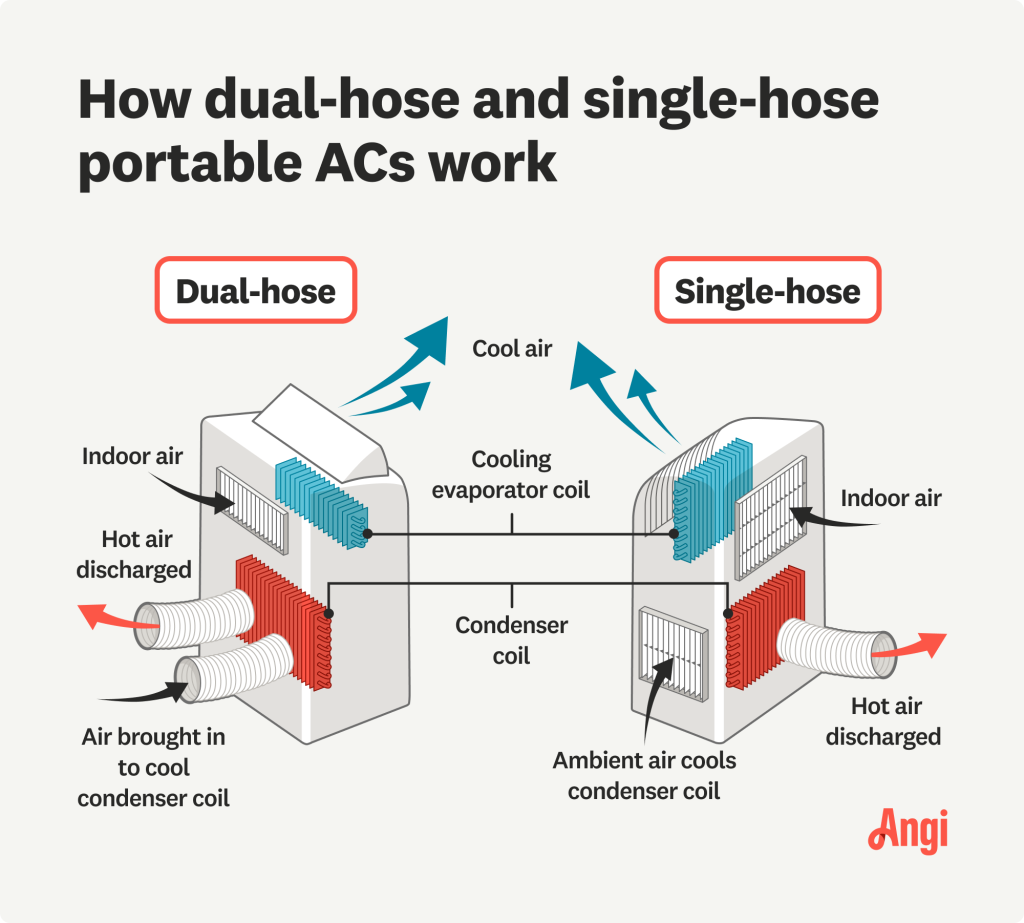
Portable air conditionershave several key componentsthat work together. These include a compressor, condenser coil, evaporator coil, and a fan. The compressor pumps refrigerant through the coils. The evaporator coil absorbs heat from the room air. The condenser coil releases heat outside. The fan moves air across the coils to help cool the room.
The cooling processstarts when warm air is drawn into the unit. The air passes over the evaporator coil, where heat is removed. The cool air is blown back into the room. The heat absorbed by the refrigerant is pushed to the outside through an exhaust hose. This way, the room stays cool.
| Type of Unit | Description |
|---|---|
| Single Hose | Uses one hose to push hot air outside. Less efficient for large rooms. |
| Dual Hose | One hose pulls air in, the other pushes hot air out. More efficient cooling. |
| Evaporative Cooler | Uses water evaporation to cool air. Best in dry climates. |
Installation And Setup
Choose a spot near a window or door. Portable air conditioners need a way to release hot air outside. The unit must be close enough to connect the exhaust hose to the window.
Ventilation is very important. The exhaust hose pushes hot air outside. Without proper ventilation, the room stays warm. Make sure the hose is straight and not bent. A bent hose blocks airflow and lowers cooling.
Follow these setup steps carefully:
- Place the unit on a flat surface near a window.
- Attach the exhaust hose to the air conditioner.
- Connect the other end of the hose to the window kit.
- Seal gaps around the window kit to stop air leaks.
- Plug in the unit and turn it on.
Cooling Mechanism Explained
Portable air conditioners cool air by drawing warm air inside and passing it over cold coils. Heat is then expelled outside through a hose, leaving cool air in the room. This simple process keeps spaces comfortable without complex installation.
Heat Exchange Cycle
Portable air conditioners use a heat exchange cycleto cool your room. The unit takes warm air from the room and passes it over a cold coil. This coil absorbs the heat and cools the air. The warm air is then pushed outside through a vent. This process keeps the room temperature comfortable by moving heat out.
Role Of Refrigerants
Refrigerantsare special liquids inside the air conditioner. They absorb heat from the air inside your room. When the refrigerant heats up, it changes to gas and moves outside. Outside, the refrigerant cools down and turns back into a liquid. This cycle repeats to keep cooling the air.
Air Circulation
- Warm air is pulled into the unit.
- Air passes over cold coils cooled by refrigerants.
- Cool air blows back into the room.
- Heat is pushed outside through a vent hose.
Credit: karinearappliances.com
Energy Efficiency And Performance
Power consumptionof portable air conditioners varies with size and usage. Smaller units use less energy but cool smaller rooms. Larger units consume more power but cool bigger spaces faster. Checking the energy labelhelps find efficient models.
| BTU Rating | Room Size (sq ft) | Typical Power Use (Watts) |
|---|---|---|
| 8,000 | 150 – 250 | 800 – 900 |
| 10,000 | 250 – 350 | 900 – 1,000 |
| 12,000 | 350 – 450 | 1,000 – 1,200 |
Improving efficiency means using the unit in a well-insulated room. Closing doors and windows reduces cooling loss. Regular cleaning of filters keeps airflow smooth. Using a timer or thermostat avoids wasting power. These steps lower bills and improve performance.
Maintenance Tips
Portable air conditioners need regular filter cleaningto work well. Clean filters help the unit cool better and use less energy. Remove the filter gently and wash it with warm water. Let it dry fully before putting it back.
Drainage managementkeeps the unit from leaking water. Check the water tank often and empty it when full. Some models use a hose for continuous drainage. Make sure the hose is not blocked or bent.
- Unit not cooling?Check if the filter is dirty or blocked.
- Fan not working?Inspect the power plug and switch.
- Water leaks?Verify the drainage hose or tank position.
- Strange noises?Clean the fan blades and check for loose parts.
Pros And Cons Of Portable Acs
Portable air conditionersare easy to move from room to room. They need no permanent installation. These units cool a space quickly and use less power than central ACs. They are good for small rooms or apartments. You can store them when not in use. Some models also dehumidify the air, making the room feel more comfortable.
They can be noisy compared to window ACs. The hose that vents hot air must be near a window. This can limit placement options. Portable ACs sometimes cool less evenly. They need regular cleaning to avoid dust buildup. Their cooling power is less than central systems, so they are not ideal for large spaces.
| Feature | Portable AC | Window AC | Central AC |
|---|---|---|---|
| Portability | Easy to move | Fixed in window | Fixed, whole house |
| Installation | No permanent setup | Requires window fitting | Professional install |
| Cooling Power | Good for small rooms | Good for single room | Cool whole house |
| Noise Level | Moderate to loud | Moderate | Quiet |
Choosing The Best Portable Ac
Choosing the right portable air conditioner depends mainly on the room size. Smaller rooms need less cooling power, while larger rooms require more. Measure your room area in square feet to find the right unit.
- Cooling Capacity:Measured in BTUs, match it to your room size.
- Ventilation:Ensure the unit has an easy-to-install exhaust hose.
- Noise Level:Look for quieter models for bedrooms or offices.
Extra features can add comfort and convenience. Look for programmable timers, remote controls, and energy-saving modes. Some units also have dehumidifiersto reduce moisture.
| Budget | What to Expect |
|---|---|
| Low | Basic cooling, fewer features, suitable for small rooms. |
| Medium | Balanced cooling and some extra features like timers. |
| High | Powerful units with many features and quiet operation. |

Credit: www.cnet.com

Credit: www.cnet.com
Frequently Asked Questions
How Do Portable Air Conditioners Cool A Room?
Portable air conditioners remove heat from indoor air and expel it outside. They use a refrigerant cycle to absorb heat. Warm air passes over coils, cooling the air. Cooled air is then circulated back into the room, lowering the temperature effectively.
What Is The Role Of The Exhaust Hose?
The exhaust hose vents hot air and moisture outdoors. It prevents heat buildup inside the room. Proper venting is essential for portable AC efficiency. Without it, the unit cannot cool the space effectively.
Can Portable Air Conditioners Reduce Humidity?
Yes, portable air conditioners remove moisture from the air. They act like dehumidifiers by condensing water vapor. This helps improve indoor comfort and prevents mold growth. However, their primary function is cooling, not dehumidifying.
How Much Space Does A Portable Ac Cool?
Portable air conditioners typically cool rooms between 150 to 500 square feet. Cooling capacity depends on BTU rating. Choose a unit suitable for your room size for optimal performance. Oversized or undersized units reduce efficiency.
Conclusion
Portable air conditioners offer convenient cooling solutions. They are easy to use and install. Just plug them in, and they start cooling. These units are versatile and fit various spaces. Perfect for small rooms or offices. They use a vent hose to expel warm air.
This keeps your room comfortable. Regular maintenance ensures efficient operation. Clean filters and check hoses often. Portable air conditioners provide relief during hot days. They are a practical choice for many. Consider your room size and needs. Choose wisely for optimal comfort.