Have you ever wondered if air conditioner capacitors are one-size-fits-all? When your AC stops working, the last thing you want is to waste time and money on the wrong part.
Understanding whether these capacitors are universal can save you frustration and keep your home cool without delay. You’ll discover the truth about air conditioner capacitors, how to choose the right one, and what to watch out for. Keep reading to make sure your next AC repair is smooth and hassle-free.
What Are Ac Capacitors
AC capacitorsstore electrical energy to help start and run the motor. They are small but very important parts of an air conditioner.
There are three main types of capacitorsused in air conditioners:
- Start Capacitors– Provide a strong boost to start the motor.
- Run Capacitors– Help keep the motor running smoothly.
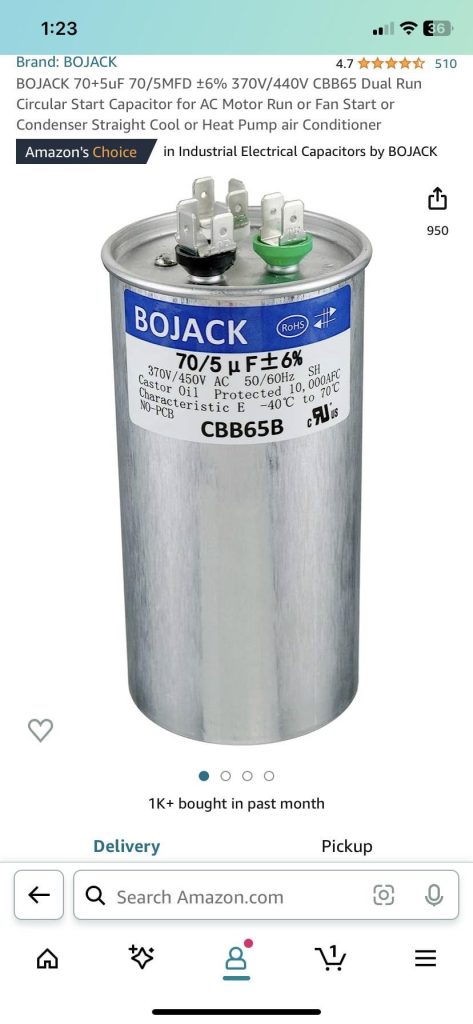
- Dual Capacitors– Combine start and run functions in one unit.
The capacitor’s role in AC performance is crucial. It supports the compressor and fan motor to work efficiently. Without a good capacitor, the AC may fail to start or run poorly. It also helps save energy by making the motor run with less power.

Credit: www.amazon.com
Common Myths About Universal Capacitors
Many think universal capacitorsfit all air conditioners. That is not true. Universalmeans they work with many models, not all. Each air conditioner has specific voltageand microfarad (µF)needs. Using the wrong capacitor can cause serious problems.
Capacitors store and release energy. If the capacitor is too weak or too strong, the motor may not start or may get damaged. This can lead to costly repairsor complete system failure.
Here are some risks of using incorrect capacitors:
- Shorter air conditioner lifespan
- Overheating of the motor
- Increased energy use and bills
- Possible fire hazards
- Voiding the air conditioner warranty
Key Factors For Capacitor Compatibility
Voltage ratingsmust match the original capacitor exactly. Using a different voltage rating can cause failure or damage.
Microfarad (µF) ratingsmeasure the capacitor’s capacity. The new capacitor should have the same µF value to ensure proper function.
Physical size and terminal typeaffect installation ease. The capacitor must fit the space and connect easily to wires.
| Factor | Why It Matters | What to Check |
|---|---|---|
| Voltage Ratings | Prevents damage and ensures safety | Match the voltage printed on the original |
| Microfarad (µF) Ratings | Ensures the AC runs efficiently | Use the exact µF value stated |
| Physical Size and Terminal Type | Fits properly and connects correctly | Check size and terminal shape |

Credit: www.amazon.com
How To Select The Right Capacitor
Always check the manufacturer specificationsbefore choosing a capacitor. These details give the exact capacitanceand voltage ratingneeded for your AC unit.
Read capacitor labels carefully. The label shows microfarads (µF), voltage, and sometimes the part number. Match these to your unit’s original capacitor for the best fit.
Consulting HVAC professionals can save time and prevent mistakes. They know which capacitor suits your air conditioner and can help avoid damage from wrong parts.
Installation Tips For Air Conditioner Capacitors
Always turn off powerbefore working on an air conditioner capacitor. Capacitors store electricity even when the unit is off. Use a voltage testerto ensure no power is present. Wear insulated glovesto protect yourself from shocks. Avoid touching capacitor terminals directly.
Carefully discharge the capacitorusing a resistor or screwdriver with an insulated handle. Replace the capacitor with one that matches the voltage and microfarad ratingsexactly. Installing a wrong capacitor can damage the unit.
- Check capacitor for visible damageor leaks before installation.
- Secure capacitor firmly in place to avoid vibrations.
- Reconnect wires to the correct terminals, matching original setup.
- Double-check all connections before restoring power.
Signs Of A Failing Capacitor
Common symptomsof a failing capacitor include the AC unit not starting or running properly. The fan might spin slowly or stop altogether. Strange noises like buzzing or humming can also occur. The AC may blow warm air instead of cool. Frequent tripping of the circuit breaker could be a sign too.
Diagnostic methodshelp confirm if the capacitor is the problem. A multimeter can test the capacitor’s electrical charge. Visual inspection might show bulging or leaking parts. Checking the AC’s startup behavior also gives clues. A professional can perform these tests safely and accurately.

Credit: www.reddit.com
Frequently Asked Questions
Are Air Conditioner Capacitors Interchangeable?
No, air conditioner capacitors are not universally interchangeable. They vary by voltage, microfarad rating, and size, so compatibility is crucial.
What Happens If I Use The Wrong Capacitor?
Using the wrong capacitor can cause motor failure, poor performance, or damage to your air conditioner’s compressor or fan motor.
How Do I Know Which Capacitor Fits My Ac?
Check your AC unit’s specifications or the capacitor label for voltage and microfarad ratings to find the correct replacement capacitor.
Can I Replace An Ac Capacitor Myself?
Yes, if you have electrical knowledge and safety tools. However, hiring a professional is safer and ensures proper installation.
Conclusion
Air conditioner capacitors are not universal. Each model requires specific types. Matching the right capacitor ensures optimal performance. Incorrect ones can damage your system. Always check the specifications before purchasing. Consult a professional if unsure. This prevents potential problems. Safety should always be a priority.
A little research goes a long way. Proper maintenance extends the lifespan of your unit. Stay informed and choose wisely. Your air conditioner’s efficiency depends on it. Keep your home cool and comfortable. Remember, the right capacitor matters. Stay cool, stay informed.