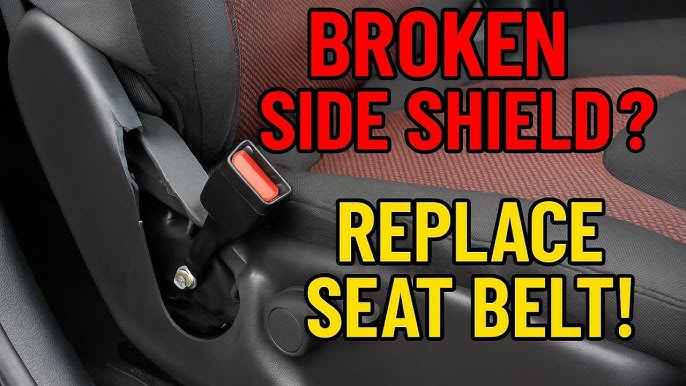
Your car seat belt is one of the most important safety features, but what do you do when it stops working properly? A seat belt that won’t retract, latch, or release can be frustrating—and dangerous.
Luckily, fixing your car seat belt is often easier than you think. You’ll discover simple, step-by-step solutions to get your seat belt working smoothly again. Keep reading, because your safety and peace of mind depend on it.

Credit: blog.myairbags.com
Common Seat Belt Issues
Seat belts keep you safe in your car. Sometimes they stop working well. You need to know how to fix common problems.
This guide covers stuck retractors, frayed belts, latch troubles, and warning lights. Follow these tips to keep your seat belt working.
Stuck Retractor
The retractor pulls the seat belt back in after you unbuckle. It can get stuck if dirt or debris blocks it. Sometimes the spring inside breaks.
Try these fixes to free the retractor:
- Pull the belt out fully and let it retract slowly.
- Clean the belt and retractor area with a soft cloth.
- Use compressed air to remove dust inside the retractor.
- If it still sticks, the retractor may need replacement.
Frayed Or Damaged Belt
A frayed or torn seat belt is unsafe. Damage can happen from sharp objects or wear over time. Never use a damaged belt.
| Damage Type | Cause | Action |
| Fraying | Rubbing on rough surfaces | Replace the belt |
| Tears | Sharp edges or accidents | Replace the belt |
| Fading | Sun exposure | Inspect regularly |
Latch Problems
The latch holds the belt in place. It can stop clicking or locking if dirty or broken. Check for dirt, and clean if needed.
If the latch does not lock, do not drive. You might need to replace the buckle or get help from a mechanic.
Warning Light Activation
Your car may show a seat belt warning light. This means the system detects a problem. It could be a bad sensor or a loose connection.
Here are simple checks you can do:
- Fasten the seat belt fully and see if the light goes off.
- Check for objects blocking the buckle sensor.
- Inspect wiring under the seat for damage.
- If the light stays on, visit a mechanic for diagnosis.

Credit: www.reddit.com
Tools Needed For Repairs
Fixing a car seat belt needs the right tools to work safely and well.
This guide lists the tools you need to repair or replace parts of your seat belt.
Basic Hand Tools
You will need simple hand tools to remove and install seat belt parts.
- Screwdrivers (flathead and Phillips)
- Socket wrench set
- Needle-nose pliers
- Trim removal tools
- Torque wrench
Cleaning Supplies
Cleaning the seat belt parts helps ensure smooth operation and safety.
| Cleaning Item | Purpose |
| Mild soap or detergent | Remove dirt and grime from fabric |
| Soft brush | Gently clean seat belt webbing |
| Microfiber cloth | Dry and polish parts |
| Lubricant spray | Ease retraction mechanism |
Replacement Parts
Use the right replacement parts to keep your seat belt safe and functional.
- Seat belt webbing (if torn or worn out)
- Buckles and latches
- Retractor mechanisms
- Mounting bolts and screws
- Plastic covers and trim pieces
Fixing A Stuck Retractor
A car seat belt retractor can get stuck and stop working properly. This problem can make it hard to pull or retract the belt.
Fixing a stuck retractor is usually simple and can be done at home with a few tools and steps.
Identifying The Cause
The retractor may stick due to dirt, dust, or small objects inside. It can also happen if the belt twists or folds inside the mechanism.
Sometimes, the retractor locks when the car stops suddenly or moves sharply. This is a safety feature to keep you safe.
- Dirt and debris blocking the mechanism
- Twisted or folded seat belt webbing
- Sudden stops activating the lock
- Worn or broken parts inside the retractor
Manual Release Techniques
Try pulling the seat belt slowly and smoothly to release the lock. Avoid quick or jerky movements that may keep it stuck.
If the belt is twisted, straighten it fully. Sometimes, pushing the retractor case gently helps free the stuck parts inside.
- Pull the belt gently and steadily
- Check and remove any twists or folds
- Push or tap the retractor case gently
- Use a small tool to press the release button if available
Lubrication Tips
Apply a small amount of silicone spray or dry lubricant to the retractor parts. Avoid oil-based lubricants because they attract dirt.
After applying lubricant, pull and retract the belt several times. This helps spread the lubricant evenly and frees the mechanism.
- Use silicone or dry lubricants only
- Do not use oil or grease products
- Apply lubricant sparingly on moving parts
- Work the belt back and forth to spread lubricant
Repairing Frayed Or Damaged Belts
Car seat belts keep you safe during accidents. Over time, belts can become frayed or damaged.
Fixing these issues quickly helps maintain your safety on the road. This guide shows how to inspect and repair belts.
Inspecting The Damage
Look closely at the seat belt fabric for any cuts, tears, or worn spots. Check both sides of the belt carefully.
Also, test the buckle and retractor to make sure they work properly. Damage to these parts affects safety too.
- Check for frayed threads along the belt
- Look for stains or burns on the fabric
- Test buckle latching and release
- Pull the belt to test the retractor function
Temporary Fixes
If the belt has small frays, you can trim loose threads with scissors. Do not cut into the main webbing.
Use strong fabric tape to cover minor damage and prevent it from worsening. Only use this as a short-term fix.
- Trim loose threads carefully
- Wrap fabric tape tightly over small frays
- Avoid using glue or weak adhesives
- Do not use temporary fixes for big tears
When To Replace The Belt
Replace the seat belt if it has deep cuts, heavy fraying, or burns. These weaken the belt’s strength.
Also replace if the buckle or retractor does not work properly. A faulty belt is unsafe in a crash.
- Large tears or holes in the fabric
- Fraying that exposes inner threads
- Burn marks or chemical stains
- Buckle that won’t latch or release
- Retractor that does not pull or lock
Solving Latch And Buckle Issues
Car seat belts keep you safe by locking in place during a crash. Sometimes, the latch or buckle can stop working well. Fixing these parts helps the seat belt work right again.
This guide shows easy ways to clean, adjust, and replace latch and buckle parts. Each step is simple and uses common tools.
Cleaning The Buckle
Dirt and dust can block the buckle from locking. Cleaning the buckle can fix this problem fast. Use a small brush and some rubbing alcohol to clear the inside.
- Push the buckle button to open it.
- Use a soft brush to remove dust inside the buckle slot.
- Dab a cotton swab in rubbing alcohol and clean the latch area.
- Let the buckle dry completely before testing it.
Adjusting The Latch Mechanism
If the latch does not click or lock firmly, it may need adjustment. Check the latch for loose screws or bent parts. Tighten screws or gently straighten bent metal.
| Issue | Adjustment Needed |
| Latch does not lock | Tighten screws, check alignment |
| Buckle button is hard to press | Lubricate moving parts lightly |
| Latch feels loose | Replace worn springs or parts |
Replacing Faulty Components
Sometimes cleaning and adjusting will not fix the latch or buckle. Then, replace the broken parts. Use parts made for your car model.
- Remove the old buckle or latch by unscrewing the mounting bolts.
- Compare the new part with the old one to confirm a match.
- Install the new part and tighten all screws securely.
- Test the seat belt latch and buckle to make sure they lock and release easily.
Resetting Seat Belt Warning Lights
Seat belt warning lights alert drivers when seat belts are not fastened properly. Sometimes, these lights stay on even after buckling up. Resetting the warning light can fix this issue.
This guide explains common triggers, simple reset methods, and when to ask for professional help.
Common Triggers
Several factors can cause the seat belt warning light to stay on. Knowing these helps you find the right fix.
- Seat belt not buckled fully or properly
- Faulty seat belt buckle sensor
- Dirty or damaged seat belt latch
- Issues with the seat occupancy sensor
- Electrical problems in the warning system
Diy Reset Methods
You can try simple steps at home to reset the seat belt warning light.
- Turn the car ignition on without starting the engine.
- Buckle and unbuckle the seat belt slowly three times.
- Fasten the seat belt firmly until it clicks.
- Turn off the ignition and wait for a few minutes.
- Turn the ignition back on to check if the light is off.
If this does not work, you can also disconnect the car battery for 10 minutes to reset the system. Remember to use caution and follow safety rules when handling the battery.
When To Seek Professional Help
If the warning light stays on after trying resets, you may need expert assistance. Professionals can diagnose and fix hidden problems.
| Problem | Possible Cause | Professional Action |
| Warning light stays on | Faulty sensor | Sensor replacement |
| Seat belt does not latch | Damaged latch mechanism | Latch repair or replace |
| Warning light flickers | Electrical issue | System diagnostics and repair |
| Seat occupancy sensor error | Malfunctioning sensor | Sensor calibration or replacement |
Safety Tips During Repairs
Fixing a car seat belt requires care and attention. Safety is the top priority during repairs.
Follow safety steps to avoid damage to the seat belt system and protect yourself.
Working Carefully With Safety Systems
Seat belts are part of the car’s safety system. Handle them carefully to keep their function intact.
- Disconnect the car battery before starting repairs.
- Avoid touching airbag components nearby.
- Use proper tools designed for seat belt repair.
- Follow the car manufacturer’s instructions closely.
- Wear gloves to protect your hands and keep parts clean.
Testing After Repair
Test the seat belt fully after fixing it to ensure it works well and locks properly.
| Test | What to Check |
| Pull Test | Seat belt locks firmly without slipping |
| Retract Test | Belt retracts smoothly without getting stuck |
| Latch Test | Buckles connect and release easily |
| Visual Check | No cuts, tears, or damage on the belt webbing |
Avoiding Common Mistakes
Avoid errors that can cause the seat belt to fail or reduce safety.
- Do not reuse old or damaged parts.
- Never bypass the seat belt locking mechanism.
- Do not force parts that do not fit easily.
- Avoid working without proper tools.
- Do not ignore warning lights related to seat belts or airbags.

Credit: www.youtube.com
When To Consult A Mechanic
Car seat belts keep you safe in a crash. Fixing small issues yourself is fine. Some problems need a mechanic’s help.
Knowing when to see a mechanic can save time and keep you safe on the road.
Complex Issues
Some seat belt problems are hard to fix. These include broken retractors, torn webbing, and faulty locking mechanisms.
- If the belt does not retract smoothly
- If the belt webbing is frayed or cut
- If the locking system fails to hold during a test
- If warning lights related to seat belts stay on
These problems need special tools and knowledge. A mechanic can fix them safely.
Warranty Considerations
Your car’s seat belt may be covered by warranty. Fixing it yourself might void this coverage.
| Warranty Status | Action |
|---|---|
| Active Warranty | Consult a mechanic or dealer |
| Expired Warranty | Consider professional repair if complex |
Check your warranty details before fixing seat belts. A mechanic can help keep your warranty valid.
Ensuring Proper Functionality
Seat belts must work perfectly to protect you. If unsure, let a mechanic check them.
- Test the belt for smooth retraction
- Ensure the belt locks when pulled sharply
- Check the buckle clicks and holds firmly
- Look for any damage or wear
A mechanic can perform safety tests and replace faulty parts. This ensures your seat belt works right every time.
Frequently Asked Questions
How Do I Fix A Stuck Car Seat Belt?
To fix a stuck seat belt, first check for twists or debris in the belt. Gently pull the belt out fully and let it retract slowly. If it remains stuck, clean the retractor with compressed air or consult a professional mechanic for repair.
Why Is My Car Seat Belt Not Retracting Properly?
A seat belt may not retract due to dirt, debris, or a damaged retractor spring. Clean the belt and retractor mechanism carefully. If cleaning doesn’t help, the retractor might need replacement to restore proper function and safety.
Can I Repair A Frayed Car Seat Belt Myself?
Minor frays can sometimes be fixed with strong adhesive tape temporarily. However, for safety, it is best to replace a frayed seat belt entirely. Seat belts are critical for protection and should not be repaired with makeshift methods.
What Causes Car Seat Belts To Stop Locking During Sudden Stops?
Seat belts lock when the retractor detects rapid movement. If it doesn’t lock, the locking mechanism may be faulty or dirty. Cleaning or replacing the retractor mechanism usually resolves this safety issue promptly.
Conclusion
Fixing a car seat belt is simpler than it seems. Start by checking for visible damage. Ensure the buckle clicks securely. Clean the belt with mild soap and water. Realign any twisted belts carefully. Replace the belt if necessary. Always prioritize safety over everything else.
Regular checks can prevent future issues. Follow these steps to keep your seat belt functioning well. Safe driving relies on effective seat belts. Keep your car seat belt in top condition. Stay safe on the road and enjoy peace of mind.