When the heat hits, nothing beats the relief of a cool, comfortable room. But how do you choose the right portable air conditioner for your space?
With so many options out there, it’s easy to feel overwhelmed. You want a unit that’s effective, easy to use, and fits your lifestyle without breaking the bank. In this guide, you’ll discover the key features to look for, helping you make a smart choice that keeps your home cool and your mind at ease.
Keep reading to find out exactly what matters most when picking your perfect portable air conditioner.

Credit: www.cnet.com
Key Features
Choosing the right portable air conditioner depends on several key features. These features affect how well the unit cools and how easy it is to use.
Understanding these features helps you pick a model that fits your needs and space.
Cooling Capacity
Cooling capacity shows how much space the air conditioner can cool. It is measured in BTUs (British Thermal Units).
Choose a unit with the right BTU for your room size to keep it comfortable.
- Small rooms: 8,000 to 10,000 BTUs
- Medium rooms: 10,000 to 14,000 BTUs
- Large rooms: 14,000 BTUs and above
Energy Efficiency
Energy efficiency means the air conditioner uses less electricity to cool your space. This saves money on bills.
Look for models with a high EER (Energy Efficiency Ratio) or ENERGY STAR label.
- Higher EER means better efficiency
- ENERGY STAR models use less power
- Efficient units reduce environmental impact
Noise Levels
Noise level shows how loud the air conditioner runs. It is measured in decibels (dB).
Choose a quieter unit if you plan to use it in bedrooms or offices.
- Below 50 dB is quiet
- 50–60 dB is moderate noise
- Above 60 dB can be distracting
Portability And Size
Portability means how easy it is to move the air conditioner around. Size affects where you can place it.
Look for units with wheels and handles for easy movement. Check dimensions to fit your space.
- Lightweight models are easier to move
- Compact size fits small rooms
- Wheels and handles add convenience
Credit: karinearappliances.com
Types Of Portable Air Conditioners
Portable air conditioners come in different types to fit various needs. Each type cools in a unique way. Knowing the types helps you pick the right one.
This guide explains the three main types of portable air conditioners. They are single hose units, dual hose units, and evaporative coolers.
Single Hose Units
Single hose units use one hose to send hot air outside. They pull air from the room to cool it. This air then leaves through the hose.
These units are easy to set up and usually cost less. They work well in small rooms but can lower air pressure inside. This may let warm air in from other areas.
- Uses one hose for hot air exhaust
- Simple and affordable
- Best for small spaces
- Can reduce room air pressure
Dual Hose Units
Dual hose units have two hoses: one pulls air from outside, and the other pushes hot air outside. This helps the unit work more efficiently.
They keep room air pressure steady and cool rooms faster. Dual hose units are good for larger rooms but often cost more and need more space for setup.
- Two hoses: one for intake, one for exhaust
- Better cooling efficiency
- Keeps room air pressure stable
- Works well in bigger rooms
Evaporative Coolers
Evaporative coolers use water to cool the air. They blow air through a wet pad to lower the temperature. This adds moisture to the air.
They use less energy and work best in dry climates. Evaporative coolers do not lower the air temperature as much as other types but can make rooms more comfortable.
- Uses water evaporation to cool air
- Energy efficient and eco-friendly
- Best in dry, low-humidity areas
- Adds moisture to the room
Installation And Venting
Portable air conditioners need proper installation for best cooling. Venting is key to remove hot air outside.
Good setup helps the unit work efficiently and keeps your room cool.
Window Kit Options
Window kits help vent hot air out through a window. Check if the kit fits your window type.
Some kits work for sliding windows, while others fit sash windows. Measure your window before buying.
- Adjustable panels fit many window sizes
- Seals prevent air leaks and bugs
- Easy-to-install kits save time
Exhaust Hose Placement
The exhaust hose removes hot air from the room. Place it near a window or vent opening.
A short, straight hose works best. Avoid bends and kinks to keep airflow smooth.
- Keep hose length as short as possible
- Secure hose to avoid disconnection
- Check hose for damage or leaks regularly
Ease Of Setup
Look for units with clear instructions and simple parts. A quick setup saves effort and frustration.
Some models come with all needed tools and accessories. Check if you need extra tools before starting.
- Pre-assembled parts reduce setup time
- Clear manuals help avoid mistakes
- Customer support can assist if needed

Credit: www.ecoflow.com
Control And Features
Portable air conditioners come with many controls and features. These help you cool your room easily and save energy.
Knowing what to look for in controls and features helps you pick the best unit for your needs.
Thermostat And Timer
A built-in thermostat lets you set the exact temperature you want. The air conditioner turns off when the room reaches that temperature.
Timers allow you to schedule when the unit turns on or off. This saves energy and keeps your room cool when you need it.
- Thermostat keeps room temperature steady
- Timer saves power by controlling run time
- Some units have 24-hour timers
Remote Control And Smart Features
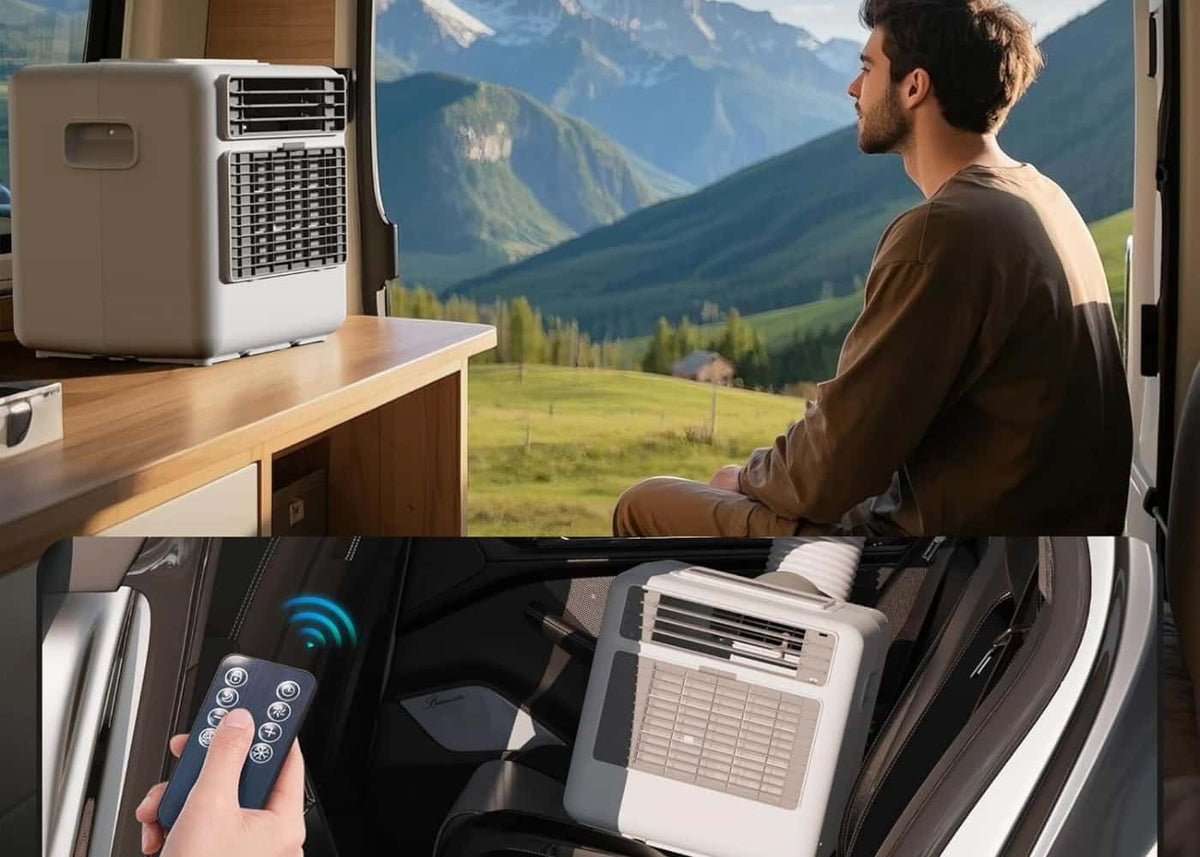
Remote controls let you adjust settings from across the room. This adds comfort and convenience.
Smart features let you control the unit with a smartphone app. Some models work with voice assistants for hands-free use.
- Remote control for easy temperature changes
- Smartphone apps for remote operation
- Voice control through smart home devices
Air Filters And Maintenance
Air filters remove dust and particles from the air. Clean filters improve air quality and unit performance.
Look for models with washable or easy-to-replace filters. Regular cleaning keeps the air conditioner working well.
- Filters trap dust and allergens
- Washable filters save money
- Replace filters as the manual suggests
- Clean filters improve cooling efficiency
Room Size And Cooling Needs
Choosing the right portable air conditioner depends on your room size. Cooling needs vary by space size and use.
A small room needs less power than a large room. Knowing your room size helps pick the right unit.
Calculating Btus
BTU means British Thermal Unit. It shows how much heat the air conditioner can remove.
To cool a room well, you need the right BTU size. Too low means weak cooling. Too high wastes energy.
- Measure your room’s length and width in feet.
- Multiply length by width to get square feet.
- Use about 20 BTUs per square foot as a guide.
- Add extra BTUs for sunny rooms or many people.
Matching Unit To Space
Pick a portable air conditioner that fits your room size and needs. Check the BTU rating on the unit.
Consider room features like ceiling height and windows. These affect cooling needs.
- Small rooms (up to 300 sq. ft.): 6,000–8,000 BTUs
- Medium rooms (300-500 sq. ft.): 8,000–12,000 BTUs
- Large rooms (over 500 sq. ft.): 12,000 BTUs or more
- Rooms with high ceilings or sun exposure may need higher BTUs
Budget And Price Considerations
Choosing a portable air conditioner means thinking about your budget. You want a unit that fits your price range but still cools well.
Costs come from buying the unit, running it, and getting support if needed. Each part matters for your total spending.
Initial Cost
The price of the air conditioner itself can vary a lot. Cheaper models may have fewer features. More expensive ones may cool bigger rooms better.
- Set a budget before shopping
- Compare prices from different brands
- Check for sales or discounts
- Think about what features you need
Operating Costs
Running the air conditioner uses electricity. The cost depends on the unit’s power and how long you use it.
| Type | Average Power Use (Watts) | Estimated Monthly Cost ($) |
| Low Power Model | 800 | 15 |
| Medium Power Model | 1200 | 22 |
| High Power Model | 1500 | 28 |
Warranty And Support
Good warranty and support save money if your unit breaks. Check how long the warranty lasts and what it covers.
- Look for at least one year warranty
- Check if parts and labor are included
- Find out if customer service is easy to reach
- Read reviews about the brand’s support
Brand Reputation And Reviews
Choosing a portable air conditioner is easier when you trust the brand. A good brand usually means better quality and support.
Reading reviews helps you learn from other buyers. They share real experiences about performance and problems.
Check Brand History And Experience
Brands with long experience in cooling products often make reliable air conditioners. They know what customers need.
Look for brands that focus on portable air conditioners. Specialized brands usually offer better features and support.
Read Customer Reviews
Customer reviews show real use cases and satisfaction levels. Pay attention to repeated issues or praise.
Look for reviews on multiple sites. This gives a balanced view and helps avoid fake reviews.
- Check cooling performance comments
- Note noise level feedback
- Watch for durability and maintenance tips
- See how well customer service responds
Consider Ratings From Trusted Sources
Trusted review sites test products and rate their quality. They compare brands fairly and show pros and cons.
Ratings help you quickly see which brands have good reliability and features. Choose brands with high scores.
- Look for energy efficiency ratings
- Check cooling capacity reviews
- Review ease of use scores
- Consider warranty and service ratings
Safety And Additional Tips
Portable air conditioners are useful for cooling rooms quickly. Knowing how to use and care for them safely keeps you and your home protected. Follow these tips to get the best experience.
Read all instructions before using the unit. Proper handling prevents accidents and damage. Below are important points on usage, maintenance, and storage.
Proper Usage
Always place the air conditioner on a flat, stable surface. Keep it away from water and heat sources. Use the correct power outlet and avoid overloading circuits.
- Do not block air vents or exhaust hose.
- Keep children and pets away from the unit.
- Unplug the device during storms or when not in use.
- Use the unit only indoors and in dry areas.
Maintenance Tips
Regular cleaning keeps your air conditioner running well. Dirty filters reduce cooling and waste electricity. Check and clean filters often.
| Maintenance Task | Frequency | Details |
| Clean air filter | Every 2 weeks | Remove and wash with mild soap and water |
| Check exhaust hose | Monthly | Ensure it is not bent or blocked |
| Wipe exterior | Monthly | Use a soft damp cloth; avoid harsh chemicals |
| Inspect power cord | Before each use | Look for cuts or damage |
Seasonal Storage
Store your air conditioner properly when not in use. This keeps it safe from dust and damage during off-seasons.
- Turn off and unplug the unit.
- Drain all water from the collection tray.
- Clean and dry the air filter completely.
- Wrap the power cord neatly to avoid damage.
- Cover the unit with a plastic sheet or bag.
- Store in a dry, cool place away from direct sunlight.
Frequently Asked Questions
What Size Portable Ac Do I Need For My Room?
Choose a portable AC based on your room size in square feet. Smaller rooms require 8,000 BTU units, while larger spaces need 12,000 BTU or more. Proper sizing ensures efficient cooling and energy savings.
How Noisy Are Portable Air Conditioners?
Noise levels vary by model but typically range from 50 to 60 decibels. Look for units with noise ratings below 55 decibels for quieter operation. Check user reviews for real-world noise experiences.
Do Portable Acs Require Venting?
Yes, most portable ACs need venting to expel hot air outside. They usually come with a window vent kit for easy installation. Proper venting improves cooling efficiency and prevents overheating.
Can Portable Air Conditioners Dehumidify A Room?
Yes, portable ACs also remove moisture from the air, acting as dehumidifiers. This feature helps reduce humidity and improves indoor comfort. Check the unit’s dehumidification capacity before buying.
Conclusion
Choosing the right portable air conditioner can enhance your comfort. Focus on size, energy efficiency, and noise levels. These factors directly affect performance. Consider the room size and cooling capacity. A large room needs a powerful unit. Energy efficiency saves money and the environment.
Quiet units offer peace. Look for easy installation and maintenance. Portable air conditioners should be user-friendly. Check for warranties and customer support. This ensures long-term satisfaction. Informed choices lead to better experiences. Remember these tips when purchasing. Enjoy a cool and comfortable space.