If you want to catch more bass, knowing how to rig your fishing line the right way is a game changer. The right setup makes your bait look natural and helps you hook those tricky bass faster.
You’ll learn simple, step-by-step tips to rig your fishing line like a pro. Whether you’re just starting out or want to sharpen your skills, mastering this will boost your confidence and your catch. Keep reading—your next big bass is waiting!
Choosing The Right Line
Choosing the right fishing line is important for catching bass. The line affects how you cast, feel bites, and fight fish.
Different lines work best in different situations. Knowing the types helps you pick the right one.
Monofilament Vs. Fluorocarbon Vs. Braided
Monofilament line is soft and stretches well. It is easy to handle and good for beginners. Fluorocarbon sinks faster and is nearly invisible underwater. Braided line has no stretch and is very strong for its size.
- Monofilament:Stretchy, affordable, good knot strength.
- Fluorocarbon:Invisible, sinks, abrasion resistant.
- Braided:Strong, thin, no stretch, good sensitivity.
Line Strength And Test Weight
Line strength is called test weight. It shows how much weight the line can hold before breaking. Bass fishing usually needs 6 to 20 pounds test line.
| Test Weight (lbs) | Best Use |
| 6-8 | Light cover, clear water |
| 10-12 | General bass fishing |
| 14-20 | Heavy cover, big bass |
Factors Affecting Line Selection
Many things affect which line to use. Water clarity, cover type, and fishing method matter. You want a line that matches the bass habitat and your gear.
- Clear water needs low visibility lines like fluorocarbon.
- Heavy cover needs strong, abrasion-resistant lines like braided.
- Topwater fishing works well with monofilament due to stretch.
- Sensitivity is key for feeling bites, favoring braided lines.

Credit: bassonline.com
Selecting Hooks And Weights
Choosing the right hooks and weights is key for fishing bass. Good gear improves your chances to catch more fish. It also helps your lure move naturally in the water.
This guide covers the types of hooks for bass, how to pick the right weight, and how to match hooks and weights to different conditions.
Types Of Hooks For Bass
Bass fishing uses several hook types. Each hook suits a certain bait and fishing style. Knowing these helps you rig your line better.
- Offset Worm Hooks:Good for soft plastic baits. The bend helps keep the bait straight.
- Extra Wide Gap Hooks:Best for bigger baits. Wide gap holds thick plastics well.
- Circle Hooks:Often used for live bait. They reduce deep hooking.
- Treble Hooks:Fit for crankbaits and topwater lures. They offer more hook points.
Choosing The Right Weight
Weights control how deep your bait goes and how it moves. The right weight depends on water depth and current strength.
| Weight Type | Use | Example |
| Split Shot | Light cover, slow sink | 1/16 to 1/8 oz |
| Bullet Weight | Flipping, pitching heavy cover | 1/4 to 3/4 oz |
| Egg Sinkers | Slip sinker rig for deep water | 1/2 to 1 oz |
| Drop Shot Weights | Vertical fishing, finesse style | 1/8 to 1/4 oz |
Matching Hooks And Weights To Conditions
Match your hook and weight to the fishing spot. Use lighter hooks and weights in shallow, clear water. Use stronger gear in thick cover or deep water.
- In thick weeds, use wide gap hooks with heavier bullet weights.
- For clear water, small hooks and light split shots work best.
- In fast current, heavier weights keep your bait in place.
- Use circle hooks with live bait and match weight to water depth.
Popular Rigging Techniques
Rigging a fishing line properly is important for catching bass. Different rigs work well in different places and times.
Here are some popular rig setups that bass anglers use often. Each rig has a simple way to set it up.
Texas Rig Setup
The Texas rig is great for fishing in weeds and cover. It helps avoid snags while fishing.
Use a bullet-shaped weight and a worm hook. Thread the soft plastic bait onto the hook so it is weedless.
- Slide the bullet weight onto the line first
- Attach the hook to the line with a knot
- Thread the worm onto the hook, hiding the point
- Cast near weeds or rocks for bass
Carolina Rig Setup
The Carolina rig is good for fishing deep water. It lets the bait move freely behind the weight.
This rig uses a heavier weight, a swivel, a leader line, and a hook with soft bait.
- Slide the weight on the main line
- Add a bead to protect the knot
- Tie a swivel after the bead
- Attach a leader line to the swivel
- Tie the hook on the leader
- Put soft plastic on the hook
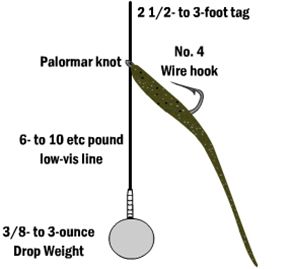
Drop Shot Rig Setup
The drop shot rig is good for suspending bait above the bottom. It works well for clear water.
Use a special hook tied above the weight on the line. Soft plastic bait is hooked nose up.
- Tie a hook with a Palomar knot
- Leave a long tag end of line below the hook
- Attach a weight at the tag end
- Hook the soft plastic through the nose
- Keep the bait suspended off the bottom
Wacky Rig Setup
The wacky rig works well for slow fishing. It creates a unique action to attract bass.
Hook the soft plastic bait through the middle so both ends wiggle freely in the water.
- Use a light hook, usually an offset worm hook
- Hook the bait through the center
- Let both ends of the bait move naturally
- Fish it slowly around cover or open water
Step-by-step Rigging Process
Rigging a fishing line for bass requires care and precision. Each step ensures your rig is strong and effective.
Follow these steps to prepare your line properly and increase your chances of a successful catch.
Attaching The Hook
Choose a hook size that fits the type of bass you want to catch. Tie the hook securely to the end of your fishing line.
Use a simple knot like the improved clinch knot to fasten the hook. Make sure the hook is tight and does not move freely.
Adding Weights
Weights help your bait sink to the right depth where bass feed. Slide a small sinker or split shot onto your line above the hook.
- Pick a weight size based on water depth and current strength
- Place the weight about 6 to 12 inches above the hook
- Use a clip or pinch the weight on so it stays in place
Tying Knots For Strength
Strong knots prevent line breaks and lost fish. The Palomar knot is a good choice for strength and ease.
| Knot Type | Use | Strength |
|---|---|---|
| Improved Clinch | Hook attachment | Strong |
| Palomar | Hooks and swivels | Very strong |
| Uni Knot | Line to line | Strong and versatile |
Always moisten your knots before tightening. This reduces friction and keeps your line safe.
Testing The Rig
Before casting, gently pull on the hook and weights. Check that everything holds tight without slipping.
- Pull on the hook to test knot strength
- Check that weights do not slide down
- Adjust or retie if any parts feel loose
- Make a short cast to feel the rig’s balance
Tips For Rigging In Different Environments
Rigging a fishing line correctly helps catch more bass. Different environments need different rig setups.
Knowing how to rig in clear water, weedy areas, or different depths improves your fishing success.
Clear Water Rigging
In clear water, bass see your line and bait well. Use light line to avoid spooking fish.
Choose natural colors and small lures to look more realistic in clear water.
- Use fluorocarbon line for less visibility
- Pick smaller hooks and natural bait colors
- Keep your rig light and simple
Weedy Or Rocky Areas
Bass hide in weeds and rocks. Use heavy line and strong hooks to avoid break-offs.
Choose weedless rigs or rigs with weed guards to prevent snagging.
- Use braided or heavy monofilament line
- Try Texas or Carolina rigs with weed guards
- Use hooks designed to avoid weeds
Fishing In Shallow Vs. Deep Water
Shallow water needs lighter rigs that move naturally. Deep water rigs need more weight for depth.
Adjust your bait size and rig weight to match the water depth and bass behavior.
- Shallow: use light weights and small baits
- Deep: add heavier weights to reach bottom
- Change rig speed based on water depth
Common Mistakes To Avoid
Rigging a fishing line for bass can be simple if you avoid common mistakes. Small errors can cause lost fish or broken lines.
Focus on the right techniques and gear to improve your chances of catching bass. Here are key mistakes to watch out for.
Incorrect Knot Tying
Tying the wrong knot or tying it poorly can cause your line to slip or break. Use knots that are strong and easy to tie.
- Do not leave loose ends; trim excess line close to the knot.
- Avoid knots that are too complex; practice simple knots like the Palomar or improved clinch knot.
- Check knots regularly for wear or damage before fishing.
- Wet the line before tightening the knot to reduce friction and line damage.
Using The Wrong Line Strength
Choosing line strength that does not match bass size or fishing conditions leads to lost fish or broken gear.
| Line Strength (lb) | Recommended Use |
| 4-6 | Small bass, clear water, light cover |
| 8-12 | Average bass size, medium cover |
| 14-20 | Large bass, heavy cover, rough conditions |
Ignoring Bass Behavior
Not paying attention to bass habits can hurt your success. Bass change their feeding and hiding spots by season and weather.
Here are tips to match your rig to bass behavior:
- Fish deeper in hot weather when bass move to cooler water.
- Use slower movements in cold water as bass are less active.
- Change bait color and size based on water clarity and bass feeding patterns.
- Observe local bass activity before choosing your setup.
Maintenance And Line Care
Taking care of your fishing line helps you catch more bass. Good maintenance keeps the line strong and ready.
Follow simple steps to check, replace, and store your line properly. This will make your fishing trips better.
Inspecting Your Line Regularly
Look over your fishing line before and after each trip. Check for cracks, frays, or weak spots on the line.
Damaged parts can cause the line to break when you catch a bass. Replace or fix any damage quickly.
- Run your fingers along the line to feel for rough areas
- Look for discoloration or worn sections
- Check knots for tightness and wear
Replacing Old Or Damaged Line
Old line loses strength and can snap easily. Change your line if it looks worn or has been used a long time.
Use the right type and weight of line for bass fishing. This keeps your gear balanced and effective.
- Remove old line completely from your reel
- Choose line suitable for bass fishing, like monofilament or braided
- Spool the new line evenly and tightly on the reel
Proper Storage Tips
Store your fishing line in a cool, dry place away from sunlight. Heat and light can weaken the line over time.
Keep the line on the reel or in a sealed container to avoid dirt and damage. This keeps it ready for your next trip.
- Avoid storing line near chemicals or sharp objects
- Keep reels covered or in a tackle box
- Check line condition before each use after storage

Credit: fishingbooker.com

Credit: mysterytacklebox.com
Frequently Asked Questions
How Do I Choose The Right Fishing Line For Bass?
Select a fishing line with 8-12 lb test strength for bass. Monofilament lines offer good stretch and sensitivity. Fluorocarbon lines provide invisibility underwater, and braided lines offer high strength and durability.
What Knot Is Best For Rigging Bass Fishing Line?
The Palomar knot is best for rigging bass fishing line. It is strong, easy to tie, and works well with braided and monofilament lines. This knot ensures your lure stays securely attached during a bass fight.
How Do I Rig A Texas Rig For Bass Fishing?
To rig a Texas rig, thread a bullet weight onto your line. Tie on a worm hook, then insert the hook into the soft plastic bait. Ensure the bait is weedless for bass fishing in heavy cover.
When Should I Use A Fluorocarbon Line For Bass?
Use fluorocarbon line in clear water or when bass are line-shy. Its low visibility underwater helps avoid spooking bass. Fluorocarbon also resists abrasion from rocks and cover, making it ideal for bass fishing.
Conclusion
Rigging a fishing line for bass is simple with practice. Start with quality gear and follow basic steps. Adjust techniques based on conditions and bass behavior. Experiment with different lures to find what works. Keep your gear organized for easy access on the water.
Stay patient, as bass fishing requires time and focus. Enjoy the process and learn from each outing. With these tips, your bass fishing experience can be more rewarding. Happy fishing!