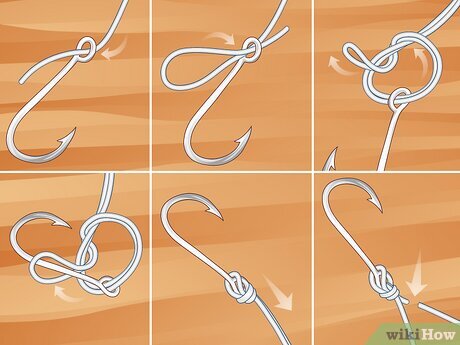
Are you ready to reel in your next big catch, but unsure about how to tie a hook on your fishing line? You’re not alone.
Many anglers, whether beginners or seasoned pros, sometimes struggle with this essential skill. But don’t worry! Mastering this simple yet crucial technique can greatly enhance your fishing experience, making your time on the water more enjoyable and successful. By the end of this guide, you’ll feel more confident in your abilities, knowing you’ve taken a key step towards improving your fishing skills.
Keep reading to discover the secrets of tying a hook securely and effectively, ensuring that your prized catch doesn’t slip away.

Credit: www.ohero.com
Choosing The Right Knot
Tying the right knot is key to fishing success. The knot keeps your hook secure and your catch safe.
Different knots work better for certain fishing lines and hooks. Knowing which knot to use helps you fish better.
Popular Knots For Hooks
Some knots are popular because they hold well and are easy to tie. Here are common knots used for hooks.
- Improved Clinch Knot: Strong and simple for most hooks.
- Palomar Knot: Keeps line strength and works well with braided line.
- Uni Knot: Versatile for many types of fishing lines.
- Snell Knot: Ideal for bait fishing with a straight hook pull.
Factors Influencing Knot Choice
| Factor | Impact on Knot Choice |
|---|---|
| Type of Fishing Line | Different lines require knots that hold without slipping. |
| Hook Size | Smaller hooks need finer knots; larger hooks need stronger knots. |
| Fishing Conditions | Rough water or heavy cover may need more secure knots. |
| Ease of Tying | Some knots are faster and easier to tie on the water. |
Preparing The Fishing Line
Before tying a hook, you must prepare your fishing line properly. Good preparation makes your knot strong and reliable.
Preparing the line includes choosing the right type and thickness. You also need to trim and moisten the line correctly.
Selecting Line Type And Thickness
Choose the fishing line type based on your fishing style and target fish. Common types include monofilament, fluorocarbon, and braided lines.
Pick the right thickness or test strength. Thicker lines hold more weight but may be less flexible. Thinner lines are less visible to fish.
- Monofilament: good for beginners, stretches well
- Fluorocarbon: less visible underwater, sinks faster
- Braided: very strong and thin, no stretch
- Choose line strength based on fish size and fishing conditions
Trimming And Moistening The Line
Cut the line cleanly before tying the hook. Use sharp scissors or clippers to avoid frayed ends.
Moisten the line with water or saliva before tightening the knot. This reduces friction and prevents the line from weakening or breaking.
- Trim about 6 inches of line for easier handling
- Wet the line to protect it during knot tightening
- Avoid dry knots to keep strength and durability
Step-by-step Knot Tying
Tying the right knot is key to secure your hook on the fishing line. Each knot has its own way to hold strong under pressure.
Learn these three common knots to improve your fishing setup and reduce line slips.
Improved Clinch Knot
The Improved Clinch Knot is popular for attaching hooks to the line. It is strong and easy to tie.
- Thread the line through the hook eye.
- Wrap the tag end around the standing line 5 to 7 times.
- Pass the tag end through the small loop near the eye.
- Then pass it through the big loop you just made.
- Moisten the knot and pull tight slowly.
- Trim the excess tag end close to the knot.
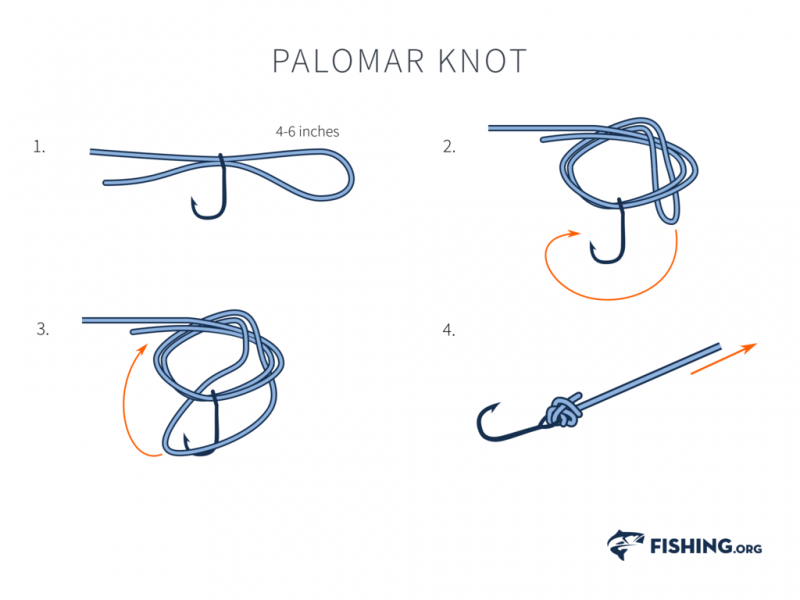
Palomar Knot
The Palomar Knot is very strong and works well with braided lines. It keeps the hook aligned with the line.
- Double about 6 inches of line and pass it through the hook eye.
- Tie a simple overhand knot with the doubled line, but do not tighten it.
- Pass the hook through the loop of the overhand knot.
- Moisten the knot with water or saliva.
- Pull both ends of the line to tighten the knot.
- Trim the loose ends of the line.
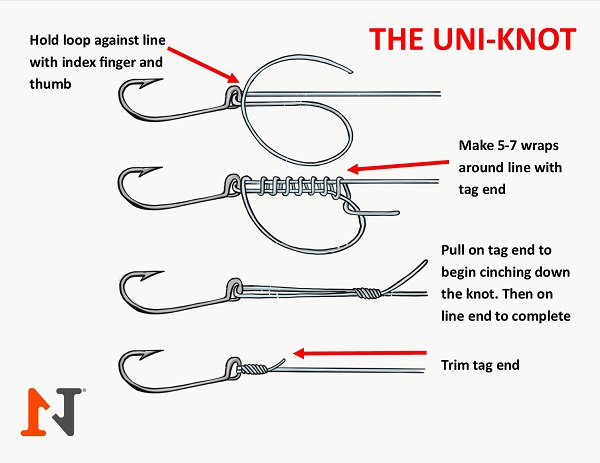
Uni Knot
The Uni Knot is versatile and easy to adjust. It works on many types of lines and hooks.
| Action | How to Do It |
|---|---|
| Thread Line | Pass the line through the hook eye and double back parallel. |
| Create Loop | Make a loop by laying the tag end over the doubled line. |
| Wrap Line | Wrap the tag end around the doubled line 5 times. |
| Pull Tight | Moisten and pull the tag end to tighten the coils around the doubled line. |
| Secure Knot | Slide the knot down to the hook eye and pull the standing line to secure. |
| Trim Excess | Cut off the tag end close to the knot. |
Credit: n1outdoors.com
Tips For Stronger Knots
Tying a strong knot is key for successful fishing. A good knot keeps the hook secure and prevents lost fish.
This guide covers common mistakes to avoid and how to test your knot strength. Follow these tips for better results.
Avoiding Common Mistakes
Many anglers lose fish because of weak knots. Avoid these simple errors to make your knots stronger.
- Don’t leave tag ends too short; leave about 1/4 inch for security.
- Wet the line before tightening to reduce friction and prevent damage.
- Avoid over-tightening, which can weaken the line fibers.
- Use the right knot for your line type and hook size.
- Practice tying knots slowly and carefully to avoid twists and tangles.
Testing Knot Strength
Testing your knot before fishing saves time and frustration. Here are ways to check knot strength.
| Test Method | Description | What to Look For |
| Pull Test | Hold the line and pull hard on the hook end. | Knot should hold without slipping or breaking. |
| Visual Check | Inspect knot for tight wraps and no loose loops. | Knot looks neat and compact. |
| Water Test | Wet the knot and pull again to simulate fishing conditions. | No slippage or loosening after wetting. |
Maintaining Knots On The Water
Tying a hook on a fishing line is only the start. Keeping the knot strong while fishing is very important. A loose knot can cause lost fish and wasted time.
Good knot care helps you catch more fish. It also makes your fishing experience smoother and less frustrating.
When To Retie
Retie the hook if the knot feels weak or looks damaged. Check it after a big catch or if the line gets tangled.
Retie also if you change the hook or if the knot has been wet and dried many times. Old knots can lose strength.
- After catching a large fish
- If the knot slips or loosens
- When changing hooks or rigs
- If the line is frayed near the knot
- After long exposure to water and sun
Knot Care During Fishing
Check your knot often while fishing. Pull it gently to make sure it stays tight. Avoid sharp bends in the line near the knot.
Keep the knot clean and free of dirt or sand. Rinse it with fresh water if you fish in saltwater. This prevents damage and keeps the knot strong.
- Inspect knots regularly during fishing
- Pull gently to test tightness
- Avoid sharp bends or twists at the knot
- Keep knots clean from dirt and sand
- Rinse with fresh water after saltwater fishing
Credit: medium.com
Frequently Asked Questions
How Do You Tie A Hook To A Fishing Line?
To tie a hook, thread the line through the eye, wrap it around 5-7 times, then pass the tag end through the loop. Pull tightly to secure the knot. This method ensures a strong, reliable connection for fishing.
What Is The Best Knot For Fishing Hooks?
The improved clinch knot is the best for fishing hooks. It offers strength and simplicity, making it ideal for various fishing lines and hooks. This knot reduces slippage and maintains line integrity during the catch.
How Tight Should A Fishing Hook Knot Be?
A fishing hook knot should be tight enough to prevent slipping but not so tight that it weakens the line. Pull firmly on both ends to secure the knot, ensuring it holds under pressure without damaging the line.
Can I Tie A Fishing Hook Without Tools?
Yes, you can tie a fishing hook without tools. Using your hands, follow the knot steps carefully. Practice improves speed and knot strength, making tools unnecessary for most fishing situations.
Conclusion
Tying a hook on a fishing line is simple and useful. Practice a few times to get it right and strong. A good knot keeps your hook secure and fish caught. Use clear steps and check your work every time.
With patience, you will feel more confident fishing. Try different knots to find the best one for you. Keep your gear ready and enjoy your fishing trips. Small skills like this make fishing more fun and successful.