Have you ever felt sick or noticed allergy symptoms when your air conditioner is running? It might not be a coincidence.
Mold can grow inside your air conditioner without you even realizing it. But can mold in your AC actually make you sick? Understanding the hidden dangers in your cooling system is important for your health and comfort. Keep reading to find out how mold affects you, what symptoms to watch for, and what you can do to keep your air clean and safe.
Credit: www.puroclean.com
How Mold Grows In Air Conditioners
Mold can develop inside air conditioners if conditions are right. Moisture and dust help mold grow on AC parts. This can affect air quality and cause health problems.
Understanding how mold grows helps you keep your AC clean. It also helps you protect your home from mold-related sickness.
Common Mold Types In Ac Units
Several mold types often appear inside air conditioners. These molds thrive in damp, dark places within the unit.
- Cladosporium:A common indoor mold that grows on wet surfaces.
- Aspergillus:Found in dust and can cause allergic reactions.
- Penicillium:Known for a musty smell and grows on damp materials.
- Alternaria:Often grows on wet insulation and filters.
Conditions That Promote Mold Growth
Mold needs specific conditions to grow inside air conditioners. These include moisture, warmth, and organic material.
| Condition | Why It Helps Mold Grow |
| Moisture | Water from condensation keeps surfaces wet |
| Warm Temperature | Ideal range for mold growth is 77°F to 86°F |
| Dust and Dirt | Provides food for mold spores |
| Poor Ventilation | Traps moisture and spores inside the unit |

Credit: www.reddit.com
Health Risks Linked To Ac Mold
Mold can grow inside air conditioners if not cleaned regularly. This mold releases spores into the air.
Breathing in these spores can cause many health problems. It is important to know the risks.
Respiratory Problems And Allergies
Mold spores can irritate your lungs and airways. People with asthma or allergies may get worse symptoms.
Common signs include coughing, wheezing, and sneezing. Mold can also cause runny noses and itchy eyes.
- Worsened asthma attacks
- Increased allergy symptoms
- Shortness of breath or chest tightness
Infections And Toxic Reactions
Some molds release toxins that harm the body. These toxins can cause serious illness in sensitive people.
People with weak immune systems may get infections from mold exposure. Toxic reactions include headaches and fatigue.
- Fungal infections in lungs or skin
- Headaches and dizziness
- Fatigue and nausea
Symptoms Of Mold Exposure From Ac
Mold can grow inside air conditioners if they are not cleaned well. Breathing in mold spores from the AC can cause health problems. It is important to know the signs of mold exposure.
These symptoms can appear soon after exposure or develop over time. Knowing the difference helps you protect your health.
Short-term Signs
Short-term symptoms happen soon after breathing mold spores. These signs often affect the nose, throat, and skin. People may feel uncomfortable but usually recover quickly if they avoid mold.
- Runny or stuffy nose
- Coughing or sneezing
- Itchy, watery eyes
- Sore throat
- Skin rash or irritation
- Headaches or dizziness
- Wheezing or shortness of breath
Long-term Health Effects
Long-term exposure to mold from an air conditioner can cause serious health problems. These effects may last for months or years. People with asthma or weak immune systems are at higher risk.
- Chronic coughing or wheezing
- Persistent sinus infections
- Asthma attacks or worsening asthma
- Fatigue and weakness
- Allergic reactions that do not go away
- Damage to lung tissue
Detecting Mold In Your Air Conditioner
Mold can grow in your air conditioner if it stays damp. It may cause health problems. Detecting mold early helps keep your home safe.
This guide shows how to find mold using visual checks and professional tests. Both ways help you know if your AC has mold.
Visual Inspection Tips
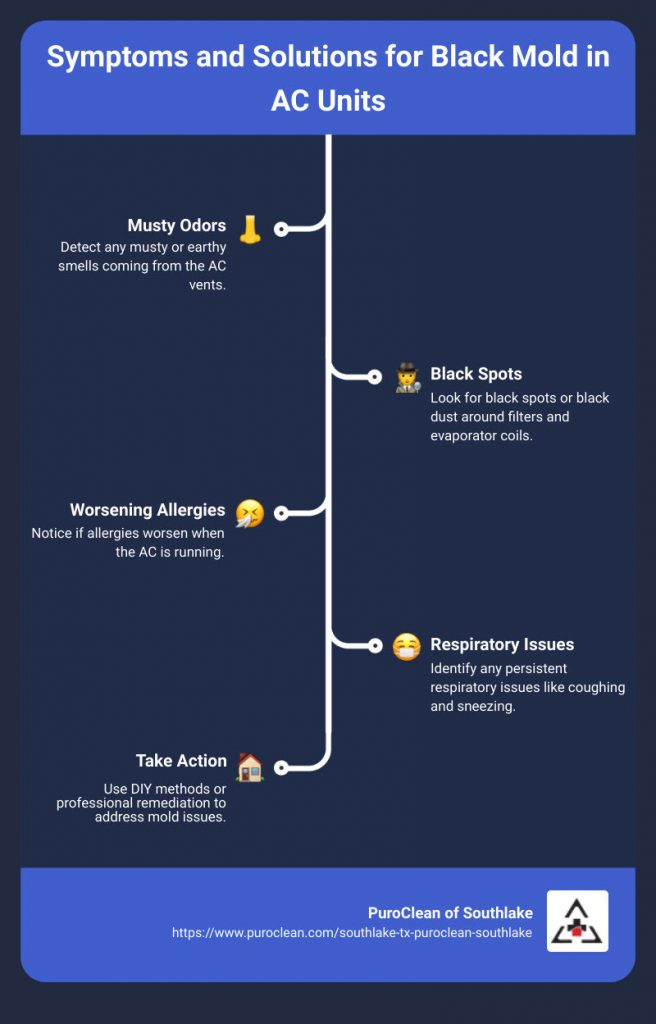
Look carefully at your air conditioner parts for signs of mold. Mold often appears as dark spots or fuzzy patches.
- Check the air vents for black or green spots.
- Inspect the drip pan and drain lines for standing water or slime.
- Look inside the unit for any damp or wet areas.
- Smell the air coming from the AC; a musty odor may mean mold.
- Examine the filters for dirt buildup or discoloration.
Professional Testing Methods
Experts use tests to find hidden mold in your air conditioner. These tests are more accurate than visual checks.
| Test Type | Description | Purpose |
| Air Sampling | Collects air samples inside and outside the AC unit. | Detects mold spores in the air. |
| Surface Sampling | Swabs surfaces inside the AC for mold presence. | Identifies mold on parts and filters. |
| Bulk Sampling | Removes pieces of material to check for mold. | Finds mold inside insulation or ductwork. |
| Moisture Meter | Measures dampness levels in AC components. | Locates areas where mold can grow. |
Preventing Mold Growth In Ac Units
Mold in air conditioners can cause health problems. It grows when moisture stays inside the unit.
Stopping mold growth keeps the air clean and protects your health.
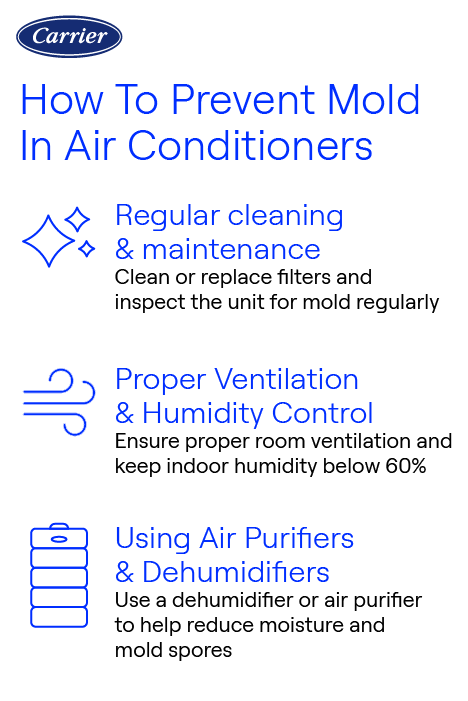
Regular Cleaning Practices
Clean your AC unit often to stop mold from growing. Dirt and dust help mold spread.
Check filters, coils, and drain pans every month. Replace or clean dirty parts quickly.
- Change air filters every 1-3 months
- Vacuum and wipe dust from vents and coils
- Clear drain pans and pipes of water buildup
- Use mild soap and water to clean parts
Humidity Control Strategies
Keep indoor humidity between 30% and 50%. High humidity helps mold grow fast.
Use a dehumidifier or air conditioner to lower moisture. Fix leaks and improve ventilation.
- Use a hygrometer to check humidity levels
- Run the AC regularly to reduce moisture
- Fix water leaks near the AC unit
- Open windows to improve air flow

Credit: www.puroclean.com
When To Seek Medical Help
Mold in your air conditioner can cause health problems. Some people get mild symptoms. Others may have serious reactions that need medical care.
Knowing when to see a doctor is important. This helps you get the right treatment quickly.
Identifying Serious Reactions
Serious reactions to mold exposure affect breathing and overall health. Watch for these signs:
- Difficulty breathing or shortness of breath
- Chest tightness or pain
- Severe coughing that won’t stop
- High fever or chills
- Worsening asthma or allergy symptoms
- Swelling or redness around the eyes or skin
- Fatigue or weakness that lasts a long time
If you notice these symptoms, seek medical help right away. Early care can prevent more serious problems.
Treatment Options For Mold Exposure
Doctors use different treatments based on how bad the symptoms are. Mild symptoms may need simple care. More serious cases need stronger treatment.
- Allergy medicines to reduce sneezing and itching
- Inhalers or breathing treatments for asthma
- Antibiotics if a mold infection occurs
- Oxygen therapy for breathing problems
- Removing mold exposure from your environment
Always follow your doctor’s advice. If symptoms return, get medical help again.
Frequently Asked Questions
Can Mold In Air Conditioners Cause Health Problems?
Yes, mold in air conditioners can cause health issues. It releases spores that may trigger allergies, asthma, and respiratory infections in sensitive individuals.
How Does Mold Grow Inside Air Conditioners?
Mold grows in air conditioners due to moisture buildup. Warm, damp environments from condensation provide ideal conditions for mold growth.
What Are The Symptoms Of Mold Exposure From Ac Units?
Symptoms include sneezing, coughing, watery eyes, skin rashes, and difficulty breathing. Prolonged exposure may worsen asthma and cause infections.
How Can I Prevent Mold Growth In My Air Conditioner?
Regularly clean and maintain your AC unit. Use a dehumidifier, change filters often, and ensure proper drainage to reduce moisture.
Conclusion
Mold in air conditioners can harm your health. Breathing problems and allergies might occur. It’s important to clean your unit regularly. This keeps mold from growing. A professional check-up helps ensure safety. Remember, a clean air conditioner means healthier air.
Take mold seriously. It’s not just about comfort. It’s about health too. Stay proactive with maintenance. Your health depends on it. Keep your air fresh and clean. Always prioritize a healthy living space.