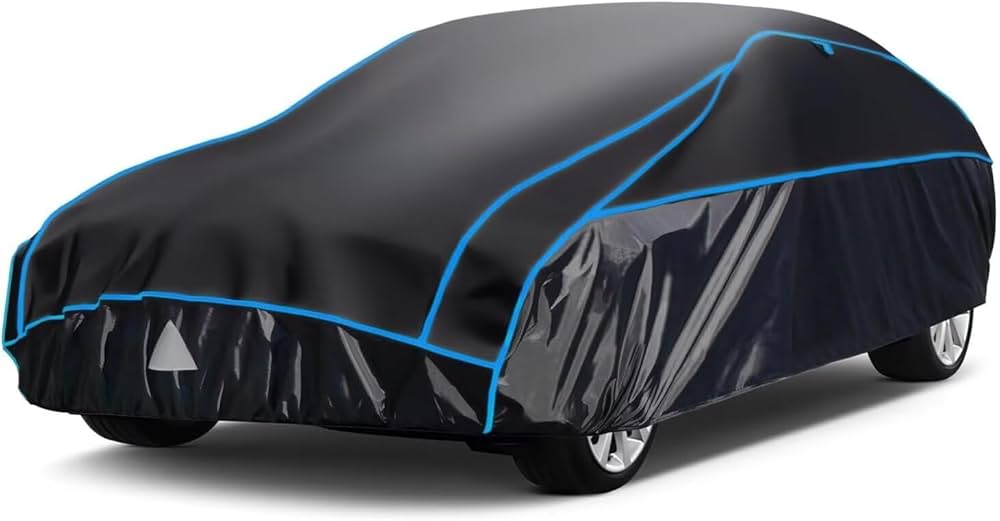
Have you ever worried about your car getting damaged during a hailstorm? You’re not alone.
Hail can leave dents, cracks, and costly repairs in its wake. But can car covers really protect your vehicle from hail damage? If you’ve been searching for a simple and effective way to shield your car, this question matters to you.
You’ll discover how car covers work against hail, what types offer the best protection, and whether investing in one is worth it. Keep reading to find out how to keep your car safe when those icy storms roll in.

Credit: www.amazon.com
How Hail Damages Cars
Hail can cause serious damage to cars during a storm. The size and speed of hailstones affect the damage level. Small hail may only leave minor marks. Large hail can dent and crack car surfaces.
Understanding how hail harms cars helps in choosing the right protection. Car covers can reduce damage by absorbing hail impact.
Types Of Hail Damage
Hail can cause many types of damage to cars. Common types include dents, paint chips, and broken glass. Each type affects the car’s look and value differently.
- Dents:These are the most common damage. Hailstones push the metal inward, creating small or large dents.
- Paint chips:When hail hits hard, it can chip or scratch the paint. This can lead to rust if not fixed.
- Broken glass:Large hail can crack or shatter windows and windshields.
- Side mirror damage:Hail can break or loosen side mirrors.
Common Vulnerable Areas
Some car parts are more likely to get hit by hail. These areas often show the most damage after a storm.
| Car Area | Type of Damage | Reason for Vulnerability |
|---|---|---|
| Roof | Dents, paint chips | Flat surface faces hail directly |
| Hood | Dents, paint chips | Wide surface exposed to falling hail |
| Trunk | Dents, paint chips | Flat and often unprotected area |
| Windows and Windshield | Cracks, shattering | Glass is fragile and less impact-resistant |
| Side Mirrors | Breakage, dents | Protrudes from car body and is exposed |
Materials Used In Car Covers
Car covers protect vehicles from many elements. The material used affects how well they protect against hail.
Different materials offer varying levels of softness, hardness, and weather resistance. These qualities matter for hail protection.
Soft Vs. Hard Covers
Soft covers are made of fabric or foam. They cushion the car’s surface and absorb some impact from hail.
Hard covers use rigid materials like plastic or metal. They block hail by providing a strong shield over the car.
- Soft covers are lighter and easier to store
- Hard covers offer stronger impact protection
- Soft covers can scratch the paint if dirty
- Hard covers may be heavier and less flexible
Weather-resistant Fabrics
Weather-resistant fabrics keep water, dust, and sun away from the car. These fabrics also help during hailstorms.
Materials like polyester and polypropylene are common. They resist tears and hold up well in bad weather.
- Polyester: strong, water-resistant, and lightweight
- Polypropylene: breathable and durable
- Foam layers: added for extra impact protection
- Multi-layer fabrics: combine materials for better defense
Effectiveness Of Car Covers Against Hail
Car covers can help protect vehicles from hail damage. They act as a shield between the hail and the car’s surface. Their effectiveness depends on the cover’s material and thickness.
Not all car covers offer the same level of protection. Some are specially designed to absorb impacts, while others are thin and mainly prevent scratches and dirt.
Impact Absorption
Thick car covers made with padded or multi-layered material absorb the force of hail better. They reduce dents and cracks on the car’s body. Soft inner layers prevent scratches.
Some covers have foam or air pockets that cushion hailstones. This padding spreads the impact over a larger area. It lowers the chance of damage to the paint and glass.
- Multi-layer covers absorb more impact
- Foam padding cushions hailstones
- Soft inner fabrics protect paint from scratches
- Heavier covers provide better protection
Limitations And Risks
Car covers cannot prevent all hail damage. Very large or fast hailstones can still cause dents. Thin covers offer little to no impact protection.
Incorrect use of covers can also cause problems. If a cover is loose, hail can hit the car directly. Covers may scratch the paint if they move in strong wind.
- Large hailstones can break through covers
- Thin covers do not absorb impact well
- Loose covers may cause scratches from movement
- Covers do not protect glass as well as metal parts
Choosing The Right Car Cover
Car covers protect your vehicle from damage caused by hail. Picking the right cover is important for good protection. You need to consider the size, fit, and material strength.
A cover that fits well and is thick can absorb hail impact better. This guide will help you choose a suitable car cover for hail protection.
Size And Fit
A car cover should fit your vehicle snugly. A loose cover may blow away or let hail hit your car. A tight cover stays in place and covers all parts.
- Measure your car’s length, width, and height.
- Choose a cover made for your car model or size.
- Look for covers with elastic hems or straps to secure them.
- A well-fitted cover protects mirrors, windows, and roof better.
Durability And Thickness
Durable materials and thick padding help absorb hail hits. Thin covers may tear or let hail damage your car’s paint or glass.
| Material | Thickness | Durability |
| Polyester with foam | Thick | High |
| Heavy-duty polyethylene | Medium | Medium |
| Lightweight nylon | Thin | Low |
Alternative Hail Protection Options
Car covers may help protect cars from small hail, but they have limits. Many car owners look for stronger options to keep their vehicles safe.
There are several alternatives to car covers that offer better protection during hailstorms. These options can reduce damage from hail of various sizes.
Garage And Carports
Garages provide the best protection from hail. They fully cover the car and stop hail from hitting it.
Carports are a good choice too. They cover the top of the car and protect it from hail falling from above.
- Garages block all hail damage on the car
- Carports protect the roof and windows
- Both protect against sun and rain as well
- Garages offer better security for the vehicle
Inflatable Hail Protectors
Inflatable hail protectors are covers filled with air. They create a cushion that absorbs hail impacts.
These protectors fit on the car like a large airbag. They reduce dents and broken glass during hailstorms.
- Easy to install and remove
- Lightweight but strong cushion
- Protects from medium to large hail
- Needs electricity or battery for inflation

Credit: www.amazon.com
Tips For Using Car Covers During Hailstorms
Car covers can help protect your vehicle from hail damage. Using them the right way improves their effectiveness. These tips will guide you on using car covers during hailstorms.
Taking care of installation and maintenance keeps your car cover ready for any storm. Follow these simple steps to keep your car safe.
Proper Installation
Place the car cover carefully over your vehicle. Make sure it fits snugly without gaps. A loose cover can blow away or let hail hit your car.
Secure the cover with straps or ties to keep it in place. Cover the whole car, including mirrors and windows, for full protection.
- Check that the cover fits your car model
- Cover the entire vehicle evenly
- Use straps or elastic bands to hold the cover tight
- Avoid sharp folds that can cause damage
- Inspect the cover for holes or weak spots before use
Storage And Maintenance
Store the car cover in a clean, dry place when not in use. Keeping it dry prevents mold and bad smells. Avoid folding it while wet.
Clean your car cover regularly to remove dirt and debris. Use mild soap and water, then let it air dry. Proper care extends the cover’s life and protects your car better.
- Fold the cover neatly after drying
- Keep it in a storage bag or box
- Check for tears or damage often
- Repair small holes quickly
- Do not use harsh chemicals for cleaning

Credit: www.amazon.com
Frequently Asked Questions
Can Car Covers Prevent Hail Damage Effectively?
Car covers can reduce minor hail damage by absorbing impact. However, heavy hail may still cause dents or cracks despite the cover. Choosing thick, padded covers offers better protection against hail storms. Always pick covers designed specifically for hail resistance.
What Type Of Car Cover Protects Best From Hail?
Heavy-duty, padded car covers with multiple layers protect best from hail. Covers made from impact-absorbing materials like foam or rubber provide superior defense. Lightweight covers offer minimal protection. For maximum safety, select covers labeled hail-resistant or hail-proof.
Are Car Covers Better Than Garage Parking During Hail?
Garages provide the best protection against hail damage. Car covers offer some defense but can’t fully replace secure shelter. If a garage isn’t available, a quality hail-resistant cover is a practical alternative. Always prioritize covered parking when possible.
How To Choose A Hail-resistant Car Cover?
Look for covers with thick padding and impact-resistant fabrics. Check product reviews focusing on hail protection. Ensure the cover fits your vehicle snugly to prevent movement during storms. Selecting certified hail-resistant covers ensures tested performance and reliability.
Conclusion
Car covers can shield your vehicle from hail. They provide a protective layer. This layer cushions the impact of hailstones. Choose a high-quality cover for best results. It fits snugly and stays in place. Investing in a car cover saves money on repairs.
Protects your vehicle’s paint and body. Consider the weather in your area. This helps in selecting the right cover. Using a car cover is a smart choice. Your vehicle remains safe during storms. Simple yet effective protection.