If you drive a front-wheel-drive (FWD) car, keeping your tires in good shape is key to a smooth and safe ride. But did you know that simply rotating your tires can make them last longer and improve your car’s performance?
You might think tire rotation is complicated or only for experts, but it’s easier than you expect. You’ll discover exactly how to rotate tires on your FWD car step-by-step. By the end, you’ll feel confident saving money and getting the most out of your tires.
Keep reading—your car will thank you.
Why Rotate Tires On A Fwd Car
Tire rotation is important for front-wheel drive (FWD) cars. It helps tires last longer and keeps the car running smoothly. Rotating tires means moving them to different positions on the car.
FWD cars put more pressure on the front tires. This can cause uneven wear. Rotating tires balances the wear and improves car safety.
Impact On Tire Wear
Front tires on a FWD car wear out faster because they do most of the work. They handle steering, braking, and power delivery. If tires are not rotated, the front tires will wear unevenly and need early replacement.
- Rotating tires spreads wear evenly across all tires.
- Even tire wear extends the life of the tires.
- It saves money by avoiding premature tire replacement.
- Proper rotation helps maintain tire balance and alignment.
Improved Traction And Grip
Rotated tires provide better traction on all wheels. This is important for driving on wet or slippery roads. Balanced tire wear helps tires grip the road equally.
| Position | Effect on Traction |
| Front Tires | High traction needed for steering and power |
| Rear Tires | Support and stability |
| Rotated Tires | Even traction on all wheels |
Enhanced Safety And Performance
Rotating tires helps keep the car safe and performs better. Uneven tire wear can cause poor handling and longer stopping distances. Regular rotation keeps tires in good shape.
Benefits of Tire Rotation for Safety and Performance:
- Improves vehicle handling and stability
- Reduces risk of tire blowouts
- Keeps braking distances short
- Makes ride smoother and quieter
Tools Needed For Tire Rotation
Rotating tires on a front-wheel-drive (FWD) car helps your tires wear evenly. This keeps your car safe and improves tire life. Using the right tools makes the job easier and safer.
Here are the main tools you need to rotate your tires correctly.
Jack And Jack Stands
A jack lifts your car off the ground. Jack stands hold the car up safely after you lift it. Never rely on the jack alone to hold the car.
Choose a jack and jack stands that fit your car’s weight. Place them on a flat, hard surface to avoid accidents.
- Use a hydraulic or scissor jack
- Make sure jack stands are rated for your car
- Set stands under the car’s frame for support
- Check stability before working under the car
Lug Wrench
A lug wrench helps you remove and tighten the wheel nuts. It fits over the lug nuts and gives you leverage to turn them.
Use the right size lug wrench for your car’s nuts. Cross-shaped lug wrenches are common and easy to use.
- Check the wrench size before starting
- Turn nuts counterclockwise to loosen
- Turn nuts clockwise to tighten
Torque Wrench
A torque wrench ensures you tighten lug nuts to the right level. Too loose or too tight can cause problems.
Set the torque wrench to the car maker’s recommended torque. Tighten nuts evenly in a star pattern.
- Find the correct torque in your car manual
- Use a click-type torque wrench for accuracy
- Double-check torque after tightening
Wheel Chocks
Wheel chocks keep your car from rolling while you work. Place them on the wheels that stay on the ground.
Use sturdy chocks made of rubber or metal. Always chock wheels before lifting your car with a jack.
- Place chocks behind or in front of the wheels
- Use two chocks per wheel for extra safety
- Check chocks stability before lifting the car
Preparing Your Vehicle
Rotating tires on a front-wheel-drive (FWD) car helps tires wear evenly. This keeps your car safe and extends tire life.
Before you start, prepare your vehicle carefully. This makes the process easier and safer.
Park On A Level Surface
Find a flat and level surface to park your car. This stops the car from rolling while you work.
A driveway or garage floor usually works well. Avoid hills or sloped areas to keep the car steady.
Engage Parking Brake
After parking, pull the parking brake firmly. This locks the rear wheels and prevents movement.
Always use the parking brake when lifting your car. It adds an extra layer of safety.
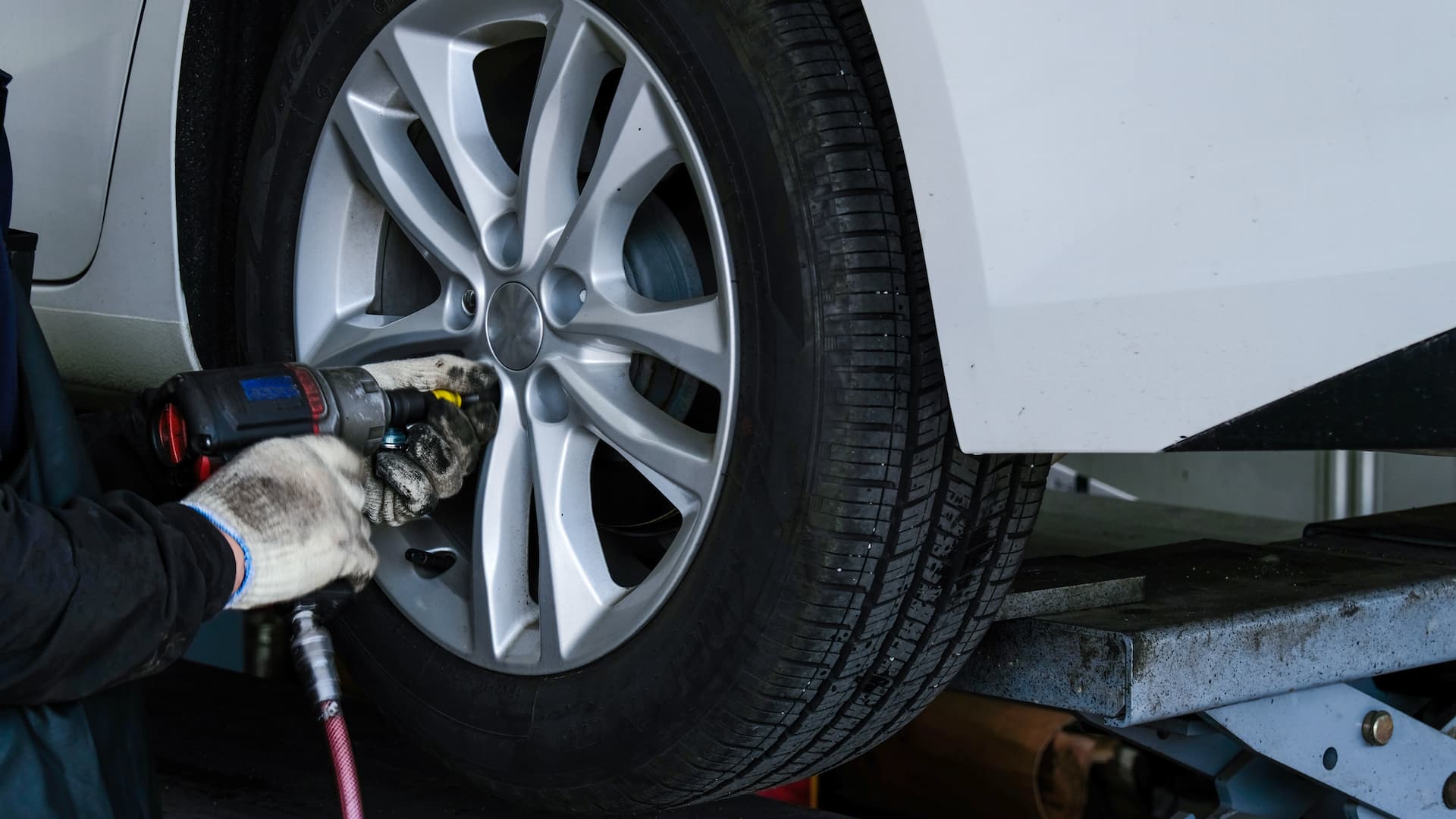
Loosen Lug Nuts Slightly
Before raising the car, loosen the lug nuts on each tire a little. Use a tire iron or lug wrench.
Do not remove the nuts yet. Just break their tight grip so they turn easier later.
- Turn lug nuts counterclockwise
- Apply steady force, avoid jerks
- Loosen nuts enough to spin by hand
Credit: www.autonationmobileservice.com
Tire Rotation Patterns For Fwd Cars
Tire rotation is important to keep your tires wearing evenly. It helps your front-wheel drive (FWD) car run smoothly and last longer.
There are different ways to rotate tires on FWD cars. Each pattern moves the tires in a special way to balance wear.
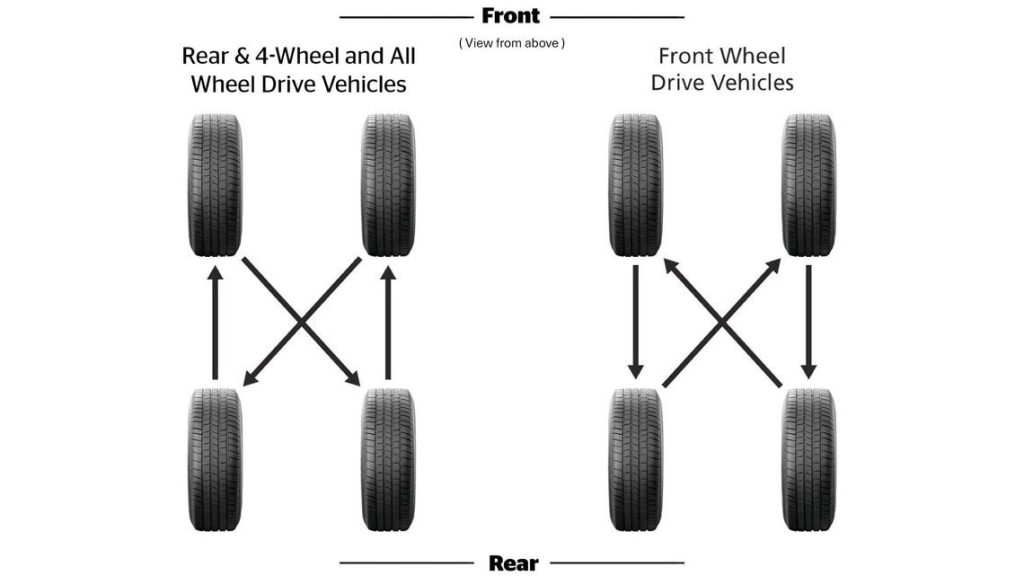
Front-to-rear Swap
The front-to-rear swap moves the front tires to the back and the rear tires to the front. The tires stay on the same side of the car.
This pattern is simple and good for tires that wear evenly on both sides. It helps balance front and rear tire wear.
- Front left tire goes to rear left
- Front right tire goes to rear right
- Rear left tire goes to front left
- Rear right tire goes to front right
Cross Pattern Rotation
The cross pattern moves tires diagonally. Front tires move to the opposite rear sides. Rear tires move to the front on the same side.
This pattern is good for FWD cars because front tires wear faster. It helps even out wear on all tires.
- Front left tire moves to rear right
- Front right tire moves to rear left
- Rear left tire moves to front left
- Rear right tire moves to front right
When To Use Each Pattern
Use the front-to-rear swap if your tires wear evenly on both sides. This works well for tires with no rotation direction.
Use the cross pattern if your front tires wear faster. This is common in FWD cars due to steering and power delivery.
- Front-to-rear swap: tires with no directional tread
- Cross pattern: tires with directional tread or uneven wear
- Check your owner’s manual for recommended pattern
Step-by-step Tire Rotation Process
Rotating tires on a front-wheel-drive (FWD) car helps your tires wear evenly. This keeps your car safe and improves tire life.
Follow these clear steps to rotate your tires correctly and keep your car running smoothly.
Lift The Vehicle Safely
Find a flat, stable surface to park your car. Engage the parking brake to stop the car from moving.
Use a jack to lift the front of the car. Place jack stands under the car for safety. Never work under a car supported only by a jack.
- Park on a level surface
- Engage the parking brake
- Use a jack to lift the front
- Place jack stands securely
Remove Tires
Use a lug wrench to loosen the lug nuts on each tire. Do this before lifting the car if possible.
After the car is lifted and supported, fully remove the lug nuts. Take off the tires carefully and place them aside.
- Loosen lug nuts while car is on ground
- Lift and secure car
- Remove lug nuts completely
- Take off each tire carefully
Swap Tires According To Pattern
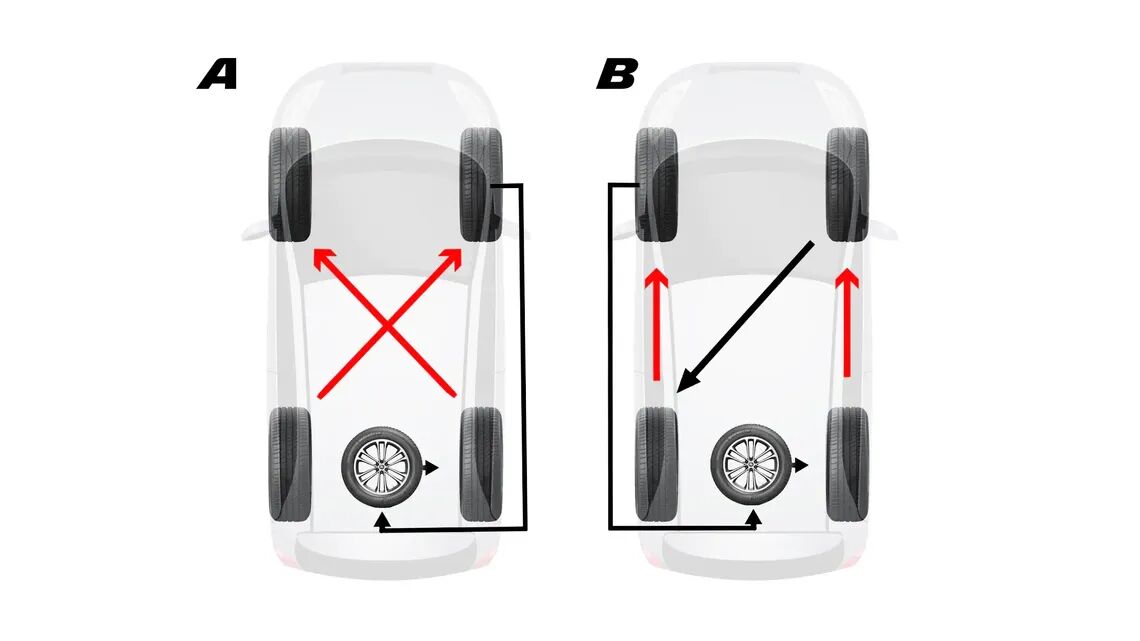
For FWD cars, the common rotation pattern is:
- Move front tires to the rear on the same side
- Move rear tires to the front but switch sides (left rear to right front, right rear to left front)
This pattern helps even out tire wear and extends tire life.
Reinstall And Tighten Lug Nuts
Put each tire back on its new position. Hand-tighten the lug nuts to hold the tire in place.
Lower the car so the tires touch the ground but the car’s weight is not fully on the tires. Use a torque wrench to tighten lug nuts in a star pattern.
- Hand-tighten lug nuts first
- Lower car until tires touch ground
- Tighten lug nuts in a star pattern
- Use correct torque settings
Credit: www.michelin.ca
Post-rotation Checks
After rotating tires on a front-wheel-drive car, it is important to do some checks. These checks help ensure safety and good performance.
Check the tightness of lug nuts, tire pressure, and tire condition. These steps keep the car driving smoothly.
Torque Lug Nuts Properly
Use a torque wrench to tighten the lug nuts to the correct setting. Tightening too little or too much can cause problems.
- Find the torque specification for your car model.
- Tighten lug nuts in a star or crisscross pattern.
- Use the torque wrench to apply the exact torque.
- Double-check each lug nut for proper tightness.
Check Tire Pressure
Proper tire pressure helps with fuel efficiency and tire wear. Check pressure after rotation since it may change.
| Position | Recommended Pressure (PSI) |
|---|---|
| Front Tires | 32-35 |
| Rear Tires | 30-33 |
Inspect Tires For Damage
Look for cuts, cracks, or bulges on the tires. Check the tread depth to ensure it is safe for driving.
- Check sidewalls for cracks or bubbles.
- Look for nails or sharp objects lodged in the tread.
- Measure tread depth; replace tires if below 2/32 inch.
- Ensure no uneven wear after rotation.
Tips To Extend Tire Life
Rotating tires on a front-wheel-drive (FWD) car helps them wear evenly. This keeps your car safe and saves money on new tires.
Following simple tips can make your tires last longer. These tips include regular rotation, checking tire pressure, and driving carefully.
Regular Rotation Schedule
Rotate your tires every 5,000 to 7,000 miles. This helps even out tire wear on a FWD car. Front tires wear faster because they do more work.
Use the recommended rotation pattern for FWD cars. Move front tires to the back on the same side. Move rear tires to the front but switch sides.
- Front left tire goes to rear left
- Front right tire goes to rear right
- Rear left tire moves to front right
- Rear right tire moves to front left
Maintain Proper Tire Pressure
Check tire pressure at least once a month. Use a tire gauge to find the right pressure. Proper pressure helps tires wear evenly and last longer.
Too low pressure causes tire edges to wear fast. Too high pressure wears the center of the tire. Follow your car’s tire pressure guide for best results.
Avoid Aggressive Driving
Drive smoothly to protect your tires. Avoid quick starts, hard stops, and sharp turns. Aggressive driving wears tires faster and can cause damage.
Slow down on rough roads and avoid potholes. Gentle driving helps your tires last longer and keeps you safe on the road.

Credit: www.bfgoodrichtires.com
Frequently Asked Questions
How Often Should I Rotate Tires On A Fwd Car?
Rotate tires every 5,000 to 7,500 miles for even wear. Follow your vehicle’s manual for specific intervals. Regular rotation extends tire life and improves performance.
What Is The Best Tire Rotation Pattern For Fwd Cars?
Use the forward cross pattern for FWD vehicles. Move front tires straight back, and rear tires diagonally forward. This balances wear on all tires effectively.
Can I Rotate Tires Myself On A Fwd Car?
Yes, you can rotate tires if you have basic tools and knowledge. Ensure the car is safely lifted and follow proper rotation patterns. If unsure, consult a professional.
Why Is Tire Rotation Important For Front-wheel-drive Cars?
Tire rotation prevents uneven wear caused by front-wheel drive’s weight and power delivery. It maintains traction, improves fuel efficiency, and extends tire lifespan.
Conclusion
Rotating tires on a FWD car is simple and essential. It prolongs tire life and improves vehicle safety. Regular rotation helps maintain balanced tread wear. Follow the right pattern to ensure effective results. Check tire pressure after rotation for optimal performance.
Always consult your car manual for specific guidelines. Consistent care keeps your ride smooth and safe. Don’t forget to inspect tires for damage during the process. Tire rotation is a small task with big benefits. Save money, drive safely, and enjoy the road with confidence.