Is your air conditioner smelling musty or causing allergy symptoms? That could be mold growing inside your unit.
Mold not only affects the air you breathe but can also damage your AC and increase energy bills. You might think cleaning it is complicated, but it doesn’t have to be. You will discover simple and effective ways to clean air conditioner mold yourself—keeping your home fresh, safe, and comfortable.
Ready to breathe easier? Let’s get started.
Signs Of Mold In Air Conditioners
Mold in air conditioners can cause health problems and damage the unit. It is important to spot mold early. Look for signs that show mold is growing inside your air conditioner.
Detecting mold helps you clean it before it spreads. Some signs are easy to see and others you may only notice by smell or airflow changes.
Visible Mold Spots
Mold often shows as black, green, or white spots on parts of the air conditioner. These spots can appear on the vents, filters, or inside the unit.
- Check air vents for dark or fuzzy spots.
- Look inside the air conditioner for discoloration.
- Examine the filter for patches that look different.
Musty Odors
A moldy smell is a strong sign of mold inside your air conditioner. The odor is usually damp and earthy. It may get stronger when the unit runs.
Signs of musty odors include:
- Smelling a damp or earthy scent near the vents.
- Noticing the smell increases when the air conditioner is on.
- Smell persists even after cleaning the room.
Reduced Airflow
Mold can block air passages inside the unit. This causes less air to flow from the vents. You might feel weaker air or uneven cooling.
| Cause | Effect |
| Mold build-up in vents | Lower air volume |
| Blocked filters | Uneven cooling |
| Clogged coils | Unit runs longer |

Credit: www.reddit.com
Health Risks From Mold Exposure
Mold in air conditioners can cause serious health problems. It grows in damp, cool places and spreads spores in the air. Breathing these spores can harm your health.
Understanding the risks helps you protect yourself and your family. The main dangers include allergic reactions, respiratory issues, and long-term effects.
Allergic Reactions
Many people are allergic to mold spores. Exposure can cause sneezing, itching, and watery eyes. Some may also get skin rashes or hives.
- Runny or blocked nose
- Itchy or red eyes
- Skin irritation or rash
- Watery eyes
- Sneezing fits
Respiratory Issues
Mold spores can irritate the lungs. People with asthma or lung problems may have worse symptoms. Mold exposure can cause coughing, wheezing, or shortness of breath.
| Symptom | Possible Effect |
| Coughing | Airway irritation |
| Wheezing | Asthma flare-ups |
| Shortness of breath | Reduced lung function |
| Chest tightness | Discomfort and pain |
Long-term Effects
Continuous mold exposure may cause serious health issues. It can weaken the immune system and lead to chronic lung diseases. Some people may develop fungal infections.
Long-term risks include:
- Chronic bronchitis or sinus infections
- Reduced lung capacity over time
- Increased risk of fungal infections
- Ongoing allergic reactions
Tools And Supplies Needed
Cleaning mold from an air conditioner is important for healthy air. You need the right tools and supplies. This guide shows what you need to clean AC mold safely and well.
Using proper gear and cleaning products helps remove mold without harm. Gather these items before starting your cleaning process.
Protective Gear
Protective gear keeps you safe from mold spores and cleaning chemicals. Always wear gear to avoid breathing in mold or touching irritants.
- Face mask or respirator
- Rubber gloves
- Safety goggles
- Long-sleeved shirt and pants
Cleaning Solutions
Cleaning solutions kill mold and stop it from coming back. Use solutions that are safe for your air conditioner parts.
- White vinegar (natural and effective)
- Commercial mold cleaner (follow label instructions)
- Water and mild detergent mix
- Isopropyl alcohol for tough spots
Cleaning Tools
Use the right tools to reach all parts of your air conditioner. Soft tools clean without damage, and small tools reach tight spots.
- Soft-bristled brush
- Spray bottle for cleaning solutions
- Microfiber cloths or rags
- Vacuum with a brush attachment
- Small screwdriver (to open panels if needed)

Credit: www.reddit.com
Step-by-step Mold Cleaning Process
Cleaning mold from your air conditioner is important for good air quality. Mold can cause health problems and damage the unit.
Follow these steps carefully to remove mold safely and keep your air conditioner running well.
Turn Off And Unplug The Unit
Before you start cleaning, make sure the air conditioner is off. Unplug it from the power source to avoid accidents.
Turning off the unit protects you from electric shocks and stops the AC from running during cleaning.
Remove And Clean Filters
Take out the air filters carefully. These parts catch dust and mold spores, so they need a good cleaning.
Wash the filters with warm water and mild soap. Let them dry fully before putting them back.
- Remove filters gently
- Rinse with warm water
- Use mild soap if needed
- Dry filters completely
Clean Coils And Fins
The coils and fins hold moisture, which helps mold grow. Clean them carefully to remove mold and dirt.
Use a soft brush or cloth with a coil cleaner. Avoid bending the fins. Rinse gently if the cleaner instructions say so.
- Use coil cleaner spray
- Brush off dirt softly
- Do not bend the fins
- Rinse only if safe
Disinfect Drain Pan And Lines
The drain pan collects water and can have mold inside. Clean it with a disinfectant to kill mold spores.
Flush the drain lines with a mixture of water and vinegar or a mold-killing solution. This stops clogs and mold growth.
- Empty the drain pan
- Clean with disinfectant
- Flush drain lines with vinegar solution
- Clear any blockages
Wipe Down Exterior Surfaces
Use a cloth and mild cleaner to wipe the outside of the air conditioner. This removes mold and dust on the surface.
Make sure all parts are dry before plugging the unit back in. This helps prevent new mold growth.
- Use mild cleaner and cloth
- Clean all exterior parts
- Dry surfaces completely
- Check for mold spots regularly
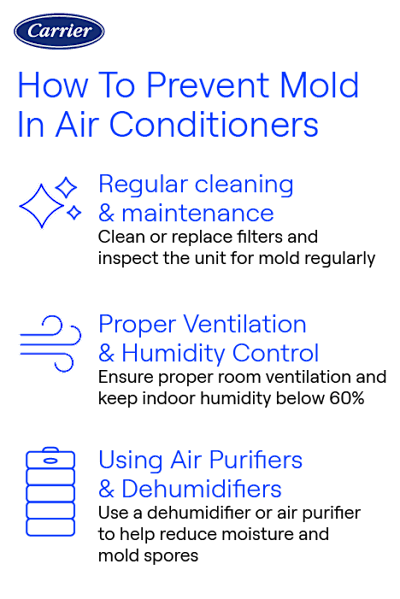
Preventing Mold Growth
Mold grows easily in damp and warm places. Air conditioners can get mold if not cleaned well.
Stopping mold early keeps the air clean and protects your health.
Regular Maintenance Tips
Check and clean your air conditioner every month. This stops dirt and moisture from building up.
Change or wash the filters often. Clean filters help air flow and reduce mold risk.
- Turn off power before cleaning
- Use a soft brush or cloth
- Clean drain pans and tubes
- Check for leaks or water pools
Using Dehumidifiers
Dehumidifiers lower the moisture in the air. Less moisture means less chance for mold.
Place a dehumidifier near the air conditioner if your home is very humid.
- Keep humidity below 60%
- Empty the water tank regularly
- Clean the dehumidifier to stop mold inside it
Ensuring Proper Ventilation
Good airflow helps dry air and stops mold from growing. Open windows and doors when possible.
Use fans to move air in rooms with air conditioners. This lowers dampness and keeps air fresh.
- Keep vents clean and unblocked
- Use exhaust fans in kitchens and bathrooms
- Check that air conditioner vents work well
When To Call A Professional
Cleaning air conditioner mold is important for good air quality. Some mold problems need expert help.
Knowing when to call a professional can save time and keep your system safe.
Severe Mold Infestations
Large mold patches inside your air conditioner can be hard to remove. Strong mold can spread quickly.
Professionals have tools and cleaners to remove mold safely and fully.
- Visible mold covering vents or coils
- Mold inside hard-to-reach areas
- Mold returning after cleaning attempts
Persistent Odors
A musty or sour smell from your air conditioner may mean mold is inside. Bad odors can affect your home’s air.
If odors stay after cleaning filters and vents, call a professional to check deeper.
- Smell that lasts after regular cleaning
- Odors spreading through house vents
- Unexplained bad air quality
System Performance Issues
Mold can block air flow or damage parts of your air conditioner. This lowers its cooling power.
If your air conditioner runs less well or stops often, mold could be a cause. Experts can find and fix these issues.
- Reduced cooling or airflow
- Frequent system shutdowns
- Higher energy bills without reason

Credit: unitedstatesolutions.com
Frequently Asked Questions
How Do I Identify Mold In My Air Conditioner?
Look for black or green spots on filters and vents. Musty odors also indicate mold growth. Check regularly to catch it early.
What’s The Safest Way To Clean Ac Mold?
Use a mixture of water and mild detergent or vinegar. Wear gloves and a mask. Avoid harsh chemicals that can damage the unit.
Can Mold In Ac Cause Health Problems?
Yes, mold spores can trigger allergies, asthma, and respiratory issues. Regular cleaning reduces health risks and improves indoor air quality.
How Often Should I Clean My Ac To Prevent Mold?
Clean your AC every 3 months during heavy use. Regular maintenance stops mold buildup and keeps the system efficient.
Conclusion
Cleaning mold from your air conditioner is important. It ensures fresh air. Regular maintenance helps keep mold at bay. Use the right tools and safety gear. Follow each step carefully for best results. Don’t skip any part of the process.
Consistent cleaning can prevent health issues. Fresh air means a healthier home. Remember, prevention is better than cure. Keep your air conditioner mold-free with regular checks. Simple steps lead to a healthier environment. Your home deserves clean air always. Stay diligent and breathe easy.