Have you ever found yourself stuck with a flat car tire and only a bike pump nearby? You might wonder, “Can a bike pump pump a car tire?”
It’s a common question that can save you time and stress in an unexpected situation. You’ll discover the truth about using a bike pump for your car tire, how effective it really is, and what you should know before you give it a try.
Keep reading to find out if your bike pump can be the quick fix you need or if there’s a better option waiting for you.

Credit: www.amazon.ca
Differences Between Bike And Car Tires
Bikes and cars use different tires designed for their needs. These tires vary in size, volume, and pressure. Understanding these differences helps to know if a bike pump can fill a car tire.
This section explains how bike and car tires differ in size and pressure. These facts affect how air is pumped into each tire.
Size And Volume Variations
Bike tires are smaller and hold less air than car tires. Car tires have a much larger volume. This means car tires need more air to fill up.
- Bike tire diameter usually ranges from 20 to 29 inches.
- Car tire diameter usually ranges from 14 to 20 inches.
- Bike tires are narrower than car tires.
- Car tires can hold several times more air volume than bike tires.
Pressure Requirements
Bike and car tires need different air pressures. Bikes require higher pressure in a smaller space. Cars use lower pressure over a larger area.
| Type of Tire | Typical Pressure Range (psi) | Reason |
|---|---|---|
| Bike Tires | 40 – 120 | High pressure for less rolling resistance |
| Car Tires | 30 – 35 | Lower pressure for load support and comfort |

Credit: etenwolf.com
Types Of Bike Pumps
Bike pumps come in different types to suit various needs. Each type works in a unique way to fill your tires with air.
Understanding these types helps you know if a bike pump can pump a car tire.
Hand Pumps
Hand pumps are small and portable. You can carry them easily on a bike ride.
They use manual force to push air into the tire. Hand pumps work best for bike tires but take longer for car tires.
Floor Pumps
Floor pumps are larger and stay on the ground. They have a handle and a big base for stability.
These pumps deliver more air with less effort. Floor pumps can fill bike tires quickly and some can inflate car tires too.
- Have a pressure gauge
- Provide steady airflow
- Require both hands to operate
Co2 Inflators
CO2 inflators use small cartridges of compressed gas. They release air fast into the tire.
They are very quick but only work for a few pumps before the cartridge is empty. CO2 inflators are mainly for bike tires, not car tires.
Pump Mechanics And Efficiency
A bike pump and a car tire pump both move air into tires. They use similar parts like a handle, cylinder, and piston.
Bike pumps are smaller and made to fill bike tires. Car tires need more air volume and higher pressure.
Air Volume Per Stroke
The air volume per stroke is the amount of air pushed into the tire with one pump movement. Bike pumps have small cylinders.
Because of this, they move less air per stroke than car pumps. Filling a car tire with a bike pump takes many strokes.
- Bike pump cylinder size: small
- Car pump cylinder size: larger
- Bike pump air volume per stroke: low
- Car pump air volume per stroke: high
Pressure Generation Capability
Pressure generation is how much air pressure the pump can create. Car tires need higher pressure than bike tires.
Bike pumps can create enough pressure for bike tires but not always enough for car tires. This makes pumping car tires slow and hard.
- Bike pumps usually reach 40-60 PSI
- Car tires need about 30-35 PSI
- Bike pumps can reach car tire pressure but with more effort
- Smaller pumps need more strokes for the same pressure

Credit: www.amazon.com
Challenges In Pumping Car Tires With Bike Pumps
Using a bike pump to fill a car tire can be difficult. Bike pumps are made for small tires and low air volume.
Car tires need more air and pressure than bike tires. This causes several problems when using a bike pump.
Time And Effort Needed
Pumping a car tire with a bike pump takes a long time. Bike pumps have smaller chambers and push less air per stroke.
You must pump many times to reach the right pressure. This can be tiring and frustrating.
- Bike pumps push less air per pump
- Car tires require higher pressure
- More pumps mean more effort and time
Potential Damage Risks
Using a bike pump on a car tire can cause damage. The pump may not fit the car valve well, causing leaks.
Over-pumping or forcing the pump can harm the valve or the pump itself. This leads to costly repairs.
- Valve damage from poor pump fit
- Leaks due to improper sealing
- Pump parts may break under high pressure
When Using A Bike Pump For A Car Tire Makes Sense
A bike pump can add air to a car tire in some cases. It works best when you need a small amount of air.
This tool is not made for car tires, but it can help in certain moments. Knowing when to use it can save you time.
Emergency Situations
If your car tire loses air far from a service station, a bike pump can help. It lets you add some air to drive safely.
Using a bike pump in an emergency is better than driving on a flat tire. It can stop further damage to your tire.
- Find a safe place to stop your car.
- Attach the bike pump to the valve carefully.
- Pump air slowly and check the pressure often.
- Drive to a repair shop after adding enough air.
Low Pressure Top-ups
A bike pump can add small amounts of air to a car tire with low pressure. It helps keep the tire safe between full inflations.
This method is good if you check your tires often. It keeps the air level steady and improves tire life.
- Check tire pressure regularly with a gauge.
- Use the bike pump to add air if pressure is slightly low.
- Do not try to fully inflate the tire with a bike pump.
- Visit a service station for full tire inflation.
Alternatives To Bike Pumps For Car Tires
Bike pumps are designed for small tires and low pressure. They often take too long to fill car tires. Using other tools can save time and effort.
Here are some alternatives to bike pumps that work better for car tires. These options provide faster and easier inflation.
Portable Car Tire Inflators
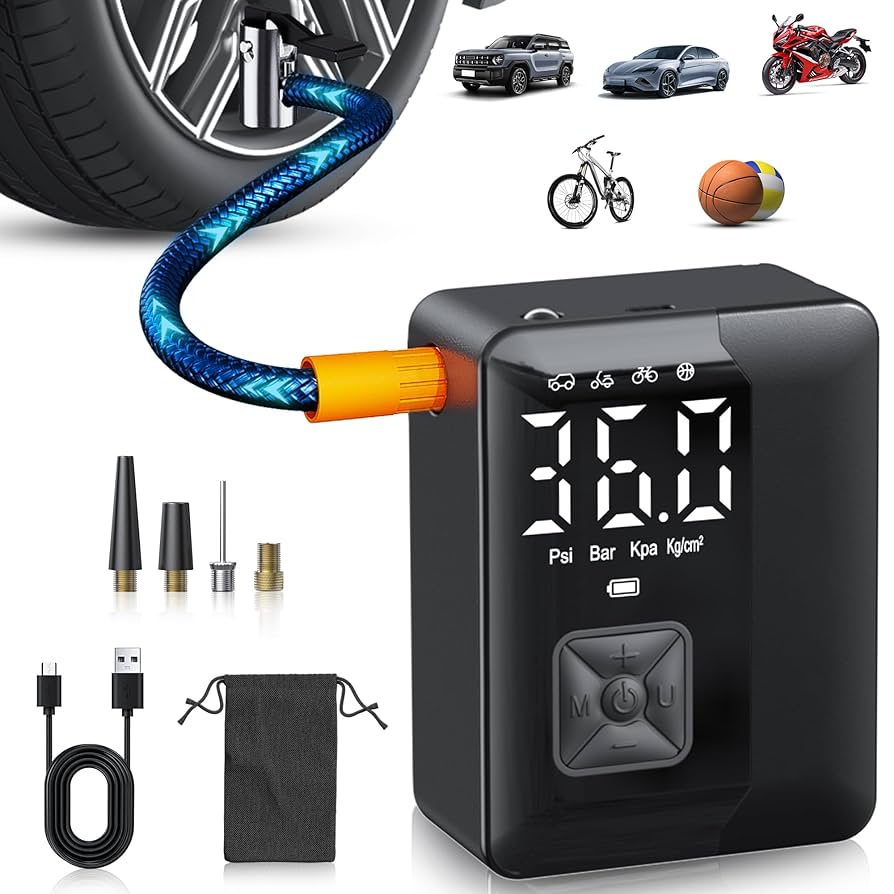
Portable car tire inflators are small devices made for quick tire inflation. They run on your car’s battery or a rechargeable battery.
- Lightweight and easy to carry
- Can inflate tires fast
- Some models have built-in pressure gauges
- Works well for emergency use
- Usually quieter than large compressors
Air Compressor Options
Air compressors come in many sizes. They can be small for home use or large for workshops. They push air into the tire with more power than bike pumps.
| Type | Power Source | Best Use | Pros | Cons |
|---|---|---|---|---|
| Electric Air Compressor | Car battery or outlet | Fast inflation on the go | Portable, easy to use | Needs power source |
| Manual Air Compressor | Hand or foot pump | Small jobs, no power needed | Cheap, no electricity | Slow, tiring |
| Stationary Air Compressor | Electric outlet | Garage or workshop | Powerful, fast | Not portable |
Tips For Safely Inflating Car Tires
Using a bike pump to inflate a car tire is possible but takes time and care. It is important to follow safe steps. This helps avoid damage to the tire or pump.
Knowing how to check tire pressure and use the right pumping methods keeps your car safe on the road.
Checking Tire Pressure
Always check the current tire pressure before inflating. Use a reliable tire pressure gauge for accuracy.
Compare the reading to the recommended pressure found in your car’s manual or on the tire label.
- Check pressure when tires are cold for best results
- Look for the correct pressure in psi (pounds per square inch)
- Do not overinflate or underinflate the tires
Proper Pumping Techniques
Attach the bike pump securely to the tire valve to avoid air leaks. Pump slowly and steadily for better control.
Pause often to check the pressure. This prevents overinflation and helps you reach the correct level safely.
- Use a bike pump with a pressure gauge if possible
- Keep the pump upright and stable during use
- Do not force the pump if it feels stuck or damaged
- Stop pumping once the tire reaches the recommended pressure
Frequently Asked Questions
Can A Bike Pump Inflate A Car Tire Effectively?
Yes, a bike pump can inflate a car tire but very slowly. It requires more effort and time due to larger tire volume and pressure needs.
Will A Bike Pump Reach The Required Car Tire Pressure?
Most bike pumps can reach typical car tire pressure, around 30-35 PSI. However, it may take longer compared to an air compressor.
Is Using A Bike Pump Safe For Car Tires?
Using a bike pump is safe for car tires if done carefully. Avoid overinflation and check pressure regularly with a reliable gauge.
How Long Does It Take To Pump A Car Tire With A Bike Pump?
Pumping a car tire with a bike pump can take 10 to 20 minutes. The exact time depends on the pump type and tire condition.
Conclusion
Using a bike pump on a car tire is possible, yet challenging. Bike pumps can fill car tires, but it’s slow and requires effort. They’re not designed for car tires’ high pressure. Having a car-specific pump is more efficient. Bike pumps work best for emergencies or minor adjustments.
It’s wise to keep a car tire pump handy for regular use. Always ensure proper tire pressure for safety. Consider investing in a suitable pump for convenience. This can save time and effort in the long run.