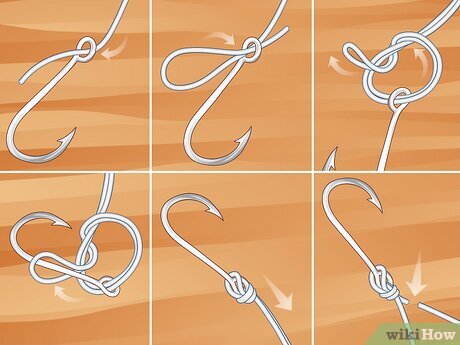
Tying a fishing line to your reel might seem simple, but doing it the right way makes all the difference. If your line slips or tangles, you’ll miss the big catch—and that’s frustrating.
You want your setup to be strong, smooth, and ready for action every time you cast. In this guide, you’ll discover easy, step-by-step instructions to secure your line perfectly. By the end, you’ll have the confidence to get your reel ready quickly and fish like a pro.
Keep reading, and let’s get your gear fishing-ready!
Choosing The Right Fishing Line
Choosing the right fishing line is important for a good fishing experience. The line connects your rod to the fish.
Picking the correct type and strength helps catch fish without breaking the line.
Types Of Fishing Lines
There are several types of fishing lines. Each type has its own features and uses.
- Monofilament:A single strand of nylon. It is stretchy and easy to handle.
- Fluorocarbon:Almost invisible in water and sinks faster than other lines.
- Braided:Made of woven fibers. It is very strong and has little stretch.
Line Strength And Thickness
Line strength is measured by “pound test.” It shows how much weight the line can hold before breaking.
| Line Strength (Pound Test) | Recommended Use | Line Thickness |
|---|---|---|
| 2-6 lbs | Light freshwater fishing | Thin |
| 8-12 lbs | Medium freshwater, small saltwater fish | Medium |
| 15-30 lbs | Large freshwater fish, saltwater fishing | Thick |

Credit: www.reddit.com
Preparing The Reel
Before tying a fishing line to your reel, you need to prepare it properly. A clean and well-positioned reel helps the line stay secure and work smoothly.
This guide covers cleaning, inspecting, and positioning the reel to get it ready for the line.
Cleaning And Inspecting The Reel
Start by cleaning the reel to remove dirt, sand, and old grease. Use a soft cloth and warm water. Avoid harsh chemicals that may damage the reel.
Check the reel parts carefully. Look for rust, cracks, or loose screws. Make sure the spool spins freely without noise or resistance.
- Wipe reel body and spool with a soft cloth
- Remove debris from small crevices
- Check screws and tighten if loose
- Spin the spool to test smoothness
- Replace damaged parts before use
Positioning The Reel Properly
Attach the reel firmly to the fishing rod. The reel should sit straight and tight on the rod’s reel seat.
Check that the reel handle is easy to reach with your dominant hand. This helps you control the line better.
- Place reel foot into reel seat
- Tighten reel seat securely
- Align reel so spool is parallel to rod
- Check handle position for comfort
- Ensure no wobble or looseness
Attaching The Line To The Reel
Attaching the fishing line to the reel is an important first step. It ensures your line stays secure while fishing.
Using the right knot helps keep the line tight and prevents slipping. Let’s look at some basic knot techniques.
Basic Knot Techniques
The most common knots for attaching a line to a reel are the Arbor knot and the Improved Clinch knot. These knots are strong and easy to tie.
- Arbor Knot:Simple and fast. Good for beginners.
- Improved Clinch Knot:Stronger and used for heavier lines.
- Pallet Knot:Useful for braided lines.
Step-by-step Knot Tying
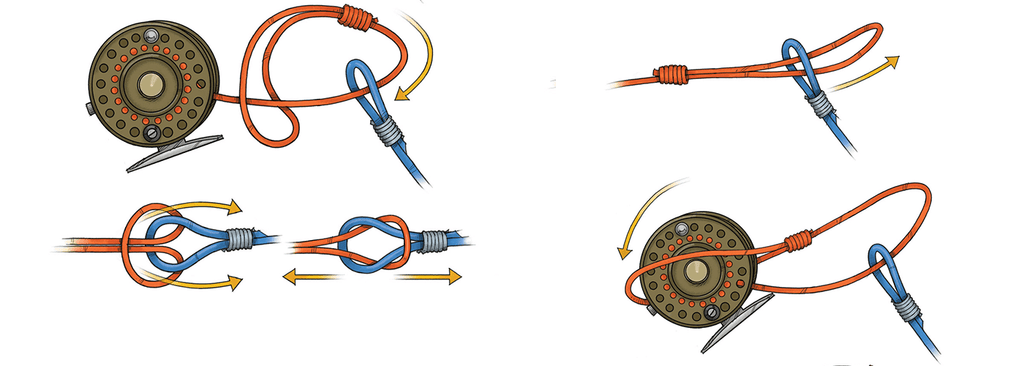
Follow these steps to tie the Arbor knot to your reel spool.
- Pass the line around the spool of the reel.
- Make a simple overhand knot around the main line.
- Tighten the knot by pulling on the tag end and main line together.
- Trim the excess tag end close to the knot.
- Wind the line tightly onto the spool for even distribution.
| Step | Action |
| 1 | Wrap line around reel spool |
| 2 | Tie an overhand knot around main line |
| 3 | Pull tag end and main line to tighten |
| 4 | Cut excess line near knot |
| 5 | Wind line on spool evenly |
Credit: www.epicflyrods.com
Securing The Knot
Tying a fishing line to the reel needs a strong knot. A secure knot keeps the line from slipping off the reel during fishing.
Follow simple steps to make sure your knot holds well and stays tight.
Testing Knot Strength
After tying the knot, test its strength before you start fishing. Pull the line hard to check if the knot stays firm.
If the knot slips or loosens, retie it. A strong knot is key to avoiding line loss.
Tips For A Tight Knot
Keep the line wet before tightening the knot. This stops heat from weakening the line.
Pull the knot slowly and evenly to make it tight and secure.
- Wet the line with water or saliva
- Pull the knot gently but firmly
- Make sure no twists or loops remain
- Trim excess line close to the knot
Spooling The Line
Spooling the fishing line onto the reel is a key skill for every angler. It prepares your reel to handle fish and cast smoothly.
Proper spooling avoids problems like line tangles and poor casting. Focus on keeping the line tight and twist-free.
Maintaining Tension
Keep steady tension on the line as you spool it to prevent loose coils. Loose line can cause tangles and reduce casting distance.
- Attach the line securely to the reel spool.
- Hold the line between your fingers to keep it tight.
- Slowly turn the reel handle to wind the line evenly.
- Check frequently to ensure the line stays tight and neat.
Avoiding Twists And Tangles
Twists and tangles weaken your line and cause casting problems. Use these tips to keep the line straight and smooth.
| Cause | Prevention |
| Line twisting from loose spooling | Keep tension firm while winding |
| Line tangling from overlapping | Wind line evenly across spool |
| Line twisting from lure or bait | Let line untwist by running through fingers |
Common Mistakes To Avoid
Tying a fishing line to the reel seems simple but many make mistakes. These errors cause line slippage or tangles.
Knowing what to avoid helps your fishing setup last longer and work better on the water.
Loose Knots
Loose knots are the main cause of line slipping from the reel. They do not hold under tension.
Always pull the knot tight and test it before spooling. A loose knot can cost you a big catch.
- Make sure the knot is snug against the reel spool
- Wet the knot before pulling tight to reduce friction
- Check the knot by pulling firmly on the line
Incorrect Spooling
Spooling the line incorrectly causes tangles and line twists. It reduces casting distance and control.
Keep the line tight and spool it in the same direction it comes off the filler spool. Avoid loose wraps.
- Do not let the line get slack during spooling
- Match the line direction to the reel’s rotation
- Fill the spool evenly without overfilling
Tools That Help Knot Tying
Tying a fishing line to the reel can be tricky without the right tools. Using aids makes the process easier and faster. These tools help secure knots tightly and prevent slippage.
Below are common tools that assist with knot tying and line preparation. They improve accuracy and save time for anglers of all levels.
Knot Tying Aids
Knot tying aids hold the fishing line steady while you tie knots. They help maintain tension and prevent the line from slipping out of place.
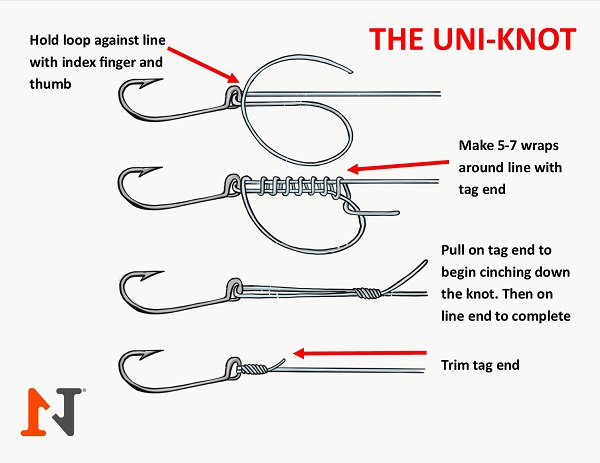
- Knot Tying Vise:Holds the line and hook securely for precise knot work.
- Threader Tools:Guides thin lines through small hook eyes easily.
- Loop Tools:Helps create consistent loops for certain fishing knots.
- Needle Nose Pliers:Assists in pulling and tightening knots firmly.
Line Clippers And Other Accessories
After tying the knot, trimming the excess line cleanly is important. Line clippers and other accessories help finish the task neatly.
| Tool | Purpose |
|---|---|
| Line Clippers | Cut excess line close to the knot for a clean finish |
| Hook Sharpener | Keeps hooks sharp for better fishing performance |
| Line Conditioner | Prevents line tangling and extends its life |
| Forceps | Remove hooks safely and hold small parts |
Credit: n1outdoors.com
Frequently Asked Questions
How Do I Start Tying A Fishing Line To The Reel?
Begin by threading the line through the reel’s guide. Wrap it tightly around the spool. Secure with an arbor knot for a strong hold.
What Knot Is Best For Attaching Line To Reel?
The arbor knot is the most reliable for securing fishing line to the reel spool. It’s simple and holds well under tension.
How Much Line Should I Wrap Around The Reel Spool?
Wrap enough line to cover the spool evenly, leaving 1/8 inch from the edge. This prevents line slippage and ensures smooth casting.
Can I Use Any Fishing Line For My Reel?
Choose a line compatible with your reel type and fishing style. Monofilament, fluorocarbon, or braided lines each suit different reels and conditions.
Conclusion
Tying a fishing line to the reel is simple with practice. Follow the steps carefully. Start by gathering your tools. Then, connect the line securely. Make sure it’s tight and even. Practice will make it easier. Remember, patience is key.
A good knot ensures a successful fishing trip. Now, you’re ready to fish confidently. Enjoy the peaceful moments by the water. Happy fishing!