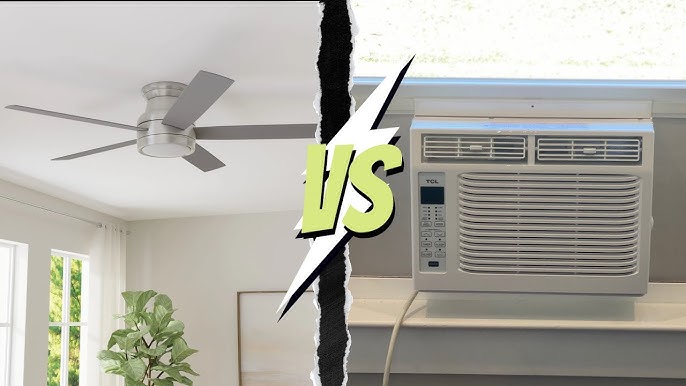
Are you wondering whether your air conditioner or fan is costing you more on your electricity bill? You’re not alone.
Many people struggle to decide which cooling option is better for saving energy and money. Understanding the real power usage behind these devices can help you make smarter choices for your home and wallet. Keep reading to discover which one uses more electricity and how you can stay cool without burning through your budget.
Electricity Consumption Basics
Appliances use electricity to work. The amount depends on their power ratingand how long they run.
Power rating shows how many watts an appliance uses. The higher the watts, the more electricity it uses.
Electricity use can be measured with a power meter. It plugs into the wall and shows how much power an appliance draws.
Another way is to check the appliance label. It usually shows the wattage or amps.
Electricity consumption depends on:
- Power rating (watts)
- Running time (hours)
- How efficiently the appliance works

Credit: www.aljazeera.com
Air Conditioner Power Demand
Air conditioners use more electricity than fans. They cool air by removing heat, which needs a lot of power. Fans just move air around and use less energy.
There are different types of air conditioners, like window units, split systems, and portable ones. Each type uses a different amount of power. Split systems usually use less energy than window units.
| Type of Air Conditioner | Power Use (Watts) | Typical Use |
|---|---|---|
| Window Unit | 500 – 1500 | Small rooms |
| Split System | 1000 – 2000 | Whole rooms or houses |
| Portable Unit | 800 – 1500 | Temporary cooling |
Energy efficiency ratingsshow how much power an air conditioner uses for cooling. Higher ratings mean less electricity is used. Look for units with good ratings to save energy and money.
Fan Power Usage
Fans come in many types. Some common ones are ceiling fans, table fans, and tower fans. Each type uses electricity differently.
| Fan Type | Typical Power Use (Watts) |
|---|---|
| Ceiling Fan | 30 – 75 |
| Table Fan | 40 – 60 |
| Tower Fan | 45 – 55 |
| Pedestal Fan | 50 – 70 |
Fans use much less power than air conditioners. They mainly move air to cool people down. This uses less electricity.
Credit: x.com
Comparing Energy Costs
The electricity useddepends on how long you run the device. Fans use less power per hour than air conditioners. But running a fan all day can add up.
Air conditioners use a lot of energy quickly. They cool a whole room but need more power.
| Device | Power Use (Watts) | Typical Running Time | Energy Used (kWh) |
|---|---|---|---|
| Fan | 50-75 | 8 hours | 0.4-0.6 |
| Air Conditioner | 1000-2000 | 2 hours | 2-4 |
Electricity billsrise more with air conditioners. Fans cost less but do not cool as much. Running time and power use both matter.
Factors Affecting Energy Use
Room sizeplays a big role in energy use. A larger room needs more power to cool or circulate air. Good insulationhelps keep the room temperature steady, lowering energy use. Poor insulation makes the air conditioner or fan work harder.
Temperature settingsalso affect electricity use. Setting the air conditioner to a very low temperature uses more electricity. Fans use less power since they only move air, not cool it. Keeping the temperature at a moderate level saves energy.
Energy-saving Tips
Set your air conditioner to a higher temperature to save power. Close doors and windows tightly to keep cool air inside. Clean or replace air filters regularly for better airflow. Use curtains or blinds to block sunlight and reduce heat. Turn off the AC when no one is in the room. Use a timer or smart thermostat to control cooling times.
Place fans near open windows to bring fresh air inside. Use ceiling fans to circulate air evenly and feel cooler. Clean fan blades to keep them working well. Set fans to rotate counterclockwise in summer for better airflow. Use fans with energy-efficient motors to lower electricity use. Combine fan use with the air conditioner to raise the temperature setting on the AC while still feeling cool.
Environmental Impact
Air conditionersuse much more electricity than fans. This leads to a bigger carbon footprint. The carbon footprint means the amount of harmful gases released into the air.
Fans use less energy by moving air around. Air conditioners cool the air by using a compressor and refrigerants. This process needs more power.
| Cooling Device | Electricity Use | Carbon Footprint |
|---|---|---|
| Air Conditioner | High | Large |
| Fan | Low | Small |
- Use fans when you want to save electricity.
- Choose energy-efficient air conditioners if needed.
- Open windows to get fresh air and cool down.
- Wear light clothes to feel cooler without extra power.

Credit: www.dreo.com
Frequently Asked Questions
Which Appliance Uses More Electricity, Ac Or Fan?
An air conditioner uses significantly more electricity than a fan. ACs cool entire rooms by removing heat, requiring more power. Fans simply circulate air, consuming minimal energy. Thus, fans are more energy-efficient and cost-effective for moderate cooling needs.
How Much Electricity Does An Air Conditioner Consume?
A typical air conditioner consumes between 1000 to 2000 watts per hour. Usage varies by AC size, model, and settings. Running an AC for several hours daily can lead to high electricity bills compared to fans.
Are Ceiling Fans More Energy-efficient Than Air Conditioners?
Yes, ceiling fans are far more energy-efficient than air conditioners. Fans use roughly 50-75 watts per hour, much less than AC units. They help reduce electricity consumption while providing adequate airflow in moderate climates.
Can Using A Fan Reduce Air Conditioner Electricity Usage?
Using a fan alongside an air conditioner can reduce electricity usage. Fans improve air circulation, allowing you to raise AC temperature settings. This combination decreases overall power consumption and lowers energy bills.
Conclusion
Choosing between an air conditioner and a fan depends on your needs. Fans use less electricity, making them cost-efficient. Air conditioners provide better cooling but consume more energy. In hot weather, fans can circulate air effectively. This makes them a good option for mild temperatures.
For extreme heat, air conditioners are more suitable. Understanding your climate and usage can guide your decision. Always consider energy bills and comfort levels. Making informed choices helps balance cost and comfort. Save energy and stay comfortable.