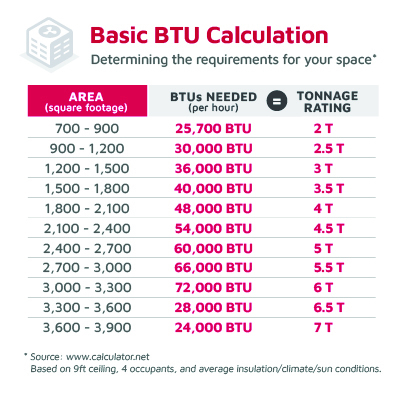
Are you wondering, “How much BTU do I need for my air conditioner?” Choosing the right size can be confusing, but it’s one of the most important decisions for your comfort and energy bills. Too small, and your room won’t cool properly.
Too big, and you’ll waste money and energy. You’ll discover exactly how to find the perfect BTU for your space, so you stay cool without overspending. Keep reading to make your home the cool, comfortable place you deserve.
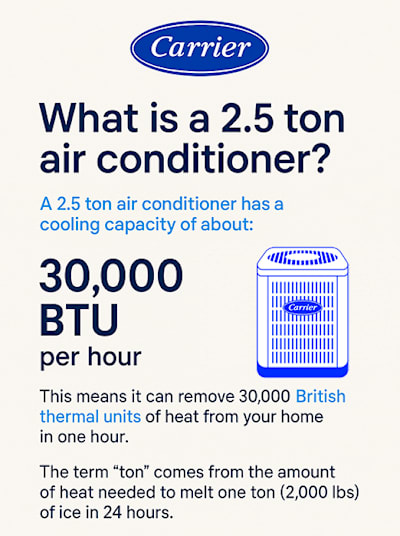
Credit: www.carrier.com
What Btu Means
BTU stands for British Thermal Unit. It measures energy used for heating or cooling.
In air conditioners, BTU shows how much heat the unit can remove from a room.
Definition Of Btu
One BTU is the energy needed to raise one pound of water by one degree Fahrenheit.
This unit helps compare different cooling or heating devices.
Why Btu Matters For Air Conditioners
BTU tells you the cooling power of an air conditioner. The higher the BTU, the bigger the space it cools.
Choosing the right BTU size saves energy and keeps your room comfortable.
How To Read Btu Ratings
- Small rooms (up to 150 sq ft): 5,000 to 6,000 BTU
- Medium rooms (150-300 sq ft): 7,000 to 8,000 BTU
- Large rooms (300-450 sq ft): 10,000 to 12,000 BTU
- Extra large rooms (450-600 sq ft): 14,000 to 18,000 BTU
Btu Comparison Table
| Room Size (sq ft) | Recommended BTU |
|---|---|
| Up to 150 | 5,000 – 6,000 |
| 150 – 300 | 7,000 – 8,000 |
| 300 – 450 | 10,000 – 12,000 |
| 450 – 600 | 14,000 – 18,000 |
Factors Affecting Btu Needs
Choosing the right air conditioner size depends on several factors. BTU, or British Thermal Unit, measures cooling power.
Understanding what affects BTU needs helps pick an efficient unit. This saves energy and keeps rooms comfortable.
Room Size
The size of your room is the main factor for BTU calculation. Larger rooms need more cooling power.
| Room Size (sq ft) | Recommended BTU |
| 100 – 150 | 5,000 – 6,000 |
| 150 – 250 | 6,000 – 8,000 |
| 250 – 350 | 8,000 – 10,000 |
| 350 – 450 | 10,000 – 12,000 |
Insulation Quality
Good insulation keeps cool air inside and hot air outside. Poor insulation increases BTU needs.
- Well-insulated rooms use less energy.
- Old windows and doors cause heat leaks.
- Adding insulation reduces cooling costs.
Sun Exposure
Rooms with more sun exposure get hotter during the day. This raises the BTU needed to cool them.
South and west-facing rooms usually require higher BTU air conditioners. Use shades or curtains to help.
Number Of Occupants
People generate body heat that adds to room temperature. More occupants mean higher BTU requirements.
- One or two people add about 600 BTUs.
- Add 600 BTUs for each additional person.
- Consider guest frequency for accurate sizing.
Appliance Heat Output
Appliances like computers, ovens, and lights produce heat. This heat raises the cooling load.
| Appliance | Heat Output (BTUs/hour) |
|---|---|
| Computer | 300 |
| Oven | 4,000 |
| Lighting (per bulb) | 100 |
| Television | 200 |
Calculating Btu For Different Rooms
BTU stands for British Thermal Unit. It measures the cooling power needed for a room.
Knowing the right BTU helps you pick the right air conditioner for comfort.
Living Rooms
Living rooms are usually large and need more cooling power. Size and sunlight affect the BTU needed.
- For rooms up to 300 square feet, use 7,000 to 8,000 BTUs.
- For 300 to 500 square feet, use 8,000 to 12,000 BTUs.
- For rooms larger than 500 square feet, use 12,000 to 18,000 BTUs.
Bedrooms
Bedrooms are smaller and need less cooling. Consider the number of windows and insulation.
| Room Size (sq ft) | BTU Needed |
| 100 – 150 | 5,000 – 6,000 |
| 150 – 250 | 6,000 – 8,000 |
| 250 – 350 | 8,000 – 10,000 |
Kitchens
Kitchens get hotter because of cooking. You need extra BTUs to cool them properly.
Use this formula for kitchen BTU needs:
- Calculate the room size BTU
- Add 4,000 BTUs for kitchen heat
Basements
Basements are cooler but may be damp. BTU needs are usually lower than other rooms.
- Small basements (under 300 sq ft): 6,000 BTUs
- Medium basements (300 to 500 sq ft): 8,000 BTUs
- Large basements (over 500 sq ft): 10,000 to 12,000 BTUs
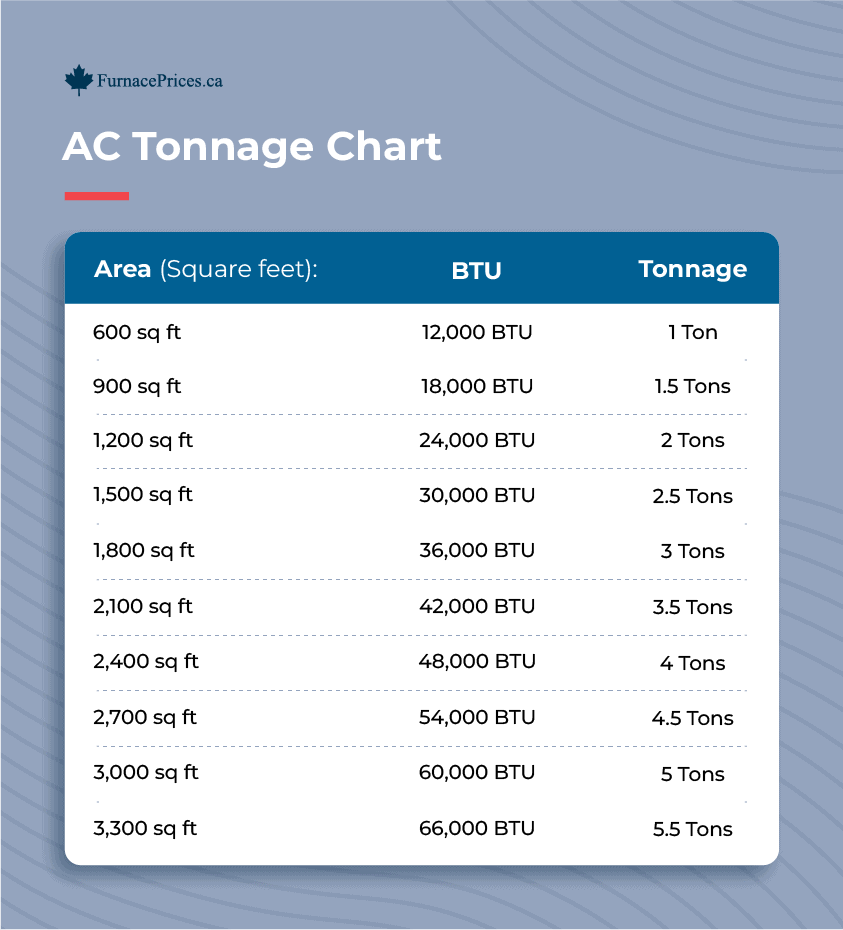
Credit: www.furnaceprices.ca
Btu Recommendations By Room Size
Choosing the right air conditioner depends on the size of your room. BTU, or British Thermal Unit, measures the cooling power needed.
Here are some guidelines to help you pick the right BTU for small, medium, and large rooms.
Small Rooms
Small rooms need less cooling power. Usually, these rooms are less than 150 square feet.
- Up to 100 sq ft: 5,000 BTU
- 100 to 150 sq ft: 6,000 BTU
Medium Rooms
Medium rooms are typically 150 to 300 square feet. They need more BTUs to stay cool.
| Room Size (sq ft) | Recommended BTU |
|---|---|
| 150 – 200 | 7,000 – 8,000 |
| 200 – 250 | 8,000 – 9,000 |
| 250 – 300 | 9,000 – 10,000 |
Large Rooms
Large rooms are over 300 square feet. They require higher BTUs for effective cooling.
Here are BTU needs for large rooms:
- 300 – 350 sq ft: 10,000 – 12,000 BTU
- 350 – 400 sq ft: 12,000 – 14,000 BTU
- 400 – 450 sq ft: 14,000 – 16,000 BTU
Types Of Air Conditioners And Btu Ratings
Choosing the right air conditioner depends on the size of your room. The cooling power is measured in BTUs.
Different types of air conditioners have different BTU ranges. It is important to match the BTU rating to your space.
Window Units
Window units are small air conditioners that fit in a window. They cool a single room or small area.
These units usually have BTU ratings from 5,000 to 12,000. The size depends on the room size.
- 5,000 BTU cools about 100-150 sq ft
- 8,000 BTU cools about 200-350 sq ft
- 12,000 BTU cools about 400-550 sq ft
Portable Units
Portable air conditioners can be moved from room to room. They use a hose to vent hot air outside.
BTU ratings for portable units range from 8,000 to 14,000. They work well for medium-sized rooms.
- 8,000 BTU cools about 250 sq ft
- 10,000 BTU cools about 300-400 sq ft
- 14,000 BTU cools about 500 sq ft
Split Systems
Split systems have an indoor and outdoor unit. They are quiet and energy efficient.
BTU ratings vary widely. They can cool single rooms or whole apartments.
- 9,000 BTU for small rooms
- 12,000-18,000 BTU for medium rooms
- 24,000 BTU or more for large rooms
Central Air Conditioners
Central air conditioners cool entire homes. They use ducts to move cool air throughout the house.
BTU ratings depend on home size. Larger homes need units with higher BTUs.
| Home Size (sq ft) | BTU Needed |
|---|---|
| Up to 1,000 | 12,000 – 18,000 |
| 1,000 – 2,000 | 18,000 – 30,000 |
| 2,000 – 3,000 | 30,000 – 45,000 |
| 3,000+ | 45,000+ |
Consequences Of Incorrect Btu Sizing
Choosing the right BTU size for your air conditioner is important. If the BTU is too low or too high, it can cause problems.
Incorrect sizing affects comfort, energy use, and the air conditioner’s life. Let’s look at the problems caused by wrong BTU sizes.
Too Low Btu
An air conditioner with too low BTU cannot cool a room properly. It will run longer trying to reach the right temperature.
This causes higher electricity bills and puts extra stress on the unit. It may break down sooner and need repairs.
- Room stays warm or humid
- AC runs constantly without stopping
- Higher power consumption
- More wear and tear on the unit
Too High Btu
An air conditioner with too high BTU cools the room too fast. It turns off quickly without removing enough moisture from the air.
This causes the room to feel cold and damp. The AC also uses more electricity by turning on and off often.
- Room feels cold and clammy
- Short cooling cycles
- Increased energy costs
- Higher chance of mechanical problems
Tips For Choosing The Right Air Conditioner
Choosing the right air conditioner means picking one with the right size and features. The size depends on the BTU you need. BTU means British Thermal Units, which measure cooling power.
Getting the right BTU helps your room cool well and saves energy. Too small or too big units waste energy and money.
Energy Efficiency
Energy efficiency tells you how well the air conditioner uses electricity. Choose a unit with a good energy rating. This saves money on your bills.
Look for the ENERGY STAR label or a high SEER rating. These show the unit uses less energy to cool the same space.
- Check the Energy Efficiency Ratio (EER) or Seasonal Energy Efficiency Ratio (SEER)
- Higher numbers mean better efficiency
- Energy-efficient units cost less to run
Additional Features
Extra features make your air conditioner easier to use and keep your room comfortable. Some help save energy too.
- Programmable timers let you set cooling times
- Remote controls add convenience
- Sleep mode lowers noise and energy at night
- Air filters improve air quality
Maintenance Considerations
Regular maintenance keeps your air conditioner running well. Choose a model that is easy to clean and service.
Look for washable filters and easy access panels. Check if replacement parts are common and affordable.
- Clean or replace filters every few months
- Keep the outdoor unit free of debris
- Schedule professional check-ups yearly
- Easy maintenance saves money and extends unit life
Common Myths About Btu And Cooling
Many people think they need a very high BTU air conditioner for their room. BTU means British Thermal Unit. It shows how much heat an AC can remove in one hour. Choosing the right BTU is important for comfort and energy use.
There are many myths about BTU and cooling. These myths can confuse you when picking an air conditioner. Let’s clear up some common wrong ideas.
Myth: Bigger Btu Means Cooler Air
Some think a bigger BTU number cools the room faster. This is not true. Too high BTU can make the room cold but dry and uncomfortable. It also wastes energy and costs more.
Myth: One Size Fits All Rooms
People believe one BTU size works for all rooms. The right BTU depends on room size, ceiling height, and sun exposure. A small room needs less BTU than a large one.
Myth: Btu Only Depends On Room Size
Many think BTU depends only on room size. Other factors matter. These include:
- Number of windows and sun exposure
- Number of people in the room
- Heat from appliances and lights
- Room insulation quality
Myth: You Can Guess Btu Needed
Some try to guess the BTU needed without measuring. This often leads to buying the wrong size. Use a BTU calculator or ask a professional to get the right size for your needs.
Btu Size Guide Table
| Room Size (sq ft) | Recommended BTU |
| 100 – 150 | 5,000 – 6,000 |
| 150 – 250 | 6,000 – 8,000 |
| 250 – 350 | 8,000 – 10,000 |
| 350 – 450 | 10,000 – 12,000 |
| 450 – 550 | 12,000 – 14,000 |
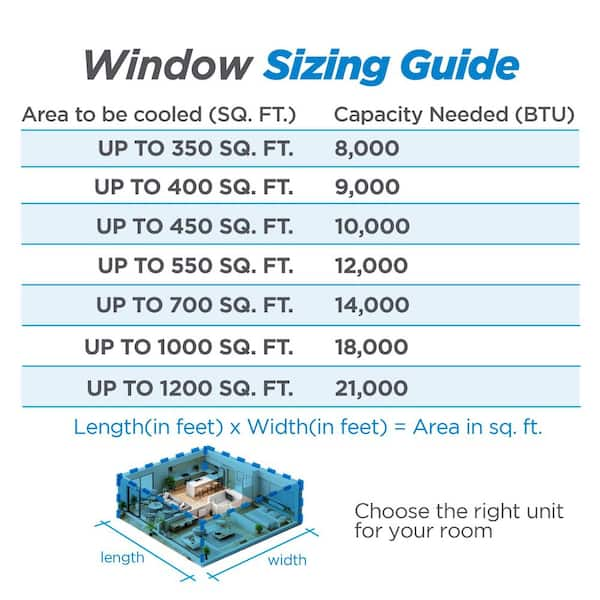
Credit: www.homedepot.com
Frequently Asked Questions
How Do I Calculate Btu For My Room Size?
To calculate BTU, multiply the room’s square footage by 25. This gives an estimate of the cooling power needed. Adjust for factors like ceiling height, sunlight, and occupants for more accuracy.
What Btu Rating Suits A 500 Sq Ft Room?
A 500 sq ft room typically requires an air conditioner with 12,500 BTUs. This rating ensures efficient cooling without excess energy use or discomfort.
Can A Higher Btu Ac Harm My Room?
Yes, an oversized AC can cause temperature swings and increased humidity. It’s best to choose a BTU rating that matches your room size for optimal comfort.
How Does Sunlight Affect Btu Needs?
Rooms with high sun exposure need 10-20% more BTUs. Sunlight increases heat, so a higher BTU rating ensures effective cooling in bright spaces.
Conclusion
Choosing the right BTU for your air conditioner matters. It ensures comfort and efficiency. Too small, and it struggles to cool. Too big, and it wastes energy. Measure your space carefully. Consider factors like sunlight and insulation. These affect cooling needs.
Use BTU calculators for guidance. They help in making informed decisions. A well-chosen air conditioner saves money. It also improves comfort at home or work. Understanding BTU basics leads to better decisions. Enjoy a cooler space with the right unit.
Stay cool and comfortable all year round.