Is your window air conditioner not cooling as well as it used to? You might be wondering if adding Freon could fix the problem.
But how exactly do you put Freon in a window air conditioner without causing damage or wasting time? You’ll discover simple, step-by-step guidance that anyone can follow. By the end, you’ll feel confident about handling your AC’s cooling power and keeping your space comfortable all summer long.
Keep reading to unlock the easy way to recharge your window air conditioner.
Signs Your Ac Needs Freon
Your window air conditioner may need Freon if it does not cool well. Freon is the refrigerant that helps cool the air. Without enough Freon, your AC will struggle.
Look for these signs to know if your AC needs more Freon. Catching the problem early can save money and keep you cool.
Reduced Cooling Efficiency
If your AC is running but the room stays warm, it may need Freon. Low Freon means the unit cannot absorb heat properly. Your air conditioner works harder but cools less.
- Room takes longer to cool down
- Air does not feel cold
- AC runs constantly without stopping
- Higher electric bills due to overwork
Ice Formation On Coils
Ice can form on the cooling coils inside the AC when Freon is low. This happens because the coils get too cold without enough refrigerant. Ice blocks airflow and reduces cooling.
- Frost or ice visible on the coils or pipes
- Water dripping inside the AC unit
- Unit stops cooling after running for a while
Hissing Or Bubbling Sounds
Unusual sounds like hissing or bubbling may mean a Freon leak. These sounds come from gas escaping or moving abnormally inside the AC. Leaks cause Freon levels to drop quickly.
| Sound | Possible Cause | Action |
| Hissing | Freon leak in pipes or coils | Call a technician to check |
| Bubbling | Air or moisture in refrigerant | Service required to fix |

Credit: thelenmechanical.com
Safety Precautions Before Adding Freon
Adding Freon to a window air conditioner can help it cool better. You must take safety steps first. These steps protect you and the environment.
Freon is a chemical that can be harmful. Follow these rules to stay safe while working on your air conditioner.
Wear Protective Gear
Always wear protective gear before handling Freon. This gear stops skin contact and breathing in harmful fumes.
Use gloves, safety glasses, and long sleeves. This gear keeps your skin and eyes safe from Freon leaks.
- Wear chemical-resistant gloves
- Use safety goggles to protect your eyes
- Wear long sleeve shirts to cover your skin
Work In A Well-ventilated Area
Freon fumes can build up and cause health risks. Always work where air flows well. This keeps the area safe.
Open windows and doors to let fresh air in. Avoid working in small, closed rooms where fumes can stay.
- Work outside if possible
- Open windows and doors for air flow
- Use fans to move air if needed
Check Local Regulations
Many places have rules about handling Freon. Check your local laws before adding it. This helps you stay legal.
Some areas require a license to buy or use Freon. Make sure you follow all rules to avoid fines or problems.
- Find out if you need a license
- Check limits on buying Freon
- Follow disposal rules for old Freon
Tools And Materials Required
Adding Freon to a window air conditioner needs the right tools and materials. Without them, the task can be unsafe or fail.
Below are the main tools and materials you will need. Each one plays a key role in the process.
Freon Type And Quantity
Use the correct Freon type for your unit. Check the air conditioner label or manual to find it. Using the wrong type can damage the system.
- Common types include R-22 and R-410A.
- Check how much Freon your unit needs before starting.
- Use a certified container to store the Freon.
Manifold Gauge Set
A manifold gauge set measures the pressure inside the air conditioner. It helps you add the right amount of Freon safely.
| Part | Purpose |
| High-pressure gauge | Measures pressure on the high side |
| Low-pressure gauge | Measures pressure on the low side |
| Hoses | Connect the gauges to the AC unit |
| Valves | Control Freon flow during charging |
Screwdrivers And Wrenches
You need screwdrivers and wrenches to access the air conditioner’s service panel and connections. These tools help you open and close fittings securely.
- Flathead and Phillips screwdrivers to remove screws.
- Adjustable wrench to loosen or tighten nuts.
- Socket wrench for hard-to-reach bolts.

Credit: www.youtube.com
Locating The Service Valve
Adding Freon to a window air conditioner requires finding the service valve first. The service valve is where you connect the refrigerant hose.
This guide helps you locate the service valve safely and easily on your unit.
Accessing The Back Panel
Start by unplugging the air conditioner. Remove the screws holding the back panel in place.
Take off the back panel carefully. This gives you access to the internal parts, including the service valve.
- Use a screwdriver to remove screws
- Keep screws safe for reassembly
- Do not force the panel off
- Handle the panel gently to avoid damage
Identifying The Low-pressure Port
The low-pressure port is the service valve where you add Freon. It is smaller than the high-pressure port.
Look for a capped valve near the compressor. It usually has a blue or black cap to mark it.
- The low-pressure port is on the larger tubing
- It has a plastic or metal cap
- It is easier to connect to than the high-pressure port
- Do not confuse it with the high-pressure port
Connecting The Manifold Gauges
Connecting the manifold gauges is key when adding Freon to a window air conditioner. These gauges measure pressure and help control the refrigerant flow.
Using the gauges correctly keeps the system safe and working well. This guide explains how to attach hoses and secure connections.
Attaching Hoses Correctly
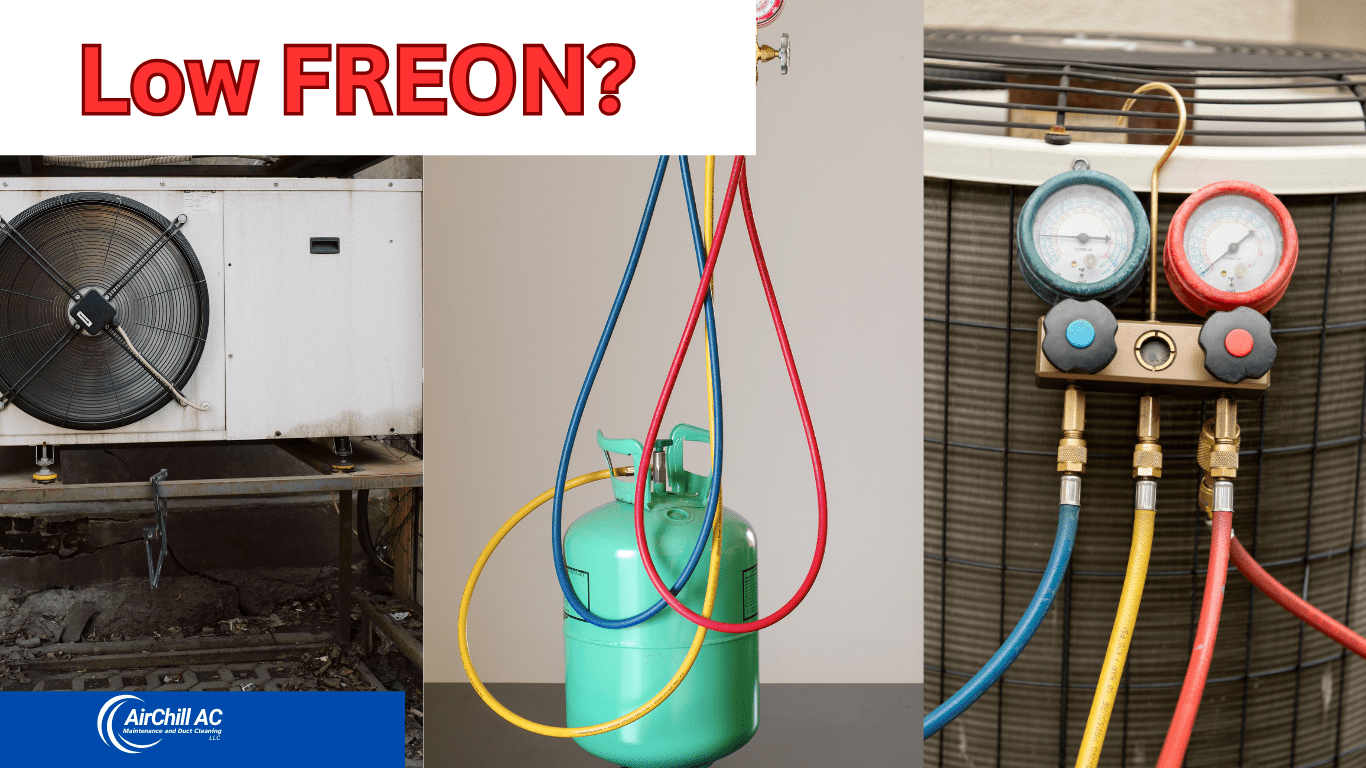
First, identify the hoses by color: red, blue, and yellow. Each hose connects to a specific port on the gauge and the air conditioner.
The red hose goes to the high-pressure side. The blue hose connects to the low-pressure side. The yellow hose links to the Freon tank or vacuum pump.
- Attach the red hose to the high-pressure port on the unit.
- Connect the blue hose to the low-pressure port on the unit.
- Connect the yellow hose to the Freon canister or vacuum pump.
Ensuring Secure Connections
Check that all hoses are tight and sealed. Loose connections can cause leaks and reduce cooling efficiency.
Use your hand to tighten fittings firmly. Avoid over-tightening, which can damage threads or valves.
- Make sure hoses fit snugly on ports and gauges.
- Hand-tighten all connections securely.
- Inspect hoses for cracks or damage before use.
Credit: airchillac.com
Adding Freon To The Unit
Adding Freon to a window air conditioner helps it cool better. It is important to do it carefully to avoid damage.
This guide explains how to add Freon safely to your air conditioner.
Starting The Air Conditioner
Turn on the air conditioner before adding Freon. This lets the system start working and shows current pressure levels.
Make sure the unit is on cooling mode and running at full power.
Opening The Valve Slowly
Attach the Freon can to the service valve. Open the valve very slowly to let Freon enter the system.
Opening it too fast can cause pressure spikes and damage the unit.
- Connect the can properly to avoid leaks
- Turn the valve a little bit at a time
- Wait between openings to check pressure
Monitoring Pressure Levels
Watch the pressure gauge closely while adding Freon. Pressure should stay within the recommended range.
If pressure is too high or too low, stop adding Freon and check the system.
- Know the correct pressure for your AC model
- Use the gauge to track changes in pressure
- Stop adding Freon if pressure moves outside safe limits
Checking For Leaks And Proper Function
Adding Freon to a window air conditioner requires care. You must check for leaks and ensure the unit works well after charging.
Leaks cause loss of refrigerant and reduce cooling. Proper function means the air conditioner cools your room efficiently.
Using Leak Detectors
Leak detectors help find places where Freon escapes. They are important to use before adding more refrigerant.
- Turn off and unplug the air conditioner.
- Apply the leak detector probe near joints and pipes.
- Look for a light or sound signal from the detector.
- If a leak is found, mark the spot for repair.
- Repeat the test after repairs to confirm no leaks remain.
Observing Cooling Performance
Check the cooling power after adding Freon. This shows if the air conditioner works properly.
| Test | Expected Result |
| Air temperature near vent | 10-15°F cooler than room |
| Compressor sound | Steady and not noisy |
| Airflow | Strong and consistent |
| Unit running time | Normal cycle length |
Common Mistakes To Avoid
Adding Freon to a window air conditioner needs care and attention. Mistakes can damage your unit or make it work poorly.
Learn the common mistakes people make when putting Freon in their air conditioners. Avoid these to keep your unit safe and cool.
Overcharging The System
Putting too much Freon in the air conditioner can cause pressure problems. This can lead to leaks or even damage the compressor.
Always check the manufacturer’s instructions for the correct amount. Use proper tools to measure the Freon level during the refill.
- Overcharging raises pressure inside the system
- High pressure can cause parts to fail
- Proper charge keeps the unit working efficiently
Ignoring Leaks
Adding Freon without fixing leaks wastes the gas and does not solve cooling problems. Leaks lower the Freon level quickly.
Check the unit carefully for leaks before adding Freon. Repair any leaks to keep the system sealed and working well.
- Leaks cause Freon loss and reduce cooling
- Ignoring leaks leads to repeated Freon refills
- Fix leaks to save money and protect the unit
Using Incorrect Freon Type
Using the wrong Freon type can harm the air conditioner’s parts. Each unit requires a specific Freon type for safe use.
Check the label on your air conditioner to find the correct Freon type. Using the right type keeps the system safe and efficient.
- Wrong Freon can damage seals and compressors
- It may cause poor cooling performance
- Use the Freon type recommended by the manufacturer
Frequently Asked Questions
How Do You Know If A Window Ac Needs Freon?
If your AC isn’t cooling well or blows warm air, it may need Freon. Check for ice buildup or hissing sounds. A professional can confirm low refrigerant levels and advise on refilling.
Can I Add Freon To A Window Air Conditioner Myself?
Yes, you can add Freon, but it requires caution. Use the correct type and follow safety guidelines. Improper handling can damage the unit or harm you. Consider professional help for best results.
What Tools Are Needed To Put Freon In A Window Ac?
You need a refrigerant gauge set, a can of correct Freon type, and safety gloves. A vacuum pump may be required for leaks. Always read the AC manual before starting the process.
How Much Freon Does A Window Air Conditioner Need?
Window AC units typically require 1 to 2 pounds of Freon. The exact amount depends on the unit’s size and model. Check the manufacturer’s label or manual for precise specifications.
Conclusion
Adding Freon to a window AC is a straightforward task. Ensure safety gear is worn. Follow the steps carefully for effective results. Properly maintain your air conditioner for optimal performance. Regular checks help avoid costly repairs. Clean filters and coils regularly.
This extends the life of your unit. A well-maintained AC provides comfort during hot days. Always prioritize safety when handling Freon. If unsure, consult a professional technician. This guarantees correct and safe Freon handling. Enjoy a cool and comfortable home environment.