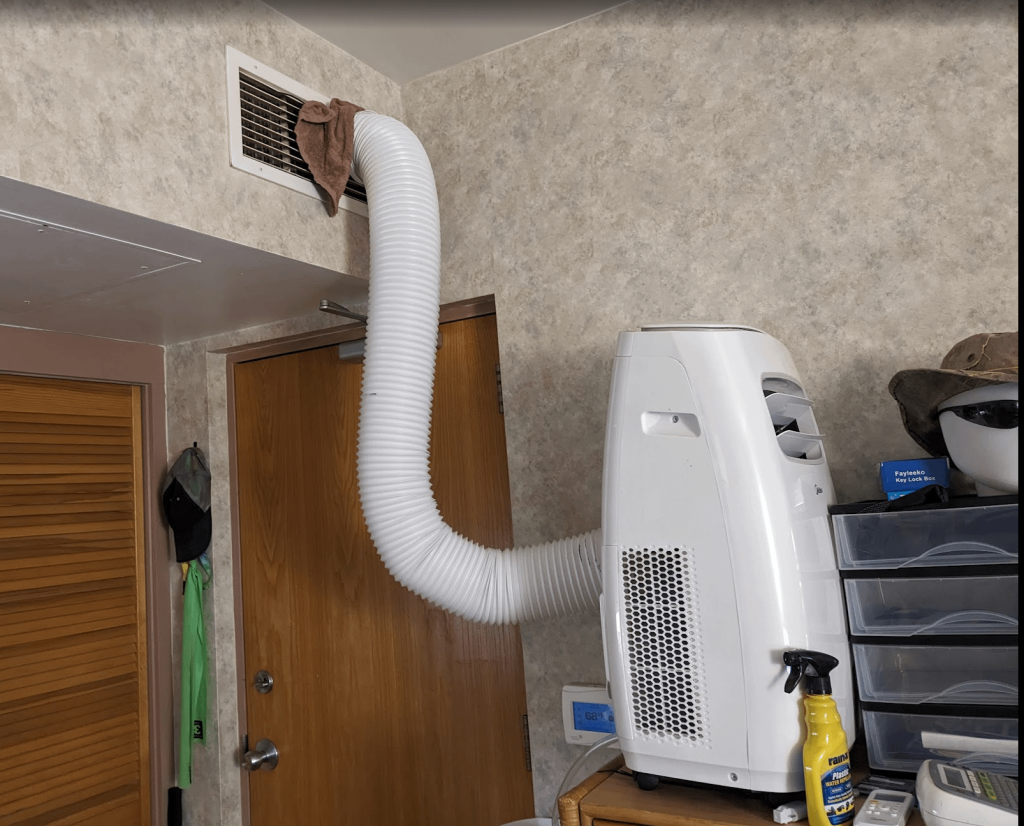
Are you wondering if you can vent your portable air conditioner into the attic? It’s a question many homeowners ask when trying to keep their rooms cool without dealing with complicated setups.
You might think the attic is a perfect spot to send hot air, but before you do, there are important things you need to know. This guide will help you understand the risks and smart alternatives so you can make the best choice for your home and comfort.
Keep reading to find out what really works and what could cause problems down the line.
Ventilation Basics
Portable air conditioners work by pulling warm air from the room. This air passes through the unit and cools down. The hot air and moisture are sent outside through a vent hose. The vent hose must lead to a place where hot air can escape easily. Common vent spots are windows or sliding doors. Venting into the attic is not a good idea.
Proper venting is very important. Without it, the hot air stays inside the house. This makes the room warmer, not cooler. It also causes moisture build-up, which can lead to mold and damage. A vent that leads outdoors helps the AC work better and lasts longer.

Credit: www.reddit.com
Attic Venting Concerns
Venting a portable air conditioner into the attic can cause serious problems. The attic is a small, closed space. It can get very hot and trap warm air.
This warm air adds extra heatto the attic, making the cooling system less effective. The unit works harder and wastes energy. Over time, this can lead to higher electric bills.
Moisture from the vent can collect in the attic. This moisture creates moldand mildew. These fungi can damage wood and insulation, and cause health issues.
Attic insulation may also suffer. Moisture weakens insulation, lowering its ability to keep your home warm or cool. Wet insulation can also lead to costly repairs.
| Risk | Effect |
|---|---|
| Heat Buildup | Raises attic temperature, wastes energy |
| Moisture | Causes mold and mildew growth |
| Insulation | Gets damaged, reduces efficiency |
Alternative Venting Options
Using a Window Vent Kitis a common way to vent portable air conditioners. It fits into the window and pushes hot air outside. This method keeps the hot air from building inside your home. The kits are easy to install and remove.
Through-the-Wall Ventinglets you push hot air directly outside through a small hole in the wall. This option is more permanent but works well if you want to keep windows closed. A professional may be needed to make the hole safely.
Portable AC with No Vent Modelsdo not need venting. They use water or ice to cool the air. These units are less powerful but good for small rooms or spaces where venting is hard.

Credit: www.reddit.com
Expert Installation Tips
Choose a vent hose that fits your portable air conditioner well. The hose should be flexiblebut not too long. A long hose can reduce cooling efficiency. Use rigid or semi-rigidhoses for better airflow. Avoid cheap, thin plastic hoses. They might tear or kink easily.
Seal all connections tightly with duct tapeor silicone sealant. This stops hot air from leaking back inside. Wrap insulation around the hose to keep the air cool. Insulation also prevents condensation, which can cause water damage or mold.
Make sure the vent hose is not bent or crushed. Airflow needs to be smoothand unblocked. Place the hose to allow hot air to flow freely into the attic. Check the attic for proper ventilation so hot air can escape outside. This helps the air conditioner work well and lasts longer.
Energy Efficiency Considerations
Venting a portable air conditioner into the attic can cause higher cooling costs. The hot air released heats the attic space, making your home warmer. This forces the air conditioner to work harder and use more energy.
Keeping indoor air quality is also important. The attic might have dust, mold, or other pollutants. Venting warm, moist air here can increase these problems. This can harm your home’s air qualityand may cause health issues.
- Hot air in attic raises home temperature
- More energy needed to cool living spaces
- Possible buildup of moisture and mold in attic
- Indoor air quality may worsen due to attic pollutants
When To Consult Professionals
Venting problemscan cause heat buildup and moisture in the attic. Watch for unusual odorsor condensationnear vents. Warm air or water stains are signs of poor venting. Noise from the unit may also indicate issues.
Hiring HVAC expertshelps ensure vents are installed safely. Professionals check for proper airflowand avoid damageto your home. They use tools to test vent paths and fix leaks. This service protects your portable air conditionerand attic space.

Credit: www.aol.com
Frequently Asked Questions
Can I Vent A Portable Ac Into The Attic?
No, venting a portable AC into the attic is not recommended. It releases hot air and moisture, which can damage insulation and cause mold growth.
What Are The Risks Of Venting Into The Attic?
Venting into the attic increases heat and humidity levels. This can lead to structural damage, mold, and reduced HVAC efficiency.
Where Should Portable Ac Units Be Vented?
Portable AC units should be vented outdoors through a window or wall. This ensures proper heat expulsion and prevents indoor humidity buildup.
Can Venting Into The Attic Void My Warranty?
Yes, venting into the attic may void your portable AC’s warranty. Manufacturers require proper venting to avoid damage and maintain coverage.
Conclusion
Venting a portable air conditioner into the attic is tricky. It’s not always safe or effective. Attics can trap heat, causing the unit to work harder. This increases energy costs. Moisture buildup may also damage the attic. Before deciding, consider other venting options.
Windows and sliding doors are common alternatives. They allow for better airflow and reduce potential risks. Always consult a professional for advice. They can help with the best solution for your home. Stay cool and choose wisely for your comfort and safety.