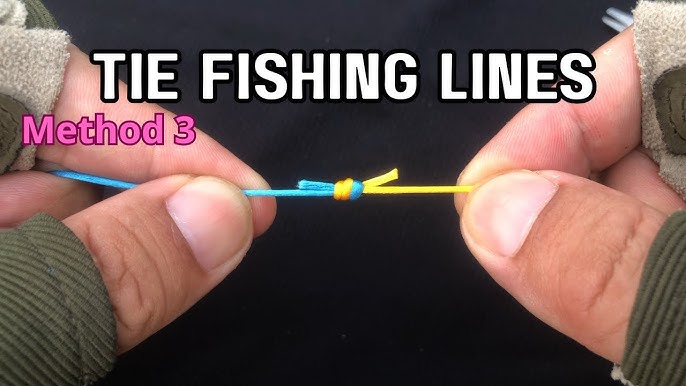
Have you ever struggled with connecting two fishing lines and wondered if there’s an easy way to do it right? Knowing how to tie fishing line together can make a huge difference in your fishing experience.
It can save you time, prevent line breaks, and keep your catch secure. You’ll discover simple, effective knots that anyone can master. By the end, you’ll feel confident handling your fishing gear like a pro. Ready to learn the secrets that will improve your fishing game?
Let’s dive in.

Credit: www.youtube.com
Choosing The Right Knot
Tying fishing lines correctly keeps your gear strong and reliable. Different lines need different knots. Using the right knot helps you catch more fish.
Monofilament, fluorocarbon, and braided lines all have unique features. Choosing the correct knot depends on the line type. This guide shows knots best for each line.
Knots For Monofilament Lines
Monofilament lines are stretchy and smooth. They need knots that hold tight without slipping. The Palomar knot is a strong choice for monofilament.
- Palomar Knot: Easy to tie and very strong.
- Improved Clinch Knot: Common and reliable for many uses.
- Uni Knot: Versatile and good for attaching hooks or lures.
Knots For Fluorocarbon Lines
Fluorocarbon lines are dense and less visible underwater. They are stiff, so knots need to be tight and neat. The Double Uni knot works well for joining fluorocarbon lines.
| Knot | Strength | Ease of Tying |
| Double Uni Knot | High | Moderate |
| San Diego Jam Knot | Strong | Easy |
| Blood Knot | Good | Challenging |
Knots For Braided Lines
Braided lines are very thin and strong but slippery. Knots must grip well and not slip. The Palomar knot is popular for braided lines because it holds tight.
- Palomar Knot
- Double Palomar Knot
- Arbor Knot (for attaching line to spool)

Credit: www.youtube.com
Step-by-step Knot Tying
Tying fishing lines together is important for a strong connection. Different knots work better for different fishing situations.
Here are simple steps for four popular knots. Follow each step carefully to tie secure knots.
Improved Clinch Knot
The Improved Clinch Knot is common for tying hooks and lures. It is strong and easy to tie.
Pass the line through the hook eye. Wrap the tag end around the main line five times. Then pass the tag end through the small loop near the eye. Finally, pass it through the big loop made. Pull tight and trim the extra line.
- Pass line through hook eye
- Wrap tag end 5 times around main line
- Pass tag end through small loop near eye
- Pass tag end through large loop
- Pull tight and trim excess
Palomar Knot
The Palomar Knot is very strong and works well for braided lines. It keeps line strength high.
Double about six inches of line. Pass the loop through the hook eye. Tie a simple overhand knot with the doubled line. Pass the hook through the loop. Pull both tag end and main line to tighten. Trim the tag end.
- Double 6 inches of line
- Pass loop through hook eye
- Tie overhand knot with doubled line
- Pass hook through loop
- Pull tight and trim excess
Double Uni Knot
The Double Uni Knot joins two lines of similar or different types. It is easy and strong.
Overlap the two lines. Make a loop with one line over the other. Wrap its tag end around both lines five times. Pull the tag end to tighten the first knot. Repeat with the other line. Pull both main lines to slide knots together. Trim tag ends.
- Overlap two lines
- Make loop with one line over the other
- Wrap tag end 5 times around both lines
- Tighten first knot by pulling tag end
- Repeat with second line
- Pull main lines to slide knots together
- Trim tag ends
Blood Knot
The Blood Knot is good for connecting thin lines. It keeps a smooth, small profile for casting.
Overlap two lines about six inches. Twist one line around the other five times. Pass its tag end between the two lines. Repeat with the other line. Pull both tag ends to tighten the knots. Slide knots together and trim tag ends.
- Overlap two lines by 6 inches
- Twist one line around the other 5 times
- Pass tag end between the lines
- Repeat with other line
- Pull tag ends to tighten knots
- Slide knots together
- Trim tag ends
Tips For Stronger Knots
Tying fishing line together needs care to keep the knot strong. A good knot holds tight and does not slip.
Use these tips to make your knots last longer and avoid losing your catch.
Proper Line Overlap
Overlap the lines by several inches before tying the knot. This gives more surface area for the knot to hold.
Make sure the lines lie flat and side by side without twisting or crossing oddly.
- Overlap at least 4-6 inches of line
- Keep lines parallel and smooth
- Avoid sharp bends or kinks
Moistening The Knot
Wet the fishing line before tightening the knot. This reduces friction and prevents damage to the line.
Use water or saliva to moisten the knot gently. Dry knots can weaken as they tighten.
- Moisten with water or saliva
- Apply before pulling the knot tight
- Helps the knot slide into place smoothly
Tightening Techniques
Tighten the knot slowly and evenly. Pull on both ends of the line to seat the knot firmly.
A quick or uneven pull can cause the knot to slip or weaken. Keep steady pressure until the knot is snug.
- Pull both ends evenly
- Use slow, steady pressure
- Check the knot tightness before fishing
Common Mistakes To Avoid
Tying fishing line correctly is key for a strong, reliable connection. Many anglers make simple mistakes that weaken their knots.
Knowing what to avoid can save your gear and improve your fishing success. Here are common errors to watch out for.
Overtightening
Pulling the knot too tight can damage the fishing line. It can cut into the fibers, making the line weak.
Always pull just enough to tighten the knot firmly. Too much force can cause the line to snap under pressure.
Incorrect Knot Choice
Using the wrong knot for your fishing line type or purpose leads to failure. Not all knots work for every line.
- Choose knots designed for your line material (monofilament, fluorocarbon, braid).
- Use simple knots for light lines and stronger knots for heavy lines.
- Practice tying each knot to avoid mistakes.
Insufficient Trimming
Leaving too much tag end after tying a knot can cause tangles and catch debris. Leaving too little can let the knot slip.
| Tag End Length | Effect |
| Too Long | Snags and tangles easily |
| Too Short | Knot may slip or come undone |
| Proper Length (3-5 mm) | Balanced security and neatness |
Testing Knot Strength
Testing the strength of a fishing knot is important. It helps ensure the knot will hold under pressure. Strong knots prevent losing fish and gear.
Two common ways to test knot strength are the manual pull test and using a knot tester. Both methods check how well the knot holds before fishing.
Manual Pull Test
The manual pull test is simple and requires no special tools. You pull the line slowly and steadily to feel the knot’s strength. This test helps find weak knots before fishing.
- Hold the line firmly on both sides of the knot.
- Pull the line with steady force, increasing gradually.
- Watch and feel if the knot slips or breaks.
- If the knot slips, retie it with more turns or a different knot type.
- Test again until the knot holds firmly without slipping.
Using A Knot Tester
A knot tester measures the exact strength of a knot. It pulls the line with controlled force and shows the breaking point. This method is more precise than manual testing.
| Test Factor | Manual Pull Test | Knot Tester |
|---|---|---|
| Equipment Needed | None | Specialized device |
| Accuracy | Moderate | High |
| Ease of Use | Easy | Requires training |
| Time Required | Quick | Moderate |
| Best For | Casual anglers | Researchers and professionals |

Credit: www.wikihow.com
Maintaining Your Knots
Tying fishing lines together is important for a strong connection. Keeping knots in good shape helps avoid losing fish or gear.
Regular care of your knots makes your fishing experience better and safer. Check your knots often to keep them strong.
Regular Inspection
Look at your knots before and after fishing trips. Check for signs of wear like fraying or slipping.
Pay attention to knots that feel loose or look damaged. These can break easily and cause problems.
- Inspect knots for cracks or cuts
- Feel knots to ensure they are tight
- Check knots after catching big fish
Replacing Worn Knots
Remove knots that show signs of damage. Replace them with new, strong knots to keep your line secure.
Always use proper tying techniques when replacing knots. This keeps the line from weakening and breaking.
- Cut off old, frayed knots
- Tie a strong knot like the improved clinch or blood knot
- Test the knot by pulling firmly before fishing
Frequently Asked Questions
What Is The Best Knot To Tie Fishing Lines Together?
The best knot for tying fishing lines is the Double Uni Knot. It is strong, reliable, and easy to tie. This knot works well for lines of different thicknesses and materials, ensuring a secure connection without slipping during fishing.
How Do You Tie Fishing Line To Line Securely?
To tie fishing lines securely, use the Double Uni Knot or Blood Knot. Both create a strong, smooth connection. Moisten the lines before tightening to prevent friction damage. Pull the knots firmly to ensure they hold under tension.
Can You Tie Monofilament To Braided Fishing Line?
Yes, you can tie monofilament to braided line using the Double Uni Knot. This knot handles differences in line texture and diameter well. It maintains strength and prevents slippage, making it ideal for combining different fishing line types.
How Many Wraps For A Strong Fishing Line Knot?
For a strong fishing line knot, make 5 to 7 wraps around the line. This ensures maximum friction and grip. Too few wraps weaken the knot, while too many can cause bulkiness and difficulty tightening.
Conclusion
Tying fishing lines is easier than it seems. Practice makes it simple. Start with the basics. Follow step-by-step guides. Use strong knots for better results. Ensure knots are tight and secure. Fishing success depends on strong lines. Always check for wear and tear.
Replace when needed. Keep lines organized. Proper care extends line life. Enjoy the fishing experience. Confidence grows with practice. Soon, tying lines feels natural. Happy fishing adventures await you!