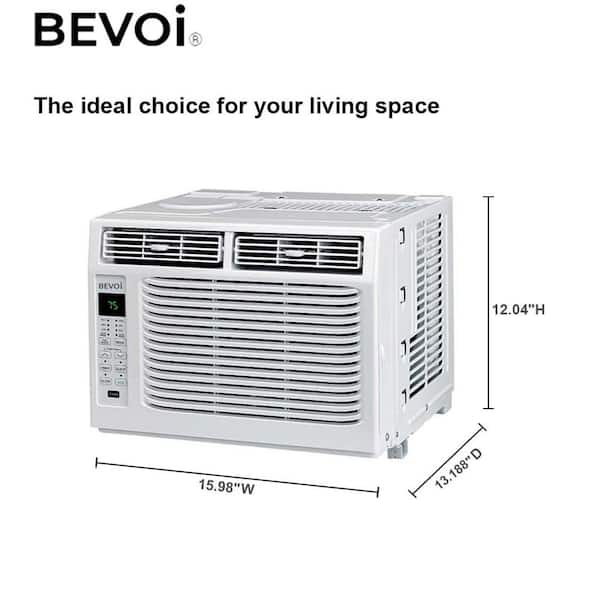
Are you wondering how many watts a 5000 BTU air conditioner uses? Knowing this can help you save money on your electricity bill and choose the right unit for your space.
Understanding the power consumption of your AC is key to making smart decisions about cooling your home efficiently. Keep reading to find out exactly how much energy a 5000 BTU air conditioner needs and how that impacts your daily use.
This simple knowledge can make a big difference in your comfort and costs.
Btu And Power Basics
Understanding how many watts a 5000 BTU air conditioner uses helps you manage energy costs. BTU and watts measure different things but relate to cooling and power.
This guide explains what BTU measures and how watts affect energy use in air conditioners.
What Btu Measures
BTU stands for British Thermal Unit. It measures the amount of heat an air conditioner can remove from a room per hour. A 5000 BTU unit cools a small space by removing 5000 BTUs of heat each hour.
- BTU shows cooling capacity.
- A higher BTU means stronger cooling.
- Choose BTU size based on room size.
Watts And Energy Consumption
Watts measure the power an air conditioner uses. This shows how much electricity the unit consumes while running. Knowing watts helps estimate energy cost.
| BTU Rating | Approximate Power (Watts) | Room Size (sq ft) |
| 5000 BTU | 400 to 600 watts | 100 to 150 |
| 8000 BTU | 700 to 900 watts | 250 to 350 |
| 12000 BTU | 1000 to 1400 watts | 450 to 550 |
Power Needs For 5000 Btu Ac
A 5000 BTU air conditioner cools small rooms efficiently. Understanding its power needs helps manage electricity use.
Knowing the wattage helps you choose the right circuit and estimate energy costs.
Typical Wattage Range
Most 5000 BTU air conditioners use between 400 and 600 watts. The exact number depends on the model and features.
This wattage is low compared to bigger AC units, making it ideal for small spaces.
- Low power models: about 400 watts
- Average models: around 500 watts
- Higher power models: up to 600 watts
Factors Affecting Power Use
Several factors change how much power a 5000 BTU AC uses. These affect energy consumption and efficiency.
Understanding these factors helps you use your air conditioner wisely and save energy.
- Room size and insulation quality
- Outdoor temperature and humidity levels
- AC unit’s age and maintenance status
- Fan speed and cooling settings
- Frequency of use and run time
Energy Efficiency Ratings
Energy efficiency ratings show how well an air conditioner uses electricity. They help compare different models.
Knowing the efficiency ratings can save money and reduce energy waste.
Eer And Seer Explained
EER means Energy Efficiency Ratio. It measures cooling power per watt used at a set temperature.
SEER means Seasonal Energy Efficiency Ratio. It shows efficiency over an entire cooling season.
- EER is useful for constant temperature conditions.
- SEER shows real-world energy use over months.
- Higher EER or SEER means better efficiency.
Impact On Electricity Bills
A 5000 BTU air conditioner with a high efficiency rating uses less electricity.
This lowers your monthly electricity bill and helps the environment.
| Efficiency Rating | Electricity Use | Monthly Cost |
|---|---|---|
| Low EER or SEER | More watts | Higher bills |
| High EER or SEER | Fewer watts | Lower bills |

Credit: www.lg.com
Calculating Energy Costs
Knowing how much electricity a 5000 BTU air conditioner uses helps you plan your budget. You can find out your daily, monthly, and yearly energy costs.
We will explain how to estimate these costs with simple calculations. This helps you save money and use energy wisely.
Estimating Daily Usage
A 5000 BTU air conditioner usually uses about 500 watts per hour. To find daily energy use, multiply the watts by hours used.
For example, if you run the AC for 8 hours a day, multiply 500 watts by 8 hours. This gives you 4000 watt-hours or 4 kWh per day.
- Power use: 500 watts (0.5 kW)
- Hours used per day: 8 hours
- Daily energy use: 0.5 kW × 8 hours = 4 kWh
Monthly And Annual Costs
To find monthly costs, multiply daily energy use by 30 days. Then multiply by your electricity rate per kWh.
For yearly costs, multiply daily energy use by 365 days and then by the rate. This gives a clear view of your spending.
| Calculation | Formula | Example (Rate $0.12/kWh) |
|---|---|---|
| Monthly Energy Use | 4 kWh × 30 days | 120 kWh |
| Monthly Cost | 120 kWh × $0.12 | $14.40 |
| Annual Energy Use | 4 kWh × 365 days | 1460 kWh |
| Annual Cost | 1460 kWh × $0.12 | $175.20 |
Choosing The Right Unit
Choosing the right air conditioner is important for comfort and energy use. A 5000 BTU unit is good for small rooms.
Knowing how many watts the unit uses helps you manage electricity costs. This guide explains key points to consider.
Matching Ac Size To Room
The size of your room affects the AC power you need. A 5000 BTU unit works best in rooms up to 150 square feet.
Too small AC will not cool well. Too big AC wastes energy and money.
- Measure the room size in square feet
- Use a 5000 BTU AC for rooms about 100 to 150 sq ft
- Consider room height and sun exposure
Energy-saving Features
Look for energy-saving features to reduce power use. These features can lower your electricity bill.
Some 5000 BTU AC units use around 450 to 600 watts when running. Features help use less power.
- Energy Star certified models use less electricity
- Sleep mode adjusts cooling at night
- Thermostat control keeps temperature steady
- Timer function turns AC off automatically

Credit: elementelectronics.com
Tips To Reduce Energy Use
Running a 5000 BTU air conditioner uses electricity. You can save energy by using it smartly. Small changes help lower your power bill.
Here are some tips to keep your air conditioner efficient and reduce energy use in your home.
Optimal Thermostat Settings
Setting your thermostat correctly saves energy. Keep it at a comfortable but not too low temperature. Avoid setting it below 78°F (25°C) during the day.
- Set thermostat to 78°F (25°C) when you are home.
- Raise the temperature by 5°F (3°C) when away.
- Use a programmable thermostat to adjust settings automatically.
- Close doors and windows to keep cool air inside.
- Use fans to help circulate air and feel cooler.
Maintenance For Efficiency
Regular maintenance keeps your air conditioner working well. A clean AC uses less power and cools better.
| Maintenance Task | Frequency | Benefit |
| Clean or replace air filters | Every 1-2 months | Improves airflow and efficiency |
| Clean coils and fins | Once a year | Prevents overheating and energy waste |
| Check refrigerant levels | Annually | Ensures proper cooling power |
| Clear debris around unit | Monthly | Allows good airflow |

Credit: www.homedepot.com
Frequently Asked Questions
How Many Watts Does A 5000 Btu Air Conditioner Use?
A 5000 BTU air conditioner typically uses between 400 to 600 watts. The exact wattage depends on the model and energy efficiency. This size is ideal for small rooms and consumes relatively low power compared to larger units.
Is 5000 Btu Enough To Cool A Small Room?
Yes, 5000 BTU is sufficient to cool rooms up to 150 square feet. It works well in bedrooms, offices, or small living areas. Proper insulation and ventilation improve its cooling efficiency.
How To Calculate Watts From Btu For Air Conditioners?
To convert BTU to watts, divide BTU by 3. 412. For example, 5000 BTU ÷ 3. 412 equals about 1465 watts cooling capacity. However, actual power consumption is lower due to unit efficiency.
Can A 5000 Btu Ac Run On A 500-watt Generator?
Most 5000 BTU AC units require 400-600 watts, so a 500-watt generator might suffice. Check the unit’s starting and running wattage. Always allow extra power for startup surge.
Conclusion
Choosing the right air conditioner wattage is crucial. A 5000 BTU unit needs around 500 watts. This ensures efficient cooling without high energy costs. Always check your room size and energy needs. Proper sizing saves money and keeps you comfortable.
Remember, energy-efficient models offer long-term savings. Understanding these basics helps in making informed decisions. Consider expert advice if unsure. This guarantees a suitable choice for your home. Stay cool and energy-smart with the right air conditioner wattage.