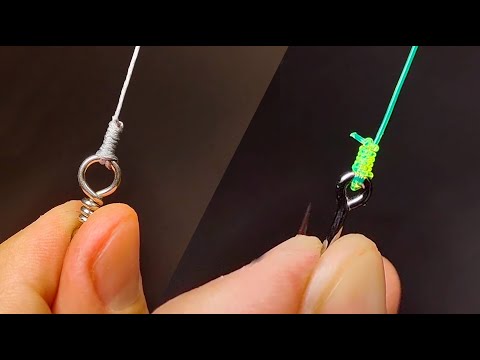
If you love fishing, you know how frustrating it can be when your line twists and tangles. A simple swivel can solve this problem and make your fishing experience much smoother.
But how do you put a swivel on a fishing line the right way? You’ll discover easy steps to attach a swivel quickly and securely. By the end, you’ll be ready to fish with confidence, avoiding annoying knots and tangles that waste your time.
Keep reading to learn the trick that every angler needs to know.

Credit: www.youtube.com
Choosing The Right Swivel
Swivels help prevent your fishing line from twisting. Picking the right swivel keeps your setup strong and smooth.
Different swivels fit different fishing needs. Knowing the types and sizes helps you choose well.
Types Of Fishing Swivels
There are several types of swivels for fishing. Each type has a special use on the water.
- Barrel Swivels:Simple and common. Good for most fishing lines.
- Ball Bearing Swivels:Rotate smoothly. Used for heavy lines and strong fish.
- Three-Way Swivels:Have three rings. Used for rigs with multiple lines.
- Snap Swivels:Have a clip for quick lure changes.
Choose the swivel type that fits your fishing style and line type.
Swivel Sizes And Strengths
Swivels come in many sizes. The size affects how strong and heavy the swivel can be.
Always match the swivel size to your fishing line and target fish weight.
| Swivel Size | Line Strength (lbs) | Common Use |
|---|---|---|
| Small (Size 12-16) | 2-8 | Light freshwater fishing |
| Medium (Size 6-10) | 10-30 | General fishing for medium fish |
| Large (Size 1-4) | 40-80+ | Heavy fishing and saltwater |
Pick a swivel that will not break under pressure but is not too big for your setup.

Credit: www.amazon.ca
Preparing Your Fishing Line
Putting a swivel on your fishing line helps prevent twists. Preparing the line correctly makes this task easier. Start by choosing the right line material and cutting it properly.
Good preparation improves fishing performance. It also protects your gear from damage and tangling.
Selecting The Line Material
Fishing lines come in many materials. Pick one that fits the fish you want to catch. Some lines stretch more, while others are stronger.
Monofilament lines are flexible and easy to handle. Fluorocarbon lines are nearly invisible underwater. Braided lines are very strong and thin.
- Monofilament: good for beginners and light fishing
- Fluorocarbon: best for clear water and cautious fish
- Braided: ideal for heavy cover and big fish
Measuring And Cutting The Line
Measure the fishing line length based on your rod and reel. Too long or short line affects casting and control. Use a ruler or tape measure for accuracy.
Cut the line cleanly with sharp scissors or a line cutter. A neat cut helps knots hold better and prevents fraying.
- Measure twice to avoid mistakes
- Cut slightly longer than needed for knot tying
- Store extra line safely to prevent tangles
Attaching The Swivel
Attaching a swivel to your fishing line helps prevent twists. It keeps your line strong and smooth. This guide shows you how to tie the swivel securely using simple knots.
Using the right knot is important. The improved clinch knot is a popular choice for attaching swivels. Follow the steps carefully for a tight and safe knot.
Using The Improved Clinch Knot
Begin by threading the line through the swivel’s eye. Wrap the tag end around the standing line five to seven times. Then, pass the tag end through the small loop near the swivel.
- Thread the line through the swivel eye.
- Wrap the tag end around the main line 5 to 7 times.
- Pass the tag end through the small loop by the swivel.
- Bring the tag end back through the big loop you just created.
- Pull the tag end slightly to start tightening.
Tightening And Securing The Knot
To secure the knot, moisten it with water or saliva. Then, pull both the tag end and the standing line slowly and firmly. This tightens the knot evenly and prevents damage to the line.
| Action | Tip |
|---|---|
| Moisten the knot | Use water or saliva to reduce friction |
| Pull slowly | Pull both ends evenly to tighten |
| Trim tag end | Leave a small tail to avoid slipping |
Testing The Connection
After attaching a swivel to your fishing line, testing the connection is important. This ensures your setup is strong and works well.
Two key parts to test are the strength of the connection and the smoothness of the swivel’s rotation. These affect your fishing experience.
Checking For Strength
Pull the line gently to check if the knot holds tight. You want to be sure it can handle the fish’s pull without breaking.
- Hold the swivel firmly in one hand.
- Pull the fishing line slowly with the other hand.
- Look for any slipping or loosening of the knot.
- If the knot slips, retie it securely.
- Repeat the test until the knot stays strong.
Ensuring Smooth Rotation
Turn the swivel by hand to check if it rotates freely. A good swivel spins easily to prevent line twists.
| Rotation Test | Expected Result |
| Spin swivel slowly | Should rotate smoothly without sticking |
| Apply light pressure | No grinding or rough spots felt |
| Check for noise | No squeaking or unusual sounds |
Tips For Maintaining Your Swivel Setup
Keeping your fishing swivel in good shape helps your line last longer. Proper care stops twists and tangles while fishing.
Regular checks and timely replacements keep your swivel working well. Follow these tips to maintain your setup.
Regular Inspections
Check your swivel often for damage or rust. Look closely at the rings and the rotating part. Make sure it moves smoothly without sticking.
- Inspect before and after each fishing trip
- Look for cracks, bends, or corrosion
- Test the swivel’s rotation by hand
- Clean off dirt and salt with fresh water
Replacing Worn Swivels
Replace your swivel if it shows wear or damage. A weak swivel can break and cause you to lose your catch.
| Sign of Wear | Action Needed |
| Rust or corrosion | Replace immediately |
| Stiff or stuck rotation | Replace or lubricate |
| Cracks or bends | Replace to avoid breakage |
| Loose parts | Secure or replace |

Credit: www.amazon.ca
Frequently Asked Questions
What Is The Purpose Of A Swivel On A Fishing Line?
A swivel prevents line twist and tangling while fishing. It allows the lure or bait to spin freely. This improves casting distance and bait presentation. Using a swivel enhances overall fishing efficiency and reduces line damage.
How Do You Properly Attach A Swivel To A Fishing Line?
To attach a swivel, tie a strong knot like the improved clinch knot. Pass the line through the swivel eye, then wrap it around the line five times. Tighten the knot firmly and trim excess line for a secure connection.
Can I Use Any Swivel Size For My Fishing Line?
No, choose a swivel size based on your fishing line strength and target species. Smaller swivels suit light lines and small fish. Larger swivels are for heavier lines and big fish. Using the correct size ensures optimal performance and durability.
When Should I Replace A Fishing Swivel?
Replace your swivel if it shows signs of rust, corrosion, or damage. Also, swap it if it feels stiff or doesn’t rotate smoothly. Regular inspection before fishing trips ensures reliable performance and prevents lost catches.
Conclusion
Putting a swivel on a fishing line is simple. It helps reduce line twists. Follow the steps to make fishing smoother. First, gather your tools. Then, tie the swivel securely. Check knots to prevent losing fish. Now, you’re ready to fish with confidence.
Practice makes perfect, so keep trying. A well-attached swivel improves your fishing experience. Enjoy your time on the water. Experiment with different techniques. Soon, you’ll see the benefits. Happy fishing!