If you drive an all-wheel drive (AWD) car, you know how important it is to keep your tires in good shape. But do you know the best way to rotate your tires to make them last longer and keep your ride smooth?
Rotating your tires the right way can save you money and improve your car’s performance. You’ll learn step-by-step how to rotate tires on your AWD car the correct way. By the end, you’ll have the confidence to do it yourself or know exactly what to ask your mechanic.
Keep reading to protect your investment and drive safer every day.
Why Rotate Tires On Awd Cars
Rotating tires on an all-wheel-drive (AWD) car is very important. It helps keep the tires wearing evenly.
AWD cars send power to all four wheels. This means tires wear differently than on other cars.
Impact On Tire Wear
Tires on AWD cars wear unevenly if not rotated. Front tires may wear faster because they do more work.
Uneven tire wear can cause handling problems and affect safety on the road.
- Front tires often wear faster than rear tires
- Uneven wear can lead to poor traction
- Rotating tires balances the wear on all four tires
Maintaining Vehicle Performance
Rotating tires keeps the car’s performance steady. It helps the AWD system work properly.
Balanced tires improve driving control and stability, especially in bad weather.
- Even tire wear helps the AWD system function well
- Better grip and control on wet or slippery roads
- Improves overall driving safety and comfort
Extending Tire Lifespan
Regular tire rotation spreads out wear on all tires. This helps tires last longer before needing replacement.
Rotating tires can save money by avoiding early tire replacement.
- Rotated tires wear evenly and last longer
- Delays the need to buy new tires
- Maintains good tire condition for safer driving
Credit: www.michelin.ca
When To Rotate Tires
Tire rotation helps your tires wear evenly. This keeps your car safe and running well.
Knowing when to rotate tires on an all-wheel-drive car is important. It protects the drivetrain and improves tire life.
Recommended Mileage Intervals
Most experts suggest rotating tires every 5,000 to 8,000 miles. This range fits most all-wheel-drive cars.
Check your car’s owner manual for exact mileage. Following this keeps your tires balanced and safe.
- Rotate tires every 5,000 to 8,000 miles
- Follow the schedule in your car manual
- Rotate tires more often if you drive on rough roads
Signs Tires Need Rotation
Look for uneven tire wear. This means the tires are not rotating properly.
Other signs include pulling to one side or vibration while driving. These can mean your tires need rotation soon.
- Tires wear unevenly on tread
- Car pulls to one side while driving
- Steering wheel vibrates at speed
- Noise from tires increases
Tools Needed For Rotation
Rotating tires on an all-wheel-drive car helps keep the tires wearing evenly. You need specific tools to do the job safely and correctly.
This guide will cover the basic equipment and safety gear required for tire rotation.
Basic Equipment
You will need several tools to lift the car and remove the tires. Having these ready makes the process easier.
- Car jack capable of lifting your vehicle
- Jack stands to safely support the car
- Lug wrench or tire iron to remove lug nuts
- Tire pressure gauge to check inflation after rotation
- Torque wrench to tighten lug nuts properly
Safety Gear
Safety is important when working under your car. Use the right gear to protect yourself.
| Gear | Purpose |
| Gloves | Protect hands from dirt and sharp edges |
| Safety glasses | Shield eyes from dust and debris |
| Closed-toe shoes | Protect feet from falling objects |
| Wheel chocks | Prevent the car from rolling |
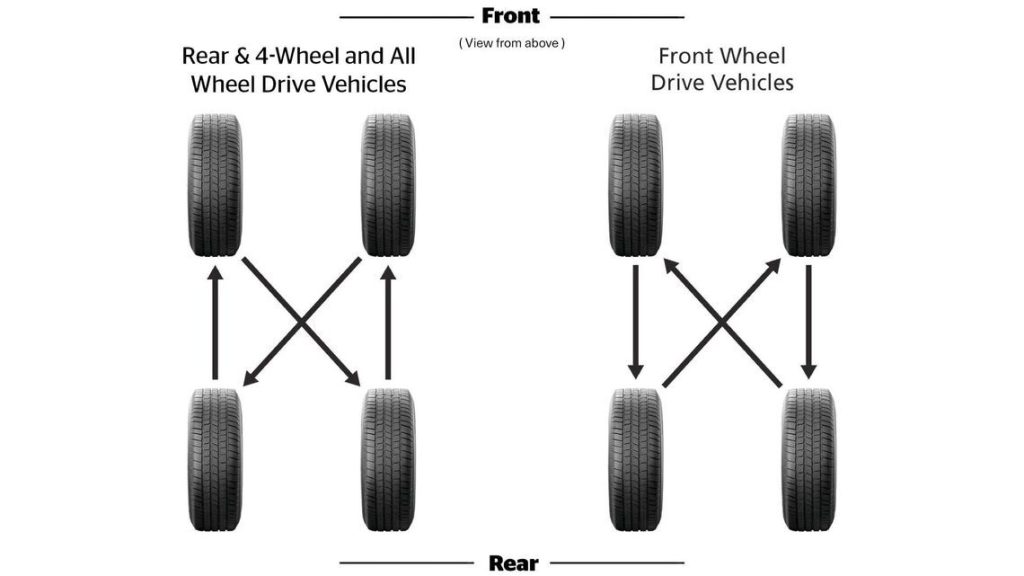
Rotation Patterns For Awd
Rotating tires on an All Wheel Drive (AWD) car helps keep the tires wearing evenly. This keeps the car safe and improves tire life.
Different rotation patterns work for AWD vehicles. Choosing the right pattern depends on tire type and car design.
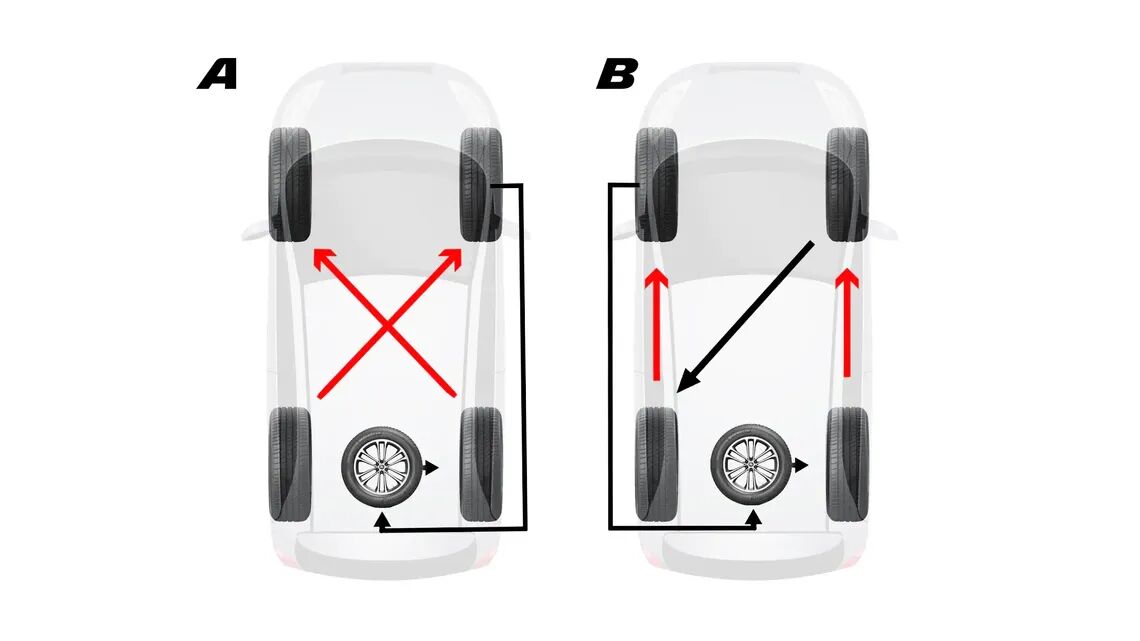
Forward Cross Pattern
The Forward Cross Pattern moves the front tires to the rear on the same side. The rear tires cross to the front on the opposite sides.
- Front left tire moves to rear left
- Front right tire moves to rear right
- Rear left tire moves to front right
- Rear right tire moves to front left
X-pattern Rotation
The X-Pattern Rotation crosses all tires. Each tire moves to the opposite corner of the car.
| Current Position | New Position |
| Front Left | Rear Right |
| Front Right | Rear Left |
| Rear Left | Front Right |
| Rear Right | Front Left |
Manufacturer Recommendations
Car makers often give specific advice for tire rotation. They base this on the car’s design and tire type.
Check your owner’s manual for these details:
- Which rotation pattern to use
- How often to rotate tires
- Any special instructions for tire size or type
Step-by-step Rotation Process
Rotating tires on an all-wheel drive car helps keep them wearing evenly. This improves driving safety and tire life.
Follow these clear steps to rotate your tires properly. You will need basic tools and a safe place to work.
Preparing The Vehicle
Park your car on a flat surface. Apply the parking brake to stop it from moving. Remove any objects from around the tires.
- Check tire pressure and inflate if needed.
- Gather a lug wrench, jack, and jack stands.
- Wear gloves to protect your hands.
Lifting And Securing The Car
Locate the car’s jacking points shown in the owner’s manual. These points are safe for lifting.
- Place the jack under a jacking point near the front tire.
- Lift the car until the tire is off the ground.
- Put a jack stand under the frame for support.
- Repeat the process for the rear tires if needed.
Removing And Swapping Tires
Loosen the lug nuts on each tire before removing the tire. Use the correct pattern for all-wheel drive rotation.
| Original Position | New Position |
| Front Left | Rear Right |
| Front Right | Rear Left |
| Rear Left | Front Left |
| Rear Right | Front Right |
Swap the tires according to the table. This pattern balances tire wear on all wheels.
Reinstalling And Tightening Lug Nuts
Place each tire back on its new position. Hand-tighten the lug nuts to hold the tire in place.
- Tighten lug nuts in a star pattern to ensure even pressure.
- Lower the car slowly to the ground using the jack.
- Use a torque wrench to tighten lug nuts to the car maker’s specifications.
- Double-check all lug nuts before finishing.

Credit: www.autosuccessonline.com
Common Mistakes To Avoid
Rotating tires on an all-wheel-drive car helps keep your tires wear evenly. Avoiding common mistakes can save you time and money.
Careful steps ensure your car stays safe and runs smoothly on the road.
Incorrect Pattern Use
Using the wrong rotation pattern can cause uneven tire wear. All-wheel-drive cars usually need a specific pattern to keep all tires balanced.
- Do not use front-wheel-drive or rear-wheel-drive patterns.
- Follow the cross pattern or the manufacturer’s guide.
- Swap tires diagonally or side to side as needed.
- Avoid mixing directional tires without proper rotation.
Improper Lug Nut Tightening
Failing to tighten lug nuts correctly can cause wheel problems or accidents. Use a torque wrench to tighten nuts to the car maker’s recommended force.
| Common Tightening Mistakes | Why It Matters |
| Too loose | Wheel can come off while driving |
| Too tight | Damages lug nuts or brake rotors |
| Uneven tightening | Wheel may wobble or cause vibration |
| Not tightening in star pattern | Leads to uneven pressure on the wheel |
Neglecting Tire Pressure Checks
Not checking tire pressure during rotation can reduce tire life and hurt fuel economy. Always check and adjust pressure before finishing.
- Use a reliable tire pressure gauge.
- Inflate tires to the recommended pressure found in the owner’s manual.
- Check pressure when tires are cold for accurate reading.
- Don’t forget the spare tire if your car has one.
Tips For Tire Maintenance
Maintaining tires on an all-wheel-drive car is important. It helps you drive safely and saves money. Proper care keeps your tires in good shape for a long time.
Check your tires often. Simple actions can stop big problems. Here are some key tips to keep your tires working well.
Regular Pressure Checks
Check your tire pressure every two weeks. Use a tire gauge when the tires are cold. Correct pressure helps your car handle better and saves fuel.
- Find the recommended pressure on the car door sticker.
- Use a quality tire pressure gauge.
- Check pressure before driving.
- Add air if pressure is low.
- Do not overinflate the tires.
Balancing And Alignment
Balanced tires and correct alignment reduce uneven wear. They keep your car smooth and safe to drive. Get these checked at least once a year.
| Service | Why It Matters | How Often |
| Wheel Balancing | Prevents vibrations and uneven wear | Every 12,000 miles or when you feel shaking |
| Wheel Alignment | Keeps tires straight and wears evenly | Every 12,000 miles or after hitting a curb |
Monitoring Tread Depth
Check your tire tread to keep good grip on the road. Low tread depth can cause slipping on wet roads. Use a tread depth gauge or a simple coin test.
Use this quick test to check tread depth:
- Place a penny with Lincoln’s head down into the tread grooves.
- If you see the top of Lincoln’s head, your tread is too low.
- Replace tires if tread is below 2/32 inch.

Credit: www.youtube.com
Frequently Asked Questions
How Often Should I Rotate Tires On An Awd Car?
Rotate AWD tires every 5,000 to 7,500 miles to ensure even wear. Regular rotation maintains balanced traction and extends tire life.
What Is The Correct Tire Rotation Pattern For Awd Vehicles?
Use the “X” pattern for AWD cars: rear tires move to the opposite front sides. This promotes even tread wear across all tires.
Can I Rotate Awd Tires Myself Safely?
Yes, if you have proper tools and knowledge. Follow your vehicle’s manual and ensure tires are balanced and tightened correctly.
Why Is Tire Rotation Important For Awd Cars?
Tire rotation prevents uneven wear, improves handling, and maintains AWD system performance. It also helps avoid costly repairs and extends tire lifespan.
Conclusion
Rotating tires on an all-wheel-drive car helps them wear evenly. This keeps your vehicle safe and driving smoothly. Regular tire rotation also saves money by extending tire life. Check your car’s manual for the right rotation pattern. Use simple tools or visit a mechanic if needed.
Keep track of when you last rotated tires. Small steps like this improve your car’s performance. Don’t skip this easy maintenance task. Your tires and wallet will thank you.