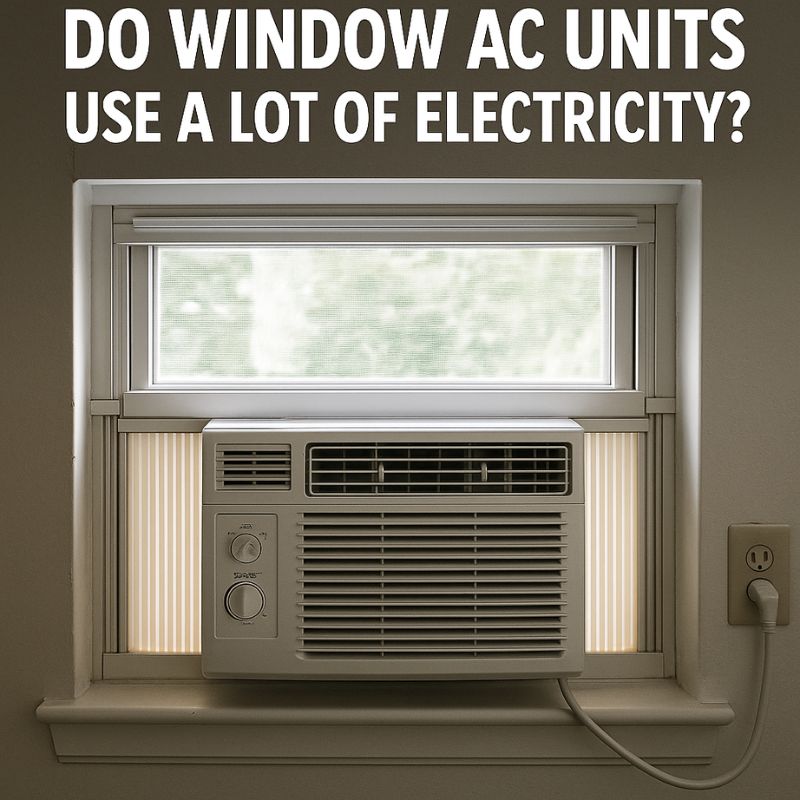
Are you curious about how much electricity your window air conditioner uses? Understanding the watts your unit consumes can help you save money and avoid surprise energy bills.
Whether you’re trying to cool a single room or deciding which model to buy, knowing the power usage is key. You’ll discover exactly how many watts window air conditioners use and how that affects your energy costs. Keep reading to make smarter choices for your comfort and your wallet.
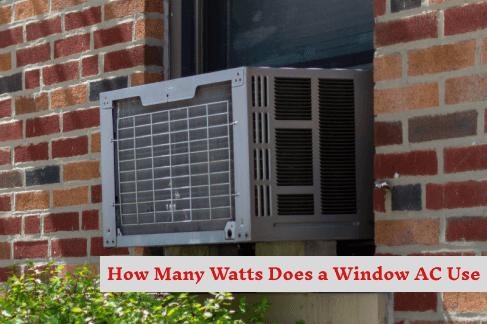
Credit: www.renogy.com
Types Of Window Air Conditioners
Window air conditioners come in various types, each using different amounts of watts. Smaller units use less power, while larger models consume more. Understanding watt usage helps choose the right air conditioner for your space and energy needs.
Compact Models
Compact window air conditioners use around 500 to 900 watts. They are small and good for cooling one small room. These models are easy to install and move. They use less power but cool less space.
Standard Units
Standard window AC units usually use 900 to 1,500 watts. They work well for medium-sized rooms. These units balance power use and cooling capacity. Many homes use these as a main cooling option.
High-capacity Systems
High-capacity window air conditioners can use 1,500 to 2,500 wattsor more. They cool large rooms or open spaces. These units need more electricity but provide strong cooling power. Best for very hot days or big areas.
Power Consumption Basics
Wattsmeasure the power a window air conditioner uses. BTUs(British Thermal Units) show how much cooling it can provide. More BTUs mean a bigger cooling power but usually higher watts too.
Typical window AC units use between 500 and 1,500 watts. Small units cool small rooms and use less power. Bigger units cool larger rooms and need more watts.
- Room size: Larger rooms need units with more BTUs and watts.
- Energy efficiency: Some models use less power for the same cooling.
- Temperature setting: Lower settings use more power to cool more.
- Outside temperature: Hotter days make the AC work harder and use more watts.
Energy Efficiency Ratings
EER (Energy Efficiency Ratio)measures cooling efficiency at a specific temperature. A higher EER means the air conditioner uses less power to cool the room.
SEER (Seasonal Energy Efficiency Ratio)shows efficiency over a cooling season. It reflects how well the unit performs in different temperatures.
Both ratings help compare models. Choose units with higher EER or SEER for lower electricity use.
Electricity bills depend on the unit’s wattage and usage time. Efficient models save money by using fewer watts per hour.
- Look for units with EER above 10 or SEER above 13.
- Smaller rooms need less wattage, saving energy.
- Regular maintenance keeps units efficient and lowers bills.
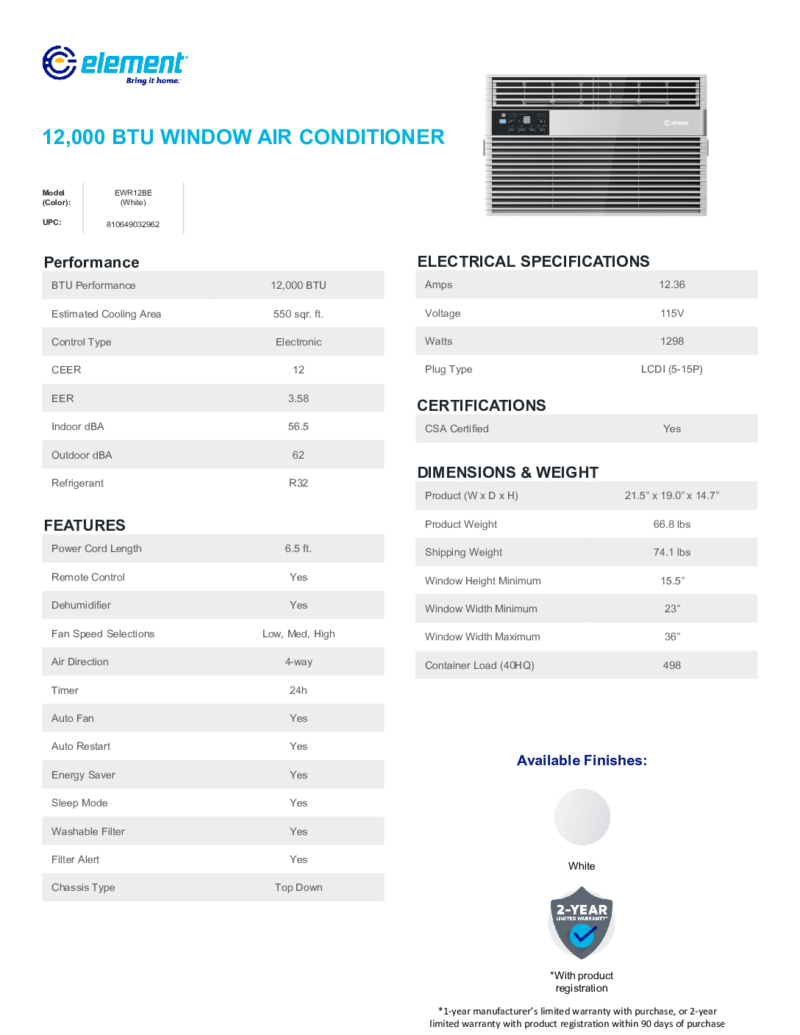
Credit: elementelectronics.com
Calculating Energy Costs
To estimate daily energy use, multiply the air conditioner’s wattage by hours used. For example, a 500-watt unit running 8 hours uses 4000 watt-hours or 4 kWh daily.
Monthly and annual costs depend on local electricity rates. Multiply daily kWh by the rate and days used. For instance, at $0.12 per kWh, running 30 days costs $14.40 monthly.
Energy calculators online help estimate costs easily. Enter the unit’s wattage, hours per day, and electricity rate. These tools provide quick, clear cost estimates for your window air conditioner.
Tips To Reduce Power Use
Correct installationhelps your air conditioner run smoothly. Place it in a shady spotto avoid direct sun. Make sure it fits tightlyin the window to stop cool air from escaping.
Keep your AC clean with regular maintenance. Clean or change the filtersevery month. Dust and dirt make the unit work harder, using more power. Check the coilsand remove any debris. This keeps air flowing well.
Use your AC smartly. Set the thermostat to a comfortable but not too low temperature, like 78°F (25°C). Turn the unit off when no one is home. Use fans to help spread cool air and reduce power use.

Credit: udpwr.com
Comparing Window Ac To Other Cooling Options
Window air conditioners use less electricity than central air systems. They usually consume between 500 to 1500 watts. Portable air conditioners use similar power but can be less efficient. They are easy to move but may cool rooms slower.
| Cooling Option | Typical Power Use (Watts) | Key Features |
|---|---|---|
| Window AC | 500 – 1500 | Good for one room, easy to install |
| Portable AC | 600 – 1500 | Moveable, less efficient, needs venting |
| Central Air System | 2000 – 5000+ | Cools whole house, uses more power |
| Evaporative Cooler | 100 – 400 | Uses water, works best in dry climates |
Evaporative coolers use the least electricity. They work by adding moisture to air. Central systems cool large spaces but cost more to run. Window and portable units suit smaller rooms well.
Frequently Asked Questions
How Many Watts Does A Typical Window Ac Use?
A typical window air conditioner uses between 500 and 1,500 watts. The exact wattage depends on the unit’s size and cooling capacity. Smaller units consume less power, while larger models require more energy. Always check the specifications for precise watt usage.
Do Window Ac Wattages Vary By Size?
Yes, window AC wattage varies significantly by size. Smaller units (5,000-6,000 BTU) use around 500-600 watts. Larger units (12,000 BTU or more) can use 1,000 watts or more. Wattage increases with cooling capacity and room size requirements.
Can I Reduce My Window Ac’s Energy Consumption?
You can reduce energy consumption by setting the thermostat higher and using energy saver modes. Regular maintenance, sealing windows, and using curtains also help minimize power use. Efficient usage lowers wattage demand and cuts electricity bills effectively.
How To Find My Window Ac’s Exact Wattage?
Check the product label or user manual for the wattage rating. It is usually listed in watts or amps. You can also find wattage online by searching the model number. Using a watt meter is another accurate method.
Conclusion
Window air conditioners use different watts based on size and settings. Smaller units use less power, while larger ones need more. Knowing your air conditioner’s wattage helps manage electricity bills better. Choose a model that fits your room size for efficiency.
Running it at moderate settings saves energy and money. Regular maintenance keeps the unit working well and uses less power. Understanding watts helps you stay cool without surprise costs. Simple steps make a big difference in energy use. Keep these points in mind for smarter cooling choices.