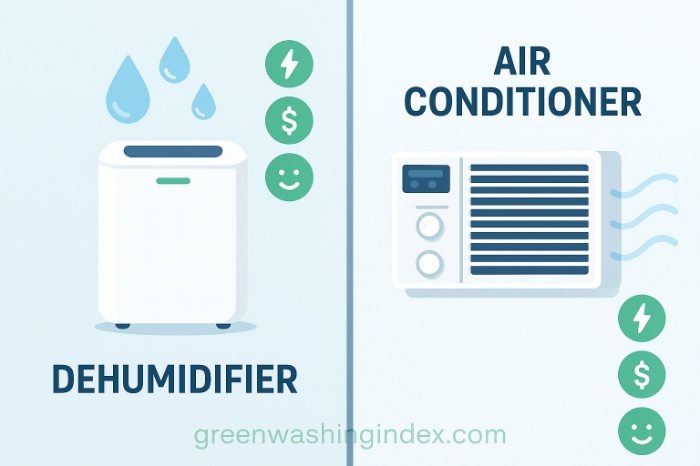
Are you confused about the difference between a dehumidifier and an air conditioner? You’re not alone.
Many people think these two devices do the same job, but they actually serve different purposes that affect your comfort in unique ways. Understanding how each works can help you make smarter choices for your home and health. Keep reading to discover which one is right for your space and how it can improve your indoor air quality and comfort.

Credit: www.amazon.ca
Benefits Of Dehumidifiers
Reducing indoor humidityhelps make rooms feel cooler and more comfortable. Dehumidifiers pull moisture from the air. This stops the air from feeling sticky or damp. It also helps prevent damage to walls and furniture caused by excess moisture.
Preventing mold and mildewis important for a healthy home. Mold grows in damp places and can cause health problems. Dehumidifiers lower moisture levels, making it harder for mold and mildew to grow. This keeps your home safer and cleaner.
Improving air qualityis another benefit. Less moisture means fewer dust mites and allergens. This can reduce breathing problems and allergies. Dry air also feels fresher and more pleasant to breathe.
Advantages Of Air Conditioners
Air conditioners help in cooling indoor spacesquickly and effectively. They lower the temperature to make rooms comfortable during hot days. This creates a pleasant environment for work and rest.
Enhancing comfort levelsis easy with air conditioners. They not only cool the air but also reduce humidity. This makes the air feel fresher and less sticky, improving overall comfort.
| Energy Efficiency Considerations | Details |
|---|---|
| Power Use | Modern air conditioners use less energy than older models. |
| Energy Saving Modes | Many units have modes to save power when full cooling is not needed. |
| Cost Impact | Efficient models reduce electricity bills over time. |
Differences Between Dehumidifiers And Air Conditioners
Dehumidifiers remove moisture from the air, making rooms less humid and more comfortable. Air conditioners cool the air and also reduce humidity but mainly focus on lowering temperature. Both improve indoor air but serve different purposes.
Primary Functions
Dehumidifiersremove moisture from the air to reduce humidity. Air conditionerscool the air and also reduce humidity as a side effect. Dehumidifiers focus only on controlling moisture. Air conditioners change temperature and moisture levels.
How They Affect Indoor Climate
Dehumidifiers make air feel less damp and more comfortable. Air conditioners make rooms cooler and less humid. Both help improve indoor air quality but in different ways. Dehumidifiers work well in damp spaces. Air conditioners work well in hot weather.
When To Use Each Device
- Use a dehumidifierin basements or places with high humidity.
- Use an air conditionerto cool rooms during hot days.
- Choose a dehumidifier if the room feels sticky but not hot.
- Choose an air conditioner if the room feels hot and humid.
Situations Requiring Both Devices
Places with high heat and humidityoften need both devices. An air conditioner cools the air, while a dehumidifier removes extra moisture. This combo makes rooms more comfortable and less sticky.
Basementsand other damp rooms can stay wet and cold. Using both devices helps dry the air and keeps the temperature steady. This stops mold and mildew from growing.
People with allergies or health problemsbenefit too. Removing moisture lowers dust mites and mold spores. Cooler air eases breathing and reduces allergy symptoms.
Cost And Maintenance Factors
The initial costof a dehumidifier is usually lower than an air conditioner. Dehumidifiers mainly remove moisture, while air conditioners cool the air. This difference affects their price and size.
Energy usevaries. Air conditioners use more power because they cool and remove moisture. Dehumidifiers use less energy since they only dry the air. This impacts monthly bills.
Both need regular care. Dehumidifiers require emptying water tanks and cleaning filters often. Air conditioners need filter cleaning and occasional professional servicing. Keeping both clean helps them work well and last longer.

Credit: www.nytimes.com
Choosing The Right Device For Your Needs
Climate plays a big role in choosing between a dehumidifierand an air conditioner. Dehumidifiers work best in humid areasto remove excess moisture. Air conditioners cool the air and also reduce humidity but are ideal for hot climates. Understanding your local weather helps pick the right device.
Space size matters too. Small rooms need less power. Large rooms require devices with higher capacity. Dehumidifiers come in various sizes, so pick one that fits your room size. Air conditioners often need professional installation for bigger spaces.
Personal preferences affect the choice. Some prefer cool airand want to lower temperature. Others want to stop dampness without cooling the room. Noise level, energy use, and ease of use are also important factors.

Credit: www.nytimes.com
Frequently Asked Questions
What Is The Difference Between A Dehumidifier And Air Conditioner?
A dehumidifier removes moisture from the air, reducing humidity. An air conditioner cools air and also lowers humidity but focuses on temperature control. Both improve comfort but serve different primary purposes.
Can A Dehumidifier Replace An Air Conditioner?
No, a dehumidifier cannot replace an air conditioner. It only reduces humidity and does not cool the air. Air conditioners control both temperature and humidity for overall comfort.
How Does An Air Conditioner Affect Humidity Levels?
An air conditioner cools air and naturally removes some moisture. It lowers humidity by condensing water vapor during cooling. However, its main function is temperature control, not moisture removal.
Do Dehumidifiers Save Energy Compared To Air Conditioners?
Yes, dehumidifiers generally use less energy than air conditioners. They focus solely on moisture removal, which requires less power. Using a dehumidifier can be more energy-efficient in humid but not hot conditions.
Conclusion
A dehumidifier and air conditioner serve different purposes. One removes moisture; the other cools air. Both improve indoor comfort in their own way. Choosing the right device depends on your needs. Think about humidity levels and temperature control. Using them together can sometimes work best.
Each has benefits for a healthier home. Understanding their roles helps you decide smartly. Stay comfortable by managing both heat and moisture. Simple steps make your living space better every day.