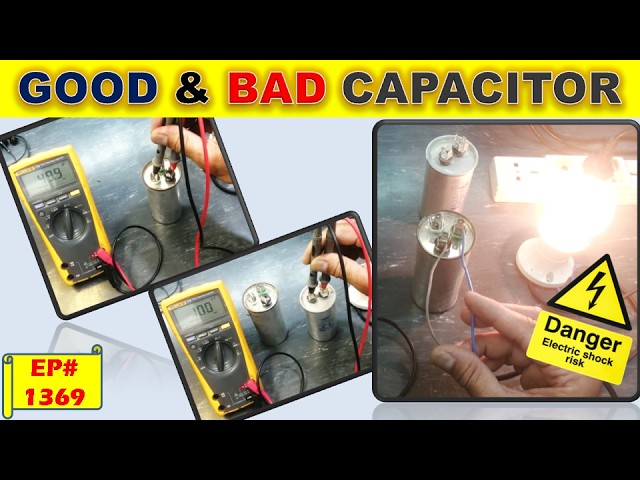
Is your air conditioner acting up and leaving you sweating? The problem might be a bad capacitor.
This small but powerful part helps your AC start and run smoothly. When it fails, your unit can struggle or stop working altogether. But how can you tell if your air conditioner capacitor is bad before calling a repair technician?
You’ll discover simple signs to watch for and easy steps to check your capacitor. Keep reading to save time, avoid costly repairs, and get your cool air back fast.

Credit: www.reddit.com
Signs Of A Bad Capacitor
Unusual noiseslike buzzing or humming may come from the AC unit. These sounds often mean the capacitor is struggling to work. The unit might try to start but fail with a clicking noise.
AC fails to startor starts slowly. The capacitor helps the motor start. If it is bad, the motor may not start at all or take a long time.
Frequent cyclingmeans the AC turns on and off too often. A bad capacitor can cause this. It stops the unit from running smoothly.
Warm air blowingfrom the vents is another sign. The capacitor helps the compressor run. Without it, the AC blows warm air instead of cold.

Credit: www.youtube.com
Tools Needed For Testing
A multimeteris essential to check the capacitor’s electrical charge. It helps measure voltage and capacitance precisely. A screwdriveris needed to open the air conditioner panel safely and access the capacitor. Use a flathead or Phillips depending on your unit.
Wearing safety gearis very important. Gloves protect hands from electric shocks. Safety glasses shield eyes from debris or sparks. Always turn off power before testing to avoid injuries.
Steps To Test The Capacitor
Always turn off powerto the air conditioner before testing. Safety is very important. Use a voltage testerto ensure no electricity flows. Wear insulated gloves to protect yourself.
The capacitor is usually a small, cylindrical or oval box near the compressor or fan motor. It has two or three terminalson top. Check the unit’s manual if needed to find the exact location.
Capacitors store electricity. To avoid shocks, discharge the capacitorbefore testing. Use a screwdriver with an insulated handle to connect the terminals. Hold it there for a few seconds to release stored energy.
A multimeter set to the capacitance mode measures the capacitor’s value. Connect the meter leads to the capacitor terminals. Compare the reading with the number printed on the capacitor. A much lower or no reading means the capacitor is bad.

Credit: www.reddit.com
Interpreting Test Results
Normal capacitance rangedepends on the capacitor’s rating. Use a multimeter to check. The reading should be within ±6% of the marked value. If the value is too low or shows no reading, the capacitor may be bad.
Signs of failureinclude the AC not starting, strange noises, or the motor running slow. A bulging or leaking capacitor is a clear sign it needs replacement. Sometimes the AC may stop working entirely.
When to replaceis clear if the capacitance is outside the normal range or if physical damage is visible. Replacing a bad capacitor can save the AC unit from further damage and restore proper function.
Replacing A Bad Capacitor
Choose a replacement capacitor with the same voltageand microfarad (µF) rating. Check the label on the old capacitor to find these numbers. Using the wrong one can cause damage or poor performance.
Make sure the new capacitor matches the size and shape to fit in the unit. Buy from a trusted storeor brand to ensure quality and safety.
- Turn off power at the breaker before starting work.
- Discharge the old capacitor to avoid shocks.
- Use insulated tools to remove and install wires.
- Connect wires to the correct terminals as per the label.
- Secure the new capacitor firmly in place.
Wear safety glassesand gloves to protect yourself. Avoid touching capacitor terminals during installation. Double-check all connections before restoring power. Proper safety helps prevent injuries and damage.
Preventive Maintenance Tips
Regular inspections help catch problems early. Check the capacitor for bulges or leaks. Listen for unusual noises when the unit runs. These signs can mean the capacitor is bad.
Keeping the unit clean improves performance. Clear dirt and debris around the outdoor unit. Clean or replace air filters inside your home. This keeps air flowing well and reduces stress on parts.
Scheduling professional checkups ensures expert care. Technicians can test the capacitor with special tools. They find issues you might miss. A yearly checkup helps keep the system running smoothly.
Frequently Asked Questions
How Do I Know If My Ac Capacitor Is Bad?
A bad AC capacitor often causes the unit to fail starting or running. Look for bulging, leaking, or a burnt smell. The AC may also make a humming noise without turning on. These signs suggest the capacitor needs replacement.
Can A Bad Capacitor Cause Ac Not To Cool?
Yes, a faulty capacitor can prevent the compressor from running. Without the compressor, your AC won’t cool effectively. If the fan or compressor won’t start, the capacitor is likely the issue.
What Happens When An Ac Capacitor Fails?
When the capacitor fails, the motor struggles to start or runs inefficiently. This causes overheating or the AC unit to stop working. It may also produce unusual noises or vibrations. Timely replacement is essential to avoid further damage.
Is It Safe To Test An Ac Capacitor Myself?
Testing an AC capacitor requires handling electrical components safely. Turn off power before testing with a multimeter. If you’re not comfortable, hire a professional to avoid risks of shock or damage.
Conclusion
A bad air conditioner capacitor can cause many problems. You might notice the unit won’t start or makes strange noises. Checking the capacitor regularly helps catch issues early. Simple tests can show if it needs replacement. Acting fast saves money and keeps your home cool.
Understanding these signs helps you avoid bigger repairs later. Keep an eye on your AC’s performance. Stay safe and call a professional if unsure. Taking care of the capacitor keeps your system running smoothly.