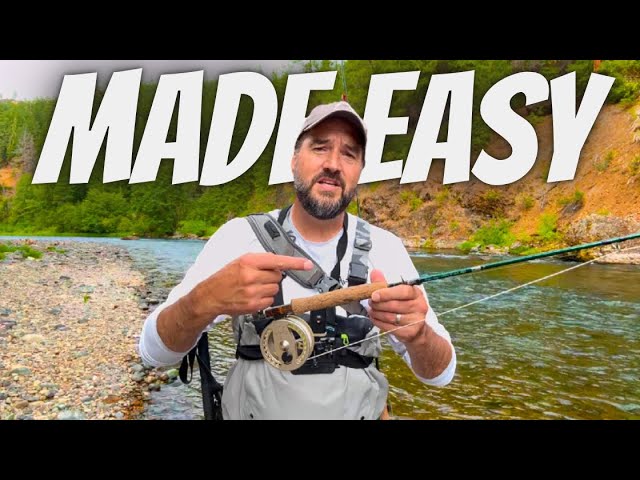
Have you ever watched a skilled fly angler and wondered how they make casting look so smooth and effortless? Learning how to cast a fly fishing rod might seem tricky at first, but with the right guidance, you can master it faster than you think.
This skill is the key to reaching the perfect spot on the water, attracting more fish, and enjoying your time outdoors even more. Keep reading, and you’ll discover simple steps and expert tips that will have you casting like a pro in no time.
Your next great fishing adventure starts here.
Choosing The Right Fly Rod
Choosing the right fly rod is important for a good fishing experience. The rod affects how well you can cast and control the line.
Understanding rod features helps you pick the best one for your fishing needs and skill level.
Rod Length And Weight
Rod length affects how far you can cast. Longer rods cast farther but can be harder to control. Shorter rods give more control but less distance.
Rod weight matches the line weight and fishing type. Lighter rods suit small fish and streams. Heavier rods work for big fish and strong currents.
- Length: 7 to 9 feet is common for most fishing
- Weight: 3 to 6 weight rods work for small to medium fish
- Use heavier rods for big fish and windy conditions
Types Of Fly Rods
Fly rods come in different types based on their build and use. Each type fits specific fishing styles and environments.
Common types include freshwater rods, saltwater rods, and travel rods. Each has unique features for its purpose.
- Freshwater rods: Light and flexible for rivers and lakes
- Saltwater rods: Strong and corrosion-resistant for ocean fishing
- Travel rods: Compact and easy to carry
Matching Rod To Fishing Style
Match your rod to the type of fishing you plan to do. This makes casting easier and fishing more fun.
Consider the fish size, water type, and casting distance when picking your rod.
- For small streams and trout, use a light, short rod
- For bigger rivers and bass, use a medium rod
- For saltwater fishing, use a heavy, strong rod
Essential Gear And Setup
Casting a fly fishing rod needs the right gear and setup. Good equipment helps you cast farther and fish better.
This guide covers fly line selection, leader and tippet choices, and reel and backing basics. Each part is key for a smooth cast.
Fly Line Selection
Fly line comes in many types for different fishing needs. Choose the line based on the water and fish you want.
Weight is the most important factor. The line weight must match your rod weight for best casting.
- Weight forward lines help cast longer distances
- Double taper lines are good for delicate presentations
- Floating lines are best for surface fishing
- Sinking lines work well in deep water
Leader And Tippet Choices
The leader connects the fly line to the fly. It should be clear and thin to avoid spooking fish.
Tippet is the final, thin section of the leader. Choose tippet strength based on the fish size and fly size.
- Use a tapered leader for smooth energy transfer
- Match tippet diameter to fly size and fish species
- Stronger tippet for bigger fish or rough water
- Thinner tippet for spooky fish or clear water
Reel And Backing Basics
The reel holds the fly line and backing. It should balance the rod and provide smooth drag.
Backing is a strong line that fills space on the reel. It helps fight big fish without breaking the main line.
- Choose a reel that matches your rod weight
- Use backing strong enough to hold big fish
- Spool enough backing to avoid running out during a fight
- Check drag system for smooth line release
Basic Casting Techniques
Fly fishing requires skill to cast the line properly. Good casting helps place the fly where fish can see it.
Learning the basic techniques will improve your accuracy and distance. Practice these steps to get started.
Grip And Stance
Hold the fly rod with a relaxed but firm grip. Use your thumb on top of the rod handle.
Stand with your feet shoulder-width apart. Face sideways to the target with your body balanced.
- Grip rod lightly but firmly
- Use thumb on top of handle
- Stand with feet shoulder-width apart
- Face sideways to the casting direction
- Keep your body balanced and relaxed
The Back Cast
Start by lifting the rod slowly to about the 2 o’clock position. This moves the line behind you.
Keep your wrist firm and use your arm to move the rod. Stop smoothly to let the line extend backward.
- Lift rod slowly to 2 o’clock
- Keep wrist firm and straight
- Use arm to move the rod
- Stop smoothly to extend the line back
The Forward Cast
After the back cast, bring the rod forward to about 10 o’clock. The line moves ahead of you.
Stop the rod sharply to let the line fly forward. Aim to place the fly gently on the water.
- Bring rod forward to 10 o’clock
- Stop rod sharply for line to fly
- Aim to land the fly softly
- Use smooth, controlled movements
Improving Accuracy And Distance
Casting a fly fishing rod well helps you catch more fish. Good casting needs both accuracy and distance.
Focus on controlling your line, timing your moves, and adjusting your casting angles. These skills improve your cast.
Controlling Line Speed
Line speed controls how far and straight your cast goes. Too fast or too slow can cause problems.
Use smooth, even movements to keep line speed steady. This helps place the fly where you want it.
- Start slow, then speed up in the forward cast
- Keep the line tight for better control
- Avoid jerky or fast snaps that cause errors
Timing And Rhythm
Good timing makes casting easier and more accurate. Rhythm helps flow between back and forward casts.
Pause briefly at the end of the back cast before moving forward. This lets the line fully extend.
- Cast smoothly with even speed changes
- Pause briefly to let the line straighten
- Keep your movements fluid and relaxed
Adjusting Casting Angles
Change your casting angle to control where the line lands. Different angles suit different fishing spots.
Lower angles help cast farther with less wind effect. Higher angles improve accuracy in tight spaces.
- Use a low angle for long, straight casts
- Raise your rod tip for short, precise casts
- Adjust angle to avoid obstacles like trees
Common Mistakes And Fixes
Fly fishing needs patience and good technique. Many beginners make simple mistakes. These errors can stop you from casting well and catching fish.
This guide covers common problems and easy fixes. Fixing these will help you enjoy fishing more and improve your skills.
Overcasting Issues
Overcasting happens when you cast too far or too hard. This wastes energy and causes poor line control. It also scares fish away.
- Fix your wrist action by keeping it steady during the cast.
- Use smooth, controlled rod movements instead of fast flicks.
- Practice short casts to build control before casting far.
- Check your rod’s line weight; using the right weight helps avoid overcasting.
Line Tangles And How To Avoid Them
Tangles or “wind knots” happen when the line twists or loops. This stops smooth casting and can break the line. Avoiding tangles keeps your line ready to cast.
| Cause | Fix |
| Line slack in the air | Keep the line tight during casting |
| Poor line layout on the water | Lay line straight before casting |
| Wrong reel drag tension | Adjust drag to let line flow smoothly |
| Using old or damaged line | Replace line regularly |
Correcting Poor Presentation
Poor presentation means the fly lands wrong or too hard. Fish may not notice your fly if you cast poorly. Good presentation helps catch more fish.
Try these tips for better presentation:
- Cast softly to let the fly land gently on the water.
- Watch the wind direction and cast upstream or across the current.
- Use a longer leader to reduce line splash near the fly.
- Practice false casting to slow the line before the final cast.

Credit: www.youtube.com
Advanced Casting Techniques
Fly fishing requires skill and practice to cast accurately. Advanced casting techniques help anglers cast longer and more precisely. These methods improve control and reduce line tangles.
Below are three important techniques: Roll Cast, Double Haul, and Mending Line on Water. Each technique serves a unique purpose in different fishing situations.
Roll Cast
The Roll Cast is useful when there is little room behind you. It allows you to cast without a backcast and is gentle on the line. This technique is great for fishing near trees or bushes.
- Start with the rod tip low and the line in front of you.
- Lift the rod smoothly to form a D-loop on the water.
- Use a quick forward stroke to propel the line forward.
- Stop the rod to let the line straighten and land gently.
Double Haul
The Double Haul increases line speed and casting distance. It uses a pulling motion with both hands during the cast. This technique is good for windy conditions or long casts.
| Action | Description |
| Backhaul | Pull line with the non-rod hand during backcast |
| Forward Haul | Pull line again during forward cast |
| Rod Movement | Make smooth, fast rod strokes for power |
| Timing | Coordinate pulls with rod stops for line control |
Mending Line On Water
Mending the line keeps the fly drifting naturally. It adjusts the line position after the cast to avoid drag. This helps the fly stay in the strike zone longer.
- Watch the fly drift and the line on the water.
- Lift or flip the line upstream or downstream with the rod tip.
- Make small, smooth movements to reposition the line.
- Avoid disturbing the fly or scaring fish.
Practicing For Consistency
Consistent casting improves your fly fishing skills. Practice helps you control your rod better.
Regular practice builds muscle memory and smooths your movements. This leads to more accurate casts.
Drills To Build Muscle Memory
Doing drills helps your body remember the casting motion. Repeat simple moves to train your muscles.
Start with slow casts and focus on smooth, even movements. Gradually increase your speed as you improve.
- Practice casting in front of a mirror
- Use a target to aim your casts
- Repeat the same cast at least 20 times
- Focus on wrist and arm coordination
Setting Practice Goals
Clear goals help you measure your progress. Set small targets for each practice session.
Goals can include casting distance, accuracy, or smoothness. Tracking these helps you stay motivated.
- Cast 30 feet accurately 10 times
- Practice roll casts without slack line
- Improve your false casting speed
- Work on smooth back and forward casts
Using Visual Feedback
Watching your cast helps you spot errors. Use visual feedback to improve your technique.
Record your casting or practice in front of a mirror. See how your rod and line move during each cast.
- Check for smooth rod motion
- Look for tight loops in the fly line
- Notice if your wrist moves correctly
- Adjust your timing based on what you see

Credit: www.youtube.com
Adapting To Different Conditions
Fly fishing needs changes in how you cast. Water, wind, and space all affect your casting style.
Learning to adjust your cast helps you catch more fish in different places and weather.
Casting In Wind
Wind pushes your line off course. It makes casting harder and less accurate.
Use shorter, lower casts to keep control. Cast with the wind, not against it.
- Keep your rod tip low to reduce wind impact
- Make shorter, controlled casts
- Cast at a slight angle to the wind
- Use heavier lines to cut through the wind
Fishing In Tight Spaces
Tight spaces need careful casting. Trees, bushes, and rocks can block your line.
Use roll casts or sidearm casts to avoid obstacles. Keep your movements smooth and small.
- Try roll casting to stay close to the water
- Use sidearm casts for low overhead space
- Keep your line tight to avoid snags
- Choose light line and small flies
Adjusting For Water Currents
Water currents move your fly and line. They can push your fly away from fish.
Cast upstream and let the current carry your fly naturally. Watch the water flow closely.
- Cast slightly upstream of your target
- Use longer leader to keep fly in current
- Control line to avoid drag
- Watch fly drift to match current speed

Credit: www.reddit.com
Frequently Asked Questions
What Is The Best Way To Cast A Fly Fishing Rod?
The best way is to use a smooth, controlled wrist motion. Start with a gentle back cast, then move forward. Keep the line straight and avoid jerky movements to improve accuracy and distance.
How Do You Avoid Tangles When Casting Fly Fishing Rods?
Avoid tangles by keeping the line straight and controlled. Use smooth, deliberate movements during both back and forward casts. Practice proper timing to prevent slack in the line, which often causes tangles.
What Is The Ideal Rod Length For Fly Fishing Casting?
A rod between 8 and 9 feet is ideal for most fly fishing. This length offers good control and distance. It suits beginners and experienced anglers alike for various water conditions.
How Important Is Wrist Movement In Fly Fishing Casting?
Wrist movement is crucial for a precise cast. It controls the rod tip’s speed and direction. Smooth wrist action helps achieve better line control and accurate placement of the fly.
Conclusion
Casting a fly fishing rod takes practice and patience. Start slow and focus on smooth movements. Keep your eyes on the line and rod tip. Feel the rhythm and timing of each cast. Small improvements add up over time. Enjoy the process as you learn.
Soon, casting will feel natural and fun. Remember, every angler began just like you. Keep trying, and you’ll see progress soon. Fly fishing offers calm and joy. Stay patient and enjoy every moment outdoors.