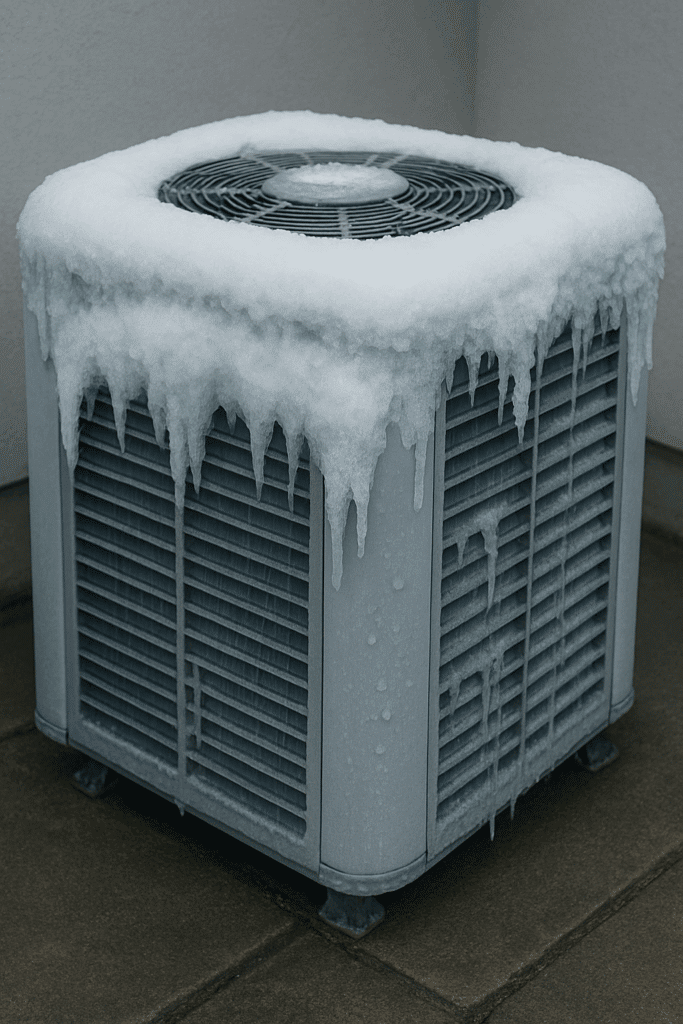
Have you ever noticed ice forming on your air conditioner and wondered why it’s happening? A freezing air conditioner isn’t just a weird quirk—it can signal a serious problem that might leave you sweating through the summer.
Understanding what causes your air conditioner to freeze can save you from costly repairs and keep your home comfortable. You’ll discover the common reasons behind this chilling issue and learn how to spot the warning signs early. Keep reading to protect your AC and stay cool all season long.
Credit: www.davisheat.com
How Air Conditioners Freeze
The cooling processin air conditioners works by removing heat from indoor air. Warm air passes over cold evaporator coils, where the refrigerant absorbs heat. This cools the air, which then circulates inside. The refrigerant carries the heat outside to release it.
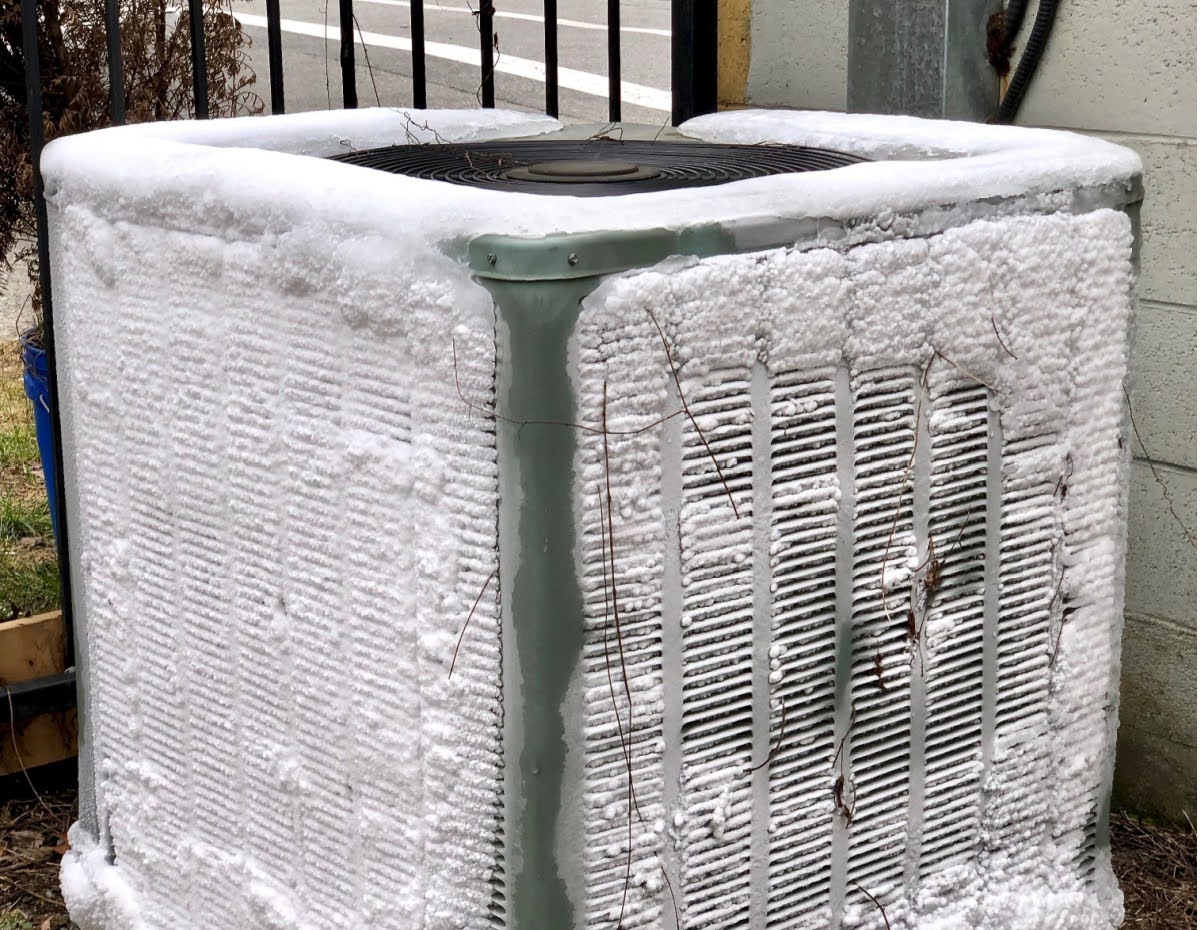
Freezing happens when airflow is blockedor refrigerant levels are low. Without enough warm air reaching the coils, moisture freezes on them. This ice buildup stops cooling and can damage the unit.
- Frost or iceon the coils or pipes
- Reduced airflow from vents
- Unusually cold air or no air coming out
- Longer running times without cooling
- Strange noises or smells from the unit
Low Refrigerant Levels
Low refrigerant levelscause the air conditioner to freeze. This happens because the refrigerant absorbs heat. If the amount is low, the system gets too cold and ice forms.
Causes of refrigerant leakinclude:
- Wear and tear of pipes and connections
- Corrosion inside the unit
- Damage during installation or maintenance
- Manufacturing defects in some parts
Effects on cooling systemare serious. The AC runs longer and uses more energy. Cooling becomes weak. Ice build-up blocks airflow, causing more freezing. The compressor can get damaged over time.
Poor Airflow Issues
Clogged air filtersblock the airflow in your air conditioner. This causes the evaporator coil to get too cold and freeze. Dirty filters stop the system from working well. Changing or cleaning filters often helps keep the air moving freely.
Blocked vents and ductsalso stop air from flowing properly. Dust, debris, or furniture can block vents. Closed or crushed ducts reduce air circulation too. This makes the air conditioner work harder and leads to freezing.
- Air filters should be checked every 1-3 months.
- Keep vents clear and open at all times.
- Inspect ducts for damage or blockages regularly.
Thermostat Problems
Incorrect thermostat settingscan cause the air conditioner to freeze. If the temperature is set too low, the system works too hard. This makes the coils get very cold and ice can form. Setting the thermostat to a reasonable temperature helps prevent freezing.
Malfunctioning sensorssend wrong signals to the thermostat. This causes the AC to run longer than needed. When the system runs too long, ice builds up on the coils. Checking and fixing sensors can stop the freezing problem.
Dirty Evaporator Coils
Dirty evaporator coilsstop air conditioners from cooling well. Dirt blocks air flow and makes coils cold. This cold causes moisture to freeze on coils. Ice builds up and stops cooling.
Dirt acts like a blanket on the coil surface. It prevents heat transferand lowers coil temperature. This causes the coil to freezeand the AC to stop working properly.
- Turn off power to the unit before cleaning.
- Use a soft brush to remove loose dirt.
- Spray coil cleaner and let it sit for 10 minutes.
- Rinse gently with water to wash away grime.
- Dry the coil and check for damage.

Credit: www.delcohvac.com
Fan And Blower Malfunctions
Fan motor issuescan cause an air conditioner to freeze. If the motor does not run properly, the fan may not blow enough air over the evaporator coil. This low airflow causes the coil to get too cold and ice to form. Sometimes, the motor may run slowly or stop completely due to electrical problems or wear and tear.
Blower speed problemsalso affect freezing. If the blower moves air too slowly, the coil temperature drops below freezing. This happens when the blower speed setting is too low or the motor weakens. A weak blower cannot push enough air through the system, leading to ice buildup.
Environmental Factors
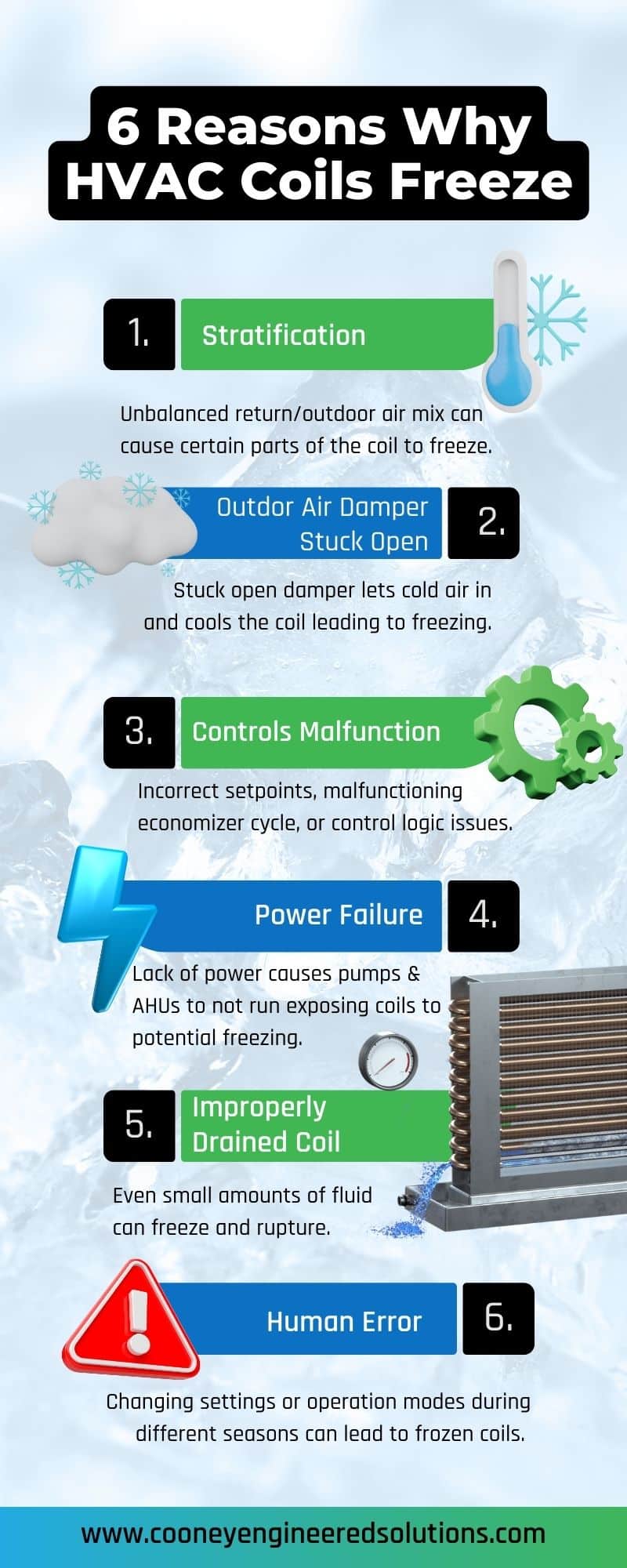
Extreme weather conditionscan cause an air conditioner to freeze. Very cold outdoor temperatures lower the coil’s temperature. This leads to ice forming on the coils. Air conditioners are not designed to work well in cold weather.
Humidityplays a big role too. High humidity means more moisture in the air. This moisture can freeze on the coils, creating ice buildup. Low humidity can dry out the system, causing other issues.
- Cold weather reduces coil temperature.
- Ice forms when temperature drops too low.
- High humidity increases moisture on coils.
- Moisture freezes, blocking airflow.
- Air conditioners struggle in cold, damp air.
Credit: cooneyengineeredsolutions.com
Maintenance Tips To Prevent Freezing
Regular filter replacementis key to keeping your air conditioner running smoothly. Dirty or clogged filters block airflow and cause the unit to work harder. This can lead to freezing issues. Change filters every 1 to 3 months depending on use. Clean filters help air flow freely and keep the system cool.
Scheduling professional inspectionsensures your air conditioner stays in good shape. Experts check for refrigerant leaks, dirty coils, and other problems. These issues can cause the unit to freeze up. A yearly inspection helps catch problems early and avoids costly repairs. Professionals also clean parts that are hard to reach.
Frequently Asked Questions
Why Does My Air Conditioner Freeze Up?
Air conditioners freeze mainly due to restricted airflow or low refrigerant levels. Dirty filters, blocked vents, or a malfunctioning blower fan reduce airflow, causing coils to freeze. Low refrigerant causes the coils to get too cold, leading to ice formation on the unit.
How Does Low Refrigerant Cause Freezing?
Low refrigerant lowers the pressure in the AC system, causing coils to become extremely cold. This extreme cold causes moisture in the air to freeze on the coils, leading to ice buildup that blocks airflow and reduces cooling efficiency.
Can Dirty Air Filters Cause An Ac To Freeze?
Yes, dirty air filters restrict airflow over the evaporator coil. This causes the coil temperature to drop below freezing, resulting in ice formation. Regularly cleaning or replacing filters helps maintain proper airflow and prevents freezing issues.
Does A Frozen Ac Affect Its Performance?
A frozen AC reduces cooling efficiency by blocking airflow and heat exchange. It can cause the system to overwork, increase energy consumption, and potentially damage components. Promptly addressing freezing issues ensures optimal AC performance and longevity.
Conclusion
Air conditioners freeze because of low airflow or refrigerant problems. Dirty filters or blocked vents stop air from moving well. Low refrigerant causes the coil to get too cold. Ice forms and blocks the system. Fixing these issues keeps your AC working right.
Regular cleaning and check-ups help avoid freezing. Don’t ignore the signs of a frozen AC. Stay cool and comfortable by caring for your unit. Simple steps can save you time and money later.