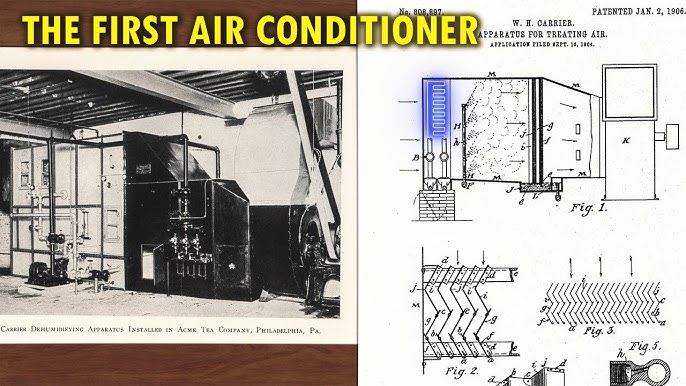
Have you ever stopped to wonder when air conditioners first came out? If you’ve ever enjoyed the cool breeze on a hot day, you owe a lot to this incredible invention.
Understanding its history not only gives you a fresh appreciation for your comfort but also reveals how this technology has shaped the way we live. Keep reading, and you’ll discover surprising facts about the origins of air conditioning that might just change how you see the cool air around you.

Credit: www.youtube.com
Early Cooling Methods
People have tried to cool themselves for thousands of years. Before air conditioners, many simple ways helped keep places cool.
These early methods used natural materials and clever ideas to reduce heat. They show how humans adapted to hot weather long ago.
Ancient Techniques
Ancient people used water and shade to cool their homes. They built houses with thick walls to block heat. In Egypt, people hung wet mats on windows to cool the air.
They also used water channels near homes. The water would evaporate and lower the temperature around the house. Fans made from palm leaves helped move cool air.
- Thick walls kept heat outside
- Wet mats cooled air by evaporation
- Water channels lowered temperatures
- Hand fans moved air for comfort
Medieval Innovations
In medieval times, people used more advanced ideas to stay cool. They designed buildings with high ceilings and large windows for better airflow.
In some places, like Persia, wind towers caught cool breezes and sent them inside homes. People also used ice stored in underground rooms to cool the air during hot days.
- High ceilings helped hot air rise
- Large windows allowed fresh air in
- Wind towers directed cool air indoors
- Ice storage cooled homes in summer

Credit: www.aei.org
Birth Of Modern Air Conditioning
Air conditioning changed how people live and work. It made hot places more comfortable.
The story starts in the early 1900s with new ideas and inventions. This led to the air conditioning we use today.
Willis Carrier’s Breakthrough
Willis Carrier is known as the father of modern air conditioning. In 1902, he found a way to control humidity and temperature.
His invention helped factories keep products dry and workers cool. This was the start of a new technology.
- He designed a machine that cooled air by removing moisture.
- This machine kept factory air at a set temperature.
- It improved air quality and comfort in indoor spaces.
First Air Conditioning Systems
The first air conditioning systems were large and costly. They were used mainly in factories and movie theaters.
| Year | Location | Use |
| 1902 | Brooklyn, New York | Printing plant humidity control |
| 1914 | New York City | Movie theater cooling |
| 1920s | Various cities | Factories and large buildings |
Air Conditioning In The 20th Century
Air conditioning changed how people live and work in the 20th century. It made hot places cooler and more comfortable.
This technology first helped businesses and later became common in homes. The changes happened step by step over many years.
Commercial Adoption
Businesses were the first to use air conditioning widely. Factories, offices, and stores found it useful to keep workers cool and machines safe.
- Factories used air conditioning to protect equipment from heat.
- Office workers worked better in cooler rooms.
- Theaters and public places made customers more comfortable.
- Air conditioning helped businesses stay open in hot summers.
Residential Use Expansion
After businesses, air conditioning started to enter homes. This change grew slowly at first but sped up after World War II.
| Decade | Key Development | Effect on Homes |
| 1920s | First home units introduced | Very rare and expensive |
| 1940s | Smaller, affordable units | More homes added air conditioning |
| 1950s-60s | Mass production and installation | Air conditioning became common |
Technological Advances Over Time
Air conditioners have changed a lot since they first came out. Technology helped make them better and easier to use.
We will look at how refrigerants and energy efficiency have improved over time. These changes shaped modern air conditioning.
Refrigerants Evolution
Early air conditioners used toxic or flammable refrigerants. These were not safe for people or the environment.
Later, safer chemicals like CFCs were used. But CFCs harmed the ozone layer, so new alternatives were needed.
- 1902: Ammonia and sulfur dioxide were common refrigerants.
- 1928: Freon (CFCs) was introduced for safer use.
- 1990s: HCFCs and HFCs replaced CFCs to protect the ozone.
- Today: Natural refrigerants like CO2 and hydrocarbons are popular.
Energy Efficiency Improvements
Air conditioners used much energy in the past. This made them costly to run and bad for the environment.
New designs and technology cut down energy use. This helped save money and reduce pollution.
- Variable speed compressors adjust power use as needed.
- Better insulation keeps cool air inside longer.
- Smart thermostats control temperature more precisely.
- Energy Star ratings help customers pick efficient models.
Air Conditioning’s Impact On Society
Air conditioners first appeared in the early 1900s. They changed how people live and work in hot places. Air conditioning made many areas more comfortable all year.
This technology helped cities grow and changed daily life. Many jobs and activities became easier in hot weather. The impact of air conditioning is seen in many parts of society.
Economic Growth
Air conditioning helped businesses stay open in hot climates. Workers could work better without heat stress. This led to higher productivity and more jobs.
Many industries grew because of cool workspaces. Tourism increased as people visited warm places comfortably. Air conditioning also helped factories run machines safely.
- Improved worker comfort increased output
- Factories operated longer in hot weather
- New businesses opened in warm regions
- Tourism grew in hot climates
Cultural Changes
Air conditioning changed how people spend free time. Indoor places like malls and theaters became popular. Families enjoyed summer indoors with cooled air.
It changed housing designs and city layouts. People moved to hotter areas because of better comfort. Social habits shifted as people stayed indoors more during hot months.
- More indoor social and shopping activities
- Growth of cities in hot regions
- Changes in home building styles
- New ways to enjoy summer
Future Trends In Cooling
Air conditioners have changed a lot since they first came out. New technology helps cool homes better and uses less energy.
Future cooling systems focus on saving energy and being smart. These changes will help protect the planet and make life easier.
Sustainable Solutions
Many new air conditioners use less electricity. They use eco-friendly materials that do not harm the environment.
Some systems use natural refrigerants. These gases cause less pollution than older types.
- Solar-powered air conditioners
- Recycling heat energy
- Using water to cool air
Smart Air Conditioning
Smart air conditioners connect to the internet. They learn your schedule and adjust the temperature automatically.
These systems save energy by turning off when no one is home. You can control them with a phone app.
- Remote control via smartphone
- Automatic temperature adjustment
- Energy use monitoring

Credit: centervilleheatandcooling.com
Frequently Asked Questions
When Were Air Conditioners First Invented?
Air conditioners were first invented in 1902 by Willis Carrier. He created the first modern system to control humidity and temperature. This invention revolutionized indoor comfort and industrial processes.
Who Invented The First Air Conditioner?
Willis Carrier invented the first modern air conditioner in 1902. His design controlled air temperature and humidity efficiently. Carrier’s invention paved the way for widespread air conditioning use.
When Did Air Conditioners Become Common In Homes?
Air conditioners became common in homes during the 1950s. Post-World War II economic growth boosted demand for home cooling. Advances in technology made units affordable and reliable for residential use.
How Did Early Air Conditioners Work?
Early air conditioners used refrigeration cycles with evaporator and condenser coils. They removed heat and moisture from indoor air. This process cooled and dehumidified rooms effectively.
Conclusion
Air conditioners first appeared in the early 1900s. They changed how people live in hot places. Over time, these machines became smaller and more affordable. Today, millions rely on air conditioners daily. They keep homes, schools, and offices cool and comfortable.
Understanding their history helps us value modern comfort. The journey from invention to everyday use is fascinating. Everyone enjoys the cool air during summer thanks to this technology.