Is your air conditioner smelling musty or showing signs of mold? Mold in your AC isn’t just unpleasant—it can affect your health and lower the air quality in your home.
You might wonder how to tackle this problem safely and effectively without calling a professional. This guide will walk you through simple, practical steps to clean your moldy air conditioner. By following these tips, you’ll breathe easier and keep your AC running smoothly.
Ready to get started? Let’s dive in.
Signs Of Mold In Ac Units
Mold can grow inside your air conditioner if moisture builds up. It may cause bad smells and poor air quality. Knowing the signs helps you act fast.
Detecting mold early prevents health problems and keeps your AC working well. Look for these common mold indicators in your unit.
Common Mold Indicators
Mold in AC units shows up in many ways. Watch for these signs to find mold quickly.
- Musty or damp smell coming from vents
- Visible black, green, or white spots on filters or coils
- Increased humidity or moisture around the unit
- Clogged or dirty air filters that worsen quickly
- Reduced airflow or strange noises during operation
Health Risks From Mold Exposure
Mold spores can harm your health. Breathing them in may cause allergic reactions or more serious issues.
| Health Effect | Common Symptoms |
| Allergic Reactions | Sneezing, runny nose, itchy eyes |
| Asthma Attacks | Wheezing, coughing, shortness of breath |
| Respiratory Infections | Chest tightness, fever, fatigue |
| Eye and Skin Irritation | Redness, itching, rash |

Credit: www.reddit.com
Safety Precautions Before Cleaning
Cleaning a moldy air conditioner needs care to protect your health. Mold can cause allergies and breathing problems.
Before you start cleaning, follow safety steps to avoid harm and damage.
Protective Gear To Wear
Wear the right gear to keep mold spores from touching your skin or lungs.
- Wear a mask that covers your nose and mouth.
- Use gloves made of rubber or latex.
- Wear long sleeves and pants to cover your skin.
- Put on safety glasses to protect your eyes.
Powering Off The Unit
Always turn off the air conditioner before cleaning to avoid electric shock.
| Action | Why It Is Important |
|---|---|
| Switch off the main power | Prevents electric shock while cleaning |
| Unplug the unit from the socket | Ensures no power is running to the device |
| Wait a few minutes before cleaning | Lets the unit cool down safely |
Tools And Materials Needed
Cleaning a moldy air conditioner requires specific tools and materials. Using the right items makes the job safer and more effective.
Below are the main cleaning solutions and essential tools you need to prepare before starting the cleaning process.
Cleaning Solutions
Choose cleaning solutions that kill mold and remove dirt without damaging your air conditioner parts. Mild and safe cleaners work best.
- White vinegar: a natural and effective mold killer
- Soap and warm water: for general cleaning
- Hydrogen peroxide: disinfects and removes mold stains
- Baking soda: helps scrub and deodorize
- Commercial mold cleaner: use only if recommended for air conditioners
Essential Cleaning Tools
Gather these tools to reach all air conditioner parts and clean them safely and thoroughly.
| Tool | Purpose |
|---|---|
| Soft brush | Remove loose mold and dust |
| Screwdriver | Open air conditioner panels |
| Spray bottle | Apply cleaning solutions evenly |
| Microfiber cloths | Wipe surfaces without scratching |
| Protective gloves | Protect skin from mold and chemicals |
| Face mask | Prevent inhaling mold spores |
| Bucket | Hold water and cleaning mixtures |

Credit: www.reddit.com
Step-by-step Cleaning Process
Cleaning a moldy air conditioner is important for healthy air. You can do it yourself with simple steps.
Follow this guide to remove mold and keep your AC working well.
Removing And Cleaning Filters
First, turn off the air conditioner and unplug it. Open the front panel and remove the filters carefully.
Use a vacuum or brush to remove dust and dirt from the filters. Then wash them in warm water with mild soap.
- Rinse filters thoroughly to remove soap
- Let filters dry completely before reinstalling
- Never use harsh chemicals on filters
Cleaning The Coils And Fins
The coils and fins collect dust and mold over time. Clean them gently to avoid damage.
Use a soft brush or fin comb to remove dirt. Spray a coil cleaner and let it sit for 10 minutes.
| Tool | Use |
| Soft Brush | Remove loose dust |
| Fin Comb | Straighten bent fins |
| Coil Cleaner | Kills mold and cleans coils |
Disinfecting The Drain Pan
The drain pan can hold water and mold. Empty water and clean the pan with a bleach solution.
- Mix one cup of bleach with one gallon of water
- Use a cloth to wipe the pan with the solution
- Rinse with clean water and dry the pan
- Check the drain pipe to ensure it is clear
Cleaning Air Ducts And Vents
Air ducts and vents spread air throughout your home. Clean them to stop mold spores from circulating.
- Remove vent covers and wash with soap and water
- Use a vacuum with a brush attachment inside ducts
- Consider professional duct cleaning for deep mold
- Replace vent covers after drying
Preventing Future Mold Growth
Mold grows in damp and dirty places. Your air conditioner can develop mold if not cleaned well. Keeping it clean stops mold from coming back.
Here are ways to prevent mold in your air conditioner. Follow these tips to keep your air fresh and healthy.
Regular Maintenance Tips
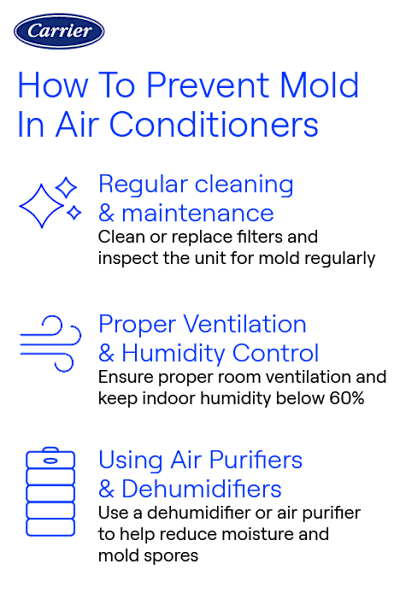
Check and clean your air conditioner often. Dirt and moisture make mold grow fast. Change or clean filters every month.
Wipe down the coils and drain pans regularly. Make sure the drain is not blocked. Remove any water buildup to stop mold.
- Clean or replace filters monthly
- Wipe coils and drain pans weekly
- Clear blocked drain lines
- Keep the unit dry after use
Improving Airflow And Humidity Control
Good airflow helps dry moisture in the air conditioner. Use fans or open windows to keep air moving.
Control humidity in your home. Use a dehumidifier if air is too wet. Mold grows when humidity is above 60%.
- Use fans to improve airflow
- Open windows for fresh air
- Keep indoor humidity below 60%
- Use a dehumidifier if needed
When To Call A Professional
Cleaning a moldy air conditioner can be tricky. Sometimes, the mold problem is too big to handle alone. It is important to know when to call a professional to keep your home safe.
Professionals have the right tools and knowledge to remove mold safely. They can also check if your air conditioner needs repairs or parts replaced.
Signs Of Severe Mold Infestation
Look for clear signs that mold is taking over your air conditioner. These signs show you need expert help quickly.
- Strong, musty smell coming from the unit
- Visible black or green mold patches inside or on the vents
- Allergy symptoms worsen when the air conditioner is on
- Water leaks or excess moisture near the unit
- Repeated mold growth after cleaning attempts
Benefits Of Professional Cleaning
| Benefit | Description |
| Thorough Mold Removal | Experts remove mold from hard-to-reach places and inside components. |
| Improved Air Quality | Cleaning reduces allergens and prevents mold spores from spreading. |
| System Checkup | Technicians inspect and fix issues that cause mold growth. |
| Longer AC Life | Proper cleaning helps your air conditioner work better for longer. |

Credit: unitedstatesolutions.com
Frequently Asked Questions
How Do I Safely Clean Mold From My Air Conditioner?
Turn off the unit and unplug it first. Use a mixture of water and mild detergent to scrub moldy areas. Wear gloves and a mask to avoid inhaling spores. Rinse and dry thoroughly before restarting the AC to prevent mold regrowth.
What Causes Mold Growth In Air Conditioners?
Mold thrives in damp, warm environments. Air conditioners collect moisture from the air, creating ideal conditions. Poor ventilation and dirty filters also encourage mold growth. Regular cleaning and maintenance help keep mold away and improve air quality.
Can Vinegar Effectively Remove Mold From Air Conditioners?
Yes, vinegar is a natural mold killer. Spray white vinegar on moldy parts and let it sit for an hour. Wipe clean with a damp cloth. Vinegar kills most mold strains without harmful chemicals, making it safe for AC cleaning.
How Often Should I Clean My Air Conditioner To Prevent Mold?
Clean your air conditioner every 3 months during heavy use. Check and replace filters monthly. Regular cleaning stops mold buildup and ensures efficient AC performance. More frequent cleaning is needed in humid climates.
Conclusion
Cleaning a moldy air conditioner keeps your home fresh and safe. Regular care stops mold from growing back. Use simple tools and cleaners for best results. Check your AC often to catch mold early. Clean air means better health for everyone inside.
Take small steps now to avoid big problems later. A clean AC works better and saves energy. Stay comfortable and breathe easy all year long.