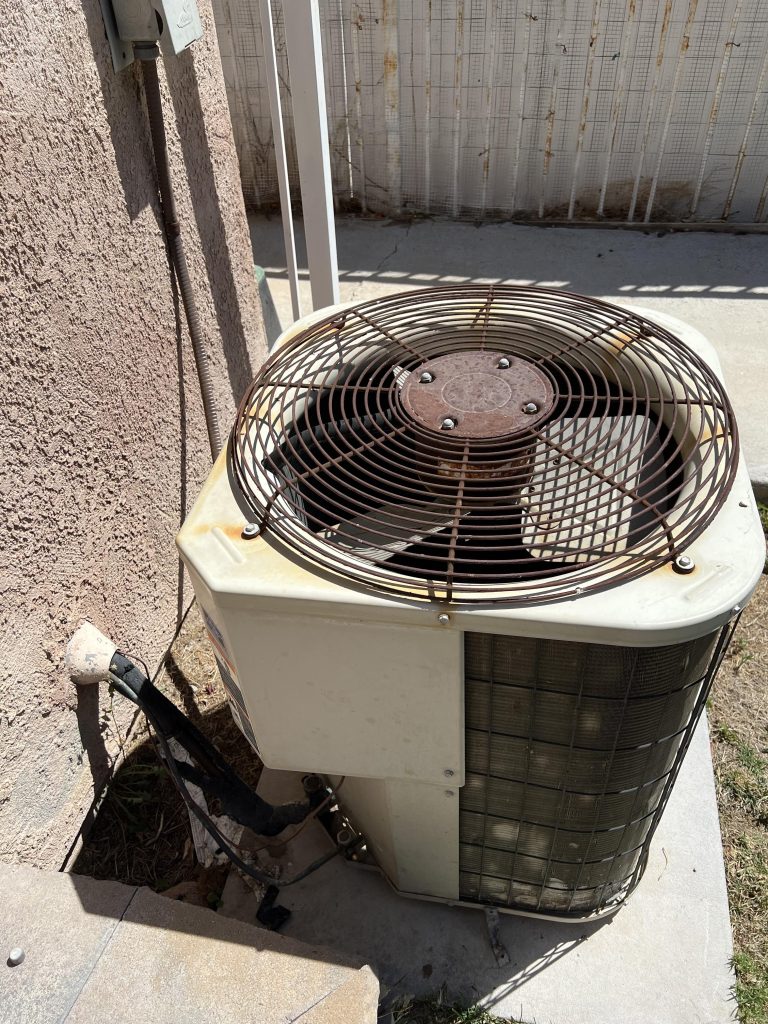
Have you ever wondered how big your air conditioner really is? Knowing the size of your AC is more important than you might think.
It affects how well your home stays cool, your energy bills, and even the lifespan of the unit. If your air conditioner is too small, it will struggle to cool your space. If it’s too big, you’ll waste money and energy.
You’ll learn simple ways to figure out the size of your air conditioner and why it matters to you. Keep reading to make sure your AC is just right for your comfort and savings.

Credit: thefurnaceoutlet.com
Why Ac Size Matters
AC sizedirectly affects comfort and energy use. An oversized unitcools the room too fast but does not remove enough moisture. This leads to a cold yet dampfeeling indoors. The system also turns on and offoften, which increases wearand wastes energy.
On the other hand, an undersized systemruns continuously but struggles to coolthe space properly. This can cause higher electricity billsand uneven temperatures. The unit may overheatand break down faster.
| Oversized Unit | Undersized Unit |
|---|---|
| Cools room too quickly | Runs all the time |
| Does not remove enough moisture | Does not cool well |
| Frequent on/off cycles | Higher energy use |
| More wear and tear | May overheat |
Factors Influencing Ac Size
The size of an air conditionerdepends on several important factors. Room dimensionsmatter a lot. Bigger rooms need larger AC units to cool properly. Ceiling height also affects the cooling load.
Insulation qualityplays a key role. Well-insulated rooms keep cool air longer, so a smaller AC might work. Poor insulation means more cooling power is needed.
Sunlight exposureimpacts the AC size. Rooms with direct sunlight get hotter and need bigger units. Shaded rooms stay cooler and require less power.
The number of occupants and appliancesalso adds to heat inside a room. More people and machines mean more heat. The AC must be strong enough to handle this extra heat.
Measuring Your Space
Measure the length and width of the room in feet. Multiply these numbers to get the square footage. This tells you the size of the space.
Ceiling height changes how much air your AC needs to cool. Rooms with higher ceilings need more cooling power. Standard ceiling height is about 8 feet. If your ceiling is taller, add extra cooling capacity.
| Ceiling Height | Adjustment |
|---|---|
| Up to 8 feet | No change |
| 8 to 9 feet | +10% cooling power |
| 9 feet or higher | +20% cooling power |

Credit: www.furnaceprices.ca
Btu: The Cooling Power Metric
BTUstands for British Thermal Unit. It measures the amount of heat an air conditioner can remove from a room in one hour. Higher BTU means more cooling power. Choosing the right BTU size helps keep a room cool and saves energy.
Too small a BTU unit may not cool well. Too large wastes energy and can cause moisture problems. Knowing your room size helps pick the correct BTU.
| Room Size (sq ft) | BTU Needed |
|---|---|
| Up to 150 | 5,000 BTU |
| 150 – 250 | 6,000 BTU |
| 250 – 350 | 8,000 BTU |
| 350 – 450 | 10,000 BTU |
| 450 – 550 | 12,000 BTU |
Using Online Tools And Calculators
Online tools help find the right sizefor your air conditioner. They use your room’s square footage, ceiling height, and sun exposure. Popular sizing calculators include websites from HVAC brands and home improvement stores.
These calculators ask for details like:
- Room length and width
- Number of windows
- Room insulation quality
- Climate zone
To get accurate results, provide precise measurements. Use a tape measure for room size. Note if the room gets direct sunlightor shade. Include the number of people who usually stay in the room.
| Input | Why It Matters |
|---|---|
| Room Size (sq. ft.) | Determines cooling capacity needed |
| Window Count | Affects heat gain inside the room |
| Sunlight Exposure | More sun means more cooling power |
| Number of Occupants | Body heat adds to room temperature |
Professional Load Calculation
A professional load calculationmeasures the cooling needs of your home. It checks factors like room size, windows, and insulation. The goal is to find the right air conditioner sizeto keep you cool without wasting energy.
During the assessment, expect a technician to:
- Measure each room’s square footage
- Check window types and shading
- Assess insulation quality
- Note the number of people and heat sources
- Evaluate airflow and ductwork
Benefits of expert sizing include:
- Better comfortwith even cooling
- Lower energy billsdue to efficiency
- Longer equipment lifespan
- Reduced humidityand noise
Matching Ac Size To Climate
In hot and humid regions, air conditioners need to be more powerful. The AC must remove both heat and moisture from the air. This means a larger capacityunit is better for comfort and efficiency. Small ACs may struggle to cool the space and remove humidity well.
For cooler climates, a smaller AC unit often works fine. The main task is to lower the temperature, not remove much moisture. Too large an AC can cool too fast without removing humidity, causing a cold, damp feeling. A properly sized AC keeps the room comfortable and saves energy.
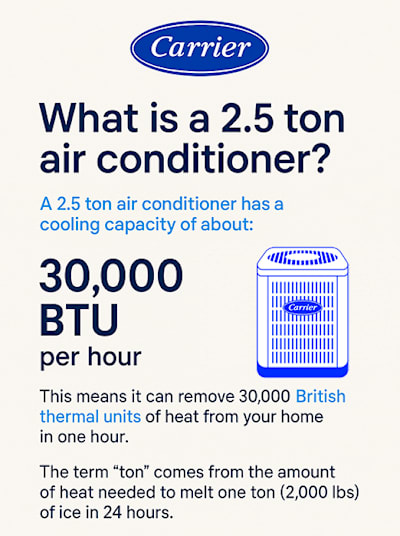
Credit: www.carrier.com
Energy Efficiency And Size
Energy efficiencydirectly affects your utility bills. Larger air conditioners use more power. But size alone doesn’t tell the full story. The SEER ratingshows how efficiently a unit cools your home.
A higher SEER rating means better efficiency. This lowers your electricity costs. Smaller units with high SEER ratings can save money. Oversized units may cool fast but waste energy.
| SEER Rating | Size Impact | Energy Use |
|---|---|---|
| Below 13 | Less efficient | High energy consumption |
| 14 – 16 | Moderate efficiency | Balanced energy use |
| 17 and above | Very efficient | Low energy consumption |
- Choose the right size for your space.
- Check the SEER rating before buying.
- Smaller, efficient units can save money over time.
- Big units with low SEER waste energy.
Signs Your Ac Is The Wrong Size
Short cyclinghappens when the AC turns on and off very quickly. This can cause wear and tear on the unit. It means your AC is too big or too small for your space. Inadequate coolingfeels like the AC is not cooling enough. Rooms stay warm or unevenly cooled. This happens if the AC is too small. High energy billscan mean your AC is working too hard. This often happens when the unit is too big or too small. It runs more than needed, using extra electricity. These signs show your AC might not be the right size.
Tips For Choosing The Right Ac
Choosing the right air conditioner size helps save money and energy. A unit too small cools poorly. Too big wastes power and costs more.
Balance the cost and capacityby checking room size. A small room needs a smaller AC. Large rooms need bigger units.
Think about future needs. Will the room size change? Will you add more devices that produce heat? A little extra capacity can help.
- Measure room square footage first.
- Check BTU ratings to match room size.
- Consider energy-efficient models to save bills.
- Plan for extra heat sources or more people in the room.
Frequently Asked Questions
How Do I Find My Air Conditioner Size?
Check your AC unit’s model number or nameplate. It usually lists cooling capacity in BTUs or tons. You can also refer to your unit’s manual or contact the manufacturer for exact size details.
What Does Ac Size Mean In Btus?
BTU stands for British Thermal Unit. It measures the cooling power of your air conditioner. Higher BTUs mean more cooling capacity, suitable for larger rooms or spaces.
Why Is Ac Size Important For My Home?
Choosing the right AC size ensures efficient cooling and energy savings. An oversized unit wastes power and cycles frequently. An undersized unit won’t cool effectively.
Can I Oversize My Air Conditioner?
Oversizing can cause short cycling, higher energy bills, and poor humidity control. It’s best to select an AC size matched to your room’s square footage.
Conclusion
Choosing the right air conditioner size matters a lot. A unit too big wastes energy and money. Too small, and it struggles to cool your space. Check your room size before buying. Use simple tools or ask a professional. Proper sizing keeps your home comfortable all year.
It also saves on electricity bills. Remember, a good fit means better air and less hassle. Stay cool, save money, and enjoy your space.