
Are your car tires feeling a little flat? Knowing how to fill car tires properly can save you time, money, and even keep you safe on the road.
You don’t have to be a mechanic or spend extra cash at the gas station. With just a few simple steps, you can make sure your tires are at the right pressure, improving your car’s performance and fuel efficiency. Keep reading, and you’ll learn exactly what to do to get your tires filled quickly and correctly.
Your car—and your wallet—will thank you.

Credit: www.oreillyauto.com
Tools Needed
Filling car tires requires some basic tools to do it right. These tools help you add air safely and check tire pressure.
Using the correct tools keeps your tires in good shape and improves your car’s performance.
Air Compressor
An air compressor is a machine that pushes air into your tires. It is the main tool to fill tires quickly.
You can use a portable or stationary air compressor. Make sure it fits your car’s tire valve.
- Portable compressors are easy to carry.
- Stationary compressors are often found at gas stations.
- Check the air pressure limits before use.
Tire Pressure Gauge
A tire pressure gauge measures how much air is in your tire. It helps you avoid over or under inflating.
There are digital and analog gauges. Choose one that is simple and easy to read.
- Place the gauge on the valve stem to get a reading.
- Compare the reading with the recommended tire pressure.
- Check tire pressure when tires are cold for accuracy.
Valve Stem Caps
Valve stem caps cover the valve where you add air. They keep dirt and moisture out of the tire valve.
Always replace valve caps after filling your tires. This helps maintain proper tire pressure longer.
- Caps protect the valve from dust and debris.
- They prevent air leaks from the valve.
- Use caps that fit tightly on the valve stem.
Check Tire Pressure
Keeping your car tires at the right pressure is important for safety. It helps your tires last longer and saves fuel.
Checking tire pressure is easy. You just need to know the right pressure and how to measure it.
Locate Recommended Pressure
Find the tire pressure recommended by the car maker. This number tells you how much air to put in your tires.
Look for a sticker on the driver’s door frame or in the owner’s manual. It shows the correct pressure in PSI or bar.
- Check the sticker inside the driver’s door
- Look in the car’s owner manual
- Do not use the number on the tire sidewall
Use Pressure Gauge
A pressure gauge helps you measure the air in your tires. It shows if you need to add or let out air.
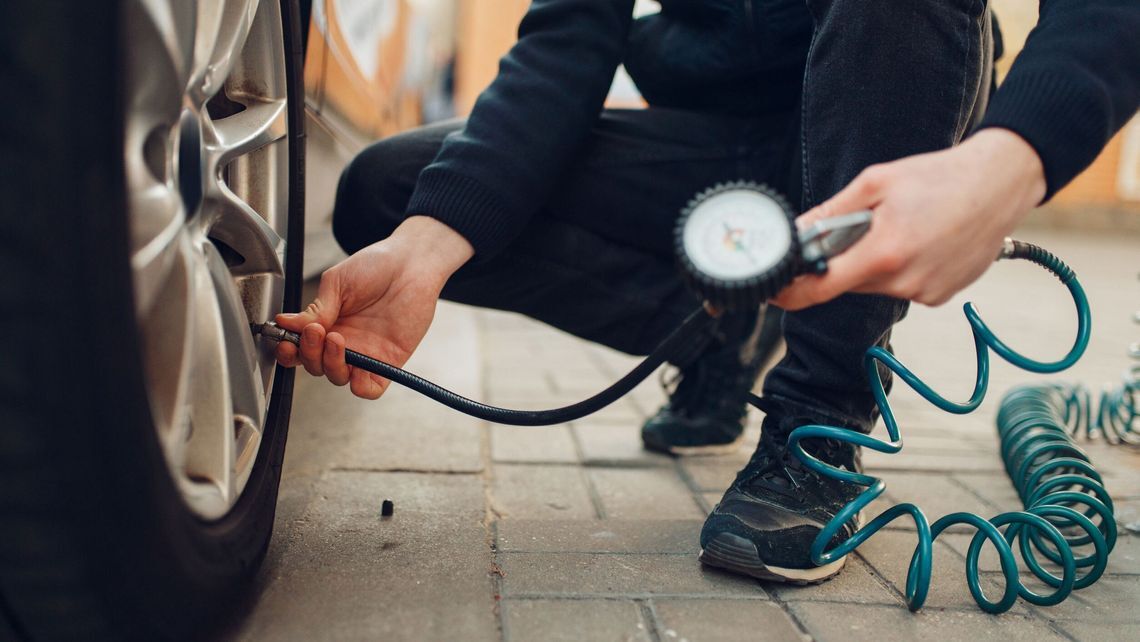
Remove the valve cap on the tire. Press the gauge on the valve stem. Read the number on the gauge.
- Use a digital or manual tire pressure gauge
- Press firmly to avoid air leaks
- Compare reading to recommended pressure
- Add air if pressure is low
- Let air out if pressure is too high
Prepare Tire Valve
Filling car tires starts with preparing the tire valve properly. This step ensures air flows in smoothly and keeps the tire safe.
Checking the valve helps avoid leaks and keeps your tires in good shape for longer.
Remove Valve Cap
First, find the valve stem on your tire. It usually looks like a small rubber or metal tube.
Turn the valve cap counterclockwise to remove it. Keep the cap in a safe place so you can put it back later.
- Locate the valve stem on the tire
- Grip the valve cap firmly
- Turn the cap left to unscrew
- Store the cap safely
Inspect Valve For Damage
Look closely at the valve stem for cracks, bends, or dirt. A damaged valve can cause air leaks.
| Damage Type | Effect |
| Cracks | Air leaks and pressure loss |
| Bends | Difficulty attaching air pump |
| Dirt or debris | Blockage and poor seal |
Credit: www.michelin.ca
Attach Air Compressor
Filling car tires starts with attaching the air compressor. This step is important to add air safely and correctly.
Make sure your compressor is off before you begin. This prevents air loss and keeps you safe.
Secure Air Hose
Hold the air hose firmly to the tire valve. The hose should not move or slip during filling.
A loose hose can cause air leaks. Check that the hose stays in place before turning on the compressor.
- Press the hose onto the valve stem
- Hold it steady with your hand
- Check for any air hissing sounds
Ensure Tight Connection
Make sure the connection between hose and valve is tight. This keeps the air inside the tire.
Use a clamp or lever on the hose if your compressor has one. This locks the hose in place securely.
- Push the hose connector firmly onto the valve
- Engage the lever or clamp to lock it
- Check if the hose feels secure before starting
Fill Tires
Filling car tires is important for safe driving. Proper tire pressure helps your car perform well.
You need to add air carefully and check the pressure often. This keeps your tires in good condition.
Add Air Gradually
Add air to your tires in small amounts. This prevents overfilling and tire damage.
Stop often to check the tire pressure. Adding air slowly helps you reach the right level.
- Remove the valve cap
- Press the air hose onto the valve
- Add air in short bursts
- Check pressure after each burst
- Replace the valve cap when done
Monitor Pressure Levels
Use a tire pressure gauge to check the air pressure. This tool shows if your tires have enough air.
Check the pressure when tires are cold. This gives the most accurate reading for safety.
- Find the recommended pressure in your car manual
- Use the gauge on each tire valve
- Compare the reading to the recommended level
- Add or release air as needed
- Check pressure regularly, at least once a month
Final Pressure Check
Checking your tire pressure is important after filling your car tires. It ensures the tires have the correct air amount for safe driving.
Incorrect pressure can cause poor handling or tire damage. Follow these simple steps for a final pressure check.
Use Gauge After Filling
Always use a tire pressure gauge right after filling your tires. This tool shows the exact air pressure inside the tire.
- Remove the valve cap from the tire.
- Press the gauge onto the valve stem firmly.
- Read the pressure displayed on the gauge.
- Compare it to the recommended pressure for your vehicle.
- Replace the valve cap after checking.
Adjust Air If Needed
If the pressure is too low or too high, adjust the air inside the tire. Correct pressure helps your car drive smoothly and saves fuel.
| Pressure Status | Action |
| Too Low | Add air until pressure matches the recommended level. |
| Too High | Release air slowly by pressing the valve stem until correct pressure is reached. |
| Correct | Do not add or release air. Check other tires next. |
Replace Valve Caps
Valve caps protect your car tires from dirt and moisture. They help keep the valve clean and prevent air leaks.
Replacing old or missing valve caps is simple. It ensures your tires stay in good condition longer.
Check The Condition Of Valve Caps
Look at each valve cap on your tires. If it is cracked, broken, or missing, you need to replace it.
Damaged valve caps can let dirt and water inside the valve stem. This may cause slow air leaks.
Choose The Right Valve Caps
Valve caps come in different materials and styles. Pick caps that fit your valve stems tightly.
- Plastic caps are common and affordable.
- Metal caps last longer and resist damage.
- Some caps have built-in seals for extra protection.
How To Replace Valve Caps
Remove the old valve cap by turning it counterclockwise. If it is stuck, use a cloth for grip.
Place the new valve cap on the valve stem. Turn it clockwise until it is snug but not too tight.
| Action | Details |
| Remove old cap | Turn counterclockwise and pull off |
| Check valve stem | Clean dirt or moisture if needed |
| Install new cap | Turn clockwise until snug |

Credit: www.youtube.com
Safety Tips
Filling car tires is important for safe driving. Proper tire pressure helps your car handle well.
Follow safety tips to avoid accidents and tire damage. Check your tires often for best results.
Avoid Overinflation
Do not fill your tires with too much air. Overinflated tires can burst or wear unevenly.
Check the car manual or tire sidewall for the right pressure. Use a tire gauge to measure pressure.
- Too much air makes tires hard and less safe
- Overinflated tires reduce road grip
- Always fill tires to the recommended pressure
Check Tires Regularly
Look at your tires often to find damage or low pressure. Check at least once a month.
Regular checks help you fix problems early. This keeps you safe on the road.
- Inspect tires for cuts, cracks, or bulges
- Use a pressure gauge to check air levels
- Check tires before long trips
Frequently Asked Questions
How Do I Check My Car Tire Pressure?
Use a tire pressure gauge to check pressure when tires are cold. Compare with the recommended PSI found in your car’s manual or driver’s door.
What Is The Right Tire Pressure For My Car?
Check your vehicle’s manual or tire sidewall for the recommended PSI. Maintaining correct pressure improves safety, fuel efficiency, and tire lifespan.
Can I Fill Car Tires At Home?
Yes, if you have a portable air compressor or pump, you can fill tires at home. Ensure to measure pressure accurately to avoid overinflation.
How Often Should I Fill My Car Tires?
Check tire pressure monthly or before long trips. Tires naturally lose air over time, so regular checks keep them properly inflated and safe.
Conclusion
Filling car tires is simple and important for safe driving. Check tire pressure often to avoid problems on the road. Use the right air pressure shown in your car’s manual or on the tire sidewall. A good air level helps your tires last longer and saves fuel.
Keep a small air pump in your car for emergencies. Stay safe by keeping your tires properly filled at all times.