Is your window air conditioner not cooling like it used to? You might be low on Freon, the key ingredient that keeps your AC blowing cold air.
Adding Freon yourself can save you time and money, but only if you know the right steps. In this guide, you’ll learn exactly how to add Freon to your window air conditioner safely and effectively. By the end, you’ll feel confident handling this simple fix and enjoy cool comfort again—without calling a costly technician.
Keep reading to discover how easy it can be to bring your AC back to life.
Signs Your Ac Needs Freon
Reduced cooling performanceis a key sign your AC needs freon. The air conditioner feels warm or not cold enough. It takes longer to cool the room. Energy bills may rise because the unit works harder.
Ice formation on coilsmeans the freon level is low. Ice or frost appears on the evaporator coils. This blocks airflow and lowers cooling. Turn off the AC to let the ice melt before adding freon.
Hissing or bubbling soundsnear the unit can signal a freon leak. These noises come from escaping gas or air trapped in the lines. A leak reduces cooling power and wastes freon.

Credit: www.youtube.com
Gathering Necessary Tools
Knowing the correct Freon typeis vital. Check the manufacturer’s labelon the air conditioner. It tells you which Freon typeto use, usually R-22 or R-410A.
Wear proper safety gearbefore starting. Use glovesand safety gogglesto protect from cold burns or gas leaks. Safety helps avoid accidents.
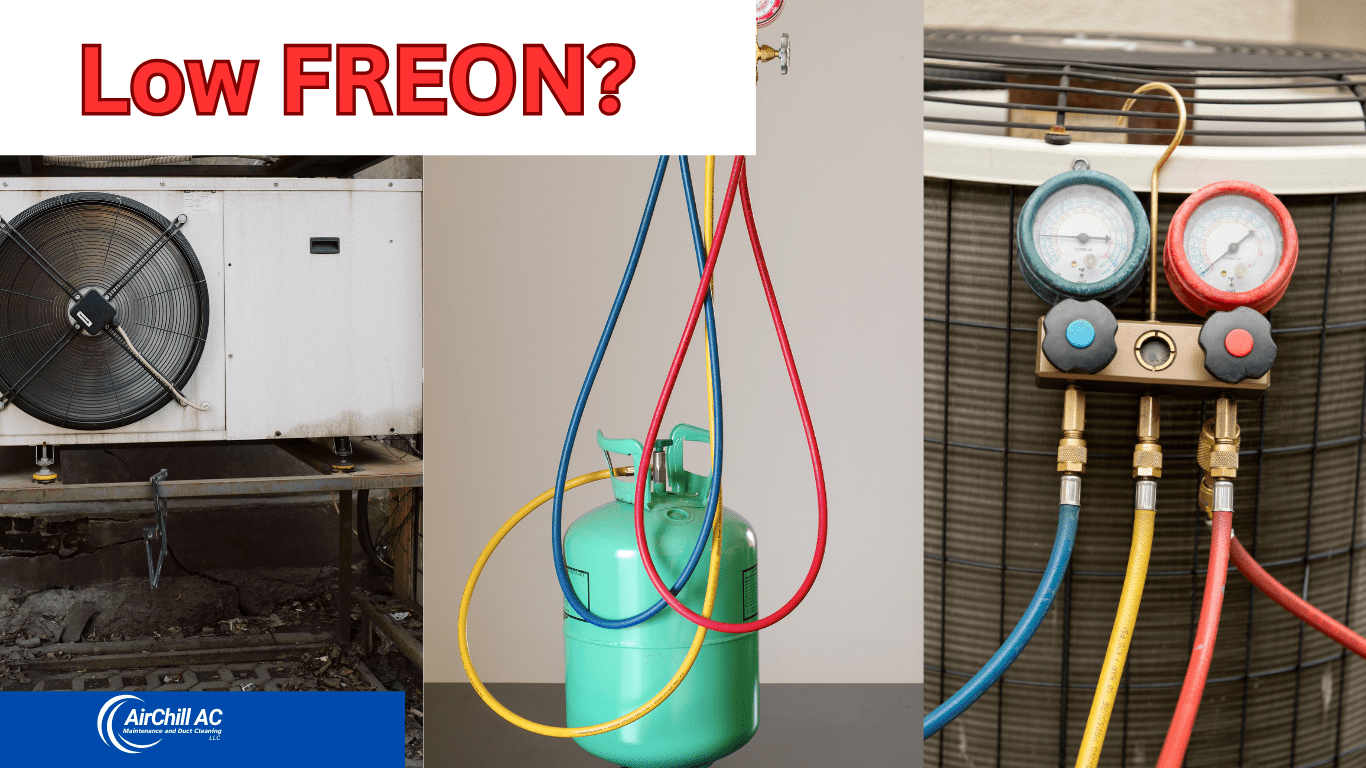
A manifold gauge sethelps measure pressure inside the AC system. It connects to the service ports and shows if Freon levels are low or high. This tool is key for adding Freon safely and correctly.
Preparing The Air Conditioner
Turn off the air conditioner and unplug it from the power source. This ensures safety during the process. Wait a few minutes to let the unit cool down.
Find the service valve on the side or back of the unit. This valve is where you will add the Freon. It usually looks like a small capped pipe.
Use a screwdriver to remove the access panel. The panel covers the coil and service valve. Keep the screws in a safe place for reassembly.

Credit: www.youtube.com
Checking Refrigerant Levels
Start by turning offthe air conditioner and unplugging it. Attach the pressure gaugesto the service valves carefully. These valves are usually found on the outdoor unit or the back of the window unit.
Make sure the connections are tight and secureto avoid leaks. Open the valves slowly to let the gauges read the pressure inside the system.
| Pressure Level (PSI) | Condition |
|---|---|
| Low (Below 40 PSI) | Refrigerant is low; needs more Freon |
| Normal (40-70 PSI) | Refrigerant level is okay |
| High (Above 70 PSI) | Too much refrigerant; be careful |
Check the readings and compare them to the recommended levels in your unit’s manual. Add Freon only if the pressure is low. Do not overfill, as this can damage the system.
Adding Freon Safely
First, attach the Freon cansecurely to the hose. Ensure the connection is tight to stop leaks. Use gloves to protect your hands from cold Freon. Keep the can upright to avoid liquid release.
Open the valve slowly to release the refrigerant. Let the Freon flow gently into the air conditioner. Avoid opening the valve too fast to prevent damage. Pause often to check the flow.
| Pressure Gauge Reading | Action |
|---|---|
| Below recommended level | Continue releasing Freon slowly |
| At recommended level | Close the valve and stop adding |
| Above recommended level | Stop and check for overcharging |
Watch the pressure gaugecarefully. It shows the Freon level inside. Stop adding Freon once the right pressure appears.
Sealing And Testing The Unit
After adding Freon, securely replace the access panelon your window air conditioner. This step prevents leaksand protects internal parts. Make sure the panel fits snugly and all screws are tight.
Next, turn on the air conditionerto test its operation. Set it to the coolest setting. Listen for any unusual sounds and check that air flows freely from the unit.
Check the unit’s cooling efficiencyby measuring the temperature difference. Use a thermometer to record the room temperature and the air coming out of the unit.
| Temperature Location | Expected Range (°F) |
|---|---|
| Room Temperature | 75 – 85 |
| Air Conditioner Output | 55 – 65 |
A difference of about 15 to 20 degreesshows the unit cools well. If not, check for leaks or low Freon levels again.
Precautions And Tips
Overchargingthe air conditioner with Freon can cause serious damage. Too much Freon leads to higher pressure inside the system. This pressure can harm the compressor and other parts. Always check the recommended Freon level in your unit’s manual. Use a gauge to measure pressure carefully. Stop adding Freon as soon as the right level is reached.
Freon is a chemical that needs careful handling. Wear gloves and goggles to protect your skin and eyes. Avoid breathing in Freon gas as it can be harmful. Work in a well-ventilated area to reduce the risk of inhalation. Keep Freon cylinders upright and store them safely away from heat.
Some problems need expert help. Call a professional if the air conditioner leaks or does not cool after adding Freon. Professionals have tools and skills to fix issues safely. Avoid trying complex repairs alone to prevent injury or damage to the unit.
Credit: airchillac.com
Frequently Asked Questions
How Do I Know If My Window Ac Needs Freon?
Check if your AC blows warm air or runs constantly. Low cooling usually means low Freon levels, signaling a recharge.
Can I Add Freon To A Window Air Conditioner Myself?
Yes, but only if you have the right tools and follow safety steps. Otherwise, hire a professional to avoid damage.
What Type Of Freon Is Used In Window Air Conditioners?
Most window AC units use R-22 or R-410A refrigerants. Check your unit’s label to confirm the correct type before adding.
How Much Freon Should I Add To My Window Ac?
Add Freon gradually and monitor the pressure using a gauge. Overcharging can damage the unit, so follow manufacturer guidelines carefully.
Conclusion
Adding Freon to your window air conditioner can improve its cooling power. Always check the unit’s manual and follow safety steps carefully. Use the right type of Freon for your model. Avoid overcharging the system to prevent damage. Regular maintenance helps your air conditioner work longer and better.
With patience and care, you can keep your room cool all summer. Simple steps make a big difference in comfort and efficiency. Keep your air conditioner running smoothly and enjoy the cool air.