Have you ever wondered what makes your air conditioner cool the air so effectively? At the heart of this process is a small but powerful part called the air conditioner compressor.
Understanding what this component does can help you appreciate how your AC keeps your home comfortable, especially during those hot, sticky days. You’ll discover the crucial role the compressor plays and why it’s essential for your cooling system to work properly.
Keep reading to learn what keeps your air feeling fresh and cool all summer long!
Role Of The Compressor
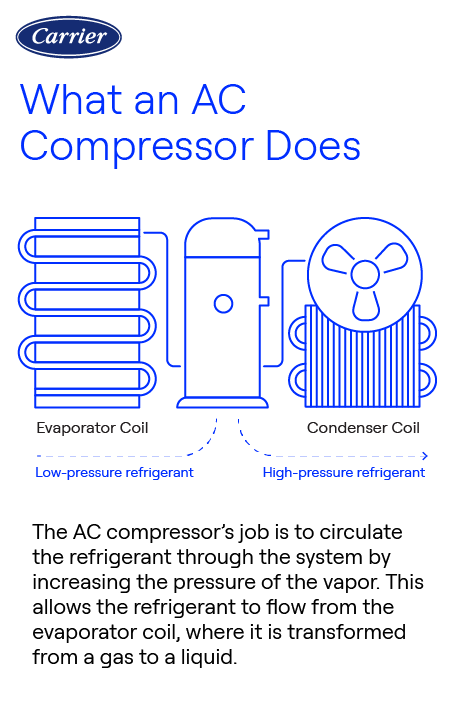
The compressoris the heart of an air conditioner. It compresses refrigerant gas, making it hot and high pressure. This gas then moves to the condenser to cool down and turn into liquid.
This process removes heatfrom inside the room and sends it outside. Without the compressor, the air conditioner can’t cool the air.
The compressor also keeps the refrigerant movingthrough the system. This flow is important to keep the air conditioner working well.
- Airflow:The compressor helps push cool air into the room.
- Temperature:It lowers the room temperature by cycling refrigerant.
Credit: www.mrcool.com
Types Of Compressors
Reciprocating compressorsuse pistons to compress air. These pistons move back and forth inside cylinders. They are common in small to medium air conditioners. They are simple and easy to fix but can be noisy.
Rotary compressorsuse a spinning motion to compress air. A roller spins inside a cylinder, squeezing the gas. These compressors are quiet and efficient. They work well in smaller units and save energy.
Scroll compressorshave two spiral parts that move in a circular path. One part stays still while the other moves. This motion traps and compresses air smoothly. Scroll compressors are very quiet and reliable. They are often found in modern air conditioners.
How The Compressor Works
The compression cyclebegins as the compressor squeezes the refrigerant gas. This increases its pressureand temperature. The hot, high-pressure gas then moves through the system.
Refrigerant movementis key to cooling. The gas travels from the compressor to the condenser. In the condenser, it cools down and turns into a liquid. This liquid then flows to the evaporator.
Pressure changeshelp the refrigerant absorb and release heat. Low pressure in the evaporator allows the refrigerant to absorb heat from the air. High pressure in the condenser forces the heat out. This cycle repeats to keep the air cool.

Credit: www.missionac.com
Signs Of Compressor Problems
Unusual noiseslike rattling, buzzing, or humming often signal compressor trouble. These sounds come from worn-out parts or loose components inside the unit.
Reduced cooling efficiencymeans the AC struggles to cool your space. The compressor might be weak or failing, causing poor performance and higher energy use.
Frequent cyclingis when the AC turns on and off too often. This can stress the compressor and other parts, leading to early breakdowns and discomfort.
Maintaining The Compressor
Keeping the compressor clean helps it work well and last longer. Dirt and dust can stop the compressor from cooling properly. Wiping off the outside and clearing any debris is important. This lets air flow freely and keeps the unit cool.
Checking refrigerant levels ensures the system cools the air as it should. Low refrigerant can make the compressor work too hard. This can cause damage and raise energy bills. Recharging the refrigerant helps the air conditioner stay efficient.
Professional inspections catch small problems early. Technicians check electrical parts, refrigerant, and compressor condition. Regular check-ups prevent big repairs and keep the air conditioner running smoothly. Plan inspections once or twice a year for best results.

Credit: www.yahoo.com
Energy Efficiency And The Compressor
The compressorcontrols the flow of refrigerant inside the air conditioner. It uses a lot of electricity. The more it runs, the higher the power consumption. A working compressor means the system cools air efficiently.
Choosing an energy-saving modelhelps reduce electricity bills. These models use advanced compressorsthat work smarter and use less power. They adjust speed and power based on cooling needs.
- Energy-saving compressors reduce wasted power.
- They extend the air conditioner’s life.
- Lower energy use means less impact on the environment.
Frequently Asked Questions
What Is The Main Function Of An Ac Compressor?
The AC compressor pumps refrigerant through the system. It compresses low-pressure gas into high-pressure gas. This process helps cool the indoor air efficiently.
How Does An Air Conditioner Compressor Work?
The compressor squeezes refrigerant gas, raising its pressure and temperature. This hot gas moves to the condenser coil, releasing heat outside. The cooled refrigerant then absorbs indoor heat, keeping rooms cool.
Why Is The Compressor Vital For Ac Performance?
The compressor drives the refrigeration cycle. Without it, refrigerant won’t circulate or change states. This stops heat transfer, making cooling impossible and reducing air conditioner efficiency drastically.
Can A Faulty Compressor Affect Energy Bills?
Yes, a damaged compressor consumes more electricity. It strains the AC system and reduces cooling efficiency. This leads to higher energy costs and possible breakdowns.
Conclusion
The air conditioner compressor plays a key role in cooling your home. It moves refrigerant and helps remove heat from inside. Without it, the AC cannot cool the air effectively. Understanding how it works helps you care for your unit better.
Regular maintenance keeps the compressor running smoothly. A healthy compressor means cooler, more comfortable days. Now you know why this part matters so much. Simple but important.