Are you looking to extend the life of your tires and get the best performance from your front wheel drive car? Knowing how to rotate your tires properly can save you money and keep your ride smooth and safe.
Many drivers overlook this simple maintenance step, but rotating your tires regularly is key to even wear and better handling. You’ll learn easy, step-by-step instructions to rotate your front wheel drive tires like a pro. Keep reading to discover the tips that will help you protect your investment and drive with confidence.
Benefits Of Tire Rotation
Rotating tires on a front wheel drive car helps keep the tires wearing evenly. It is an important part of car care that many drivers miss.
This practice improves how long tires last and how the car drives. It also helps keep you safe on the road.
Extend Tire Lifespan
Front wheel drive cars wear out the front tires faster than the rear ones. Rotating tires moves them to new positions, so all tires wear evenly.
- Prevents early tire replacement
- Reduces uneven tread wear
- Saves money over time
- Keeps tires in better shape
Improve Vehicle Performance
Evenly worn tires help the car handle better. Rotation keeps good traction on all wheels. This makes steering smooth and braking more reliable.
| Benefit | Effect on Vehicle |
|---|---|
| Balanced tire wear | Better grip and control |
| Equal tread depth | Improved fuel efficiency |
| Consistent tire pressure | Smoother ride quality |
Enhance Safety
Rotating tires reduces the risk of tire blowouts and skids. It helps keep the car stable during sharp turns and wet roads.
Key safety advantages include:
- Improved braking distance
- Reduced risk of hydroplaning
- Lower chance of tire failure
Credit: www.michelin.ca
When To Rotate Tires
Rotating tires is key to keeping your car safe and running well. It helps your tires wear evenly and last longer.
Knowing the right time to rotate your front wheel drive car tires protects your investment and improves driving comfort.
Mileage Intervals
Most car makers suggest rotating tires every 5,000 to 8,000 miles. This range fits many driving styles and conditions.
- Check your owner’s manual for exact recommendations.
- Follow the schedule to avoid uneven wear.
- Adjust rotation frequency if you drive in rough conditions.
Signs Of Uneven Wear
Uneven tire wear means it is time to rotate your tires. Look for these signs regularly to catch problems early.
| Wear Pattern | Possible Cause | Action |
| More wear on front tires | Front wheel drive pulls more weight | Rotate front to rear tires |
| Feathered edges | Misalignment | Check alignment and rotate |
| Bald spots | Imbalanced tires | Balance and rotate tires |
Tools Needed For Rotation
Rotating tires on a front wheel drive car needs the right tools. Using proper tools keeps you safe and makes the job easier. Below are the main tools you will need.
Each tool plays a specific role. Knowing how to use them helps you do the tire rotation correctly.
Jack And Jack Stands
You need a sturdy jack to lift your car off the ground. Jack stands hold the car safely once it is lifted. Never rely on the jack alone to support the car.
- Hydraulic or scissor jack works well for most cars.
- Jack stands come in different weight ratings; choose one that matches your car’s weight.
- Place jack stands on firm, level ground before lowering the car onto them.
Lug Wrench
A lug wrench helps you remove and tighten the lug nuts on your wheels. It is important to use the right size wrench for your lug nuts.
Common types of lug wrenches include:
- Cross-shaped wrench
- Socket wrench with a breaker bar
- Impact wrench for powered removal
Torque Wrench
After rotating tires, you must tighten lug nuts with a torque wrench. This tool ensures the nuts are neither too loose nor too tight. Proper torque prevents wheel damage and accidents.
| Torque Setting for Front Wheel Drive Car | Typical Value (ft-lbs) |
| Lug Nuts | 80 – 100 |
Wheel Chocks
Wheel chocks keep your car from rolling when it is jacked up. Place them against the wheels that stay on the ground. This simple tool helps prevent accidents.
Wheel chocks can be made of rubber, plastic, or metal. Choose chocks that fit your tires well and provide good grip.
Rotation Patterns For Front Wheel Drive
Rotating tires on a front wheel drive car helps them wear evenly. It also extends the life of your tires. Different rotation patterns work best for front wheel drive vehicles.
Choosing the right pattern keeps your car safe and improves tire performance. Here are some common rotation patterns for front wheel drive cars.
Forward Cross Pattern
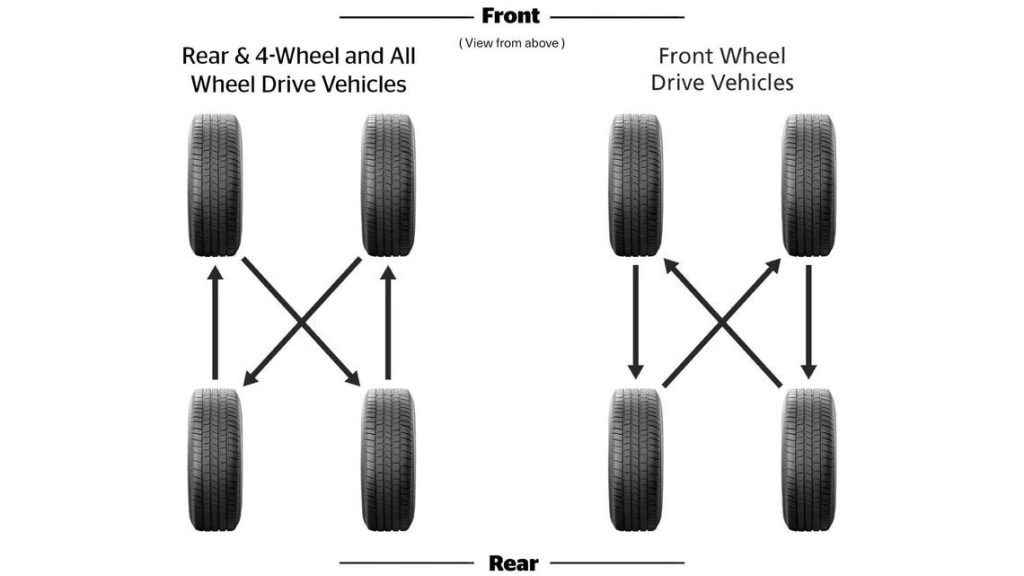
The forward cross pattern is popular for front wheel drive cars. It moves the front tires straight back to the rear. The rear tires cross to the front on the opposite sides.
This pattern helps balance wear because the front tires handle steering and power. It also improves tire life.
- Front left tire moves to rear left
- Front right tire moves to rear right
- Rear left tire moves to front right
- Rear right tire moves to front left
X-pattern
The X-pattern swaps tires diagonally. Each tire moves to the opposite corner. This helps even out wear on all tires.
This pattern is good if your tires wear unevenly. It keeps tread wear balanced across the whole set.
- Front left tire moves to rear right
- Front right tire moves to rear left
- Rear left tire moves to front right
- Rear right tire moves to front left
Side To Side Swap
The side to side swap moves tires only across the same axle. Front tires switch sides, and rear tires switch sides. This pattern keeps tires on the same axle but evens out wear.
This method works if your tires wear mostly on the edges. It also keeps tread wear more even side to side.
- Front left tire moves to front right
- Front right tire moves to front left
- Rear left tire moves to rear right
- Rear right tire moves to rear left
Step-by-step Rotation Process
Rotating tires on a front wheel drive car helps them wear evenly. This keeps the car safe and improves tire life.
Follow these simple steps to rotate your tires properly and keep your vehicle running smoothly.
Prepare The Vehicle
Park your car on a flat, stable surface. Turn off the engine and set the parking brake to keep the car from moving.
Gather the tools you need: a jack, a lug wrench, and wheel chocks to block the wheels.
Loosen Lug Nuts
Use the lug wrench to loosen the lug nuts on all four tires. Turn them counterclockwise, but do not remove them yet.
Loosening them before lifting the car makes it easier and safer to remove the tires later.
Lift The Car Safely
Place the jack under the car’s recommended lifting point. Lift one side of the car until the tires are off the ground.
Use jack stands to support the car. Never rely on the jack alone to hold the vehicle while working.
Remove And Swap Tires
Remove the lug nuts completely and take off the front tires. Swap them with the rear tires on the same side.
For front wheel drive cars, move the front tires straight back to the rear. Move the rear tires to the front, crossing sides.
- Front left tire → Rear left
- Rear left tire → Front right
- Front right tire → Rear right
- Rear right tire → Front left
Tighten Lug Nuts Properly
Put the lug nuts back on each tire by hand. Tighten them in a star pattern to keep the wheel secure and even.
- Tighten one lug nut partially
- Move to the opposite lug nut
- Repeat until all are snug
- Fully tighten using the wrench
Lower The Vehicle
Remove the jack stands carefully. Lower the car slowly using the jack until all tires touch the ground.
Give the lug nuts one last check with the wrench. Make sure they are tight and secure before driving.
Common Mistakes To Avoid
Rotating the tires on a front wheel drive car helps extend tire life and improve safety. Avoiding common mistakes makes this job easier and safer.
Knowing what to watch out for can save you time and money. Here are some common errors to avoid when rotating your tires.
Not Using Proper Tools
Using the wrong tools can cause damage or make the job harder. You need the right size wrench or socket and a reliable jack and jack stands.
- Never use an adjustable wrench for lug nuts.
- Use a torque wrench to tighten bolts correctly.
- Always use jack stands after lifting the car with a jack.
- Check that tools are in good condition before starting.
Skipping Torque Specifications
Tightening lug nuts without following the correct torque can cause problems. Too loose, and the wheel can come off. Too tight, and you risk stripping the bolts.
| Torque Setting | Effect of Incorrect Torque |
| Too Low | Wheel may loosen and cause accidents |
| Too High | Bolts can break or damage threads |
| Correct | Ensures safe and secure wheel attachment |
Ignoring Tire Pressure
Not checking or adjusting tire pressure after rotation reduces tire life and safety. Pressure affects handling and fuel efficiency.
- Check tire pressure when tires are cold.
- Use the pressure recommended in the owner’s manual.
- Adjust pressure after rotation to keep even wear.
- Inspect tires for damage or uneven wear during rotation.
Maintaining Tire Health After Rotation
Rotating tires on a front wheel drive car helps them wear evenly. This keeps your tires lasting longer and improves driving safety.
After rotation, some simple checks can keep your tires in good shape. These include pressure checks, alignment, and balancing.
Regular Pressure Checks
Check tire pressure once a month and before long trips. Proper pressure keeps tires from wearing unevenly and improves fuel efficiency.
- Use a tire pressure gauge to measure pressure
- Check when tires are cold for accurate reading
- Inflate to the manufacturer’s recommended pressure
- Do not overinflate or underinflate the tires
Wheel Alignment
Wheel alignment keeps your tires pointing straight. Misalignment causes uneven tire wear and poor handling.
| Signs of Poor Alignment | Effects on Tires |
|---|---|
| Steering pulls to one side | Wear on one edge of tires |
| Uneven tire tread wear | Reduced tire life |
| Vibration in steering wheel | Damage to suspension |
Balancing Tires
Balancing tires prevents vibration and uneven wear. It spreads the weight of the tire evenly around the wheel.
Benefits of Proper Tire Balancing:
- Smoother ride with less vibration
- Longer tire life
- Better fuel economy
- Less wear on suspension parts

Credit: www.reddit.com

Credit: www.bfgoodrichtires.com
Frequently Asked Questions
How Often Should I Rotate Front Wheel Drive Tires?
Rotate front wheel drive tires every 5,000 to 7,500 miles. Regular rotation ensures even tire wear and extends tire life. Check your vehicle’s manual for specific recommendations. Proper rotation improves handling and safety on the road.
What Is The Best Pattern To Rotate Front Wheel Drive Tires?
Use the forward cross pattern for front wheel drive tires. Move front tires straight back and cross rear tires to the front. This pattern balances tire wear and maintains traction. Always follow your vehicle manufacturer’s guidelines.
Can I Rotate Front Wheel Drive Tires Myself?
Yes, you can rotate front wheel drive tires yourself with proper tools. Ensure the car is securely lifted and follow the correct rotation pattern. If unsure, seek professional help to avoid damage or injury.
Why Is Tire Rotation Important For Front Wheel Drive Cars?
Tire rotation prevents uneven wear on front wheel drive tires. It balances traction and extends tire lifespan. Rotating tires improves fuel efficiency and driving safety. Regular rotation saves money on premature tire replacement.
Conclusion
Rotating tires keeps your front wheel drive car safe and smooth. It helps tires wear evenly and last longer. Regular rotation improves fuel efficiency and driving comfort. Follow the right pattern and timing for best results. Checking tire pressure during rotation is also important.
This simple step saves money and avoids early tire replacement. Keep your car in good shape by rotating tires often. Small care makes a big difference on the road.