If you’re using braided fishing line, you know it can be tricky to tie knots that hold strong. The right knot keeps your line secure and prevents losing your catch.
But how do you tie braided fishing line so it stays tight and reliable every time? You’ll discover simple, step-by-step methods that anyone can master. By the end, you’ll feel confident tying knots that won’t slip or weaken your line.
Keep reading to make sure your next fishing trip is a success.

Credit: www.youtube.com
Choosing The Right Knot
Tying a knot for braided fishing line needs care. Braided line is thin and slippery.
You must pick a knot that holds tight and does not slip. The right knot keeps your catch secure.
Common Knots For Braided Line
Some knots work better with braided line than others. These knots are strong and easy to tie.
- Palomar Knot – simple and very strong for braided line
- Double Uni Knot – good for joining braided line to leader
- Improved Clinch Knot – popular but needs care with braided line
- San Diego Jam Knot – great for hooks and lures
Use knots that keep the line from slipping. Wet the line before tightening knots.
Knots For Different Fishing Setups
Different fishing setups need different knots. Choose based on your gear and target fish.
- For tying braided line to hooks or lures, use Palomar or San Diego Jam knots.
- To connect braided line to a fluorocarbon or monofilament leader, try Double Uni knots.
- When tying to a swivel or snap, the Improved Clinch knot works well if tied carefully.
- For heavy fish or strong currents, use knots known for high strength and low slip.
Always test your knot by pulling hard before fishing. This ensures the knot will hold.

Credit: www.reddit.com
Preparing Your Line
Preparing your braided fishing line is important before tying any knots. It helps the knot hold better and keeps the line strong.
Take time to get your line ready. This makes fishing easier and prevents problems later.
Trimming And Moistening
Trim the end of your braided line cleanly with sharp scissors. A neat end helps the knot stay tight and neat.
Before tying, moisten the line with water or saliva. This reduces heat and friction, which stops the line from weakening.
- Use sharp scissors to cut the line
- Trim any frayed or damaged ends
- Wet the line before pulling the knot tight
- Moistening protects the line from heat damage
Avoiding Line Damage
Handle braided line gently to avoid cuts or nicks. Damaged line can break easily when fishing.
Check your line for rough spots or sharp edges on hooks and guides. Fix any problems before tying knots.
- Do not pull the line too hard
- Use smooth tools and equipment
- Inspect the line for damage often
- Replace damaged line to keep strength
Step-by-step Knot Tying
Tying knots with braided fishing line requires care and the right technique. Braided line is thin and strong, so choosing the right knot keeps your line secure.
This guide shows how to tie three popular knots used with braided line. Follow these steps to ensure your knots hold well and stay strong.
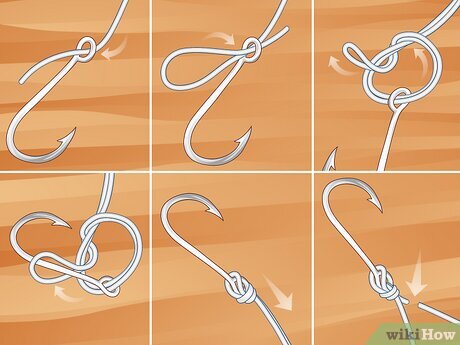
Palomar Knot
The Palomar knot is simple and strong. It works well with braided line because it does not slip easily.
- Double about 6 inches of line and pass the loop through the hook eye.
- Tie an overhand knot with the doubled line, leaving a loop big enough to pass the hook.
- Pass the hook through the loop.
- Pull on the standing line and tag end to tighten the knot.
- Trim the tag end close to the knot.
Improved Clinch Knot
This knot is a classic choice for many anglers. It grips braided line well when tied properly.
| Step | Action |
|---|---|
| 1 | Thread the line through the hook eye. |
| 2 | Wrap the tag end around the standing line 5 to 7 times. |
| 3 | Pass the tag end through the small loop next to the eye. |
| 4 | Then pass the tag end through the big loop formed. |
| 5 | Wet the knot and pull both ends to tighten. |
| 6 | Trim the tag end close to the knot. |
Double Uni Knot
The Double Uni knot is great for joining braided line to leader or another line. It is strong and reliable.
- Overlap the ends of the two lines by 6 inches.
- Make a loop with the first line around the second line.
- Wrap the tag end 4 to 6 times around both lines.
- Pull the tag end to tighten the knot. Repeat with the second line.
- Slide both knots together by pulling the standing lines.
- Trim the tag ends close to the knots.

Credit: www.reddit.com
Tips For Knot Strength
Tying a strong knot with braided fishing line is key to catching fish. Small mistakes can weaken your knot.
Use careful methods to keep your knot tight and secure for better fishing results.
Proper Tension
Pull the line firmly but not too hard while tying. Too much force can damage the braid.
- Keep steady tension while wrapping the line.
- Avoid sudden jerks that may weaken the knot.
- Hold the knot tight as you finish it.
Securing The Tag End
The tag end is the short line left after the knot. Secure it well to stop slipping.
| Method | Description |
| Double Wrap | Wrap the tag end twice around the main line. |
| Burning | Lightly melt the tag end to prevent fraying (only for synthetic braid). |
| Trim Close | Cut the tag end close to the knot but leave a small tail. |
Testing Your Knot
Always test your knot before fishing. It helps avoid lost fish and broken lines.
- Pull the knot slowly to check for slippage.
- Look for any looseness or gaps in the knot.
- Retie if the knot feels weak or uneven.
Common Mistakes To Avoid
Tying braided fishing line needs care and the right technique. Mistakes can weaken the knot and cause line loss.
Watch out for common errors. Fixing these will improve your fishing experience.
Over-tightening
Pulling the knot too tight can damage the braided line. It may cut fibers and weaken the knot.
- Pull gently to snug the knot without squeezing too hard.
- Wet the line before tightening to reduce friction.
- Check the knot for smoothness and no sharp bends.
Incorrect Loop Size
Making the loop too big or too small causes knot failure. The loop must fit the hook or lure properly.
| Loop Size | Effect |
|---|---|
| Too Large | Hook moves too much, weakens hook set |
| Too Small | Line may twist or break at knot |
| Just Right | Strong hold and natural lure action |
Ignoring Line Type
Different braided lines have unique stretch and texture. Using the wrong knot or method reduces strength.
Here are tips for line type:
- Use knots designed for braided lines, like the Palomar or Double Uni.
- Choose line diameter and strength suited to your fishing.
- Test knots before fishing to ensure they hold well.
Maintaining Your Knots
Tying braided fishing line knots is only the first step. Keeping them strong matters for a good catch. Regular care helps avoid line breaks and lost fish.
Focus on checking and retying your knots often. This keeps your fishing line reliable and safe on every trip.
Regular Checks
Look at your knots before and during fishing. Check if the line is frayed or slipping. Wet the knots before tightening them to prevent damage.
- Examine knots closely for wear and tear
- Feel knots for smoothness and tightness
- Replace knots showing damage or looseness
- Keep knots moist while tightening
Retying After Use
Retie your knots after each fishing trip. Braided lines can weaken after use. Starting fresh knots keeps your line strong.
Cut off old knots and use new line ends. This reduces the risk of failure during your next catch.
- Cut off old knots after fishing
- Use fresh line for new knots
- Tie knots carefully and tightly
- Test knots by pulling firmly
Frequently Asked Questions
What Is Braided Fishing Line?
Braided fishing line is made from woven fibers, offering strength and durability. It’s popular for its minimal stretch and high sensitivity, making it ideal for detecting bites. This line is suitable for various fishing environments, including heavy cover or deep waters.
Its thin diameter allows for longer casting distances.
Why Use Braided Line For Fishing?
Braided line is favored for its strength, sensitivity, and durability. Its low stretch enhances bite detection, while its thin diameter allows for longer casts. It’s ideal for fishing in heavy cover or deep waters. Braided line also resists abrasion, making it suitable for challenging fishing environments.
How To Tie A Palomar Knot?
To tie a Palomar knot, double the line and pass it through the hook eye. Tie an overhand knot, but don’t tighten it. Pass the loop over the hook, then pull both ends to tighten. Trim the excess line. This knot is strong and suitable for braided lines.
Is Braided Line Suitable For All Fishing?
Braided line is versatile, but not always ideal. It’s excellent for heavy cover or deep waters due to its strength and sensitivity. However, its visibility might deter fish in clear waters. Consider conditions and target species when choosing braided line.
Fluorocarbon or monofilament might be better in certain situations.
Conclusion
Tying braided fishing line does not have to be hard. Use strong knots like the Palomar or Uni knot. Practice a few times to get it right. Check your knots before you fish to avoid losing fish. Clean, tight knots hold better and last longer.
With patience, your fishing trips will improve. Keep it simple, and enjoy the process. This skill makes fishing more fun and successful. Try different knots to see what works best for you.