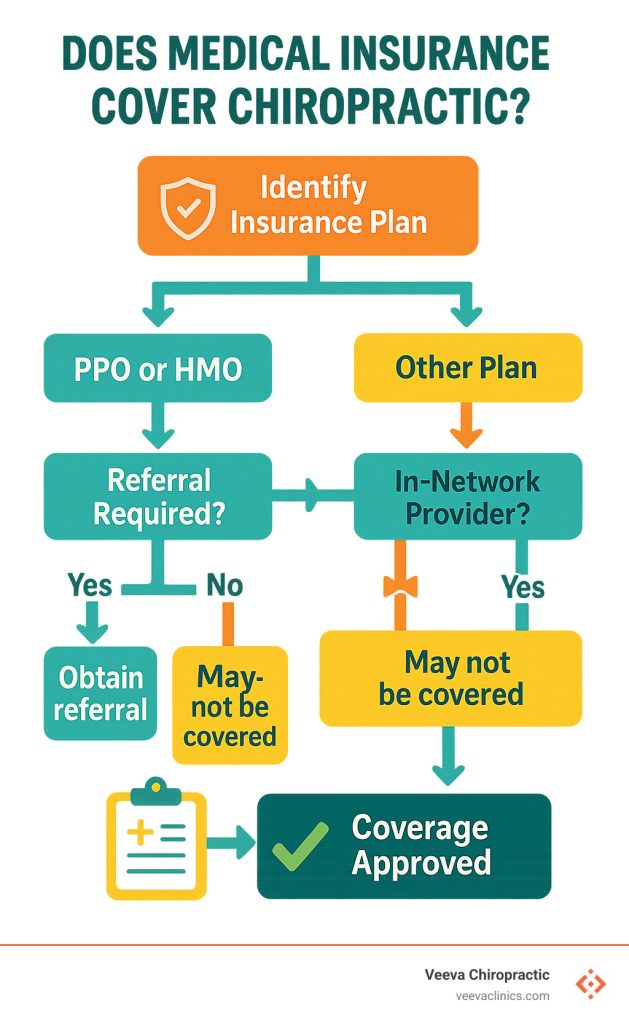
Are you wondering if chiropractic care is something your insurance will cover? If you’ve been thinking about visiting a chiropractor but worry about the cost, you’re not alone.
Knowing whether your insurance plan pays for these treatments can save you time, money, and stress. You’ll discover the key facts about insurance coverage for chiropractic care and what steps you can take to make sure you get the most out of your benefits.
Keep reading to find out how to protect your wallet while taking care of your health.
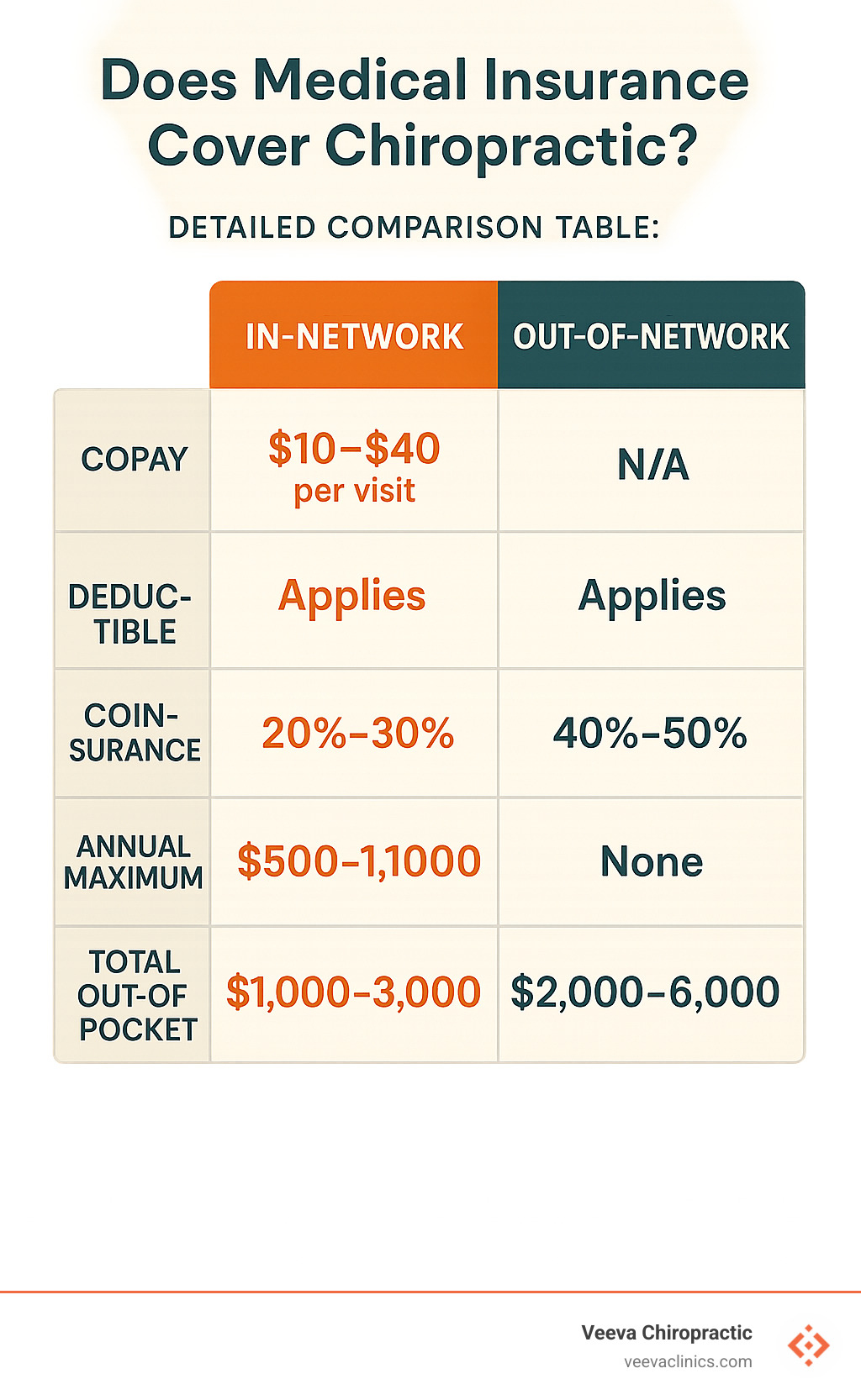
Credit: veevaclinics.com
Insurance Plans That Include Chiropractic
Many insurance plans offer some coverage for chiropractic care. This type of care focuses on spine health and pain relief.
Knowing which insurance plans cover chiropractic helps patients plan their visits and costs better.
Private Health Insurance Coverage
Most private health insurance plans include chiropractic care. Coverage depends on the plan type and provider.
Plans often cover visits, X-rays, and therapies but may limit the number of sessions per year.
- Check if chiropractic services are in-network
- Understand co-pays and deductibles
- Verify session limits and pre-authorization rules
Medicare And Chiropractic Services
Medicare Part B covers some chiropractic services. It mainly covers spinal manipulation to correct subluxation.
Other chiropractic treatments are usually not covered by Medicare. Patients should check details before treatment.
- Coverage includes manual spinal adjustments
- X-rays are covered if they support treatment
- Non-spinal therapies are generally excluded
Medicaid Policies On Chiropractic Care
Medicaid coverage for chiropractic care varies by state. Some states cover only limited services.
Patients should contact their state Medicaid office to learn about their chiropractic benefits.
- Coverage may include spinal adjustments
- Limits on the number of visits are common
- Some states require referrals or prior approval

Credit: www.bstretched.com
Types Of Chiropractic Treatments Covered
Insurance plans may cover many chiropractic treatments. Coverage depends on the plan and the treatment type.
Knowing which treatments are covered helps patients plan their care and costs better.
Spinal Adjustments And Manipulations
Spinal adjustments are the most common chiropractic treatment covered by insurance. These involve hands-on techniques to improve spine alignment.
Manipulations help reduce pain and improve movement. Many insurance plans cover these treatments when prescribed by a doctor.
- Manual spinal adjustments
- High-velocity low-amplitude thrusts
- Gentle mobilization techniques
Therapeutic Modalities
Insurance often covers therapeutic modalities used in chiropractic care. These treatments support healing and pain relief.
Therapies include heat, cold, ultrasound, and electrical stimulation. These methods help reduce inflammation and muscle tension.
- Heat therapy
- Cold packs
- Ultrasound treatment
- Electrical muscle stimulation
Diagnostic Services
Insurance may cover diagnostic services used by chiropractors. These tests help find the source of pain or injury.
Common diagnostics include X-rays and physical exams. These are important to create a proper treatment plan.
- X-ray imaging
- Physical and neurological exams
- Posture and range of motion assessments
Factors Affecting Insurance Coverage
Insurance coverage for chiropractic care varies widely. Many factors affect whether your treatment is covered.
Understanding these factors helps you know what to expect from your insurance plan.
Medical Necessity Criteria
Insurance companies often require proof that chiropractic care is medically necessary. This means your treatment must address a specific health problem.
They may ask for documentation from your doctor or chiropractor to show the need for care.
- Symptoms that affect daily life
- Diagnosis of spine or nerve issues
- Previous treatments that did not work
- Clear treatment goals and plans
Provider Network Restrictions
Insurance plans often limit coverage to chiropractors in their network. Seeing a provider outside this network may cost more or not be covered.
Always check if your chiropractor accepts your insurance before treatment to avoid unexpected bills.
- In-network providers have agreed fees
- Out-of-network visits may need higher copays
- Some plans do not cover out-of-network care
- Network lists are usually available online
Coverage Limits And Caps
Insurance plans often set limits on chiropractic visits or total costs covered per year. These caps can affect how much care you receive.
It is important to know your plan’s limits before starting treatment to plan your care.
- Maximum number of visits allowed
- Annual dollar amount limits
- Restrictions on types of treatments covered
- Possible need for pre-approval for extra visits
How To Verify Your Coverage
Checking if your insurance covers chiropractic care saves time and money. It helps you plan your treatment better.
Follow simple steps to confirm your benefits. Know what to ask and where to find the details.
Contacting Your Insurance Provider
Call your insurance company’s customer service. Use the number on your insurance card. Ask if chiropractic care is covered.
- Provide your policy number.
- Ask about coverage limits and copay amounts.
- Check if specific chiropractic treatments are covered.
- Request information on approved providers.
Understanding Your Policy Documents
Read your insurance policy carefully. Look for sections about physical therapy and alternative care. These often include chiropractic services.
| Document Section | What to Look For |
| Benefits Summary | Coverage limits and copays |
| Exclusions | Services not covered |
| Provider Network | List of in-network chiropractors |
| Claims Process | How to file for chiropractic care |
Pre-authorization And Referral Requirements
Some insurance plans require approval before chiropractic visits. Others need a referral from your primary doctor.
- Check if pre-authorization is needed for treatment.
- Ask if you must get a referral first.
- Find out how to get approval quickly.
- Keep records of all approvals and referrals.
Out-of-pocket Costs And Alternatives
Chiropractic care costs can vary depending on your insurance plan. Many people want to know what expenses they must pay themselves.
This guide explains common out-of-pocket costs and some payment options for chiropractic services.
Co-pays And Deductibles
Most insurance plans require co-pays when you visit a chiropractor. Co-pays are fixed amounts paid at each visit.
Deductibles are the amount you pay before insurance starts to cover costs. You may need to meet your deductible first.
| Cost Type | Description | Typical Amount |
|---|---|---|
| Co-pay | Fixed fee per visit | $10 – $40 |
| Deductible | Annual amount before coverage | $500 – $2,000 |
| Coinsurance | Percentage of cost after deductible | 10% – 30% |
Flexible Spending Accounts (fsas) And Health Savings Accounts (hsas)
FSAs and HSAs let you use pre-tax dollars to pay for chiropractic care. These accounts reduce your taxable income.
- FSAs have a yearly limit and use-it-or-lose-it rules.
- HSAs have higher limits and roll over unused money.
- You can pay co-pays and deductibles with these accounts.
- Check if your chiropractor accepts FSA/HSA cards.
Self-pay Options And Payment Plans
If insurance does not cover chiropractic visits, you can pay out of pocket. Many clinics offer self-pay rates and payment plans.
- Discounts for paying upfront or in cash
- Monthly payment plans to spread out costs
- Sliding scale fees based on income
- Package deals for multiple visits

Credit: www.youtube.com
Tips For Maximizing Chiropractic Benefits
Chiropractic care can be a helpful part of your health routine. Many insurance plans cover some or all of the costs. Knowing how to use your benefits well can save you money.
This guide offers tips to help you get the most from your chiropractic insurance coverage. Follow these simple steps to avoid surprises and make your visits easier.
Choosing In-network Providers
Pick chiropractors who work with your insurance company. In-network providers have agreements that lower your costs. Using them means your plan pays more of the bill.
Check your insurance website or call customer service to find in-network chiropractors. Confirm the provider accepts your plan before making an appointment.
- Save money with lower copays and deductibles
- Prevent unexpected bills from out-of-network charges
- Ensure insurance approval for treatments
Keeping Detailed Treatment Records
Keep copies of all your chiropractic bills and treatment notes. Good records help prove your care is needed. They are useful if your insurance asks for proof.
Track dates, services, and costs. Save receipts and doctor’s notes. Organizing this information speeds up claims and reduces errors.
- Collect all invoices and receipts
- Ask your chiropractor for treatment summaries
- Note dates and types of services received
- Store documents in one place for easy access
Appealing Denied Claims
If your insurance denies a chiropractic claim, don’t give up. You can ask them to review the decision. Appeals often get approved after extra review.
Write a clear appeal letter. Include your treatment records and any doctor’s notes. Follow your insurer’s appeal process closely to avoid delays.
- Check why the claim was denied
- Gather all supporting documents
- Submit the appeal within the allowed time
- Keep copies of all communications
Frequently Asked Questions
Is Chiropractic Care Generally Covered By Insurance?
Many insurance plans do cover chiropractic care. Coverage often depends on the specific policy and medical necessity. It’s important to check with your insurance provider for details about your plan. Some plans may require a referral from a primary care physician for coverage to apply.
What Types Of Insurance Cover Chiropractic Care?
Most major health insurance plans, including Medicare, typically cover chiropractic care. However, coverage specifics can vary widely. Some plans may cover only certain treatments or limit the number of visits. Always review your policy or contact your insurer for the most accurate information.
Does Medicare Cover Chiropractic Services?
Medicare Part B covers certain chiropractic services, primarily spinal manipulation. Coverage is generally limited to treatments deemed medically necessary. It’s crucial to verify with Medicare or your healthcare provider what specific services are covered under your plan to avoid unexpected expenses.
Are Chiropractic Visits Covered Without A Referral?
Insurance requirements for referrals can vary. Some plans mandate a referral from a primary care physician, while others do not. It’s essential to consult your insurance policy or speak with an insurer representative to understand the specific requirements for chiropractic coverage under your plan.
Conclusion
Chiropractic care often has some insurance coverage. Coverage depends on your plan and provider. Always check your insurance policy first. Many plans cover visits for pain or injury. Some require referrals or have limits on visits. Knowing your benefits helps avoid surprise costs.
Talk to your chiropractor about insurance details. Staying informed keeps your care affordable and clear. Understanding insurance makes your health choices easier. Choose the best care without worrying about costs.