Have you ever found yourself with a flat car tire and no air pump nearby? You might wonder, “Can I use my bike pump to fill up my car tires?” It sounds simple, but is it really the best choice?
If you’ve asked this question, you’re not alone. Understanding how a bike pump works with car tires can save you time and frustration. Keep reading to find out if your trusty bike pump can come to the rescue or if you need something else to get back on the road quickly and safely.
Bike Pump Basics
A bike pump is a tool to add air into tires. It helps keep tires firm and safe to ride.
Many people wonder if a bike pump can fill car tires. It depends on the pump type and tire size.
Types Of Bike Pumps
There are many bike pumps. Each type works best for different needs and bikes.
- Floor Pumps:Large and stable. They fill tires quickly and easily.
- Hand Pumps:Small and portable. Good for quick fixes on the road.
- Mini Pumps:Very small and light. Best for carrying on rides.
- Electric Pumps:Use a motor to pump air automatically.
How Bike Pumps Work
Bike pumps push air into the tire using a piston. You push and pull the handle to move air.
The pump creates pressure that forces air inside the tire. This pressure inflates the tire and makes it firm.
- Pull handle up to let air into the pump chamber.
- Push handle down to push air into the tire.
- Repeat until the tire reaches the right pressure.

Credit: www.amazon.ca
Car Tire Pressure Needs
Maintaining the right pressure in car tires is important for safety and performance. The pressure affects how the car drives and how long the tires last.
Many people wonder if a bike pump can fill car tires. Knowing the correct pressure helps decide if a bike pump works well.
Standard Pressure Levels
Car tires usually need more pressure than bike tires. Most cars require between 30 and 35 PSI (pounds per square inch). This amount keeps the tire firm and safe.
- Small cars: 30-32 PSI
- SUVs and trucks: 35-40 PSI
- Check the car manual or tire sidewall for exact pressure
Bike pumps can reach these pressures, but it takes longer and more effort. Some pumps may not be strong enough for car tires.
Why Accurate Pressure Matters
Having the right tire pressure improves car safety and fuel efficiency. Too low pressure can cause tire damage and poor handling.
High pressure can lead to a harsh ride and uneven tire wear. Checking pressure regularly helps avoid these problems.
- Proper pressure ensures better control on the road
- Correct pressure reduces fuel consumption
- Maintains tire life and prevents blowouts
Using Bike Pumps On Car Tires
Bike pumps are made to fill bike tires with air. Some people wonder if they can use these pumps for car tires. It is possible but not always easy or fast.
Car tires need more air and pressure than bike tires. This difference affects how well a bike pump works on car tires.
Compatibility Issues
Bike pumps usually work at lower pressures than car pumps. Car tires need higher pressure to be safe. Pumping car tires with a bike pump can take a long time.
Bike pumps are smaller and have less air volume. This means you must pump many times to fill a car tire. This can be tiring and slow.
Valve Types And Fit
Bike tires often use Presta or Schrader valves. Most car tires use Schrader valves. You need the right adapter to fit a bike pump to a car tire valve.
Some bike pumps fit Schrader valves directly. Others need a small adapter. Without the right fit, air will leak and pumping will be hard.
- Schrader valve: common on cars and some bikes
- Presta valve: slim, common on road bikes
- Adapters allow Presta pumps to fit Schrader valves
Effort And Time Required
Using a bike pump on a car tire takes more time than a car air pump. You must pump many times to reach the right pressure. This can be tiring.
Bike pumps are best for small jobs or emergencies. For regular use, a car tire pump or air compressor works better. It saves effort and time.

Credit: www.amazon.ca
Pros And Cons
Using a bike pump for car tires can be a quick fix in some situations. It is important to know the advantages and drawbacks before you try it.
This guide explains the benefits and the risks of using a bike pump on car tires.
Benefits Of Using A Bike Pump
A bike pump can be handy if you have no other option to fill your car tires. It is small and easy to carry. Some pumps come with adapters to fit car tire valves.
- Compact and lightweight, easy to store in your car
- Can inflate tires enough to reach a service station
- Usually affordable and simple to use
- Works without electricity or batteries
Limitations And Risks
Bike pumps are made for lower pressure and smaller volumes. Car tires need much more air. Using a bike pump can take a long time and may not reach the needed pressure.
| Issue | Explanation |
| Time-consuming | Car tires have larger volume, so pumping takes longer |
| Pressure limits | Bike pumps may not reach the high pressure car tires require |
| Wear and tear | Overusing a bike pump on car tires may damage it faster |
| Inaccurate pressure | Bike pumps often lack precise gauges for car tire pressure |
| Risk of underinflation | Low pressure can reduce tire performance and safety |
Alternatives To Bike Pumps
Using a bike pump for car tires is possible but not always practical. There are better tools made for car tires.
Here are some common alternatives to consider for inflating car tires quickly and easily.
Portable Car Tire Inflators
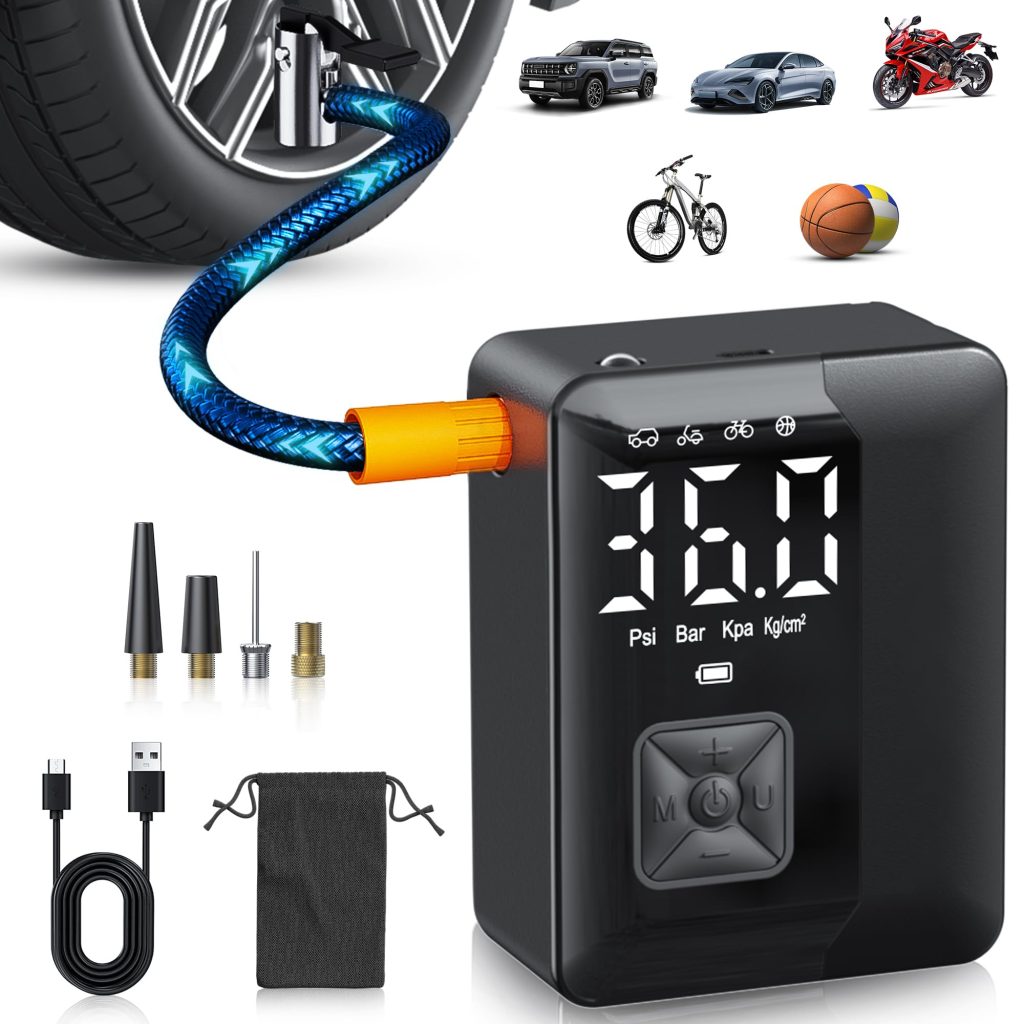
Portable car tire inflators are small electric devices. They plug into your car’s power outlet. These inflators work fast and are easy to carry in your trunk.
- Compact and lightweight
- Run on 12V power source
- Often include pressure gauges
- Good for emergencies and road trips
Air Compressors
Air compressors are more powerful than bike pumps. They can fill tires quickly and with higher pressure. They come in various sizes for home or garage use.
| Type | Power Source | Use | Portability |
| Small Electric | Car Battery or Outlet | Car Tires | High |
| Gas-Powered | Gasoline Engine | Heavy Duty Work | Low |
| Pneumatic | Shop Air Line | Garage Use | Low |
Gas Station Air Pumps
Most gas stations have air pumps. These are easy to use and free or low cost. They provide enough pressure for car tires.
- Usually coin-operated or free
- Provide high air pressure
- Easy to find near roads
- Good for quick tire inflation

Credit: www.amazon.com
Tips For Inflating Car Tires Safely
Inflating car tires is important for safety and fuel efficiency. Using the right tools and methods helps keep tires in good shape.
This guide offers simple tips for checking tire pressure, avoiding overinflation, and regular tire maintenance.
Checking Tire Pressure
Check tire pressure when tires are cold for accurate readings. Use a reliable pressure gauge to measure the air inside the tire.
- Find the recommended pressure in your car’s manual or tire label.
- Remove the valve cap from the tire.
- Press the gauge firmly on the valve stem to get a reading.
- Compare the reading with the recommended pressure.
- Add or release air as needed to reach the correct pressure.
Avoiding Overinflation
Do not inflate tires beyond the recommended pressure. Overinflation can cause poor handling and tire damage.
| Risk | Effect |
| Overinflation | Less tire grip and uneven wear |
| Underinflation | More fuel use and tire overheating |
| Correct Inflation | Better safety and longer tire life |
Regular Maintenance
Keep your tires in good condition with regular checks and care. This helps avoid problems on the road.
- Inspect tires for cuts, cracks, or objects.
- Rotate tires every 5,000 to 7,000 miles.
- Check tire alignment and balance.
- Replace tires when tread depth is low.
Frequently Asked Questions
Can A Bike Pump Inflate Car Tires?
Yes, a bike pump can inflate car tires, but it’s inefficient. Bike pumps are designed for lower pressure and smaller volumes. They require more effort and time to reach the required pressure for car tires. It’s more practical to use a pump specifically designed for cars or visit a gas station.
Is It Safe To Use A Bike Pump For Cars?
Using a bike pump for car tires is safe but not ideal. It takes considerable effort and time to reach the required pressure. Additionally, frequent use can wear out the bike pump. For safety and efficiency, it’s better to use a car-specific pump.
How Long Does It Take With A Bike Pump?
Inflating car tires with a bike pump can be time-consuming. Depending on the tire size and pump type, it might take 15-30 minutes per tire. This process requires significant physical effort, making it impractical for regular use. A car-specific pump is faster and more efficient.
Can A Bike Pump Achieve Correct Tire Pressure?
A bike pump can achieve the correct pressure, but it’s challenging. Car tires require higher pressure, and achieving this with a bike pump takes considerable time and effort. For accurate and efficient inflation, use a pump designed for car tires.
Conclusion
A bike pump can fill car tires, but it takes much longer. Car tires need higher pressure than bike tires. Using a bike pump is fine for small emergencies or topping off air. For regular use, a proper car tire pump works best.
Always check tire pressure with a gauge for safety. Carrying a bike pump is handy, but know its limits. Keep your tires properly inflated for better driving and fuel savings. Simple tools can help, but choose the right one for the job.