Is your air conditioner leaking water or not cooling as well as it should? A clogged drain line might be the hidden problem causing these issues.
If you don’t fix it soon, it could lead to costly repairs or even damage to your home. But don’t worry—you don’t need to be an expert to clear the blockage yourself. You’ll discover simple, step-by-step methods to unclog your air conditioner drain line quickly and safely.
Keep reading to protect your AC and stay cool all summer long.

Credit: unitedstatesolutions.com
Signs Of A Clogged Drain Line
A clogged air conditioner drain line can cause many problems. It stops water from draining properly. This can lead to damage and poor performance.
Knowing the signs of a clog helps you fix it early. Look for these common issues around your AC unit.
Water Leaks Around Unit
Water pooling or leaking near the air conditioner shows a clogged drain line. The blocked line stops water from flowing out. This water then leaks from the unit.
Leaks can damage floors and walls if not fixed. You may also see mold growth in damp areas.
Foul Odors
A clogged drain line often causes bad smells near the AC. Standing water and mold in the line create these odors. The smell may be musty or sour.
These odors can spread inside your home. They signal that the drain line needs cleaning.
Reduced Cooling Efficiency
When the drain line clogs, your AC may cool less well. Water buildup can affect the unit’s parts. This makes the system work harder.
The result is less cool air and higher energy bills. Fixing the clog restores proper cooling.
Tools Needed For Clearing
Clearing a clogged air conditioner drain line needs a few simple tools. Having the right items makes the job easier and safer.
This guide covers three main tools to help you clean the drain line properly and avoid damage.
Wet-dry Vacuum
A wet-dry vacuum helps suck out clogs from the drain line. It can remove dirt, leaves, and standing water that block the flow.
Use the vacuum at the drain line’s exit point for best results. Make sure to seal the hose tightly for strong suction.
Pipe Cleaner Or Brush
A pipe cleaner or a small brush helps scrub inside the drain line. This tool breaks up algae and slime that cause clogs.
- Choose a brush that fits your drain pipe size.
- Use gentle pressure to avoid damage.
- Clean the brush before and after use to keep it effective.
Bleach Or Vinegar Solution
Bleach or vinegar solution cleans and disinfects the drain line. It helps prevent mold and bacteria growth inside the pipe.
| Solution | Usage | Safety Tip |
| Bleach | Mix 1 part bleach with 3 parts water | Wear gloves and ventilate area |
| Vinegar | Use undiluted white vinegar | Safe for most drain lines |
Step-by-step Cleaning Process
Clogged air conditioner drain lines can cause water leaks and damage. Cleaning the drain line keeps your AC working well.
This guide shows easy steps to clear the drain line safely and quickly.
Turn Off The Ac Power
Before starting, turn off the power to your air conditioner. This keeps you safe and prevents damage.
Use the main electrical panel or the AC’s switch to cut the power.
Locate The Drain Line
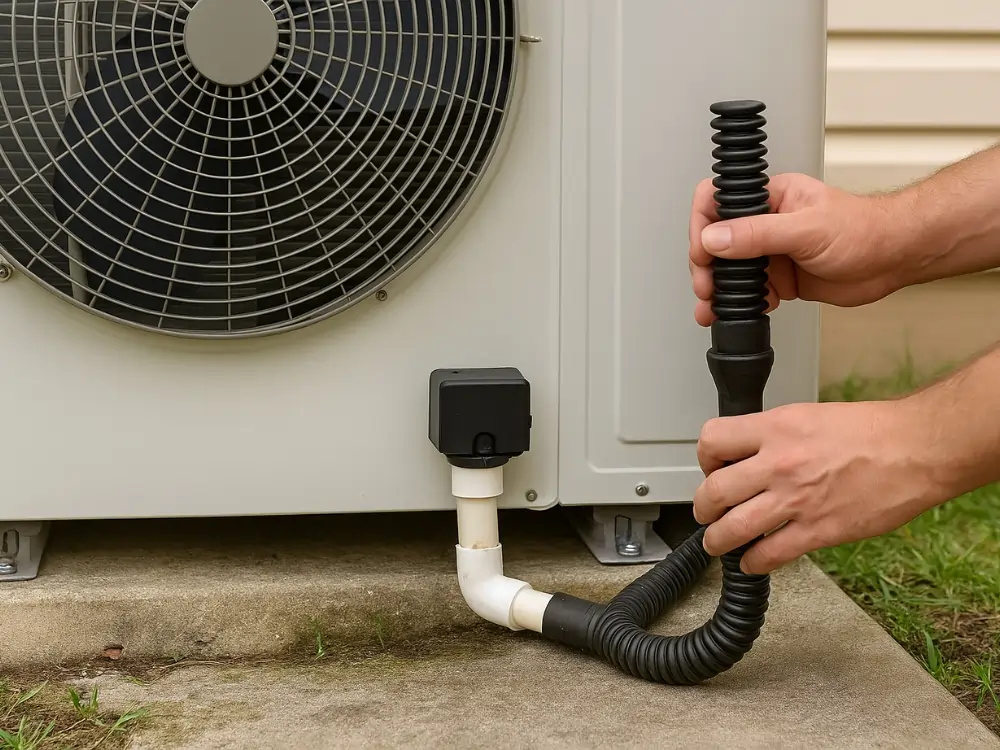
Find the drain line where water leaves your AC unit. It usually looks like a PVC pipe.
Look near the indoor unit or outside near the condenser.
Use Vacuum To Remove Blockages
Attach a wet/dry vacuum to the drain line’s end to pull out dirt and debris. This clears the clog.
Run the vacuum for a few minutes until water flows freely.
Flush With Cleaning Solution
Pour a mix of water and vinegar or a mild bleach solution into the drain line’s access point. This kills mold and algae.
Let the solution sit for 30 minutes, then flush with clean water.
Check For Proper Drainage
Turn the AC power back on and run it for a while. Watch the drain line to see if water flows out smoothly.
If water drains well, your drain line is clear and clean.
Credit: airaceheatingandcooling.com
Preventing Future Clogs
Clogged air conditioner drain lines cause water damage and poor cooling. Keeping the drain line clear stops these problems.
Simple habits and tools help prevent build-up and blockages. Follow these tips to keep your system running smoothly.
Regular Maintenance Tips
Regular cleaning and checking help avoid clogs. Remove dirt and algae to keep water flowing freely.
- Flush the drain line with a vinegar solution every month
- Check and clear the drain pan of standing water
- Inspect the drain line for any cracks or leaks
- Clean the air filters to reduce debris in the system
Installing A Drain Line Filter
A drain line filter catches dirt before it enters the pipe. It lowers the chance of clogs and reduces maintenance needs.
| Filter Type | Benefit | Maintenance |
| Mesh Screen | Blocks large particles | Clean monthly |
| Activated Carbon | Reduces odors and algae | Replace every 6 months |
| Foam Filter | Traps fine debris | Wash and dry monthly |
Scheduling Professional Inspections
Experts find hidden problems that cause clogs. They clean parts and check the entire system for damage.
- Inspect the drain line and pan for blockages
- Test the condensate pump and float switch
- Check refrigerant levels and system pressure
- Clean evaporator coils and air filters
- Report any needed repairs or replacements
When To Call A Professional
Sometimes, you can fix an air conditioner drain line yourself. Other times, the problem needs expert help. Knowing when to call a professional saves time and money.
Some issues are too hard or risky to handle alone. A professional knows how to fix these safely and correctly.
Persistent Drain Line Issues
If your drain line clogs keep coming back, a professional should check it. Repeated clogs can mean deeper problems you cannot see.
They can inspect the whole system and find hidden damage or buildup. Fixing it early stops bigger repairs later.
Complex Blockages
Simple clogs can clear with basic tools. But complex blockages need special equipment and skills.
Blockages from mold, algae, or hard debris can block the line deeply. Professionals use strong cleaners and tools to clear them safely.
- Deep pipe cleaning
- Use of high-pressure water jets
- Safe chemical treatments
Electrical Concerns
If your air conditioner shows electrical problems, do not try to fix it yourself. Water and electricity are a dangerous mix.
Drain line problems can sometimes cause electrical issues. A professional can safely inspect and repair wiring or parts to avoid shocks or fire risks.

Credit: www.youtube.com
Frequently Asked Questions
What Causes Air Conditioner Drain Line Clogs?
Air conditioner drain lines can clog due to dirt, algae, and mold buildup. Over time, debris accumulates, blocking the line. Regular maintenance and cleaning can prevent clogs. Using a wet/dry vacuum can remove blockages and ensure efficient drainage.
How Do I Know If My Ac Drain Line Is Clogged?
Signs of a clogged AC drain line include water leaks around the unit and musty odors. You might also notice reduced cooling efficiency. Regularly checking for these signs can help prevent further damage. Immediate action can save costly repairs and maintain your unit’s performance.
Can I Unclog My Ac Drain Line Myself?
Yes, you can unclog your AC drain line yourself using simple tools. A wet/dry vacuum or a plumber’s snake can help remove blockages. Regular maintenance, such as pouring vinegar down the line, prevents clogs. However, if unsure, consult a professional for assistance.
How Often Should I Clean My Ac Drain Line?
Cleaning your AC drain line every 3 to 6 months is recommended. Regular maintenance prevents clogs and ensures efficient operation. Seasonal cleanings align with routine HVAC maintenance. Keeping the drain line clear prevents costly repairs and extends the unit’s lifespan.
Conclusion
Keeping your air conditioner drain line clear helps your AC work well. Regular cleaning stops water damage and mold growth. Use simple tools to remove clogs and keep the line flowing. Check the drain line often to catch problems early.
A clear drain line saves money on repairs and keeps your home comfortable. Small steps can prevent big headaches later. Stay on top of maintenance and enjoy cool, clean air all season.