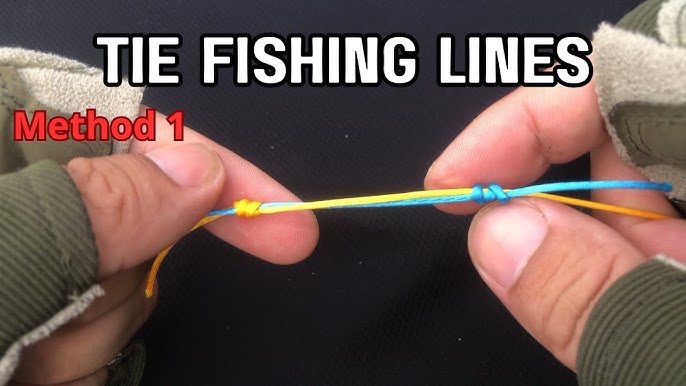
Are you struggling to join two fishing lines smoothly and securely? Whether you’re adding a leader, fixing a broken line, or connecting different types of lines, knowing how to tie them properly can make all the difference.
A strong knot means fewer lost fish and less frustration on the water. You’ll learn simple, reliable methods to tie two lines together that anyone can master. Keep reading, and you’ll soon feel confident handling your gear like a pro.

Credit: www.youtube.com
Choosing The Right Knot
Tying two lines together is common in fishing. Picking the right knot keeps your line strong and secure.
Different knots work best for different types of lines and fishing situations. Understanding these helps you choose well.
Types Of Fishing Knots
There are many knots to join two fishing lines. Each knot has its strengths and uses.
- Blood Knot: Good for joining similar thin lines.
- Double Uni Knot: Works well for lines of different thickness.
- Albright Knot: Best for heavy to light line connections.
- Sheet Bend: Simple and fast for thicker lines.
- Loop-to-Loop Knot: Easy to connect two loops on lines.
Knowing these knots helps you pick the right one for your fishing needs.
Factors To Consider
Think about the type and thickness of your fishing lines. Some knots hold better on thin lines.
Consider how much strength you need. Some knots keep more line strength than others.
- Line Material: Monofilament, fluorocarbon, or braided lines behave differently.
- Line Diameter: Thicker lines may need simpler knots.
- Ease of Tying: Choose knots you can tie quickly and correctly.
- Slip Resistance: Pick knots that do not slip when pulled hard.
- Fishing Conditions: Wet or cold conditions may affect knot performance.

Credit: www.wikihow.com
Step-by-step Knot Tying
Tying two fishing lines together is important for strong connections. There are several knots you can use. Each knot works best in different situations.
Learn how to tie these popular knots to join lines safely and securely. Follow the steps carefully to avoid losing fish.
Double Uni Knot
The Double Uni Knot is simple and works well for lines of different sizes. It keeps good strength and is easy to tie.
To tie it, overlap the two lines and make a loop with one line. Wrap the tag end around both lines five times. Pull tight. Repeat with the other line. Then pull both standing lines to slide the knots together.
- Overlap lines by 6 inches
- Make a loop with the first line
- Wrap tag end 5 times around
- Tighten the knot
- Repeat on second line
- Pull standing lines to join knots
Blood Knot
The Blood Knot is good for joining lines of similar size. It is strong and smooth, so it passes through guides easily.
Overlap the lines and wrap one tag end around the other line five times. Do the same with the other tag end. Insert both tag ends through the center loop. Pull tight slowly to close the knot.
- Overlap lines about 6 inches
- Wrap first tag end 5 times
- Wrap second tag end 5 times
- Insert tag ends through center loop
- Pull slowly to tighten
Albright Knot
The Albright Knot is good for joining heavy line to lighter line. It works well with different materials like braid to mono.
Make a loop in the heavier line. Pass the lighter line through the loop. Wrap the lighter line around both parts of the loop ten times. Pass the tag end back through the loop and pull all ends tight.
- Form a loop in the heavier line
- Pass lighter line through loop
- Wrap lighter line 10 times around loop
- Pass tag end back through loop
- Pull all ends tight
Surgeon’s Knot
The Surgeon’s Knot is easy to tie and good for lines of similar or different sizes. It is strong but bulky.
Overlap the two lines. Tie an overhand knot by passing the tag end through twice. Pull the knot tight. Then tie a second overhand knot with the tag ends. Pull all ends to tighten the knot.
- Overlap lines about 6 inches
- Make an overhand knot with double pass
- Tighten the knot
- Tie a second overhand knot
- Pull all ends tight
Tips For Stronger Knots
Tying two fishing lines together requires care to keep the knot strong. A weak knot can break and cause loss of fish. Use simple steps to ensure your knot holds well.
This guide covers key tips on line preparation, moistening, and tightening for better knots.
Proper Line Preparation
Clean and prepare your fishing lines before tying. Remove any dirt or frayed ends. This helps the knot grip better and prevents slipping.
- Cut the line ends cleanly with sharp scissors.
- Remove any damaged or rough spots on the lines.
- Align the two lines side by side evenly.
- Use lines of similar thickness for better knot strength.
Moistening The Knot
Moistening the knot before tightening reduces friction. This protects the line from heat damage and helps the knot tighten smoothly.
| Why Moistening Helps | What to Use |
| Prevents line from weakening due to heat | Water or saliva |
| Allows knot to slide and cinch tight | Apply lightly to knot area |
| Improves knot durability over time | Use before final tightening |
Tightening Techniques
Tighten knots carefully and evenly. Uneven tension can cause the knot to fail. Use slow, steady pulls on both lines.
- Hold both ends firmly while pulling.
- Pull lines in opposite directions evenly.
- Check knot for slips and adjust as needed.
- Trim excess line close to the knot.
Common Mistakes To Avoid
Tying two fishing lines together is easy but mistakes can cause problems. These errors can weaken your knot and cause line breaks.
Knowing what to avoid helps keep your lines strong and secure while fishing.
Incorrect Threading
Threading lines the wrong way leads to knots that slip or come undone. Always pass the ends through the knot loops properly.
Wrong threading causes weak knots and wasted time fixing them on the water.
- Make sure both line ends go through the knot loops as instructed.
- Double-check threading before tightening the knot.
- Practice with spare line to see how the knot forms.
Insufficient Tightening
Not pulling the knot tight enough can cause it to slip when under tension. Tighten slowly and evenly on both ends.
A loose knot can come apart and cause you to lose your catch.
- Pull lines firmly to remove slack before finishing the knot.
- Wet the knot with water or saliva to reduce friction.
- Tighten the knot slowly to let the lines settle evenly.
Using Wrong Knot For Line Type
Different fishing lines need different knots. Using the wrong knot can damage the line or make the knot weak.
Match your knot choice to the type of line, like braided, monofilament, or fluorocarbon.
- Use the Double Uni Knot for braided lines.
- The Blood Knot works well with monofilament lines.
- The Albright Knot fits connecting different line types.
Testing Your Knot Strength
Tying two fishing lines together is only part of the process. Testing your knot strength ensures it will hold under pressure. This step helps avoid losing fish or gear.
Strong knots resist breaking and slipping. Knowing how to check your knot gives you confidence before casting.
Manual Pull Test
The manual pull test is a simple way to check knot strength. Use your hands to pull the knot tight and see if it slips or breaks.
- Hold both ends of the line firmly.
- Pull slowly and steadily.
- Feel for any slipping or loosening.
- Check if the knot tightens as you pull.
- Stop if the knot breaks or the line snaps.
Water Resistance Factors
Water can affect knot strength in different ways. Some knots weaken when wet, while others hold better.
| Water Condition | Effect on Knot |
|---|---|
| Freshwater | Usually less impact, knots hold well |
| Saltwater | Can cause line swelling and knot slipping |
| Cold Water | Line may become stiff, knots might loosen |
| Warm Water | Line remains flexible, knots hold better |
Maintaining Your Knots
Keeping your fishing knots strong is important for a good catch. Knots can weaken over time from water and movement.
Regular care helps avoid lost fish and broken lines. Check and fix your knots often for best results.
Regular Inspection
Look at your knots every time before you fish. Check for signs of wear or damage like fraying or loosening.
- Feel the knot for tightness and smoothness
- Look for small cuts or weak spots on the line near the knot
- Make sure the knot holds firm when you pull gently
- Remove any dirt or debris from the knot area
Re-tying When Necessary
If you find a knot that looks weak or loose, re-tie it right away. Do not wait until it breaks during fishing.
| Reason to Re-tie | Action |
| Knot feels loose | Untie and tie a new knot tightly |
| Line near knot is frayed | Cut the damaged part and make a fresh knot |
| Knot is dirty or slippery | Clean the line and re-tie for better grip |
| After a big catch | Check and re-tie knots to ensure strength |

Credit: www.wikihow.com
Frequently Asked Questions
How Do You Securely Tie Two Fishing Lines?
To securely tie two fishing lines, use the Double Uni Knot. Start by overlapping the ends of both lines. Create a loop and wrap each line around the other three times. Pull the knots tight and trim excess line. This knot ensures a strong connection.
What’s The Best Knot For Different Line Types?
The Albright Knot is best for different line types. It’s versatile, especially for connecting different diameters. Start by creating a loop with the thicker line, then wrap the thinner line around it ten times. Pull tight and trim excess for a secure hold.
How Can I Join Monofilament And Braid Lines?
To join monofilament and braid lines, use the FG Knot. This knot is strong and reliable. Start by wrapping the braid around the mono eight times. Finish with a series of tight half-hitches. Trim excess for a neat finish, ensuring a secure connection.
Why Is The Double Fisherman’s Knot Popular?
The Double Fisherman’s Knot is popular for its strength and simplicity. It’s ideal for joining two similar lines. Create two overhand knots with each line around the other. Pull tight to secure. This knot is reliable for fishing and climbing scenarios.
Conclusion
Tying two fishing lines together is a useful skill. It helps you fix breaks or join different line types. Practice simple knots like the blood knot or double uni knot. These knots hold strong and are easy to learn. Take your time and check your work each time.
With steady practice, you will tie lines quickly and confidently. This skill can improve your fishing experience and success. Keep trying, and you will see better results on your next trip.