Is your air conditioner making your home feel less fresh? Mold growing inside your AC can cause bad smells, poor air quality, and even health problems.
You might not see it right away, but that hidden mold is affecting your comfort and safety. The good news is, you don’t have to live with it. You’ll discover simple and effective ways to get rid of air conditioner mold for good.
Keep reading to breathe cleaner air and enjoy a healthier home.

Credit: www.reddit.com
Causes Of Ac Mold
Mold in your air conditioner can cause bad smells and health problems. Understanding what causes mold helps you stop it.
Three main causes lead to mold growth in AC units: humidity and moisture, poor airflow, and neglected maintenance.
Humidity And Moisture
Mold grows well in damp places. High humidity inside your home or water in the AC system creates the perfect spot for mold.
- Warm air cools inside the AC and creates condensation.
- Condensation collects on coils and drip pans.
- Standing water from blocked drains increases moisture.
- High indoor humidity above 60% feeds mold growth.
Poor Airflow
When air does not flow well, moisture stays longer inside the AC parts. This leads to mold growth on filters and ducts.
| Airflow Issue | Effect on Mold |
| Blocked vents | Stops air movement and traps moisture |
| Dirty filters | Reduce airflow and cause damp spots |
| Closed rooms | Create stagnant air and humidity pockets |
Neglected Maintenance
Failing to clean and check your AC leads to mold. Dirt and dust build-up keep moisture and germs inside.
Regular maintenance tasks include:
- Changing or cleaning air filters every 1-3 months
- Cleaning evaporator coils to remove dirt and mold spores
- Checking and clearing the drain line to prevent water backup
- Scheduling professional inspections yearly
Signs Of Mold In Ac
Mold can grow inside your air conditioner without you noticing. It harms your health and the AC unit.
Knowing the signs helps you spot mold early. This lets you clean it before it spreads more.
Musty Odors
A strong musty smell is a common sign of mold in your AC. The odor comes from mold spores growing inside the unit.
If you smell this odor when the AC runs, it means mold is present. This smell may get worse over time.
Visible Mold Spots
You may see black, green, or white spots inside or around the AC vents. These spots are mold colonies.
- Check air vents and grills for discoloration.
- Look inside the drip pan for mold build-up.
- Inspect the air filters for dark patches.
- Examine the coils for any fuzzy growth.
Reduced Air Quality
Mold in the AC lowers the air quality in your home. It releases spores that can cause allergies and breathing problems.
| Symptom | Cause |
| Frequent sneezing | Mold spores in air |
| Itchy eyes | Airborne mold particles |
| Worsening asthma | Reduced air quality |
| Musty smell | Active mold growth |
Safety Precautions
Removing mold from your air conditioner can be risky. Mold spores can cause health problems. You must take safety steps before you start cleaning.
Follow these safety rules to protect yourself and your home while getting rid of air conditioner mold.
Wear Protective Gear
Always wear protective gear to avoid contact with mold. Mold spores can irritate your skin, eyes, and lungs.
- Use gloves made of rubber or latex
- Wear a mask that covers your nose and mouth
- Put on safety goggles to protect your eyes
- Wear long sleeves and pants to cover your skin
Turn Off Power
Before cleaning, turn off the power to your air conditioner. This prevents electrical shocks and accidents.
| Why Turn Off Power? | How to Do It Safely |
|---|---|
| Stop electric shock risks | Switch off the AC circuit breaker |
| Avoid damage to the unit | Unplug the unit from the power outlet |
Ventilate The Area
Good airflow helps clear mold spores from the air. It lowers the chance of breathing in harmful particles.
- Open windows and doors near the AC unit
- Use fans to move air outside
- Avoid staying in the room during cleaning if possible

Credit: www.reddit.com
Diy Mold Removal Steps
Mold in your air conditioner can cause bad smells and health problems. You can clean it yourself with simple steps.
Follow these steps to remove mold safely and keep your air conditioner clean and fresh.
Clean Or Replace Filters
Dirty filters hold mold spores and spread them through your home. Clean filters regularly or replace them if needed.
Use mild soap and water to wash reusable filters. Let them dry completely before putting them back.
- Turn off the air conditioner first
- Remove the filter carefully
- Wash with warm soapy water
- Dry the filter fully before replacing
- Replace disposable filters with new ones
Scrub Moldy Surfaces
Check the air conditioner’s coils and vents for mold spots. Use a soft brush or cloth to scrub these surfaces gently.
Do not use too much water. Wipe surfaces clean and dry them well to stop mold from growing back.
- Wear gloves and a mask for protection
- Use a soft brush or sponge
- Scrub all visible mold areas
- Wipe with a damp cloth
- Dry the surfaces fully
Use Mold-killing Solutions
Use safe mold-killing solutions to clean your air conditioner parts. Vinegar and baking soda are good natural options.
Spray or apply the solution on moldy areas. Let it sit for a few minutes before scrubbing and wiping clean.
- Mix equal parts white vinegar and water
- Or make a paste with baking soda and water
- Apply the solution to mold spots
- Wait 10 minutes before scrubbing
- Rinse and dry the cleaned areas
Preventing Future Mold
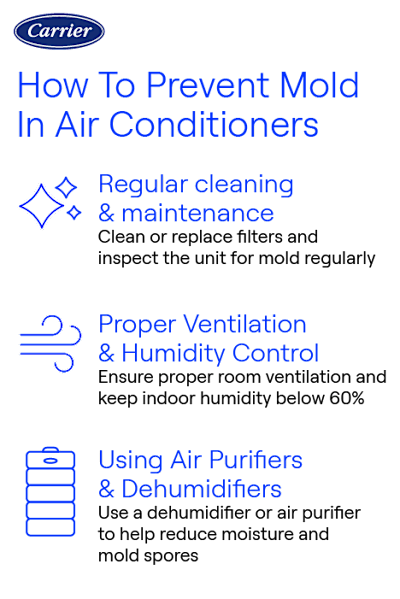
Mold in air conditioners can cause health problems and damage your unit. You can stop mold from growing again by following simple steps. These steps focus on cleaning, humidity, and airflow.
Keeping your air conditioner mold-free helps keep your home air fresh and healthy. Use these tips to prevent mold growth in the future.
Regular Cleaning Schedule
Cleaning your air conditioner regularly removes dirt and moisture. This stops mold from growing on the coils, filters, and vents. Clean or replace filters every month during heavy use. Wipe down the exterior and vents every two weeks.
- Clean or replace filters monthly
- Wipe vents and exterior every two weeks
- Check and clean drain pans monthly
- Schedule professional cleaning once a year
Control Indoor Humidity
High humidity makes mold grow faster. Keep your home humidity below 60% to slow mold growth. Use a dehumidifier if needed. Fix leaks and avoid drying clothes indoors. Keep rooms dry and well-maintained.
| Humidity Level | Effect on Mold |
| Above 60% | Increases mold growth |
| 30% to 50% | Ideal for mold prevention |
| Below 30% | Too dry, may cause discomfort |
Improve Ventilation
Good airflow helps keep moisture low. Open windows when weather allows. Use exhaust fans in bathrooms and kitchens. Make sure air vents are not blocked. Proper ventilation helps dry wet areas fast.
- Open windows daily for fresh air
- Use exhaust fans during cooking and showering
- Keep air vents clear of furniture and dust
- Consider adding a ventilation system if needed
When To Call Professionals
Air conditioner mold can cause bad smells and health problems. Sometimes, you need experts to fix the issue safely.
Knowing when to call professionals helps stop mold from spreading and harming your home.
Severe Mold Growth
Large mold patches inside your air conditioner need expert help. Severe mold can damage parts and spread quickly.
Professionals use special tools to remove mold completely and clean the system well.
- Visible thick mold inside vents or ducts
- Mold covering large areas of the unit
- Mold returning after home cleaning efforts
Health Concerns
Mold can cause coughing, sneezing, or breathing trouble. If you or family feel sick, call a professional.
Experts know how to remove mold safely to protect your health and indoor air quality.
- Allergy or asthma symptoms worsening
- Frequent headaches or skin irritation
- Family members with weak immune systems
Persistent Odors
Bad smells from your air conditioner may mean mold inside. If odors stay after cleaning, call a specialist.
Professionals can find hidden mold and clean your system to remove odors for good.
- Musty smell when air conditioner runs
- Odors that return quickly after cleaning
- Smell affecting whole room or house

Credit: www.reddit.com
Frequently Asked Questions
What Causes Mold In Air Conditioners?
Mold in air conditioners is often caused by moisture, dirt, and dust accumulation. When these elements combine, they create a breeding ground for mold. Regular maintenance, like cleaning and checking for leaks, can prevent mold. Ensuring proper ventilation and using a dehumidifier can also help reduce moisture levels.
How Can I Identify Mold In My Ac?
Mold in your AC often emits a musty smell and may cause allergic reactions. Visible signs include black or green spots on vents or inside the unit. If you notice these symptoms, it’s essential to inspect and clean your air conditioner immediately to prevent health issues.
Is Air Conditioner Mold Dangerous?
Yes, air conditioner mold can be dangerous, especially for people with allergies or respiratory issues. Mold spores can circulate through your home, affecting indoor air quality. Prolonged exposure can lead to symptoms like coughing, sneezing, or skin irritation. It’s crucial to address mold promptly to maintain a healthy environment.
Can I Clean Ac Mold Myself?
Yes, you can clean AC mold yourself using a mixture of water and detergent. Turn off the unit and use a soft brush to scrub away the mold. Ensure all parts are thoroughly dry before reassembling. For extensive mold growth, professional cleaning may be necessary to ensure safety and effectiveness.
Conclusion
Getting rid of air conditioner mold keeps your home fresh and healthy. Clean your AC regularly to stop mold growth. Use simple cleaning tools and safe products. Check for leaks and fix them fast. Keep your AC dry and well-ventilated.
Small steps prevent big mold problems later. A clean AC means better air and comfort. Stay consistent with cleaning to enjoy fresh air all year. Mold-free AC helps everyone breathe easier and feel better.