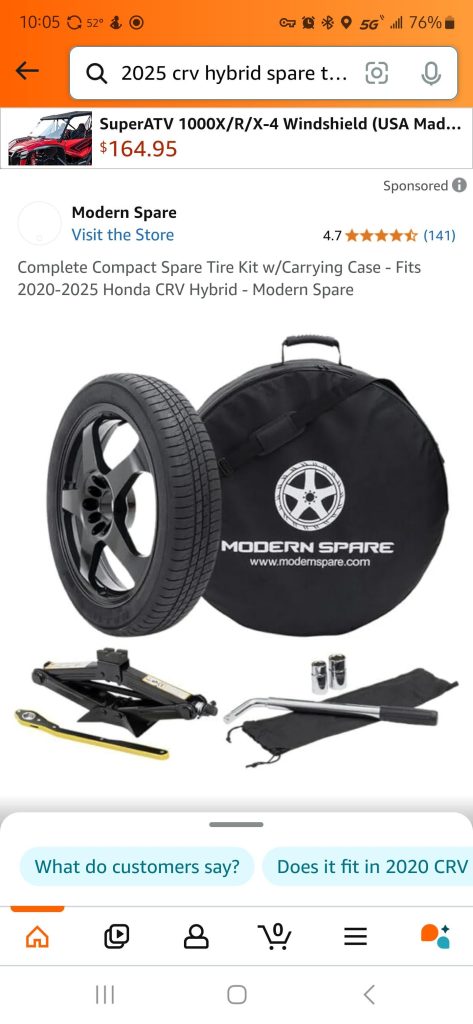
Have you ever wondered if your brand-new car comes with a spare tire? It’s a question many car buyers don’t think about until they face a flat tire on the road.
Imagine being stuck on the side of the highway, unsure if your car has what you need to get back on track. Knowing whether your new vehicle includes a spare tire can save you time, stress, and even money. You’ll discover the truth about spare tires in new cars and what you should do to stay prepared for any unexpected flat.
Keep reading to make sure you’re never caught off guard.

Credit: www.reddit.com
Spare Tires In Modern Cars
Many new cars do not come with a traditional spare tire. Instead, they offer other options for drivers in case of a flat tire. It is important to know what kind of spare or tire repair tools your car has.
Car makers choose different ways to save space and reduce weight. These choices affect whether a spare tire is included or not.
Common Spare Tire Types
There are different types of spare tires that come with cars. Each type has its own use and size. Here are the common types:
- Full-size spare: Same size and type as regular tires. It fits and drives like normal.
- Compact or “donut” spare: Smaller and lighter. Designed for temporary use only.
- Run-flat tires: Tires that let you drive a short distance after a puncture.
- Tire repair kits: Kits with sealant and air compressors to fix small holes.
Why Some Cars Skip Spares
Many new cars do not include any spare tire. Automakers skip spares for several reasons. These reasons help explain this trend:
| Reason | Explanation |
| Weight Reduction | Lighter cars use less fuel and perform better. |
| Space Saving | More room for storage or other car parts. |
| Cost Saving | Less material lowers manufacturing costs. |
| Technology | Run-flat tires and repair kits reduce need for spares. |
| Safety | Some spares can be hard to install safely on the road. |
Alternatives To Spare Tires
New cars often do not come with spare tires. Instead, car makers offer other solutions to handle tire problems on the road.
These alternatives can save space and weight in your car. They also help you fix or continue driving after a flat tire.
Tire Repair Kits
Tire repair kits allow you to fix small punctures quickly. They usually include a sealant and an air compressor.
- Sealant plugs the hole inside the tire.
- The compressor inflates the tire again.
- They are compact and easy to store.
- Useful for minor damages only.
- Do not work for large holes or sidewall damage.
Run-flat Tires
Run-flat tires let you keep driving after a puncture. They have reinforced sidewalls to support the car’s weight.
| Feature | Benefit |
| Reinforced sidewalls | Support the car without air |
| Drive distance | Up to 50 miles at low speed |
| Weight | No extra tools needed |
| Cost | More expensive than regular tires |
Factors Influencing Spare Tire Inclusion
Not all new cars come with a spare tire. Several factors affect whether a spare tire is included in a vehicle.
These factors depend on the car’s design and the manufacturer’s choices. Understanding these can help buyers know what to expect.
Car Model And Make
Different car brands and models have varied approaches to spare tires. Some include full-size spares, while others provide only tire repair kits.
- Luxury and larger SUVs often come with full-size spare tires.
- Compact cars and hybrids may have smaller, space-saving spares.
- Some sports cars skip spare tires to save space and weight.
- Electric vehicles sometimes exclude spare tires due to design limits.
Cost And Weight Considerations
Manufacturers balance cost and weight when deciding on spare tires. Adding a spare tire raises production cost and car weight.
| Factor | Effect on Spare Tire Inclusion |
| Manufacturing Cost | Spare tires increase the price of the car. |
| Vehicle Weight | Extra weight reduces fuel efficiency and performance. |
| Storage Space | Spare tires need room, limiting trunk space. |
| Safety Regulations | Some regions require spare tires by law. |
Pros And Cons Of Carrying A Spare
Many new cars come without a traditional spare tire. This change affects drivers in different ways. Carrying a spare tire has both benefits and drawbacks.
This article looks at the advantages and limitations of keeping a spare tire in your vehicle. Understanding these points helps you make a better choice.
Advantages Of Having A Spare Tire
A spare tire can be very useful during a flat tire emergency. It lets you replace a damaged tire quickly and continue your journey without waiting for help.
- Provides safety by allowing quick tire replacement
- Reduces the need to call roadside assistance
- Can save time and money on towing
- Offers peace of mind during long trips
- Helps in remote areas where help is not nearby
Drawbacks And Limitations
Carrying a spare tire has some downsides. It takes up space in your car and adds extra weight. This can lower fuel efficiency and reduce cargo room.
| Drawback | Details |
| Weight | Spare tires add extra pounds to the vehicle. |
| Space | Spare tires use trunk or undercarriage space. |
| Maintenance | Spare tires need regular checks to stay usable. |
| Temporary Use | Most spares are for short-term use only. |
| Cost | Adding a spare tire can increase vehicle price. |
What To Do Without A Spare Tire
Many new cars no longer include a spare tire. This can leave drivers unsure what to do if they get a flat. Knowing your options helps keep you safe and moving.
If your car does not have a spare, you still have ways to handle a flat tire. Here are two common methods to help you in this situation.
Emergency Roadside Assistance
Roadside assistance is a service that helps when your car breaks down. It can be very useful if you do not have a spare tire. Most plans can send someone to change your tire or tow your car.
- Call your roadside assistance provider immediately.
- Give your exact location and details about the flat tire.
- Wait in a safe place until help arrives.
- Keep your phone charged and ready for communication.
Using Tire Sealants And Inflators
Tire sealants and inflators can fix small punctures temporarily. They work by sealing the hole and inflating the tire enough to drive to a repair shop.
| Type | Use | Limitations |
| Tire Sealant | Seals small punctures from nails or screws | Not effective for large holes or sidewall damage |
| Tire Inflator | Inflates tire with compressed air or CO2 | Temporary fix; pressure can drop over time |
| Combined Sealant and Inflator | Seals and inflates at the same time | Best for quick, short-distance fixes |

Credit: www.carsales.com.au
Tips For Choosing Your Spare Or Alternative
Not all new cars come with a spare tire. Some include alternatives like tire repair kits.
Choosing the right spare or alternative depends on your driving habits and how you care for your tire.
Assessing Your Driving Needs
Think about where and how often you drive. Long trips need a reliable spare tire.
- If you drive mostly in cities, a tire repair kit might be enough.
- For rural or off-road driving, a full-size spare is safer.
- Consider the size and weight of the spare for easy handling.
- Check if your car’s storage space fits a spare tire.
Maintenance And Storage Advice
Proper care keeps your spare or alternative ready to use when needed.
| Task | Frequency | Details |
| Check tire pressure | Monthly | Keep spare at recommended pressure |
| Inspect for damage | Every 6 months | Look for cracks, dry rot, or punctures |
| Store properly | Always | Keep in a cool, dry place away from sunlight |
| Test repair kits | Yearly | Ensure sealant and tools work well |

Credit: www.reddit.com
Frequently Asked Questions
Do All New Cars Have Spare Tires?
Not all new cars come with spare tires anymore. Manufacturers often prioritize fuel efficiency and cargo space. Some vehicles include tire repair kits or run-flat tires instead. Always check the specifications of a new car to know what it includes.
Why Are Spare Tires Less Common Now?
Spare tires are becoming less common to improve fuel efficiency. Removing them reduces the vehicle’s weight, enhancing mileage. Additionally, manufacturers aim to maximize cargo space and incorporate modern alternatives like run-flat tires or repair kits.
What Alternatives Exist To Spare Tires In New Cars?
New cars often offer tire repair kits or run-flat tires. Repair kits temporarily fix punctures, allowing short-distance travel. Run-flat tires can be driven on for limited distances even when deflated, providing convenience without needing a spare.
How Can I Ensure My New Car Has A Spare Tire?
Check the vehicle’s specifications or consult the dealership before purchasing. Confirm if a spare tire or alternative solution is included. This ensures you’re prepared in case of a flat tire situation.
Conclusion
New cars often do not include a full spare tire anymore. Many come with a tire repair kit or a smaller, temporary tire. This saves space and reduces weight. Still, carrying a spare tire can bring peace of mind on the road.
Knowing what your car has helps you prepare for emergencies. Check your new car’s equipment before driving. Being ready means fewer worries if a tire problem happens. Choose what works best for your safety and convenience.