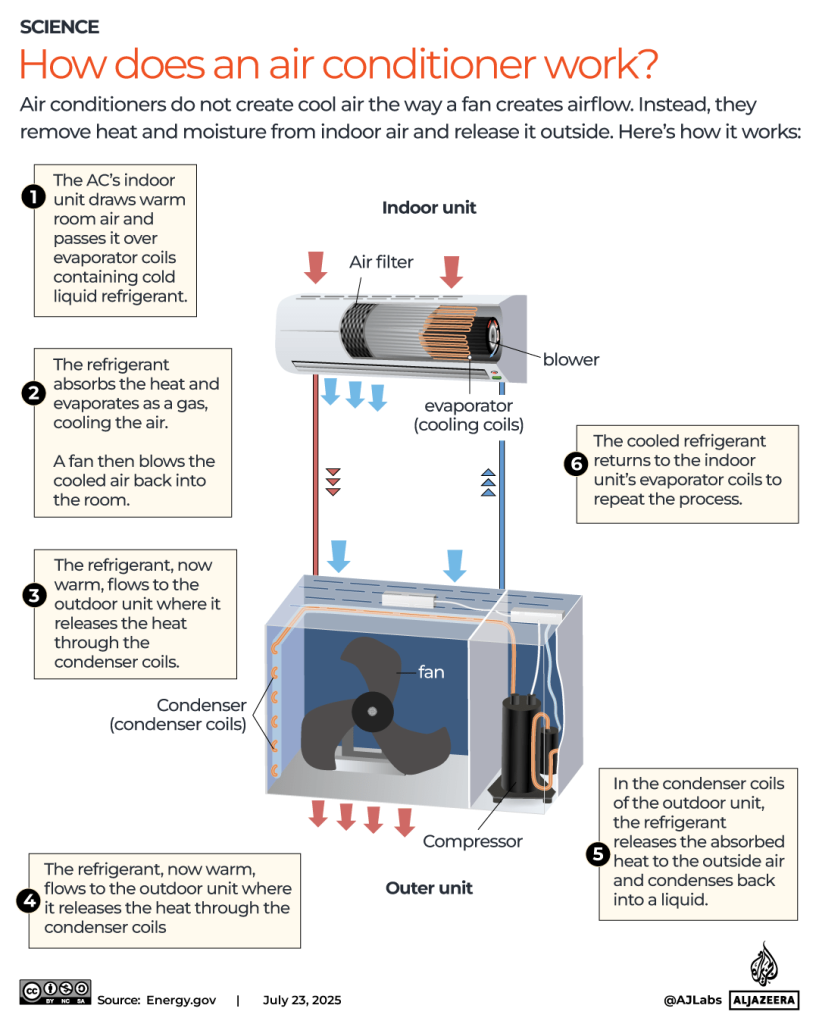
Have you ever wondered what’s happening inside your air conditioner when it cools your room? Understanding how an air conditioner works can help you appreciate this amazing machine and even save on energy bills.
You’ll discover a simple, clear diagram that breaks down each part of your air conditioner and shows exactly how it keeps you cool. By the end, you’ll see your AC in a whole new light—and know exactly what makes your comfort possible.
Keep reading to unlock the secrets behind your cool air!
Credit: www.mrcool.com
Basic Components
An air conditioner cools your room by moving heat outside. It uses several parts to do this job well.
Understanding these parts helps you know how an air conditioner works.
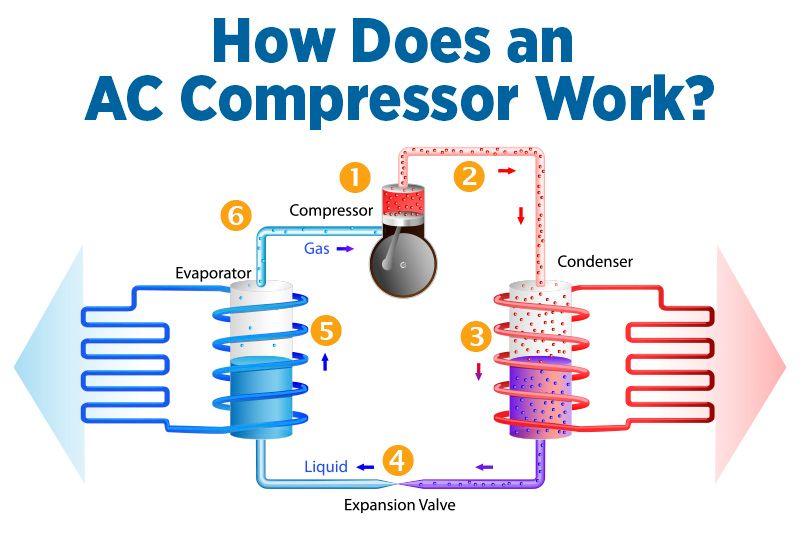
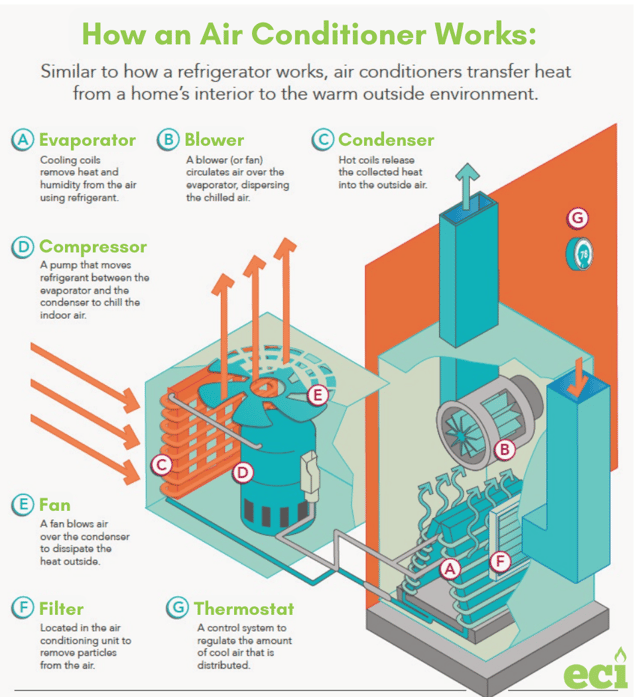
Compressor
The compressor is like the heart of the air conditioner. It pumps the refrigerant through the system. It squeezes the refrigerant gas to make it hot and high-pressure.
Condenser Coil
The condenser coil cools the hot gas from the compressor. It turns the gas into a liquid by removing heat. The heat moves outside the building through the coil.
Expansion Valve
The expansion valve controls how much refrigerant goes to the evaporator coil. It lowers the pressure and temperature of the refrigerant. This prepares the refrigerant to absorb heat inside the room.
- Regulates refrigerant flow
- Reduces refrigerant pressure
- Prepares refrigerant for cooling
Evaporator Coil
The evaporator coil absorbs heat from the air inside your room. The cold refrigerant inside the coil turns warm air into cool air. The refrigerant changes from liquid to gas here.
Refrigerant
| Role | Description |
| Cooling Agent | Absorbs heat inside the evaporator coil |
| Heat Release | Releases heat outside via condenser coil |
| State Changes | Changes from gas to liquid and back to gas |
| Circulation | Moves through the system in a closed loop |
Credit: www.ecicomfort.com
Cooling Cycle Steps
An air conditioner cools a room by moving heat outside. It uses a special fluid called refrigerant.
The refrigerant changes between liquid and gas to absorb and release heat during the cooling cycle.
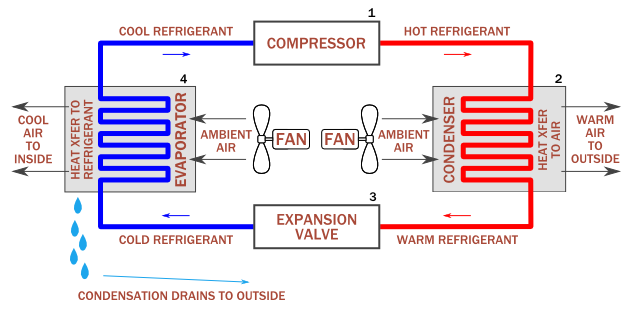
Compression Of Refrigerant
The cycle starts with the compressor squeezing the refrigerant gas. This raises its pressure and temperature.
High pressure helps the refrigerant release heat outside the building later in the cycle.
Heat Release Outside
Next, the hot, high-pressure gas moves through coils outside the house. It cools down and turns into liquid.
- Refrigerant releases heat to the outside air
- Gas cools and condenses to liquid form
- Heat moves away from the refrigerant
Pressure Drop
The liquid refrigerant passes through an expansion valve. This valve lowers its pressure quickly.
The pressure drop cools the refrigerant further before it enters the indoor coils.
Heat Absorption Inside
Inside the house, the cold refrigerant absorbs heat from the air. This cools the room.
| Process | Effect |
|---|---|
| Refrigerant absorbs indoor heat | Air cools down |
| Refrigerant changes from liquid to gas | Heat moves to refrigerant |
| Warm gas returns to compressor | Cycle repeats |
Role Of Air Flow
An air conditioner cools your home by moving air through its system. Air flow is very important in this process.
Air flow helps remove warm air inside and bring in cooler air. It keeps the temperature comfortable.
Indoor Air Circulation
Inside your home, air moves through vents and ducts. The air conditioner pulls warm air in.
This warm air passes over cold coils. The coils cool the air before sending it back into the rooms.
- Warm air enters the return vents
- Air passes over cooling coils
- Cooled air flows out through supply vents
- Air keeps circulating until the room cools
Outdoor Air Exchange
Outside, the air conditioner releases heat taken from inside your home. This keeps your house cool.
The system uses a fan to push warm air outside. This exchange helps lower the indoor temperature.
- Warm air moves to the outdoor unit
- Heat leaves the refrigerant to outside air
- Cool refrigerant flows back inside
- Outdoor fan helps move air efficiently
Credit: medium.com
Energy Efficiency Tips
Air conditioners use energy to cool your home. Saving energy lowers bills and helps the environment.
Simple actions can make your air conditioner work better and use less power.
Regular Maintenance
Keep your air conditioner clean and checked often. Dirty parts make it work harder and waste energy.
Change or clean filters every month or two. Clean filters help air flow well and cool faster.
- Clear debris around outdoor units
- Check and clean evaporator and condenser coils
- Inspect and fix leaks in ducts
- Schedule professional tune-ups yearly
Thermostat Settings
Set your thermostat wisely to save energy. Avoid very low temperatures that make the AC run more.
Use programmable thermostats to cool only when needed. Raise the temperature when you are away or asleep.
- Set temperature at 78°F (25.5°C) when home
- Increase temperature by 7-10°F (4-6°C) when away
- Use timers or smart thermostats for control
Sealing And Insulation
Seal windows and doors to keep cool air inside. Leaks let warm air in and waste energy.
Insulate your home’s walls and attic to reduce heat gain. Good insulation helps the AC cool better.
- Use weatherstripping on doors and windows
- Seal cracks with caulk or foam
- Add insulation to attic and walls
- Close blinds or curtains during sunny hours
Frequently Asked Questions
How Does An Air Conditioner Cool A Room?
An air conditioner cools a room by circulating refrigerant. It absorbs heat inside and releases it outside. The evaporator coil cools the air, while the compressor and condenser remove heat effectively.
What Is The Role Of The Compressor In Ac?
The compressor pumps refrigerant through the system. It compresses low-pressure gas into high-pressure gas. This process enables the refrigerant to release heat outside, crucial for cooling indoor air.
How Does The Evaporator Coil Work In Ac?
The evaporator coil absorbs heat from indoor air. Refrigerant inside evaporates by taking heat, cooling the air. This cooled air is then blown back into the room.
Why Is A Condenser Important In Air Conditioning?
The condenser releases heat absorbed from indoors to the outside air. It converts high-pressure gas refrigerant back to liquid. This step completes the cooling cycle efficiently.
Conclusion
Understanding how an air conditioner works helps you use it better. The diagram shows how cool air moves through your home. It starts with the compressor, then moves to the condenser and evaporator. Each part plays a key role in cooling the air.
Knowing this can save energy and improve comfort. Keep your air conditioner clean and maintained for best results. Now, you can appreciate the simple science behind your cool space.