Are you sure your car mirrors are set up the right way? Properly positioning your mirrors can make a huge difference in your driving safety and comfort.
When your mirrors are adjusted correctly, you reduce blind spots and get a clearer view of the road behind you. This simple step can help you avoid accidents and feel more confident every time you get behind the wheel. Keep reading to discover easy, effective tips to position your car mirrors perfectly—so you can drive safer and smarter starting today.
Credit: www.cardekho.com
Adjusting Rearview Mirror
The rearview mirror helps you see what is behind your car. Proper adjustment makes driving safer.
Learn how to position the mirror to center your view and reduce glare at night.
Centering The Rear View
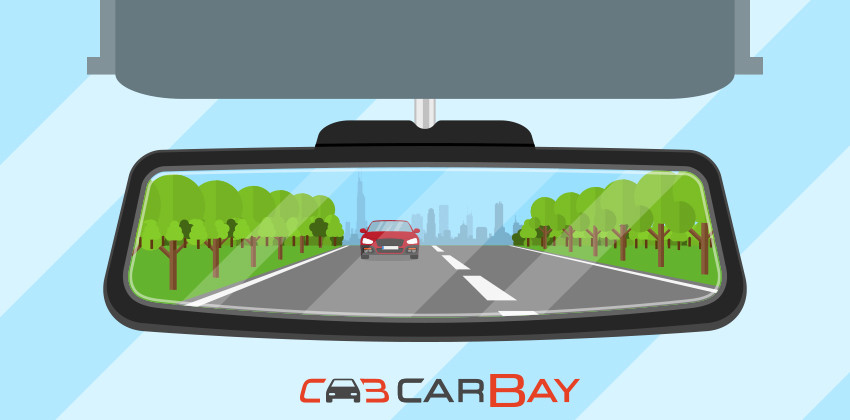
Sit in your normal driving position. Adjust the mirror so you see as much rear window as possible.
- Hold the mirror frame, not the glass.
- Move the mirror left or right until the back window is centered.
- Adjust up or down to see the road behind clearly.
- Check that you can see cars directly behind your vehicle.
Reducing Glare At Night
Bright lights from cars behind can blind you at night. Use the mirror’s night mode to reduce glare.
| Action | Effect |
| Flip the tab or lever on the mirror | Changes mirror angle to dim headlights |
| Adjust mirror position after flipping | Maintains clear view with less glare |
| Check mirror regularly | Ensures comfort and safety while driving |
Setting Side Mirrors
Setting your car’s side mirrors correctly helps you see traffic around you. It reduces the chance of accidents.
This guide explains how to position your side mirrors for better safety and clear views.
Eliminating Blind Spots
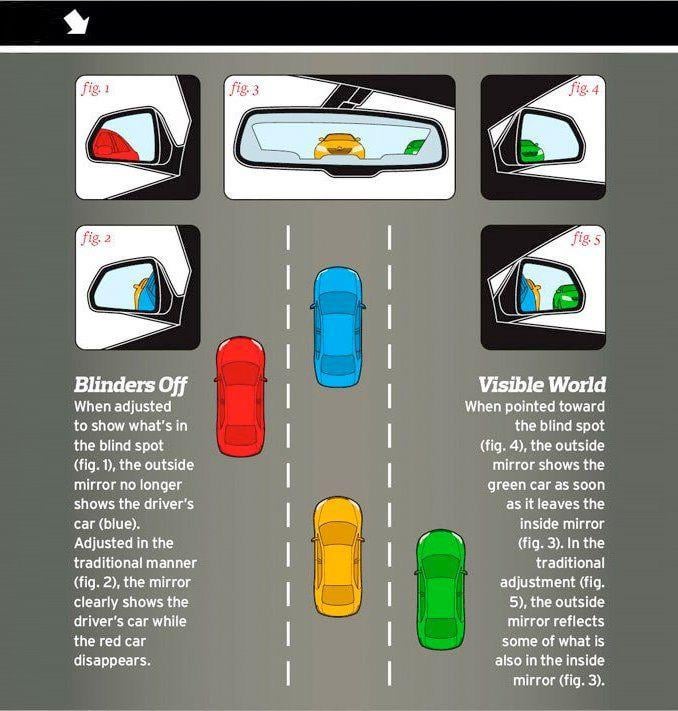
Blind spots are areas your mirrors do not show. You need to adjust mirrors to cover these spots.
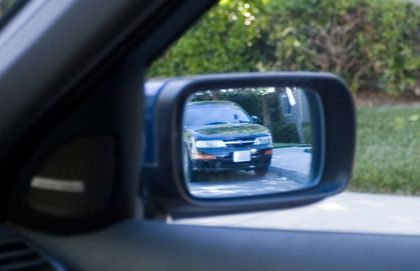
- Lean your head toward the driver’s window. Adjust the left mirror until you see the side of your car.
- Lean your head toward the center of the car. Adjust the right mirror until you see the side of your car.
- Make sure the mirrors show the lanes next to your car, not just your own car.
- Check your blind spots by turning your head before changing lanes.
Proper Angle For Side Visibility
Set your side mirrors at the right angle to see other vehicles clearly. This helps you react faster.
| Mirror Side | Recommended Angle | What You Should See |
| Left Side Mirror | About 15 degrees outward | Lane next to your car and some road behind |
| Right Side Mirror | About 15 degrees outward | Lane next to your car and some road behind |
Using The Mirror Check Technique
Positioning car mirrors correctly helps you see other vehicles clearly. The mirror check technique improves safety by reducing blind spots. It involves scanning mirrors in a certain order and using head checks to confirm your view.
This guide explains how to use the mirror check technique with two key steps: sequential mirror scanning and combining mirrors with head checks.
Sequential Mirror Scanning
Scanning your mirrors in sequence gives you a full picture of the traffic around you. It helps you react faster to changes on the road.
- Check the rearview mirror to see traffic behind you.
- Look at the left side mirror for vehicles approaching from the left.
- Check the right side mirror for cars coming from the right.
- Return to the rearview mirror before making any moves.
Combining Mirrors With Head Checks
Mirrors do not cover all angles. Head checks fill in the gaps and confirm what you see in the mirrors. Use both together for safe driving.
| Mirror | What to Check | When to Use Head Check |
|---|---|---|
| Rearview Mirror | Traffic directly behind your car | Rarely needed; mirrors cover this area well |
| Left Side Mirror | Vehicles in left lane and blind spots | Always do a head check before lane changes left |
| Right Side Mirror | Vehicles in right lane and blind spots | Always do a head check before lane changes right |

Credit: www.carsales.com.au
Common Mistakes To Avoid
Setting car mirrors correctly is important for safe driving. Many drivers make simple mistakes that reduce mirror effectiveness.
Knowing what to avoid helps you see better and prevent accidents. Here are common errors to watch out for when positioning your mirrors.
Overlapping Mirror Views
One common mistake is setting side mirrors too far inward. This causes the mirror views to overlap with the rearview mirror.
Overlapping views reduce your ability to see blind spots. It means you might miss cars in adjacent lanes.
- Adjust side mirrors outward until you see a small part of your car.
- Keep the majority of the mirror showing the road behind.
- This reduces overlap and widens your field of view.
Ignoring Mirror Adjustments After Changes
Many drivers forget to adjust mirrors after changing seats or sharing the car. This causes poor visibility and unsafe driving.
Always check and readjust your mirrors every time you enter the car. Small changes in seating affect mirror angles.
- Move your seat and steering wheel to your usual position first.
- Adjust all mirrors to give the best rear and side views.
- Make this a habit before driving to stay safe on the road.
Tools And Accessories
Properly positioning your car mirrors improves safety and driving comfort. Several tools and accessories help adjust mirrors correctly. These tools make it easier to see blind spots and reduce accidents.
Below are two useful accessories that can help you adjust your car mirrors better and keep you safer on the road.
Blind Spot Mirrors
Blind spot mirrors are small convex mirrors you attach to your existing side mirrors. They increase your field of view and help spot vehicles in blind zones. These mirrors come in different shapes and sizes and are easy to install.
- Attach them to the top corner of side mirrors
- Adjust angle to cover the blind spot area
- Clean regularly for a clear view
- Choose the right size for your car mirrors
Automatic Mirror Adjusters
Automatic mirror adjusters let you control mirror positions electronically. They use small motors inside the mirror housing. You can change mirror angles from inside the car with a switch or remote.
| Feature | Benefit | Notes |
| Remote control adjustment | Easy to use without leaving the seat | Some models have memory settings |
| Heated mirrors | Clear fog and ice quickly | Useful in cold climates |
| Power folding | Protect mirrors when parked | Reduces damage risk |
| Auto-dimming | Reduces glare from headlights | Improves night driving comfort |
Credit: www.zigwheels.my
Tips For Different Vehicles
Properly positioning your car mirrors helps you see better and drive safely. Different vehicles need different mirror adjustments.
Below are tips for sedans, SUVs, motorcycles, and other vehicles to set your mirrors right.
Sedans And Hatchbacks
Adjust your side mirrors so you can see the road behind and reduce blind spots. Tilt the rearview mirror to see the entire rear window.
- Set side mirrors just outside the edge of your vehicle.
- Check that the rearview mirror shows the full back window.
- Adjust while sitting in your normal driving position.
- Make small changes and test by looking over your shoulder.
Suvs And Trucks
These bigger vehicles need wider mirror settings because of their size. You may need to adjust mirrors more often.
| Mirror | Recommended Position | Reason |
| Left Side | Wide angle, showing lane next to vehicle | Reduce blind spots on the driver’s side |
| Right Side | Wide angle, showing adjacent lane | Cover blind spots on passenger side |
| Rearview | Centered on rear window | Full view of what’s behind |
Motorcycles And Other Vehicles
Motorcycles have small mirrors that need careful positioning. Other vehicles may have unique mirror shapes.
Use this checklist to adjust motorcycle mirrors:
- Adjust mirrors from your normal riding position.
- Make sure you can see the lanes on both sides.
- Keep mirrors clean and free of vibrations.
- Test your view by shifting your head slightly.
Frequently Asked Questions
How Do I Adjust My Car Mirrors Correctly?
To adjust your car mirrors, sit in your usual driving position. Adjust the side mirrors to barely show the sides of your car. This reduces blind spots. For the rearview mirror, position it to have a clear view of the entire rear window.
Regularly check and readjust mirrors as needed.
Why Is Proper Mirror Positioning Important?
Proper mirror positioning is crucial for safe driving. It minimizes blind spots, improves visibility, and helps in making better driving decisions. Properly adjusted mirrors allow you to see vehicles approaching from behind and from the side. This enhances your situational awareness and reduces the risk of accidents.
How Often Should I Check My Mirror Positions?
You should check your mirror positions every time you drive. Adjust the mirrors if the seating position changes or if someone else drives your car. Regular checks ensure optimal visibility. Mirrors can shift over time due to vibrations or accidental contact, so frequent adjustments are essential for safety.
Can Incorrectly Positioned Mirrors Cause Accidents?
Yes, incorrectly positioned mirrors can increase the risk of accidents. They create larger blind spots, making it difficult to spot other vehicles, pedestrians, or cyclists. Poor visibility can lead to dangerous lane changes and missed hazards. Always ensure mirrors are adjusted properly to enhance safety on the road.
Conclusion
Properly positioning car mirrors keeps you safe on the road. It helps reduce blind spots and shows what’s behind you. Adjust mirrors before driving to see clearly on all sides. Small changes can make a big difference in your view.
Stay alert and check mirrors often while driving. This simple step improves your awareness and reaction time. Drive confidently knowing your mirrors give you the best view. Safety starts with good mirror positioning every trip.