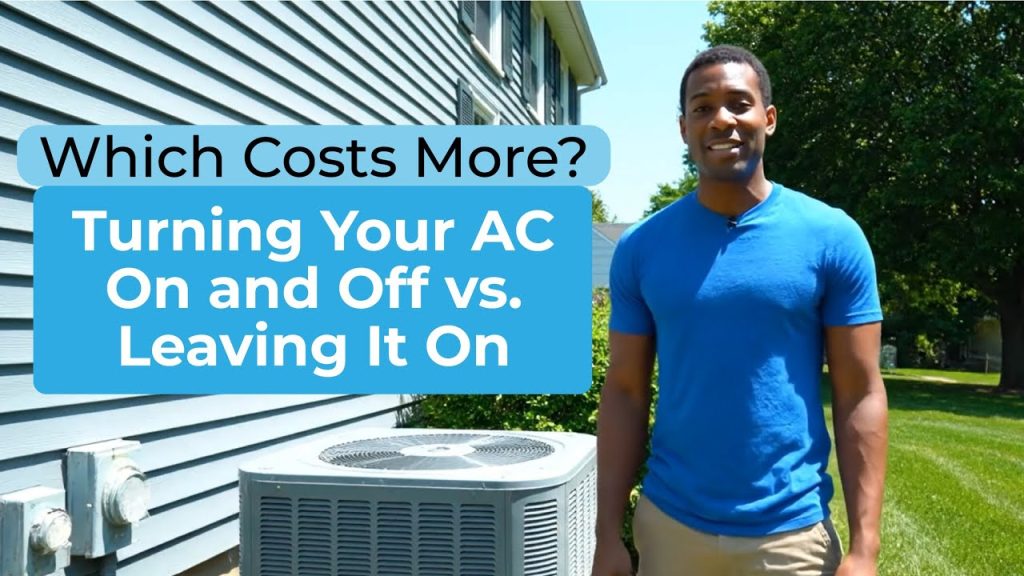
Have you ever wondered if turning your air conditioner on and off actually costs you more money? You might be surprised by the answer.
Many people believe that constantly switching the AC on and off wastes energy and spikes their bills. But is that really true? Understanding how your air conditioner works can help you save money and stay cool without guilt. Keep reading to discover the simple truth behind your AC habits and how to make the best choices for your comfort and wallet.
How Air Conditioners Use Energy
Air conditioners cool indoor spaces by removing heat. They use electricity to run compressors and fans. Understanding their energy use helps save power and money.
This article explains how air conditioners consume energy during startup and when running continuously. Knowing this can clear up myths about turning AC units on and off.
Energy Consumption During Startup
When an air conditioner starts, the compressor uses extra power to begin cooling. This startup phase can draw two to three times the usual energy. But the peak only lasts a few seconds.
- The compressor motor needs more current at startup.
- Fans and other parts also use power but less than the compressor.
- Quick startup means the high power demand is short.
- Turning the AC on and off frequently causes repeated spikes.
Energy Use In Continuous Operation
After startup, the air conditioner runs at a steady power level. It cycles on and off to keep the room cool. Most energy is used during this steady operation.
| Operation Phase | Power Use | Duration |
| Startup | High (2-3x normal) | Few seconds |
| Continuous Running | Normal steady power | Minutes to hours |
| Idle or Off | Minimal or no power | Until restarted |

Credit: lghomecomfort.ca
Impact Of Turning Ac On And Off
Many people wonder if turning the air conditioner on and off uses more energy. The answer depends on how the AC runs and how often you switch it. Understanding this helps save energy and money.
The way the AC cycles affects its efficiency and lifespan. Let’s look at the effects of short cycles versus long runs and what happens with wear and tear.
Short Cycles Vs Long Runs
Short cycles happen when the AC turns on and off quickly. This can waste energy because the unit uses extra power each time it starts. Long runs keep the AC on for more time, which uses steady energy.
Running the AC in short bursts can lower comfort and increase electric bills. Long runs help the system cool your home evenly and avoid spikes in power use.
- Short cycles increase start-up energy use
- Long runs keep energy use stable
- Short cycles may cause uneven cooling
- Long runs improve temperature control
Wear And Tear Considerations
Turning the AC on and off often can cause wear on the compressor and other parts. The compressor works hardest when starting up, so frequent starts can shorten its life.
Continuous long runs reduce the number of starts. This lowers wear and tear and can help the AC last longer. Proper maintenance also protects the system from damage.
- Frequent starts increase compressor wear
- Long runs reduce mechanical stress
- Regular service extends AC lifespan
- Balanced use prevents early breakdowns
Thermostat Settings And Energy Efficiency
Turning the air conditioner on and off can affect your energy use. How you set your thermostat plays a big role in this.
Understanding the best temperature settings helps save energy and lowers bills.
Optimal Temperature Settings
Set your thermostat to a temperature that is comfortable but not too cold. A good range is usually between 75°F and 78°F.
Keeping the temperature steady saves energy because the system does not work too hard.
- Set higher temperatures when no one is home
- Lower temperatures slightly when you are inside
- Avoid setting very low temperatures to cool quickly
Effect Of Temperature Fluctuations
Changing the temperature often can make the air conditioner run more. This uses more electricity.
Large temperature swings force the system to work harder to reach the new setting.
- Frequent on/off cycles reduce energy efficiency
- Small temperature changes use less energy
- Maintaining a steady temperature saves power
Comparing Energy Costs: Continuous Vs Intermittent Use
Many people wonder if turning the air conditioner on and off uses more energy. This question depends on how you use your AC. Understanding the cost differences can help you save money and energy.
This article compares the energy costs of running the air conditioner continuously versus turning it on and off throughout the day.
Cost Analysis Based On Usage Patterns
Continuous use means keeping the air conditioner running at a steady temperature. Intermittent use means turning it off when not needed and back on later. Each pattern affects energy costs differently.
- Continuous use:The AC runs steadily, avoiding frequent starts.
- Intermittent use:The AC cycles on and off, causing more frequent starts.
Starting the AC uses extra power, but running it constantly uses energy all day. It is important to balance these factors to reduce costs.
Real-world Examples And Studies
Studies show that turning the AC off when you leave a room can save energy. Below is a comparison of energy use in different scenarios.
| Usage Pattern | Energy Use (kWh) | Cost ($) |
| Continuous Use (8 hours) | 8 | 1.20 |
| Intermittent Use (4 hours on, 4 hours off) | 6 | 0.90 |
| Intermittent Use (2 hours on, 6 hours off) | 4 | 0.60 |
The data indicates that turning off the AC when not needed usually lowers energy use and cost. Frequent starts use more power, but the savings from not running all day are bigger.
Tips To Save Energy With Your Air Conditioner
Using your air conditioner wisely can save energy and lower bills. Small changes in how you operate it make a big difference. Learn simple ways to keep cool without wasting power.
Below are some easy tips on smart thermostat use, regular maintenance, and alternative cooling methods. Follow them to keep your home comfortable and energy efficient.
Smart Thermostat Usage
Smart thermostats help manage your air conditioner better. They adjust temperatures based on your schedule and outside weather. This means the AC runs only when needed.
- Set the thermostat higher when you are away.
- Use programmable settings to cool only during hot hours.
- Lower the temperature gradually to avoid power surges.
- Use a fan to spread cool air before lowering the AC setting.
Regular Maintenance
Keeping your air conditioner clean and checked saves energy. Dirty filters and parts make the unit work harder. This increases electricity use and can damage the system.
| Maintenance Task | Frequency |
| Clean or replace filters | Every 1-2 months |
| Check refrigerant levels | Yearly |
| Clean evaporator and condenser coils | Yearly |
| Inspect fan and motors | Yearly |
Alternative Cooling Methods
Using other ways to cool your home can reduce AC use. This helps save energy and keeps your room fresh.
- Use ceiling or portable fans to improve air flow.
- Close curtains or blinds to block sunlight during the day.
- Open windows early morning or late evening for natural cooling.
- Plant trees or shrubs near windows for shade.

Credit: www.bhg.com

Credit: blairsair.com
Frequently Asked Questions
Does Frequently Turning Ac On And Off Increase Costs?
Yes, frequently turning your air conditioner on and off can increase energy costs. The unit uses more power during startup. Keeping it running at a consistent temperature is more efficient. Instead, adjust the thermostat slightly to save energy while maintaining comfort.
How Does Cycling Ac Affect Energy Efficiency?
Cycling your AC on and off reduces energy efficiency by requiring more power to restart. Maintaining a steady temperature is more efficient. This approach minimizes the strain on your AC system. Consistent operation can also prolong the unit’s lifespan, saving you money on repairs.
Is It Cheaper To Leave Ac On All Day?
Leaving the AC on all day isn’t always cheaper. It depends on your usage and home insulation. Programming your thermostat can optimize efficiency. Adjusting temperatures while you’re away reduces costs. Consider energy-saving settings to maintain comfort without excessive energy use.
Does Short Cycling Damage The Air Conditioner?
Yes, short cycling can damage your air conditioner over time. It causes excessive wear on components. Frequent cycling can lead to overheating and increased repair needs. Ensuring proper unit sizing and regular maintenance can prevent short cycling and extend your AC’s lifespan.
Conclusion
Turning your air conditioner on and off does not waste energy. It actually helps save electricity by cooling only when needed. Running the AC nonstop uses more power and costs extra money. Short breaks let the unit rest and work better.
Use a thermostat to control the temperature easily. This way, you keep your home comfortable without high bills. Small changes in how you use your AC make a big difference. Save energy, save money, and stay cool at the same time.
Simple habits bring smart benefits.