Have you ever wanted to master the art of fly fishing but felt unsure where to start? Learning how to cast a fly fishing rod is the key skill that will open up a whole new world of fishing adventures for you.
Imagine standing by a peaceful river, effortlessly sending your line gracefully through the air, feeling completely in control. This guide will walk you through simple, step-by-step techniques that anyone can follow. By the end, you’ll be confident and ready to enjoy fly fishing like a pro.
Keep reading, and let’s get your casting skills on point!

Credit: www.youtube.com
Choosing The Right Fly Rod
Choosing the right fly rod is important for a good fishing experience. The right rod helps you cast better and catch more fish.
There are many types of fly rods. You need to pick one that matches your fishing style and the type of water you fish in.
Types Of Fly Rods
Fly rods come in different materials and actions. Material affects weight and strength. Action means how much the rod bends.
- Graphite rods are light and strong.
- Bamboo rods are traditional and flexible.
- Fiberglass rods are durable and slow action.
- Carbon rods combine lightness and power.
Matching Rod To Fishing Style
Different fishing styles need different rods. Match your rod to the fish and water where you fish.
| Fishing Style | Rod Action | Rod Weight |
| Small streams | Light action | 2-4 weight |
| Rivers | Medium action | 5-7 weight |
| Lakes and ponds | Medium-fast action | 6-8 weight |
| Saltwater | Fast action | 8-12 weight |
Selecting The Proper Rod Length
Rod length affects casting distance and control. Choose a length that fits your fishing environment.
- Short rods (6-7 feet) work well in tight spaces.
- Medium rods (8-9 feet) are good for most fishing.
- Long rods (10+ feet) help cast far and control line.
Essential Fly Fishing Gear
Fly fishing needs special gear to work well. The right tools help you catch fish and enjoy your time outside.
This guide covers fly line types, reels and backing, and how to pick the right leader and tippet for casting.
Fly Line Varieties
Fly lines come in many types. They affect how your cast feels and how far you can reach.
The main types include weight-forward, double taper, and level lines. Each type suits different fishing styles.
- Weight-forward:Heavier front helps cast longer distances.
- Double taper:Good for delicate presentations and easy roll casting.
- Level:Same thickness all along, best for beginners or short casts.
Reels And Backing
The reel holds your line and helps fight fish. Choose a reel that fits your rod and fishing type.
Backing is a thin line that goes between the reel and fly line. It gives extra length when a fish runs far.
- Pick reels made for fly fishing with smooth drag systems.
- Use backing that matches your reel size and fish size.
- Backing helps prevent line breaks during a strong fight.
Choosing The Right Leader And Tippet
The leader connects your fly line to the fly. It must be invisible and flexible to fool fish.
The tippet is the thin end of the leader. It holds the fly and breaks if a fish pulls hard.
- Use a leader length of 7 to 9 feet for most fishing.
- Match tippet size to fly size and fish strength.
- Thinner tippets are less visible but break easier.
Basic Casting Techniques
Fly fishing needs good casting skills. Learning the basics helps you cast better and catch more fish.
Start with simple steps. Practice your grip, stance, and the key cast moves for success.
Grip And Stance
Hold the rod firmly but not too tight. Use your thumb on top of the rod handle for control.
Stand with your feet shoulder-width apart. Face the target area with your body sideways to the water.
- Hold the rod with your dominant hand
- Keep your wrist firm but relaxed
- Stand with your body at a right angle to the water
- Keep your knees slightly bent
Loading The Rod
Loading means bending the rod to store energy for the cast. Start with the line straight on the water.
Lift the rod slowly until the line pulls tight. The rod will bend as it takes the load.
- Start with a slack line on the water
- Lift the rod tip smoothly
- Feel the rod bend under the line’s weight
- Stop when you feel resistance
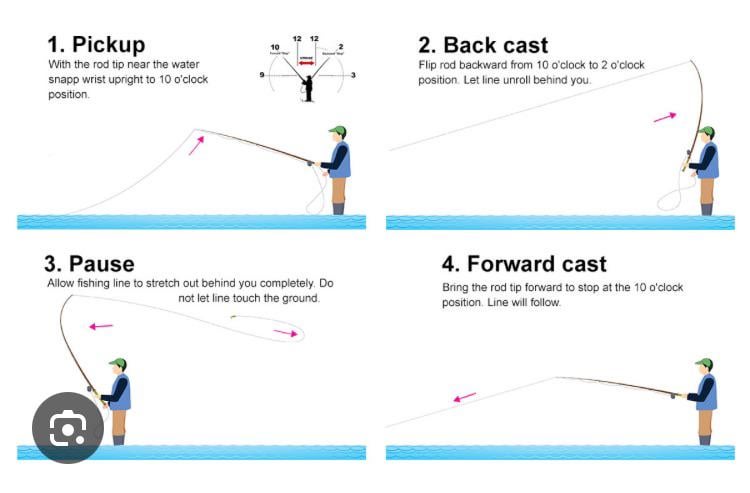
The Forward Cast
The forward cast sends the fly to the target. Move the rod forward quickly and stop sharply at eye level.
Stop the rod to let the line fly straight. Avoid pushing the rod forward too hard or too fast.
- Start with the rod behind you
- Move the rod forward in a smooth motion
- Stop the rod at about 11 o’clock position
- Let the line extend toward the target
The Back Cast
The back cast prepares the line for the forward cast. Move the rod backward with a smooth motion.
Stop the rod sharply near the 1 o’clock position. The line will straighten behind you.
- Start with the rod tip low
- Lift the rod smoothly backward
- Stop sharply at 1 o’clock position
- Watch the line straighten behind you

Credit: m.youtube.com
Advanced Casting Methods
Fly fishing takes skill and practice. Advanced casting methods help you cast better in different situations. These techniques let you control the line and fly more precisely.
Learn these methods to improve your fishing experience and reach difficult spots with ease.
Roll Cast
The roll cast is useful when there is little room for a back cast. It helps you cast without a lot of space behind you. This method uses the water’s surface to load the rod.
To perform a roll cast, start with the line on the water. Lift the rod tip slowly to bring the line into a D-shape. Then, use a smooth forward stroke to cast the line out.
Double Haul Technique
The double haul technique increases line speed and casting distance. It uses a pulling motion with your hands while casting. This method requires good timing and coordination.
- Start with a normal back cast.
- Pull the line down with your non-rod hand to add power.
- Make the forward cast while pulling the line again.
- Release the line smoothly at the end of the cast.
- Practice to time the pulls with the rod movement.
Mending The Line
Mending the line helps control the drift of your fly. It adjusts the line on the water to avoid drag. This keeps the fly moving naturally with the current.
| Type of Mend | Purpose | When to Use |
| Upstream Mend | Slows line drift | Faster current downstream |
| Downstream Mend | Speeds line drift | Slower current downstream |
| Side Mend | Moves line left or right | Current flows unevenly |
Common Casting Mistakes
Many anglers face challenges when casting a fly fishing rod. Mistakes can cause poor accuracy and frustration. Learning what to avoid helps improve your casting skills.
This guide covers three common errors: overcasting and undercasting, poor timing, and incorrect rod angle. Fixing these can make your casts smoother and more precise.
Overcasting And Undercasting
Overcasting happens when you cast too far, and undercasting is when your cast falls short. Both affect how well your fly lands on the water.
- Overcasting wastes energy and may scare fish.
- Undercasting limits your reach and fishing area.
- Both cause poor fly presentation.
- Adjust your casting power to match the distance needed.
- Practice to find the right balance for each situation.
Poor Timing
Timing is key in fly casting. Moving the rod too fast or too slow can ruin your cast. Good timing lets the line flow smoothly.
| Timing Error | Effect on Cast |
| Starting too soon | Line collapses, poor distance |
| Starting too late | Line slack, weak presentation |
| Stopping too early | Short casts, poor loop shape |
| Stopping too late | Wide loops, less control |
Incorrect Rod Angle
The rod angle affects the cast direction and distance. Holding the rod too low or too high causes problems.
Here are some tips for correct rod angle:
- Keep the rod tip about 10 to 20 degrees above the horizon.
- A low angle can drag the line on the water.
- A high angle can cause the line to lift too much and lose control.
- Adjust the angle to match wind and water conditions.

Credit: www.youtube.com
Tips For Improving Accuracy
Casting a fly fishing rod with accuracy helps you catch more fish. Small changes can improve your aim and control.
Focus on your technique and watch how the line moves. This guide covers key tips to help you cast better.
Aiming At Targets
Look at your target before casting. Keep your eyes on the spot where you want the fly to land.
- Keep your rod tip steady while aiming.
- Practice short casts to build control.
- Use a smooth back and forward motion.
- Adjust your stance for better balance.
Controlling Line Speed
Line speed affects how far and how accurately you cast. Too fast or too slow can make your fly land off target.
| Line Speed | Effect on Cast | Tip |
| Too Fast | Fly shoots past target | Slow your wrist flick |
| Too Slow | Fly drops short | Increase smooth acceleration |
| Just Right | Fly lands softly on target | Practice timing and rhythm |
Adjusting For Wind Conditions
Wind changes your cast path. You must change your aim and casting style to stay accurate.
- Cast into the wind for better control.
- Use shorter casts if the wind is strong.
- Keep the rod lower to reduce wind effect.
- Adjust your line angle to match wind direction.
Practice Drills For Casting
Practicing casting helps you improve your fly fishing skills. Regular drills build muscle memory and control.
Try different exercises to develop distance, accuracy, and real fishing skills. Each drill targets a key part of casting.
Distance Casting Exercises
Distance casting helps you reach fish far from shore. Practice smooth, long casts with steady rod movement.
Start by casting to a target 20 feet away. Gradually increase the distance as you get better.
- Use a single smooth stroke to cast farther
- Focus on timing the rod lift and forward cast
- Keep the line straight during the cast
- Practice false casting to build line speed
Accuracy Challenges
Accuracy is key to placing your fly where fish are. Aim for small targets to improve precision.
Set up markers like hula hoops or cones on the water or ground. Try to land your fly inside these targets.
- Focus on smooth rod stops to control fly placement
- Practice casting at different angles to hit targets
- Use short casts to improve control
- Try casting with different wind conditions
Simulating Real Fishing Scenarios
Practice casting as if you were fishing in real spots. This helps you prepare for actual fishing trips.
Include obstacles like trees or bushes in your practice. This trains you to cast in tight spaces and avoid snags.
- Practice roll casts for tight spots
- Simulate casting upstream and downstream
- Work on quick false casts to adjust fly position
- Use different fly weights to mimic real fishing conditions
Maintenance For Optimal Performance
Keeping your fly fishing rod in good condition helps you catch more fish. Regular care makes your gear last longer and work better.
Clean and store your rod and line properly. Check your equipment often to avoid problems on the water.
Cleaning The Rod And Line
After fishing, rinse your rod with fresh water to remove dirt and salt. Use a soft cloth to dry it gently.
Clean your fly line by wiping it with a damp cloth. This removes grime and helps the line cast smoothly.
- Use mild soap if the rod is very dirty
- Do not use harsh chemicals or solvents
- Dry the rod and line completely before storing
Storing Equipment Properly
Store your rod in a cool, dry place away from direct sunlight. This prevents damage to the rod and line.
Keep your fly line loose on the reel to avoid kinks. Use rod tubes or cases for extra protection during transport.
- Avoid storing rods near heat sources
- Keep lines away from sharp objects
- Use rod socks or tubes for safe storage
Regular Gear Inspections
Check your rod guides and reel seat for cracks or damage before each trip. Replace any broken parts quickly.
Inspect your fly line for nicks or frays. A damaged line can break and ruin your cast.
- Look for loose or missing rod guides
- Test reel drag and smoothness
- Check line for wear and replace if needed
Frequently Asked Questions
What Is The Best Technique For Casting A Fly Rod?
The best technique involves smooth, fluid motions. Begin with the rod tip low, accelerate through the backcast, pause, then forward cast. Ensure your wrist remains firm to avoid bending. Practice regularly to improve timing and precision.
How Do I Avoid Tangles While Casting?
Avoid tangles by ensuring your line is straight before casting. Keep your movements smooth and consistent. Use the right amount of line for your cast. Practice regularly to improve your control and reduce the chances of tangling.
What Equipment Is Needed For Fly Casting?
Essential equipment includes a fly rod, reel, and line. Choose a rod suitable for the type of fishing you plan to do. A good quality reel and line will ensure better casting performance. Always match your gear to the specific conditions and fish species.
How Can I Improve My Fly Casting Accuracy?
To improve accuracy, focus on your target. Practice casting at short distances before attempting longer casts. Consistent practice and refining your technique will enhance accuracy. Adjust your grip and stance as needed for better control.
Conclusion
Casting a fly fishing rod takes practice and patience. Start slow and focus on your movements. Keep your line smooth and steady. Watch how the rod bends and learn its feel. Each cast helps you improve your skill. Soon, you will enjoy fishing more and catch better fish.
Remember, practice makes the difference. Enjoy the calm and fun of fly fishing. Keep casting, learning, and having a great time outdoors.