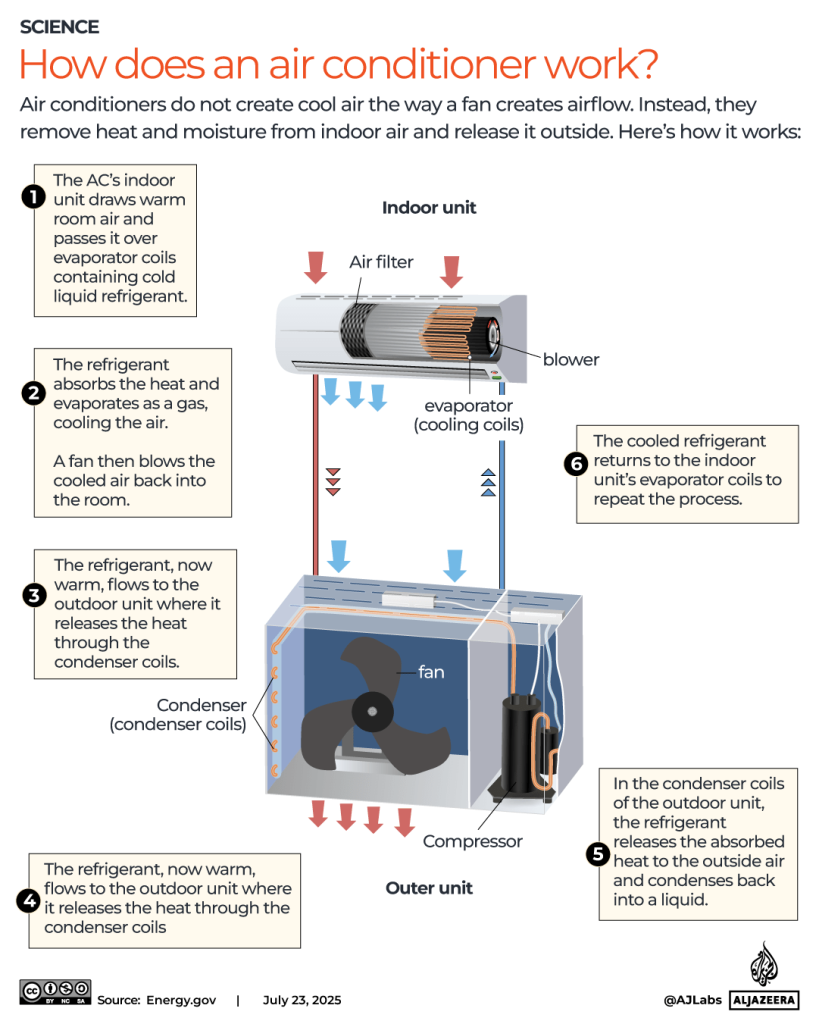
Have you ever wondered what makes an inverter air conditioner different from a regular one? If you want to keep your home cool while saving energy and cutting down on electricity bills, understanding how an inverter air conditioner works is key.
This technology adjusts its power to match your room’s temperature perfectly, giving you steady comfort without the usual ups and downs. You’ll discover exactly how inverter air conditioners operate and why they might be the smartest choice for your cooling needs.
Keep reading to learn how this simple change can make a big difference in your comfort and savings.

Credit: www.meltonheating.com
Inverter Air Conditioner Basics
An inverter air conditioner uses a special technology to control its cooling power. It changes the speed of the compressor motor. This helps save energy and keeps the room temperature steady.
Unlike regular air conditioners, inverter ACs adjust their cooling capacity. They run at different speeds depending on the need. This makes them more efficient and quieter.
Core Components
The main parts of an inverter air conditioner include the compressor, inverter drive, sensors, and control system. Each part works together to control the cooling process.
- Compressor:Compresses the refrigerant gas and controls cooling power.
- Inverter Drive:Changes the motor speed to adjust cooling.
- Sensors:Measure room temperature and system status.
- Control System:Processes sensor data and manages the compressor speed.
Difference From Traditional Acs
Traditional air conditioners run the compressor at full speed or off. They switch on and off to keep the room cool. This uses more energy and causes temperature swings.
Inverter ACs run the compressor continuously but at varying speeds. They adjust cooling smoothly. This saves energy and keeps the room temperature stable.
- Traditional ACs use more power due to on/off cycles.
- Inverter ACs save energy by running at variable speeds.
- Traditional ACs cause temperature changes in the room.
- Inverter ACs maintain consistent room temperature.
- Inverter ACs are usually quieter than traditional models.
Inverter Technology Explained
An inverter air conditioner adjusts its compressor speed to control temperature. It does not turn on and off like regular AC units.
This technology helps maintain a steady temperature and uses less energy.
Variable Speed Compressor
The compressor in an inverter AC can change its speed. It runs faster when cooling is needed and slower when less cooling is required.
This variable speed helps the AC run smoothly without sudden stops or starts.
- Runs at high speed to cool quickly
- Slows down to save energy
- Maintains consistent room temperature
Energy Efficiency Mechanism
Inverter technology reduces power use by adjusting compressor speed. It avoids using full power all the time.
This leads to lower electricity bills and less strain on the power grid.
- Uses less energy than traditional ACs
- Reduces wear and tear on components
- Improves overall cooling performance
Energy Savings Benefits
An inverter air conditioner uses advanced technology to save energy. It adjusts its power to match the cooling needs.
This helps reduce energy waste and keeps the room comfortable all the time.
Reduced Power Consumption
Inverter air conditioners change their compressor speed. They run slower when less cooling is needed.
This uses less electricity than regular air conditioners that turn on and off repeatedly.
- Less power is used during stable temperatures
- Compressor avoids full stops and starts
- Energy is saved by matching cooling demand
Consistent Temperature Control
The inverter system keeps the temperature steady. It avoids big swings between cold and warm.
This makes the room more comfortable and saves energy by not overcooling or overheating.
- Maintains target temperature without big changes
- Reduces energy waste from sudden cooling bursts
- Improves user comfort with smooth operation
Lower Electricity Bills
Using less power means the electricity bill is lower. Inverter air conditioners cut costs over time.
They are a smart choice for saving money on energy every month.
- Consumes less electricity than non-inverter models
- Helps reduce monthly energy expenses
- Offers long-term savings through efficient use
Performance Factors
Inverter air conditioners adjust their speed to cool a room efficiently. Their performance depends on several key factors. Understanding these helps get the best comfort and energy savings.
This guide covers how room size and insulation, usage patterns, and maintenance affect inverter AC performance.
Room Size And Insulation
Choosing the right inverter AC depends on the room size and how well it is insulated. A properly sized unit cools faster and uses less power.
| Room Size (sq ft) | Recommended AC Capacity (BTU) | Insulation Effect |
|---|---|---|
| 100 – 200 | 5,000 – 6,000 | Good insulation lowers capacity needs |
| 200 – 400 | 8,000 – 12,000 | Poor insulation increases capacity needs |
| 400 – 600 | 14,000 – 18,000 | Good insulation improves efficiency |
Usage Patterns
How often and when you use the inverter AC affects its performance. Consistent use at moderate settings keeps energy use low.
- Turn off AC during cooler parts of the day
- Use timer or smart controls to avoid running all day
- Set temperature between 24°C and 26°C for comfort and efficiency
- Avoid frequent on/off cycles to reduce compressor wear
Maintenance Tips
Regular maintenance keeps the inverter AC running smoothly and saves energy. Clean parts and check for issues often.
- Clean or replace air filters monthly
- Clear debris around outdoor unit
- Check refrigerant levels yearly
- Inspect electrical connections
- Schedule professional servicing every 1-2 years
Choosing The Right Inverter Ac
Inverter air conditioners save energy by adjusting their cooling power. Picking the right AC helps you stay comfortable and save money.
Consider your room size, energy ratings, and extra features before buying an inverter AC.
Capacity Selection
Choose an AC with the right cooling capacity for your room size. Too small units will not cool well. Too large units use more power.
- For small rooms (100-150 sq ft), 0.75 to 1 ton is enough
- Medium rooms (150-250 sq ft) need 1 to 1.5 tons
- Large rooms (250+ sq ft) require 1.5 tons or more
Energy Star Ratings
Energy Star ratings show how efficient an AC is. Higher ratings save electricity and lower bills. Look for models with good ratings.
- Check the Seasonal Energy Efficiency Ratio (SEER)
- Higher SEER means better energy savings
- Choose models with Energy Star labels for quality assurance
Additional Features
Extra features improve comfort and convenience. Some features also help save energy or make maintenance easier.
- Sleep mode reduces power use during night
- Auto restart turns AC back on after power cuts
- Air filters improve indoor air quality
- Smart controls allow remote operation via apps
Credit: www.renogy.com
Common Myths And Facts
Many people have wrong ideas about how inverter air conditioners work. These myths can confuse buyers and users. Knowing the truth helps to make better choices.
This article clears up common myths about inverter air conditioners. It focuses on startup power use, noise levels, and durability.
Startup Power Usage
Some think inverter air conditioners need a lot of power to start. They believe this wastes electricity and raises bills.
- Myth:Inverter ACs use high power only at startup.
- Fact:Inverter ACs use less power to start than normal ACs.
- Fact:They adjust power smoothly, so energy use stays low.
- Myth:Startup power spikes damage the electrical system.
- Fact:Inverter ACs have stable startup with no spikes.
Noise Levels
Many believe inverter air conditioners are louder than regular ones. This is not true for most models.
| Myth | Fact |
| Inverter ACs make more noise because of their complex parts. | Inverter ACs run quieter due to variable speed compressors. |
| Constant compressor speed means steady noise. | Variable speed means the compressor runs softly most of the time. |
| Noise increases with cooling power. | Inverter ACs adjust power to keep noise low and stable. |
Durability
People often worry that inverter air conditioners break faster because of their technology. This is a common misunderstanding.
Durability Myths and Facts:
- Myth:Inverter ACs wear out quickly due to complex parts.
- Fact:Inverter ACs often last longer with proper care.
- Myth:Repair costs are higher for inverter ACs.
- Fact:Repair costs are similar but happen less often.
- Myth:Frequent speed changes cause damage.
- Fact:Smooth speed control reduces wear on components.
Future Trends In Inverter Acs
Inverter air conditioners are improving every year. New technology helps them use less energy and work smarter.
The future of inverter ACs looks bright with smart features and better cooling methods. These changes help save money and protect the environment.
Smart Integration
Inverter ACs are becoming part of smart homes. They can connect with phones and voice assistants for easy control.
Users can set temperatures remotely and create schedules. This makes cooling more convenient and saves energy.
- Control AC with smartphone apps
- Use voice commands to adjust settings
- Set timers and temperature schedules
- Monitor energy use in real time
Eco-friendly Refrigerants
New inverter ACs use refrigerants that harm the environment less. These chemicals reduce greenhouse gas effects.
Manufacturers are switching to refrigerants with low global warming potential. This helps fight climate change.
- Replace old refrigerants with safer options
- Use gases like R-32 and R-290
- Reduce ozone layer damage
- Improve overall system efficiency
Advanced Energy Saving
Future inverter ACs use better sensors and controls to save energy. They adjust cooling based on room conditions.
These systems reduce power use without losing comfort. They also learn user habits to optimize cooling times.
- Use smart sensors to detect occupancy
- Adjust cooling speed automatically
- Learn user preferences over time
- Lower electricity bills and energy waste

Credit: link.springer.com
Frequently Asked Questions
What Is An Inverter Air Conditioner?
An inverter air conditioner uses a variable speed compressor for efficient cooling. It adjusts its power to maintain the desired room temperature. Unlike traditional units, it doesn’t switch on and off frequently. This leads to reduced energy consumption and quieter operation.
It’s ideal for consistent comfort and energy savings.
How Does Inverter Technology Save Energy?
Inverter technology modulates the compressor’s speed, minimizing energy wastage. It operates at varying speeds to match cooling demand. This reduces power consumption compared to non-inverter models. By avoiding frequent start-stop cycles, it enhances efficiency and longevity. This results in lower electricity bills and a more sustainable cooling solution.
What Are The Benefits Of Inverter Acs?
Inverter ACs offer numerous benefits, including enhanced energy efficiency and consistent cooling. They provide quieter operation due to reduced compressor noise. Users experience faster cooling and improved comfort. Additionally, they have a longer lifespan due to fewer mechanical stresses. This makes them a cost-effective and eco-friendly choice.
Are Inverter Air Conditioners Quieter?
Yes, inverter air conditioners are quieter than traditional models. They adjust the compressor speed to maintain temperature. This reduces noise levels significantly. The absence of frequent on-off cycles also minimizes operational sound. Users enjoy a more peaceful indoor environment, enhancing comfort and relaxation.
Conclusion
Inverter air conditioners save energy by adjusting compressor speed. They keep rooms comfortable without constant on-off cycles. This leads to lower electricity bills and less noise. The technology helps maintain a steady temperature all day. Understanding how they work can guide better cooling choices.
This knowledge benefits both your comfort and wallet. Choosing an inverter AC means smarter cooling for your home. Simple, efficient, and effective—that’s how inverter air conditioners operate.